
Maharashtra
Bio-loos plants will be Intalled soon on 6 wards in Mumbai : BMC

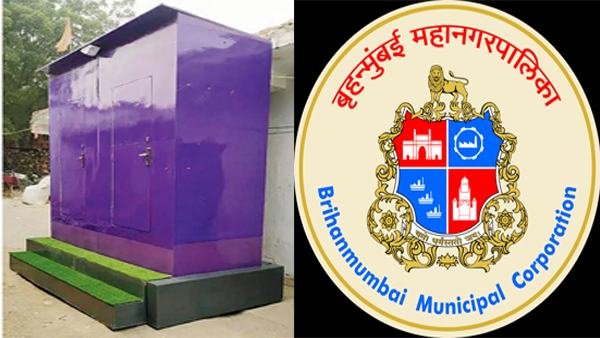
In a pilot project, the BMC is set to install bio-toilets at four locations each in six wards. The civic body had earlier started a similar project but the toilets did not work for long due to poor maintenance. This time, with an operation and maintenance contract in place, the civic body aims to gauge if this can be used across the city where sewer networks are not available. The Brihanmumbai Municipal Corporation, which is in the process of increasing the number of community and public toilets, especially in slums and high footfall areas, took up the project to cater to the people living in areas without a sewer network and areas with a space crunch.
Bio-toilets are based on biodegradation techniques where organic substances are decomposed by micro-organisms, mainly bacteria, into simpler substances such as carbon dioxide, water and ammonia. Though bio-toilets have many advantages, its performance depends upon the sustainability of micro-organisms. Bacterias have the ability of self growth, but the use of chemicals in toilet cleaners are harmful to them.
As part of the project, BMC has selected six wards—P North (Malad), P South (Goregaon), S (Bhandup), N (Ghatkopar), M East (Govandi, Mankhurd) and F North (Wadala, Sion)—to install the bio-toilets within next six months.
“Each of these toilets has two seats, one for men and another for women. There is a pit which is a part of installation and does not require much digging or other infra. A connection of water and electricity is enough. So, it will work best in areas which have space constraints or no existing sewer network,” said an official from BMC’s solid waste management department.
He added that a work order of Rs 4.14 crore which includes supply, installation, commissioning as well as operation and maintenance for three years has already been given. The feasibility study of the spots is going on and the report is expected within two weeks, following which the installation will begin.
“If it works, we are thinking of implementing it across the city. It will be useful in places where we cannot build traditional toilets due to various reasons,” said Sangita Hasnale, deputy municipal commissioner. The performance of these toilets will be analysed after three months to decide on further installations.
4 No of bio-toilets to be installed in each of the six wards



A 70-year-old man was cheated of Rs 4.81 lakh by cyber fraudsters on the pretext of pension card registration in the Baner area in Pune, Maharashtra.
The victim, Dilip Eknath Waikar, a resident of Pashan, received a WhatsApp message regarding pension card registration between September 8 and 9. He was asked to open the message and enter his bank account details. Subsequently, he discovered that Rs 4.81 lakh had been fraudulently withdrawn from his account.
Following the incident, a case was registered at Baner police station under Sections 318(4) and 318(2) of the Bharatiya Nyaya Sanhita (BNS) and Section 66(D) of the Information Technology Act. The identity of the accused remains unknown, and no arrests have been made so far.
In a similar incident reported in September, a 72-year-old retired bank employee was cheated of Rs 5 lakh after clicking on a Facebook advertisement offering a pension card. The victim, a resident of Makarba, approached the Sarkhej police after noticing an unauthorised transaction in his bank account.
According to his complaint, the retired banker came across an advertisement on Facebook on September 6 offering a pension card purportedly issued by a bank. Believing the advertisement to be genuine, he applied for the card through the link provided.
The following day, he received a call from an unknown mobile number. The caller allegedly informed him that his pension card had been approved and asked him to provide his name, address and other personal details to complete the registration process.
The victim told police that he shared the requested information, including his bank account details, with the caller.
He subsequently received an email alert regarding an online transaction worth Rs 5 lakh from his account. Realising that he had not authorised the transaction, he suspected fraud and immediately contacted the cybercrime helpline at 1930.
Upon checking his bank account, he discovered that the money had been transferred online to an account maintained with Punjab National Bank.
Crime
Tiger Shroff attack: CM Fadnavis vows action, says Mumbai Police will dismantle gangs operating from abroad

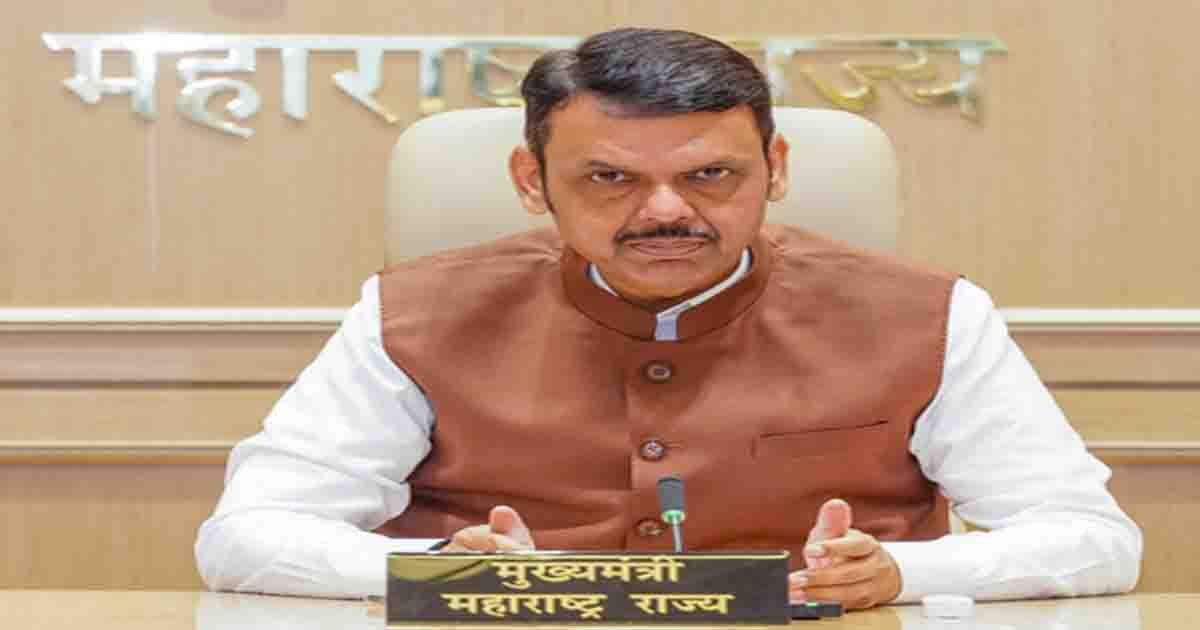
Maharashtra Chief Minister Devendra Fadnavis on Monday issued a stern warning to criminal syndicates following the shocking attack on Bollywood actor Tiger Shroff. Dismissing the perpetrators as cowards hiding behind remote communication networks, the Chief Minister asserted that the Mumbai Police will completely dismantle the international tentacles of these criminal gangs.
Emphasising the professional calibre of the city’s law enforcement, CM Fadnavis stated that no one will be permitted to openly challenge the Mumbai Police or threaten public safety. Labelling the culprits as cowardly proxies who operate from hidden locations, he declared that their plots will be thoroughly neutralised.
Acknowledging that the threats originate from outside Maharashtra and beyond national borders, CM Fadnavis confirmed that the state machinery is actively coordinating with central intelligence agencies to root out the entire network.
“The police will find the accused, and their masterminds have also been found. Therefore, I can say with certainty that such incidents will not be tolerated. The Mumbai Police will definitely track down the accused. No one can openly challenge the police,” said CM Fadnavis.
“These are cowardly people. They hide somewhere and boast from there. They don’t have the courage. These are kind of hired people, and those who operate based on them,” CM Fadnavis said.
“The challenge the police definitely face in this is that they do not operate from Maharashtra; they operate from outside the country. By contacting the Central government agencies, the Mumbai Police will annihilate these gangs operating from outside Maharashtra and the country,” he added.
He noted that the police have already mapped crucial trails and identified key operatives linked to the assault.
CM Fadnavis said that public safety — for both celebrities and ordinary citizens — remains its paramount priority. With multiple specialised police teams deployed to probe the shooting, he added that the government has made it clear that local conspirators and international masterminds alike will face the full might of the law.
Earlier, Deputy Chief Minister Eknath Shinde stated that the attack on actor Tiger Shroff was extremely unfortunate, and he fortunately survived it. He mentioned that following the attack, Shroff’s entire family is currently in a state of terror and anxiety, prompting him to personally visit them to check on his health.
The Deputy CM noted that despite having no disputes or quarrels with anyone, such a life-threatening attack on a young actor has left the Shroff family, especially his mother, Ayesha Shroff, under severe mental stress.
Following the incident, Mumbai Police have taken serious cognisance of the matter, with the Police Commissioner forming a special team to track down the culprits.
Deputy CM Shinde, who visited the Tiger Shroff at his residence and inquired about his health, stated that these criminals will be apprehended immediately and strict action will be taken against them. Additionally, he mentioned that instructions have been given to the Mumbai Police Commissioner to review the security of all artists and actors in the film industry.
Addressing recent incidents of celebrities being threatened by the Bishnoi gang or other gangs, Shinde asserted, “The terror of any gang or attempts to threaten celebrities in Mumbai or Maharashtra will not be tolerated. Anyone attempting to do so will be given a fitting reply by the police,” he said.
Recalling how the police completely crushed Mumbai’s gang wars through strict action in the 1990s, Dy CM Shinde warned that anyone attempting to create terror through similar bullying today will not be spared. “The security of ordinary citizens and celebrities is the top priority of the government. Artists in the film industry have no reason to panic following such incidents,” said Dy CM Shinde.
He appealed to people that anyone receiving threat calls or messages from such gangs should immediately contact the Mumbai Police, assuring that the government stands firmly behind the artists.
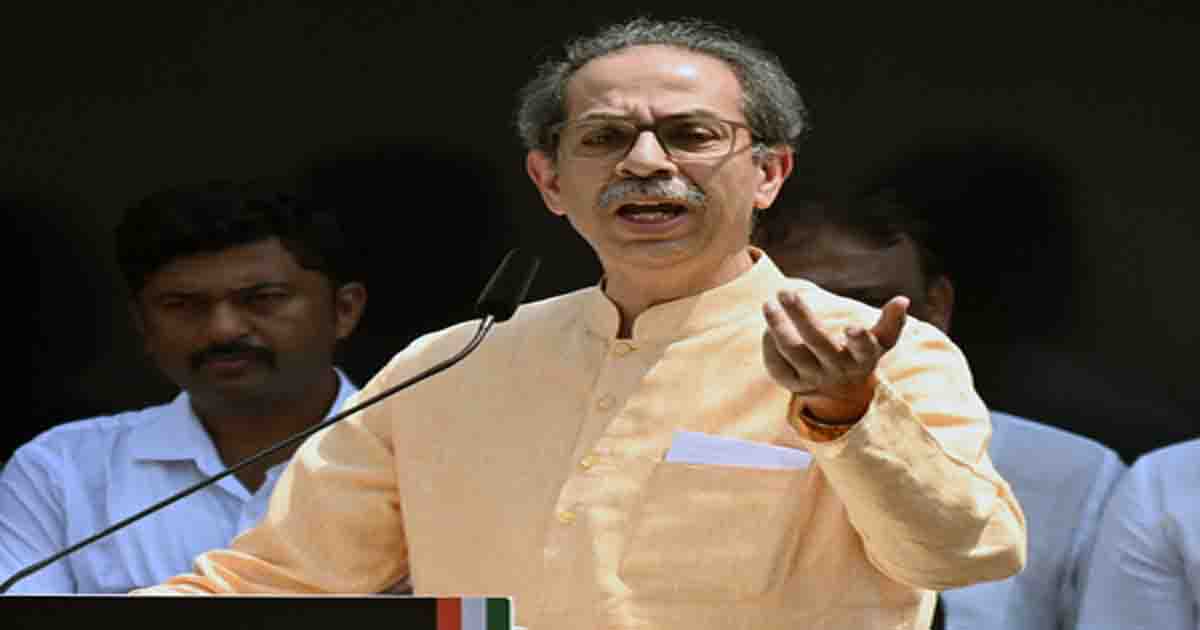
The Shiv Sena Uddhav Balasaheb Thackeray on Monday said that political change, or a “regime change”, is an inevitable constitutional process and is bound to happen.
The party said in its mouthpiece, ‘Saamana’, that this “regime change” had actually taken place in the 2024 Lok Sabha elections, but Prime Minister Narendra Modi and others managed to “cling to power by manipulating mafia-like Election Commissioners such as Gyanesh Kumar”.
The Thackeray camp, in an editorial in Samaana, said, “Their cup of sins is full. Consequently, they were seized by the perverse idea to oppose the ‘Tiranga (Tricolour) movement. This incident accelerated the momentum for a ‘regime change’.”
It claimed that the rule of those who oppose hoisting the Tiranga in India will have to be overthrown to bring about a “regime change,” and this “regime change” is inevitable. The people have decided upon it. As a result, the tyrannical regime has been shaken.
“Taking false oaths in the name of the Constitution will no longer be of any use,” it said. Defending the push for a political transition, the editorial reiterated that regime changes are a natural part of democratic evolution, noting historical precedents, drawing comparisons to past political realignments in India — such as coalitions and movements during the Emergency and subsequent political upheavals — as well as international examples of governments seeking leadership transitions.
“If the opposition is now saying that a government that came to power through unfair means should be changed, what is wrong with that? Modi, Fadnavis, and others perceive peaceful, democratic agitations as anarchy, yet all the agitations conducted by the BJP so far were of this very nature. During the Emergency, their Jan Sangh was merged into the Janata Party precisely to effect a regime change. V.P. Singh launched a rebellion against Rajiv Gandhi and formed the Janata Dal, and BJP members were egging V.P. Singh on in that endeavour. The underlying objective was nothing other than a regime change,” said the editorial.
The editorial further stated that the campaign launched by the BJP against the “courteous Prime Minister Dr Manmohan Singh was solely for regime change”.
It noted, “Opposition movements against those in power are always meant to bring about regime change, and world wars have been fought over this issue. Causing a regime change in Iran was President Trump’s objective, for which the US dropped hundreds of bombs on Iran. President Trump repeatedly declared, “We want to effect a regime change in Iran,” but President Trump could not accomplish a “regime change” in Iran.
Rejecting the ruling party’s dismissal of the protests as “anarchy” or a “game for power”, the editorial argued that desiring a change in government and struggling for it are core characteristics of a vibrant democracy.

One killed, several injured in clashes between two communities in Manipur

Govt asks Meta to review Facebook and Instagram recommendation systems

Tiger Shroff attack: Ashoke Pandit stands by Jackie Shroff after attack, calls for stricter action

Tiger Shroff firing case: Juvenile among 3 detained in Rajasthan Kota

US intelligence blackout hurt Ukraine: Zelensky

Rahul, Cong ecosystem want to force regime change: BJP after Neha Bora praises B’desh Gen-Z protest

BJP pays tribute to ex-President Abdul Kalam, recalls his enduring influence on generations of India’s youth

Attack on democratic rights: INDIA Bloc leaders on detentions of anti-ECI protestors

INDIA bloc begins protest march against ECI

Maha Congress stages agitation against Gyanesh Kumar
-

 Crime4 years ago
Class 10 student jumps to death in Jaipur
-

 Maharashtra2 years ago
Mumbai Local Train Update: Central Railway’s New Timetable Comes Into Effect; Check Full List Of Revised Timings & Stations
-

 Maharashtra2 years ago
Mumbai To Go Toll-Free Tonight! Maharashtra Govt Announces Complete Toll Waiver For Light Motor Vehicles At All 5 Entry Points Of City
-

 Maharashtra2 years ago
False photo of Imtiaz Jaleel’s rally, exposing the fooling conspiracy
-

 National News2 years ago
Ministry of Railways rolls out Special Drive 4.0 with focus on digitisation, cleanliness, inclusiveness and grievance redressal
-

 Maharashtra2 years ago
Maharashtra Elections 2024: Mumbai Metro & BEST Services Extended Till Midnight On Voting Day
-

 National News2 years ago
J&K: 4 Jawans Killed, 28 Injured After Bus Carrying BSF Personnel For Poll Duty Falls Into Gorge In Budgam; Terrifying Visuals Surface
-

 Crime2 years ago
Baba Siddique Murder: Mumbai Police Unable To Get Lawrence Bishnoi Custody Due To Home Ministry Order, Says Report