
Politics
Bengal BJP to approach President against state government on Member of Parliament Local Area Development

A delegation of all 16 BJP Lok Sabha MPs from West Bengal will approach President Ram Nath Kovind with complaints that they are unable to spend the Member of Parliament Local Area Development (MPLAD) funds on development projects in their respective areas due to lack of cooperation from the local and district administration.
The MPs will go to New Delhi shortly and submit a written deputation to the President. Before approaching the President, they will meet Governor Jagdeep Dhankhar and submit a written deputation to him as well on this count.
Confirming the decision, BJP’s national vice-president and the party MP from Midnapore Lok Sabha constituency in West Bengal, Dilip Ghosh said the state government is deliberately not cooperating with the party members in spending their respective MPLAD funds, so that their expenditure figure on this count cut a sorry figure and BJP does not get a political advantage.
“The district officials also refuse to meet our MPs, when the latter approach the administration with their proposed development projects to be funded from their respective MPLAD funds. We will now highlight this matter,” Ghosh said.
It is learnt that with just two years left from the 2024 Lok Sabha polls, none of the 16 BJP Lok Sabha members have been able to spend even 50 per cent of the MPLAD funds allocated to them. According to Ghosh, although the party MPs regularly submit their proposed expenditure to the administration, a section of the district magistrates, additional district magistrates, sub-divisional officers and block development officers hold them back.
It is learnt that BJP is preparing a list of such bureaucrats who have been ignoring this issue regularly and register complaints against them.
The MPs allege that if MPLAD funds are utilised for a particular project, as per rule, the name of the MP concerned has to enlisted and displayed at the project site. “The ruling Trinamool Congress do not want that and hence the bureaucrats are resorting to such non- cooperation as per the instructions of the ruling party leaders,” Ghosh said.
The Trinamool Congress leaders have overruled such allegations and described it as an attempt to malign the party.


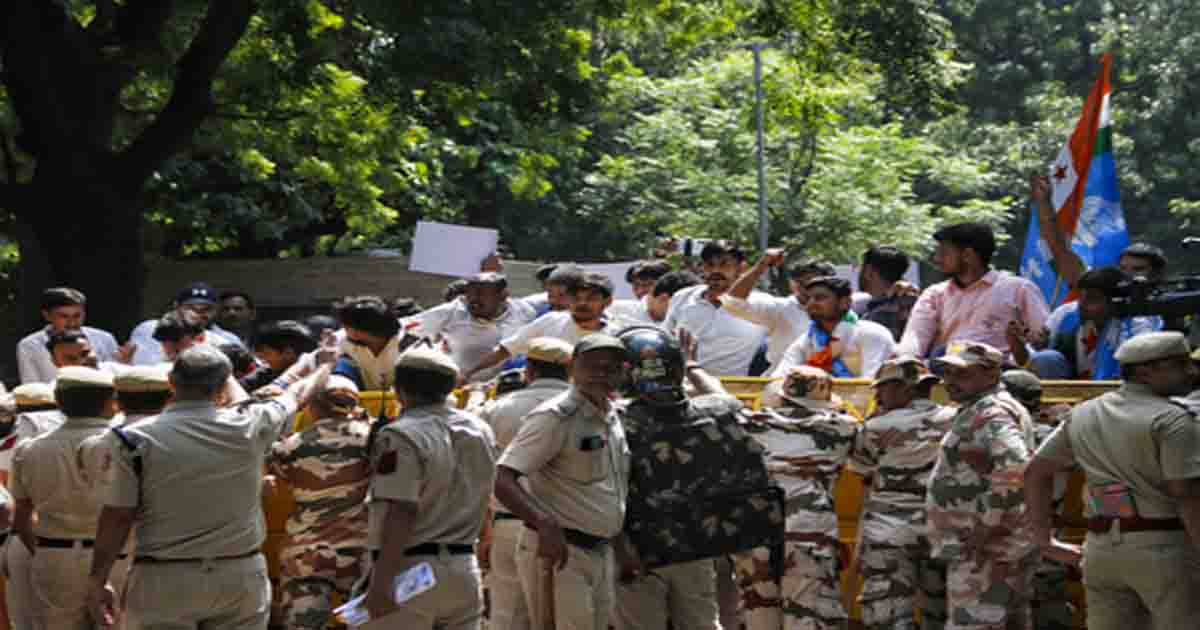
New Delhi, Oct 6: Association of Students for Alternative Politics (ASAP), the students’ wing of the Aam Aadmi Party (AAP), said on Tuesday that it will undertake a protest march to the national capital’s Jantar Mantar on October 10 against the Chief Election Commissioner (CEC) Gyanesh Kumar.
CEC Kumar has come under fire following a media report which claimed that Election Commissioners Sukhbir Singh Sandhu and Vijay Joshi had “objected on record” to several decisions taken by the Election Commission of India (ECI), allegedly without their knowledge, specifically over the conduct of Special Intensive Revision (SIR) of electoral rolls.
In a post on the social media platform X, Eeshna Gupta, Co-in-charge of ASAP, said: “Across the country, thousands are raising their voices against the functioning of the Election Commission, demanding the resignation and prosecution of CEC Gyanesh Kumar, withdrawal of the SIR, and comprehensive reforms to the ECI.”
“Despite repeated instances of police action, manhandling and sexual assault against protesters and journalists, the movement for democratic accountability continues to grow. On October 10, ASAP will march to Jantar Mantar in New Delhi alongside student organisations, democratic groups, and individuals united around these demands,” she added.
According to a statement issued by the organisation, the protests across the country reflect “growing public concern” over the functioning of the Election Commission, with demands for the resignation and prosecution of CEC Gyanesh Kumar, the withdrawal of the SIR, and comprehensive reforms within the ECI.
Noting that thousands of students and individuals have come together in defence of constitutional and democratic values, the AAP students’ body added: “ASAP stands in solidarity with those participating in these demonstrations and with the broad demand for the protection of democratic rights, constitutional freedoms, and the right to peaceful protest. We call upon democratic organisations, student groups, and individuals committed to constitutional values to participate in the protest.”
Earlier on Tuesday, the Opposition INDIA bloc MPs launched a protest march towards the Election Commission of India (ECI) headquarters in New Delhi, demanding the resignation of the CEC.
However, the opposition leaders were stopped by security personnel midway.
Last week, the Aam Aadmi Party and several left-wing student organisations, including Students’ Federation of India (SFI) and All India Students’ Association (AISA), staged a protest against the CEC at Jantar Mantar, with several being detained by the police.
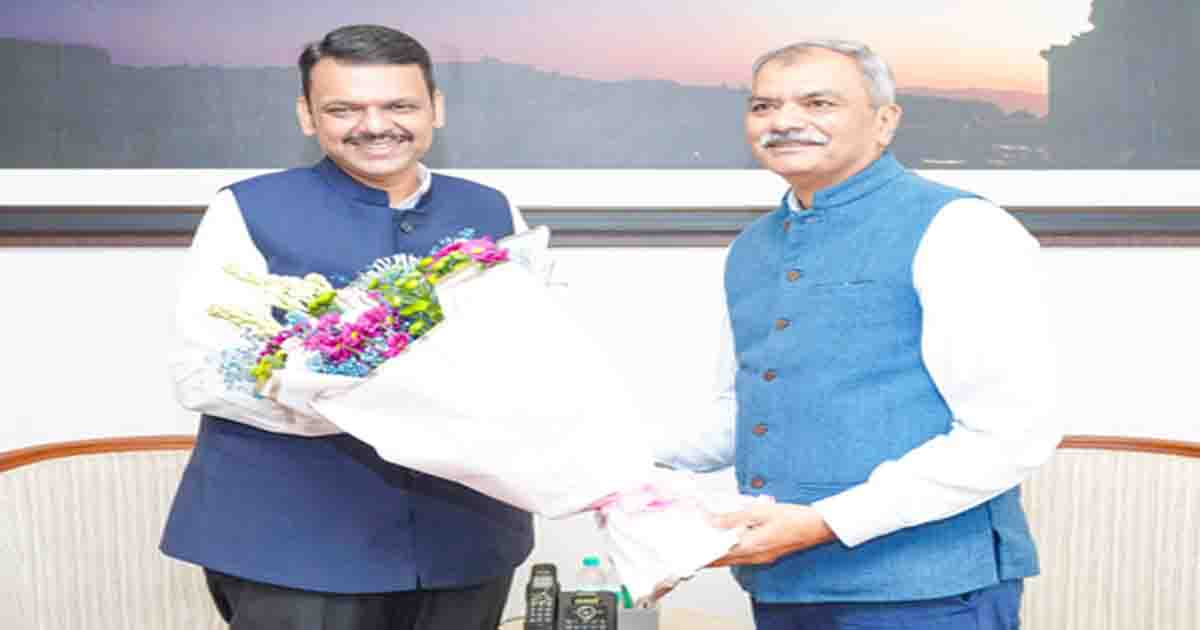
Mumbai, Oct 6: Director General of the Narcotics Control Bureau (NCB) Anurag Garg called on Maharashtra Chief Minister Devendra Fadnavis in Mumbai and discussed measures to intensify the fight against drug trafficking, an official said on Tuesday.
The NCB official said on X, “Detailed discussions were held on the various steps being undertaken by the Ministry of Home Affairs under the Whole-of-Government Approach against drug trafficking and distribution in line with the Central Government’s objective of making the country drug-free by December 2029, along with Maharashtra’s ongoing efforts and the action plan for the coming period.”
“The state continues to be at the forefront of this nationwide mission to build a drug-free Maharashtra,” said the NCB.
Earlier in August, the India-US Counter Narcotics Working Group (CNWG) Pillar I Working Group Meeting was hosted by the Narcotics Control Bureau (NCB) in a hybrid format to strengthen bilateral cooperation in combating narcotics trafficking.
The NCB shared details of the meeting on the social media platform X, stating, “The India-US Counter Narcotics Working Group (CNWG) – Pillar I Working Group Meeting was hosted by the Narcotics Control Bureau on 6 August 2026 in hybrid mode.”
The meeting brought together representatives from several Indian and US agencies. Participants from the Indian side included the NCB, Central Bureau of Narcotics (CBN), Directorate of Revenue Intelligence (DRI), Central Drugs Standard Control Organisation (CDSCO), Ministry of External Affairs (MEA), Department of Revenue and Department of Chemicals and Petrochemicals.
The US delegation included officials from the Drug Enforcement Administration (DEA), LEGAT, Office of National Drug Control Policy (ONDCP) and the US Department of State.
The discussions focused on strengthening operational cooperation, preventing the diversion of precursor chemicals, enhancing policy coordination, and advancing capacity building, said the NCB.
According to the Union Home Ministry, the NCB has strengthened international cooperation in drug control through bilateral agreements with 27 countries and Memoranda of Understanding (MoUs) with 19 countries.
India holds regular Director General (DG) Level/bilateral talks on drug-related matters with countries such as Myanmar, Nepal, Thailand, Sri Lanka, Indonesia, Singapore and the US, said an official.
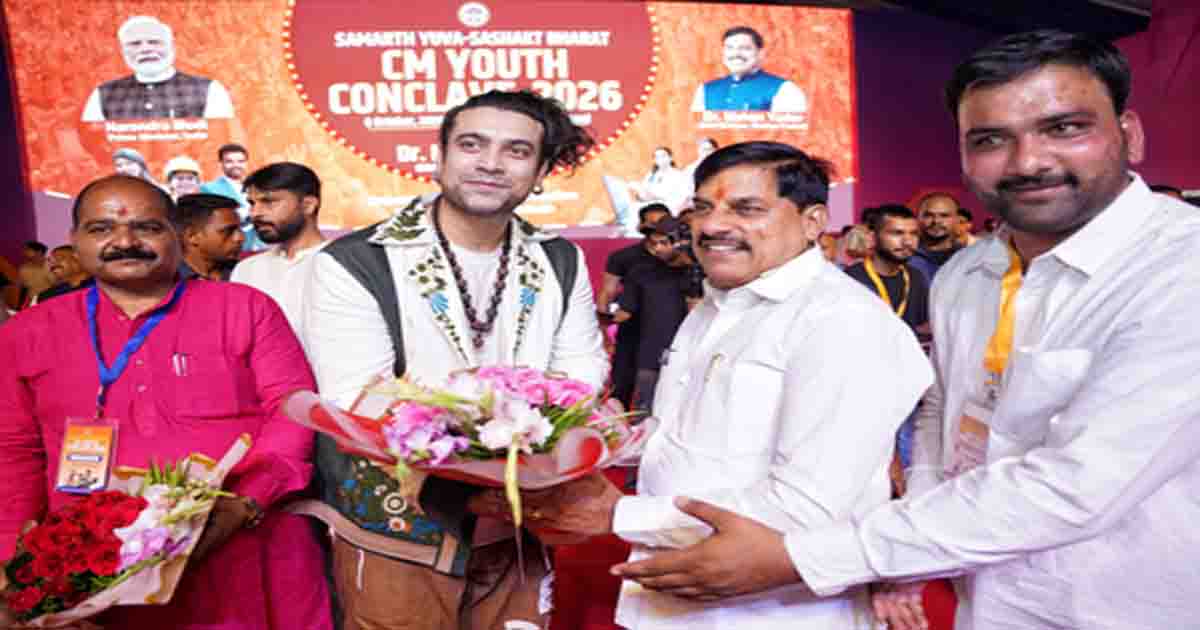
Bhopal, Oct 6: Chief Minister Mohan Yadav on Tuesday promised to expand employment and career opportunities for young people in Madhya Pradesh, announcing twice-yearly MPPSC examinations and separate job-oriented tests from 2027 as part of a series of youth-focused measures.
Addressing the CM Youth Conclave-2026 at Lal Parade Ground in Bhopal, Yadav declared 2027 as the “Year of Youth” and said the state government would focus on education, skill development, research, innovation and employment. “Next year will be observed as the Year of Youth. Therefore, the PSC examination will be conducted twice a year,” Yadav said.
He said separate employment-oriented examinations would also be conducted in addition to the regular MPPSC examinations, describing the initiative as a first in the country. The Chief Minister announced that 12 medical colleges and 12 new skill-oriented universities would be established in the state.
The government plans to open one medical college every month, he said. Free coaching for competitive examinations will be provided in government colleges across all districts, while state-of-the-art laboratories for Artificial Intelligence and advanced computing will be established, Yadav said.
The government will also increase the monthly stipend for research scholars from Rs 16,000 to Rs 25,000. Each university will be provided a dedicated fund of Rs 1 crore for research activities, he said. “An Idea Fund of Rs 5 crore will be created at the state level to encourage innovation and startup ideas among the youth,” Yadav said.
The state will enrol one lakh youths in skill-enhancement programmes and facilitate job placements through placement agencies. An Investor Meet will also be organised next year to help generate employment opportunities, he said.
Yadav said the measures were aimed at creating a wider ecosystem for young people to pursue higher education, research, entrepreneurship and jobs within the state.
During his address, the Chief Minister also referred to Prime Minister Narendra Modi’s public life and urged the youth gathered at the conclave to applaud and greet him.
“Under the leadership of our Prime Minister, tomorrow marks 25 years of Prime Minister Narendra Modi’s public life. Today, all of us in Bhopal and the youth of the entire state should applaud and extend our greetings to Prime Minister Narendra Modi,” Yadav said.
According to government data cited at the event, around 36.74 crore people aged 15-29 years live in India, accounting for nearly 26 per cent of the country’s population.

AAP students’ wing to join protests against CEC on Oct 10

Drug-free Maharashtra: CM Devendra Fadnavis, NCB D-G Anurag Garg discuss strategy

CM Yadav promises more job opportunities for youth, announces twice-yearly PSC exams

Maha CM launches ‘Participate Mumbai’ platform to boost CSR-led development partnerships

Navi Mumbai International Airport steps up mobility, hospitality and airline support

Gift to President Putin part of PM Modi bid to globally display India’s heritage

PM Modi’s warm camaraderie with Putin, Xi on full display at BRICS Summit

Corporators of all parties in trouble! Corporators of all major parties including Shiv Sena (UBT), BJP and Congress are facing legal challenges.

Complaint against Netflix & Mukesh Chhabra for inappropriate language on ‘India’s Got Latent 2’

Maha Congress stages agitation against Gyanesh Kumar
-

 Crime4 years ago
Class 10 student jumps to death in Jaipur
-

 Maharashtra2 years ago
Mumbai Local Train Update: Central Railway’s New Timetable Comes Into Effect; Check Full List Of Revised Timings & Stations
-

 Maharashtra2 years ago
Mumbai To Go Toll-Free Tonight! Maharashtra Govt Announces Complete Toll Waiver For Light Motor Vehicles At All 5 Entry Points Of City
-

 Maharashtra2 years ago
False photo of Imtiaz Jaleel’s rally, exposing the fooling conspiracy
-

 National News2 years ago
Ministry of Railways rolls out Special Drive 4.0 with focus on digitisation, cleanliness, inclusiveness and grievance redressal
-

 Maharashtra2 years ago
Maharashtra Elections 2024: Mumbai Metro & BEST Services Extended Till Midnight On Voting Day
-

 National News2 years ago
J&K: 4 Jawans Killed, 28 Injured After Bus Carrying BSF Personnel For Poll Duty Falls Into Gorge In Budgam; Terrifying Visuals Surface
-

 Crime2 years ago
Baba Siddique Murder: Mumbai Police Unable To Get Lawrence Bishnoi Custody Due To Home Ministry Order, Says Report