
International News
B’desh: ‘July fighters’ threaten countrywide roadblocks to press 3-point demand

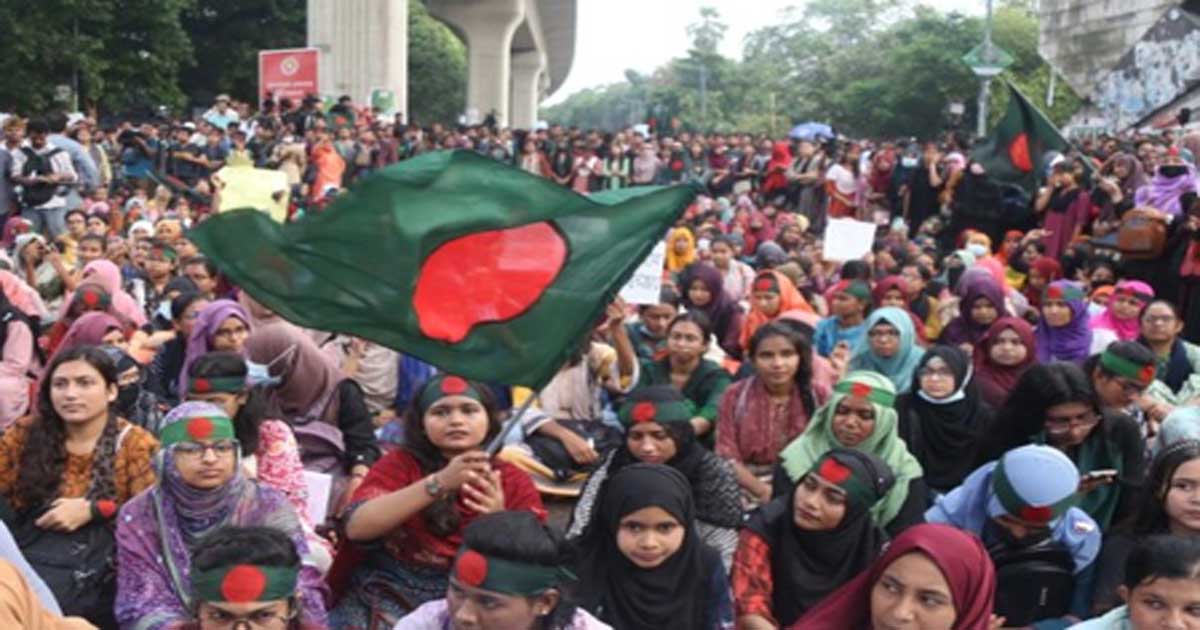
Dhaka, Oct 18: In the wake of tensions surrounding the signing of the July Charter, a group of protestors in Bangladesh, named ‘July Joddha Sangsad’ (July fighters), have announced to block all highways across the country on Sunday, pressing home their three demands, local media reported.
The demands include state recognition of those killed in the July 2024 protests; recognition of the injured as ‘July warriors’; and a specific roadmap for the rehabilitation of the families of the deceased, and legal assistance for the wounded.
Amid the boycott of several political parties, including the National Citizen Party (NCP) and four leftist parties, the July Charter was signed on Friday by the Chief Advisor to the interim government, Muhammad Yunus, members of the National Consensus Commission and leaders of different political parties.
Addressing a press conference in Dhaka, Masud Rana, chief organiser of the group ‘July Joddha Sangsad’, announced the blockade on Friday evening following clashes between the protestors and police near the Parliament complex, where they had staged a demonstration against the signing of the July Charter.
“We have been attacked. To protest the attack on us and implement our three-point demands, a blockade will be observed on the highways of every district and city from 2 pm to 5 pm on Sunday,” Bangladeshi Bengali daily ‘Jugantor’ quoted Masud as saying.
Masud accused the police of attacking their “peaceful sit-in”, saying, “We were holding our demonstration peacefully in front of the Parliament gate. Administrative officials had spoken to us, and we assured them that our programme would continue until 10 am without any disorder. But instead of initiating any discussion or solution, they suddenly launched an attack on us.”
On Friday afternoon, violent clashes broke out between law enforcers and protesters at the Parliament premises just hours before the July Charter Signing ceremony, leaving several injured.
Confirming the development, Inspector Faruk, in charge of the Dhaka Medical College Hospital (DMCH) police outpost, said that 36 people, who were involved in the July protests, were injured and were admitted to the Dhaka Medical College Hospital.
Reports suggest that as the protestors tried to rally and press their demands, the military and police personnel blocked them at the Parliament gate, triggering violence.
The police responded with a baton charge and fired three rounds of sound grenades to disperse the crowd.
Subsequently, protesters retaliated by vandalising police vehicles, including a car and a bus and setting fire to the temporary reception room, control room, and furniture installed outside the Parliament building for the July Charter Signing Ceremony.
The protestors warned the interim government, saying, “If we have to spill our blood again, the second administration will not survive either,” citing how the protests last year toppled the former Awami League government, paving the way for the Muhammad Yunus-led interim government to assume power.
Bangladesh has been gripped by numerous protests and extreme lawlessness since the democratically elected government of the Awami League, led by former Prime Minister Sheikh Hasina, was overthrown during violent protests last year.

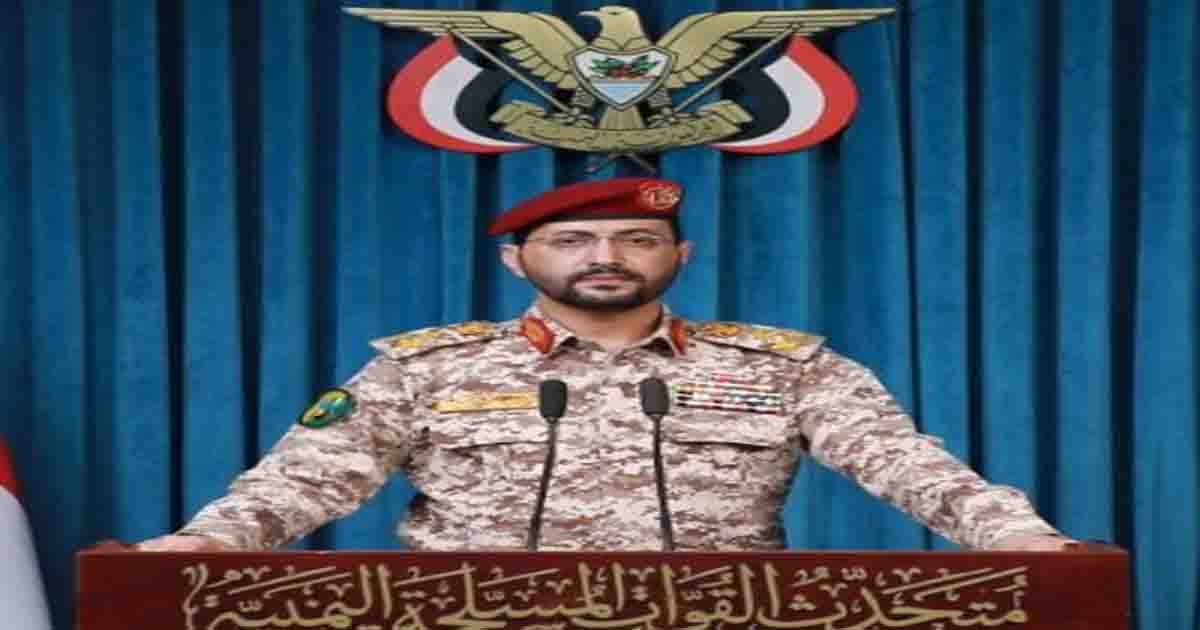
Yemen’s Houthis on Thursday claimed that its forces engaged in a rescue operation after Saudi Arabia targeted an Indian yacht carrying 14 Indian nationals near Zuqar Island in the southern Red Sea.
Citing preliminary information, Houthi military spokesperson Yahya Saree said that the Yemeni Armed Forces would provide more details later.
“The Saudi enemy is targeting an Indian yacht near Zuqar Island, carrying 14 people of Indian nationality, according to preliminary information. The Yemeni Armed Forces are rescuing them and will provide more details later. This reckless act by the Saudi enemy in targeting it threatens international navigation in the Red Sea, and the international community must stop the Saudi enemy from these reckless actions,” Saree posted on X.
The claim comes a day after an Indian national was among two people killed, while two other Indian nationals were injured, in an attack on King Fahd International Airport in Saudi Arabia’s Dammam on Wednesday, the Indian Embassy said on Thursday.
“Saudi authorities have informed that one Indian national was among two people who unfortunately lost their lives in the attack on Dammam airport yesterday night and two Indian nationals were injured. We are ascertaining further details and contacting the affected families. Our thoughts and prayers are with the family and loved ones of the deceased and we wish speedy recovery of the injured,” it said in a post on X.
India on Thursday condemned the continued attacks on civilian and energy infrastructure in Saudi Arabia, including the attack on King Fahd International Airport and Aramco’s Shaybah oil field, while expressing hope that peace and normalcy would return to the region at the earliest.
“We strongly condemn the continued attacks on civilian and energy infrastructure in Saudi Arabia, including the attack on King Fahd International Airport in Dammam and Saudi Aramco’s Shaybah oil field in the Eastern Province on October 21. These attacks have unfortunately resulted in civilian deaths and injuries,” the MEA said in a statement.
India had also expressed its solidarity with Saudi Arabia in safeguarding its sovereignty.
“We also reiterate that the attacks on civilian and critical infrastructure are completely unacceptable and must cease immediately. We stand in solidarity with the people and the Government of the Kingdom of Saudi Arabia in safeguarding its sovereignty, and hope that peace and normalcy would return to the region at the earliest,” read the MEA statement.
The Houthis, for their part, have accused the Saudi forces for carrying out air and missile strikes across Yemeni provinces this week.
International News
Indian national among two people killed in attack on Saudi Arabia’s airport, two Indians injured

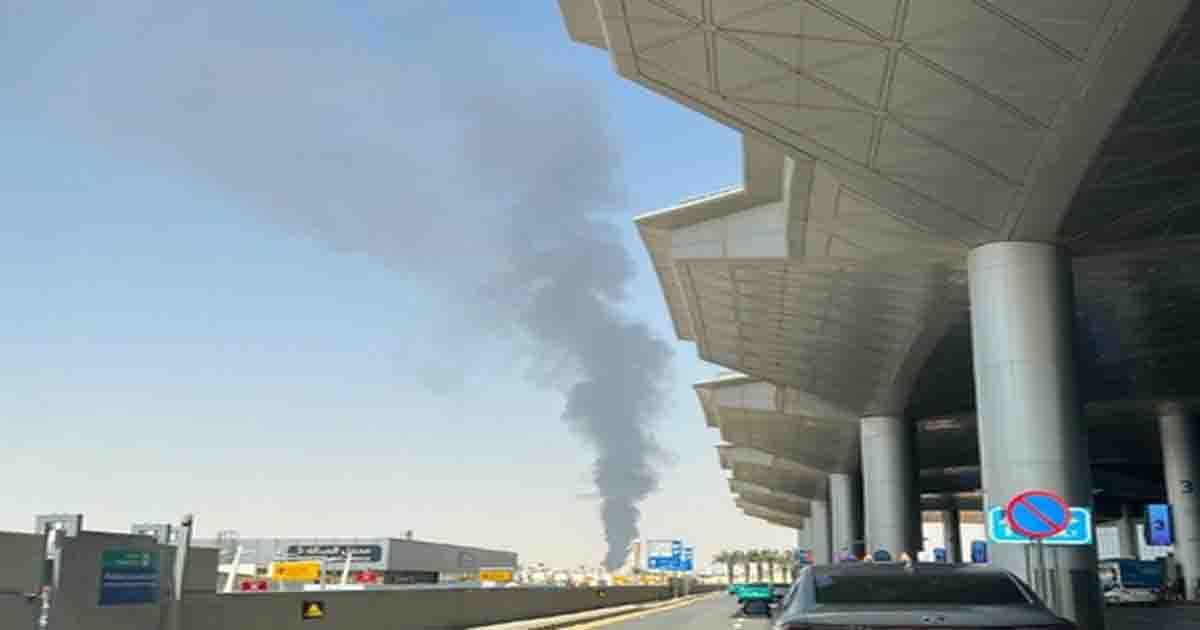
An Indian national was among two people killed, while two other Indian nationals were injured, in an attack on King Fahd International Airport in Saudi Arabia’s Dammam on Wednesday, the Indian Embassy said on Thursday.
The Indian Embassy in Saudi Arabia said that it is ascertaining further details and contacting the affected families.
“Saudi authorities have informed that one Indian national was among two people who unfortunately lost their lives in the attack on Dammam airport yesterday night and two Indian nationals were injured. We are ascertaining further details and contacting the affected families. Our thoughts and prayers are with the family and loved ones of the deceased and we wish speedy recovery of the injured,” it said in a post on X.
Earlier in the day, Saudi Arabia’s General Authority of Civil Aviation (GACA) said that two people were killed in the attack that targeted King Fahd International Airport on Wednesday, which includes one Indian resident and one Saudi citizen. It further said that eight people were injured in the attack.
In a statement shared on X, the GACA said, “Further to its earlier statement regarding the attack that targeted King Fahd International Airport in Dammam on the evening of Wednesday, October 21, 2026, corresponding to 10 Jumada Al-Awwal 1448 AH, the General Authority of Civil Aviation (GACA) clarifies that the number of fatalities has risen to (2) after an additional fatality was confirmed, involving (1) Saudi citizen and (1) Indian resident. The number of the injured remains at (8), including (1) Saudi citizen, and residents of the following nationalities: (2) Indian, (2) Yemeni, (2) Bangladeshi, and (1) Nepalese. Their injuries range from minor to critical, and they are receiving the necessary medical care at several hospitals.”
Saudi Arabia’s GACA stated that it is working in coordination with the relevant authorities to complete the damage assessment, verify the safety of the facilities, and take the necessary measures to ensure the safety of passengers and personnel and maintain the security and safety of Saudi Arabia’s civil aviation system. It further mentioned that airport operations have resumed and air traffic has returned to normal.
On Sunday, the Indian Embassy advised its nationals in Saudi Arabia to take due precautions under the prevailing situation, visit the nearest safe place in case of an aerial attack, and refrain from filming, publishing or sharing any information, photos and videos regarding the ongoing events.
“The Indian Community in Saudi Arabia is advised to take due precautions under the prevailing situation. In case of an aerial attack, immediately proceed to the nearest safe place (inside a building or an interior room away from windows), and refrain from filming, publishing, or sharing any information, photos, or videos related to the ongoing events,” it posted on X.
The Embassy said that its officials continue to visit hospitals where Indian nationals are undergoing treatment and are in constant touch with their families and providing necessary assistance.
International News
First Russian tanker carrying 40,000 tonnes of diesel to depart in 2-3 days: Putin
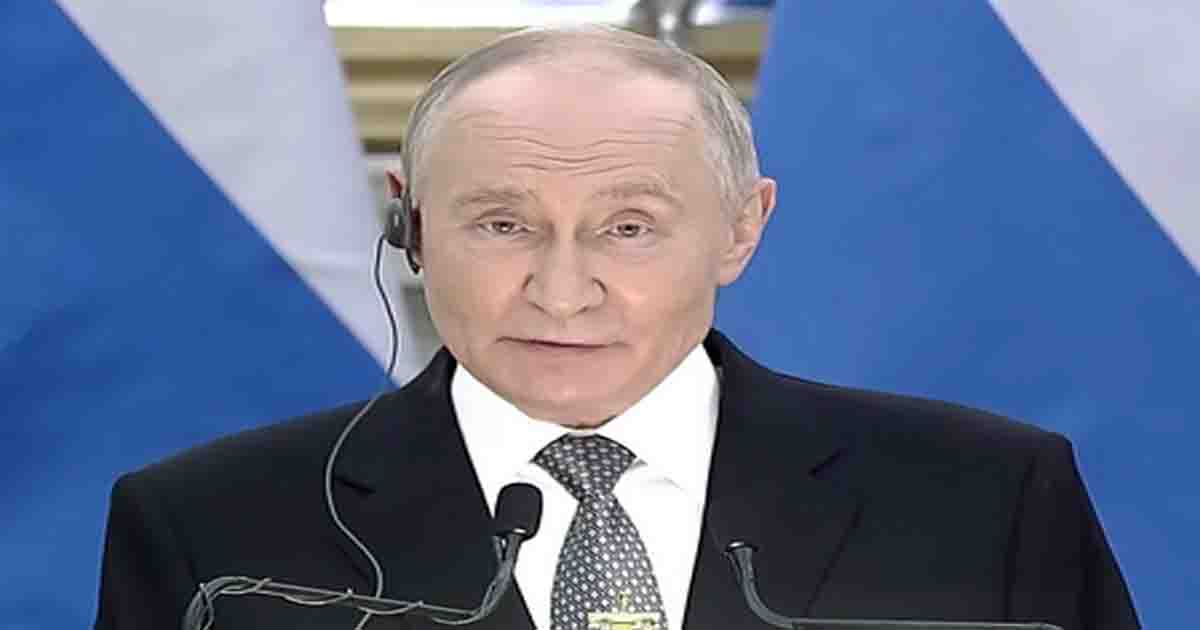
The first tanker carrying 40,000 tonnes of Russian diesel fuel will depart in two to three days, Russian President Vladimir Putin said Wednesday.
Russia is currently preparing shipments of several tankers carrying diesel fuel, Putin said during his meeting with US special envoy Steve Witkoff at the Konstantinovsky Palace in St. Petersburg.
The fuel is for the global and US markets, Xinhua news agency reported.
Putin held a telephone conversation with US President Donald Trump on October 9, during which considerable attention was paid to prospects for resolving the Ukraine crisis, the Kremlin said.
On global energy developments, Russia reaffirmed its readiness to supply oil and petroleum products to US and global markets, according to the Kremlin.
On Tuesday, Ukrainian President Volodymyr Zelensky discussed proposals for various ceasefire formats with Witkoff in Oslo, Norway, Ukraine’s state-run Ukrinform news agency reported.
The meeting was also attended by Norwegian Prime Minister Jonas Gahr Store and Finnish President Alexander Stubb.
Speaking after the meeting, Zelensky said the talks also covered security guarantees for Ukraine and the country’s recovery.
Following the meeting, Witkoff travelled to St. Petersburg in Russia, where he met Russian leadership to discuss peace efforts.
Global energy markets have faced sustained pressure since the outbreak of hostilities in the Middle East earlier this year. The conflict has triggered what the International Energy Agency termed the “largest supply disruption” in the history of global fuel markets.
Last week, US President Donald Trump said that “massive” oil, gas and mineral exploration is “getting ready” to begin in Greenland.
Writing on his Truth Social platform, Trump suggested that experts believe the Arctic island owns an amount of “easily available oil” which is “far greater than that of almost any land, anywhere in the world.”
He did not provide any specific estimates or elaborate on the exploration plans.
Trump also said any future attack on the United States would “have to come across Greenland, where our Defence will routinely knock down drones, missiles, or any other form of weapon not yet even conceived.”
Trump’s remarks followed a wide-ranging deal signed in late September by the United States, Denmark and Greenland to expand the US military presence on the island.
The deal came after months of pressure from Trump, who repeatedly called for acquiring the autonomous Danish territory and did not rule out the use of military or economic means. The proposal has drawn strong opposition from NATO allies and Greenlanders.

Aasif Khan’s wife reveals actor suffered major heart attack, calls out Qazi Touqeer for mocking him

Four more arrested in Tiger Shroff firing case; two women accused of supplying weapons, accused remanded to police custody till October 26.

Swiggy’s Q2 net loss widens sequentially to Rs 922 crore

12 injured in attack on Dalit family in Patna, two critical

Saved 14 Indians in Red Sea after yacht attacked by Saudi Arabia, claim Houthis

Rahul, Cong ecosystem want to force regime change: BJP after Neha Bora praises B’desh Gen-Z protest

Attack on democratic rights: INDIA Bloc leaders on detentions of anti-ECI protestors

BJP pays tribute to ex-President Abdul Kalam, recalls his enduring influence on generations of India’s youth

INDIA bloc begins protest march against ECI

Maha Congress stages agitation against Gyanesh Kumar
-

 Crime4 years ago
Class 10 student jumps to death in Jaipur
-

 Maharashtra2 years ago
Mumbai Local Train Update: Central Railway’s New Timetable Comes Into Effect; Check Full List Of Revised Timings & Stations
-

 Maharashtra2 years ago
Mumbai To Go Toll-Free Tonight! Maharashtra Govt Announces Complete Toll Waiver For Light Motor Vehicles At All 5 Entry Points Of City
-

 Maharashtra2 years ago
False photo of Imtiaz Jaleel’s rally, exposing the fooling conspiracy
-

 National News2 years ago
Ministry of Railways rolls out Special Drive 4.0 with focus on digitisation, cleanliness, inclusiveness and grievance redressal
-

 Maharashtra2 years ago
Maharashtra Elections 2024: Mumbai Metro & BEST Services Extended Till Midnight On Voting Day
-

 National News2 years ago
J&K: 4 Jawans Killed, 28 Injured After Bus Carrying BSF Personnel For Poll Duty Falls Into Gorge In Budgam; Terrifying Visuals Surface
-

 Crime2 years ago
Baba Siddique Murder: Mumbai Police Unable To Get Lawrence Bishnoi Custody Due To Home Ministry Order, Says Report