
National News
Ayushman Bharat scheme has given benefits of 7,000 cr to needy: PM Modi

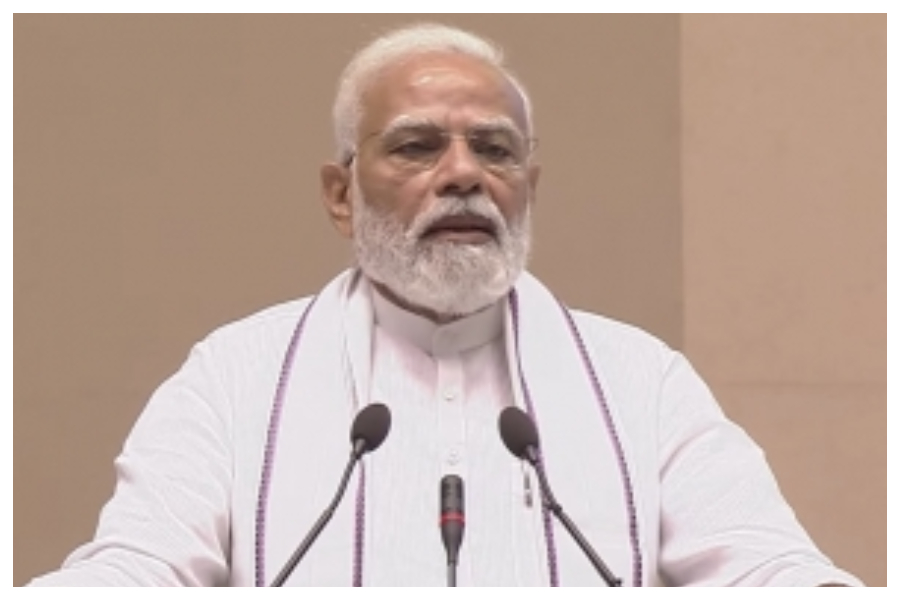
Prime Minister Narendra Modi on Friday said the Government’s ambitious Ayushman Bharat scheme has provided Rs 7,000 crore benefit to the poor of the country.
He was inaugurating MA Nayak Healthcare Campus and Nirali Multispecialty Cancer Hospital in Navsari.
The hospital has been built in memory of Nirali, the granddaughter of L&T Group chairman Anil Nayak, who died of cancer at the age of two-and-a-half years.
“Three years ago, I had the opportunity of laying the foundation stone for a cancer hospital here. It is being inaugurated today. This is a sentimental tribute to Nirali, whom we lost much before time. The hospital shows the determination of Nirali’s family that no one should face a similar trauma. People of Navsari and surrounding districts will have an access to emergency treatment.”
To empower the poor, it was necessary to make health care accessible, he said adding: “We have been working with a holistic approach to improve the health sector for the last eight years. We have emphasised on good nutrition, clean lifestyle, behavioural issues related to preventive health and that’s the primary responsibility of the government.”
Highlighting the achievements of his government, Modi said that his government strives to save the poor and middle class from the cost of treatment. The efforts reflects on the health of women and children today. Health indicators continue to improve. Gujarat ranks first in the Policy Commission’s third sustainable goal list.
“When I was the Chief Minister, we started the “Mukhyamantri Amrutam Yojana” by which poor families get assistance of Rs 2 lakh. More than 40 lakh poor patients of Gujarat are benefited. We launched Ayushyaman Bharat on lines of “Amrutam Yojna”. It has helped the tribals, Dalits, the deprived as well as the women. They have received Rs 7,000 crore benefit so far.” In the last 20 years, Gujarat Health Centres has achieved many new milestones. Work has been done at every level. As many as 600 Din Dayal Aushadhalays have been set up in the cities and 14 lakh poor women benefitted from the “Chiranjeevi scheme”.
On the state’s philanthropic tradition and public participation, the PM said that as the capacity grows, so will the service value of Gujarat. “We are constantly striving towards modernising India. The higher the people’s participation, the faster the country’s capacity will increase and generate better results,” he stated.
PM Modi also congratulated Anil Nayak’s family for the multicare hospital which has modern facilities for cancer care, cardiac, paediatric, general surgery, world class CT MRI are also provided in the hospital. The hospital has a total of 400 beds, of which 100 beds will be started on a primary basis at present.
Earlier, the Prime Minister performed the ‘bhumipujan’ of the government medical college and hospital to be built at a cost of Rs 542 crore here.


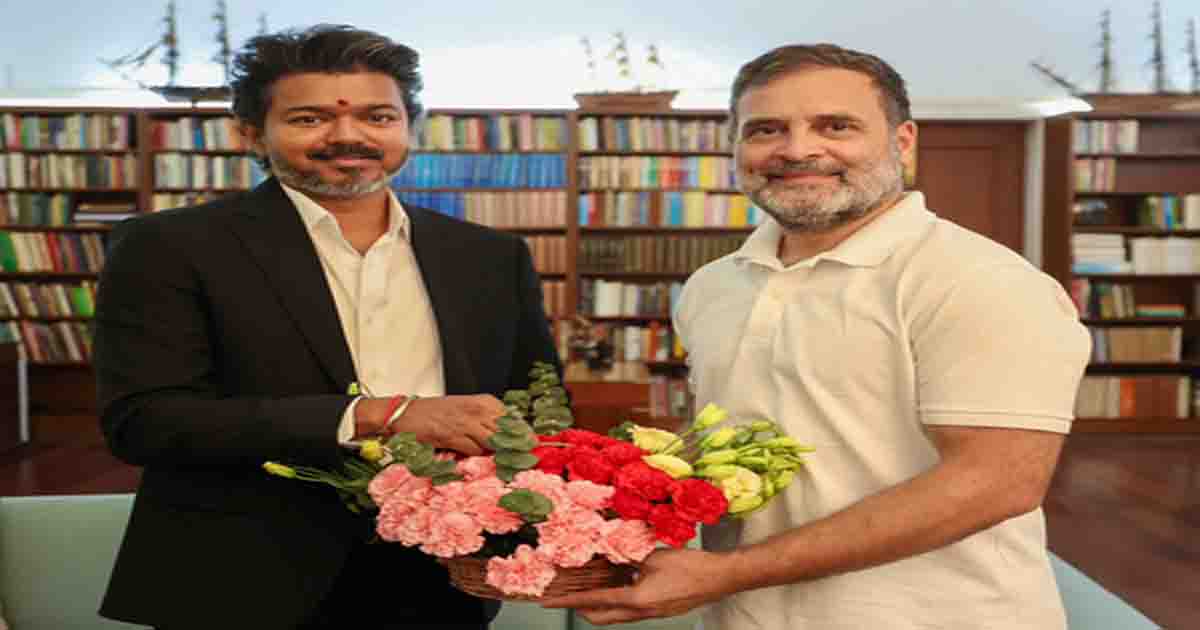
Chennai, Oct 10: Lok Sabha Leader of the Opposition (LoP), Rahul Gandhi, will address students at Chennai Island Grounds on Saturday as part of his ‘Chhatron Ki Goonj (Voice of Students)’ outreach programme, which focusses on concerns over examination irregularities, paper leaks, rising tuition fees and unemployment.
During his visit, LoP Gandhi is also scheduled to meet Tamil Nadu Chief Minister Vijay at his Neelankarai residence.
The meeting is slated for 1.30 p.m., an hour after the Congress leader’s expected arrival at Chennai airport.
The student interaction, scheduled for 5 p.m., follows similar programmes in Kota in Rajasthan, Pune and Nashik in Maharashtra, and Indore in Madhya Pradesh.
The initiative provides a platform for students to discuss difficulties within the education system and challenges in securing employment.
The Tamil Nadu Congress has made extensive arrangements for the Chennai event, erecting a large covered pavilion at Island Grounds.
State Congress president Manickam Tagore inspected the venue and reviewed preparations with senior party leaders. He was accompanied by senior party in-charge Ghulam Ahmad Mir, joint in-charge Nivedit Alva, ministers Rajesh Kumar and Viswanathan, and Congress legislature party leader Tharahai Cuthbert.
According to organisers, more than one lakh students registered through a website and QR codes circulated across Tamil Nadu.
However, entry to the interaction will be restricted to 10,000 students who have been issued identification cards.
Students from several colleges across the State are expected to attend. Organisers have installed large screens outside the pavilion to enable people gathered beyond the main enclosure to watch the proceedings.
Drinking water and toilet facilities have also been arranged at the venue. Seating provisions have been made for around 350 invited education representatives, including college principals, professors and former principals.
The programme will centre on issues affecting students, including NEET and other examination paper leaks, increasing educational expenses and uncertainty over job opportunities.
LoP Gandhi’s outreach seeks to bring these concerns into direct discussion with young people. Apart from his meeting with CM Vijay and the student interaction, LoP Gandhi is expected to meet Congress functionaries and other prominent political leaders at the Taj Connemara hotel during his Chennai visit.
The State Congress leadership has been coordinating arrangements for the event, including student participation and facilities at the venue, ahead of his arrival. LoP Gandhi is scheduled to leave Chennai for New Delhi on a flight at 9.30 p.m.
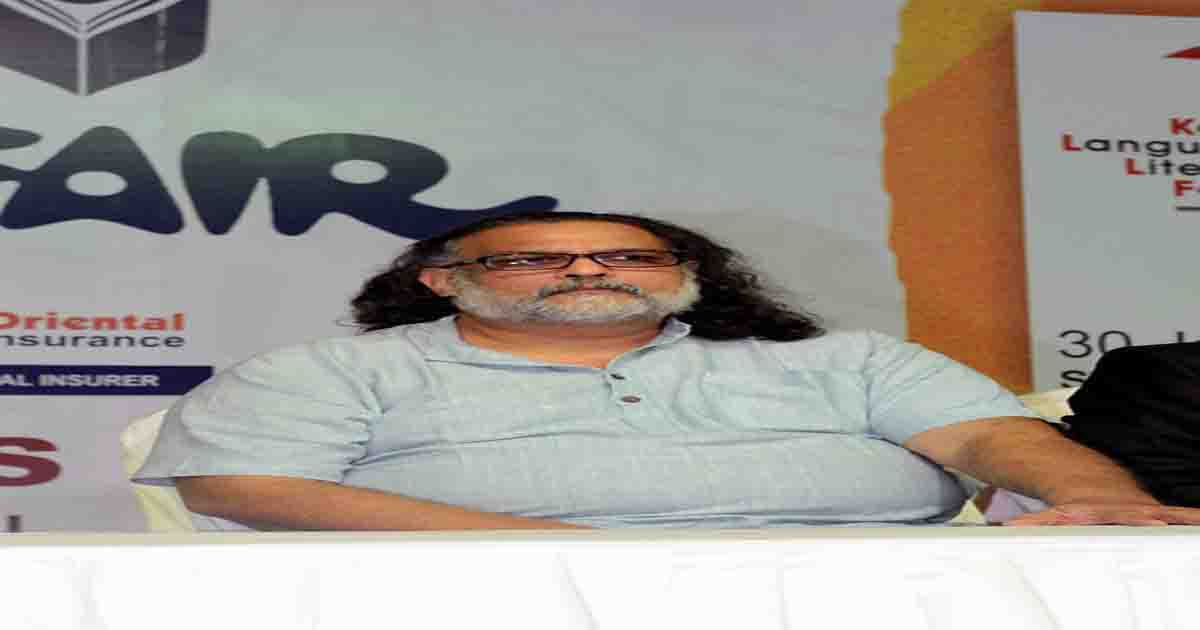
New Delhi, Oct 10: Mumbai Police on Saturday detained Mahatma Gandhi’s great-grandson Tushar Gandhi while he was on his way to August Kranti Maidan.
Tushar Gandhi, president of ‘Hum Bharat Ke Log’, posted a message on X on Friday, sharing a poster calling upon Mumbaikars to join him for a protest at August Kranti Maidan at 3.30 p.m. on Saturday in support of the Cockroach Janta Party’s (CJP) protest at Jantar Mantar in Delhi.
Zonal DCP Ragasudha R said that the Gamdevi police station had not received any application regarding the proposed gathering and that no permission had been granted so far.
A police official said that permission had not been granted for the gathering.
“August Kranti Maidan is not a protest site, and no one can protest there due to a High Court order. No application regarding this matter has been received by the Gamdevi Police Station,” the official said.
Tushar Gandhi, the great-grandson of Mahatma Gandhi, was also present on stage during the October 2 protest at Mumbai’s Shivaji Park.
Meanwhile, security arrangements have been tightened across Delhi ahead of the proposed protest by the CJP and the All India Students’ Association (AISA) at Jantar Mantar. The groups have called on their supporters to protest against Chief Election Commissioner Gyanesh Kumar over allegations of manipulation of voter lists.
With memories of the July 20 unrest and police action during protests over the NEET paper leak still fresh, authorities have imposed extensive security restrictions. The earlier protests had preceded the resignation of Education Minister Dharmendra Pradhan.
More than 20,000 police personnel and members of the Central Armed Police Forces (CAPF) have been deployed across the national Capital to maintain law and order.
Entry and exit gates at 45 Delhi Metro stations have remained closed since Friday night, while train services to two of Delhi’s major railway stations have been cancelled. With permission for the proposed protest yet to be granted, police have intensified surveillance across the city amid concerns over a possible large-scale mobilisation.
Earlier on Saturday, YouTuber Dhruv Rathee was detained by Delhi Police from his residence in Sector 56, Gurugram, ahead of the CJP’s proposed protest at Jantar Mantar.
CJP founder Abhijeet Dipke and other party members, Saurav Das and Ashutosh Ranka, were also detained at Delhi’s Indira Gandhi International (IGI) Airport upon their arrival ahead of the announced protest, police said on Saturday.
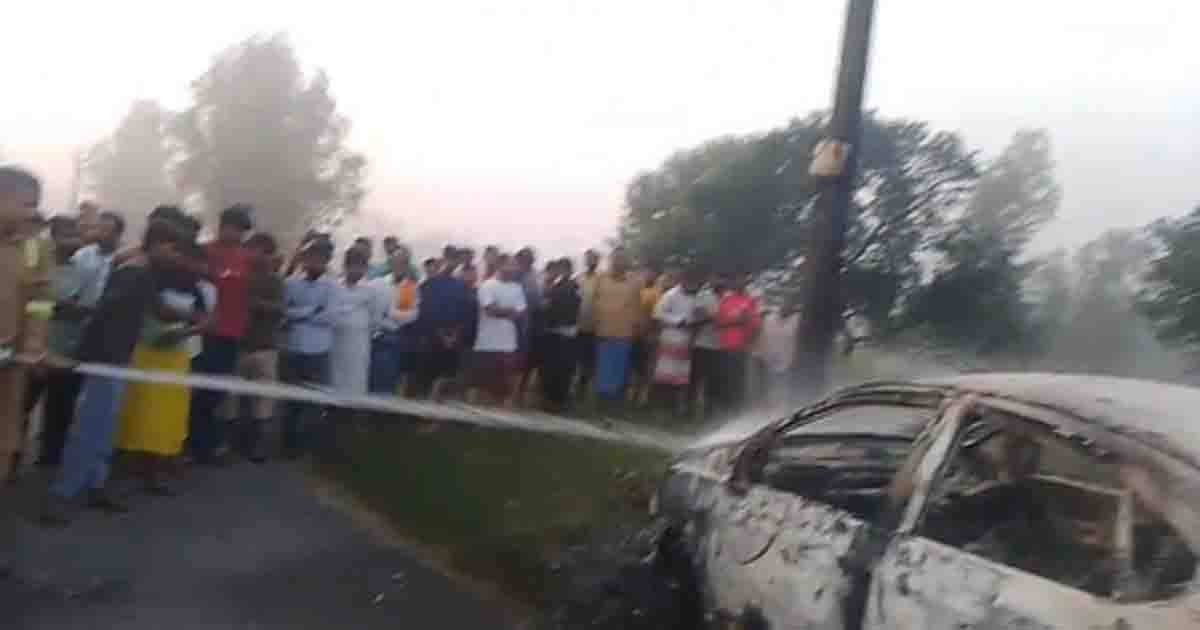
Barabanki, Oct 10: A tragic incident triggered panic in the Safdarganj area of Uttar Pradesh Barabanki district on Saturday morning after a moving car suddenly caught fire, killing the driver, who was trapped inside the vehicle and could not escape.
The incident occurred around 6 a.m. near the Pyarepur Saidpur Canal, approximately 33 km from the district headquarters. The fire spread rapidly, engulfing the entire car within minutes and leaving the driver with no opportunity to get out.
Upon receiving information about the incident, fire brigade personnel and Safdarganj police rushed to the spot. Firefighters managed to bring the blaze under control after considerable effort. However, the car had already been completely engulfed in flames, and the driver died at the scene.
The deceased was identified as Pradeep Kumar, a resident of Pyarepur village in Barabanki district. Police identified him through the vehicle’s registration number.
According to the available information, Kumar was returning to Barabanki after dropping off passengers at Lucknow airport when the incident occurred. He was the only person inside the car at the time of the accident.
Safdarganj police station in-charge Ajay Prakash Tripathi said the body had been taken into custody and further legal proceedings had been initiated.
The sudden outbreak of fire in the moving vehicle has raised questions about what caused the blaze and why the driver could not escape. However, the exact cause of the fire remains unknown.
Police have launched an investigation to establish the circumstances surrounding the incident and determine how the fire broke out. Officials said further details would emerge after the investigation.
The incident caused a stir in the area, with locals gathering at the spot as emergency services attempted to extinguish the flames. The death of the driver inside the vehicle left residents shocked.
Authorities are examining the circumstances leading to the fire, and the findings of the investigation are expected to establish the cause of the blaze and the sequence of events that led to the fatal incident.

Sanjay Raut predicts ‘major political upheaval’, says Centre fears protesters

Saira Banu recalls Dilip Kumar drying Nana Patekar hair after he arrived home drenched in rain post ‘Krantiveer’ National Award win

LoP Rahul Gandhi to meet CM Vijay, address students in Chennai today

Congress leader Dalwai urges Fadnavis to free Maha activists detained ahead of Delhi stir

Mumbai Police detain Mahatma Gandhi great-grandson ahead of CJP protest

Gift to President Putin part of PM Modi bid to globally display India’s heritage

PM Modi’s warm camaraderie with Putin, Xi on full display at BRICS Summit

INDIA bloc begins protest march against ECI

Complaint against Netflix & Mukesh Chhabra for inappropriate language on ‘India’s Got Latent 2’

Maha Congress stages agitation against Gyanesh Kumar
-

 Crime4 years ago
Class 10 student jumps to death in Jaipur
-

 Maharashtra2 years ago
Mumbai Local Train Update: Central Railway’s New Timetable Comes Into Effect; Check Full List Of Revised Timings & Stations
-

 Maharashtra2 years ago
Mumbai To Go Toll-Free Tonight! Maharashtra Govt Announces Complete Toll Waiver For Light Motor Vehicles At All 5 Entry Points Of City
-

 Maharashtra2 years ago
False photo of Imtiaz Jaleel’s rally, exposing the fooling conspiracy
-

 National News2 years ago
Ministry of Railways rolls out Special Drive 4.0 with focus on digitisation, cleanliness, inclusiveness and grievance redressal
-

 Maharashtra2 years ago
Maharashtra Elections 2024: Mumbai Metro & BEST Services Extended Till Midnight On Voting Day
-

 National News2 years ago
J&K: 4 Jawans Killed, 28 Injured After Bus Carrying BSF Personnel For Poll Duty Falls Into Gorge In Budgam; Terrifying Visuals Surface
-

 Crime2 years ago
Baba Siddique Murder: Mumbai Police Unable To Get Lawrence Bishnoi Custody Due To Home Ministry Order, Says Report