
Crime
As drug net tightens, ISI and D-Syndicate push massive fake currency surge

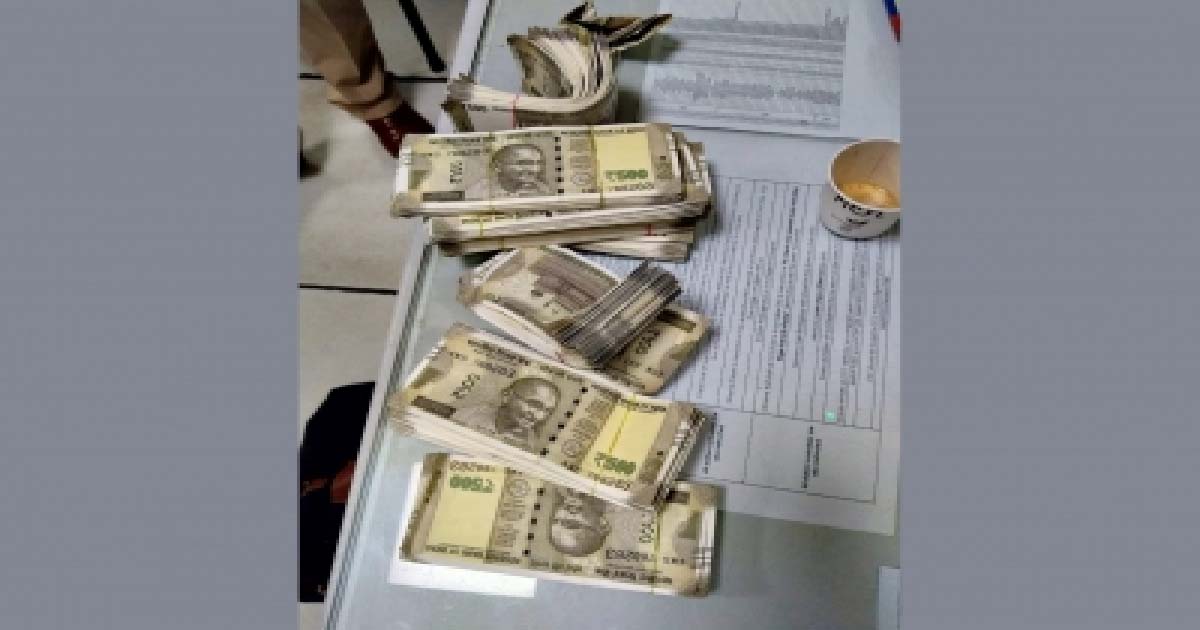
New Delhi, Dec 10: With the Indian agencies cracking down heavily on the narcotics trade, Intelligence Bureau officials have warned about an uptick in the smuggling of fake currency notes. In the past two weeks, several operations have been carried out in various parts of the country in which fake currency rackets have been busted.
The fake currency mafia is controlled by the Dawood Ibrahim syndicate, which is based in Pakistan. While the syndicate is trying to find newer routes and partners to further the narcotics trade, it is also stepping up operations relating to fake Indian currency. The ISI needs funds to resurrect its terror groups, which were largely beaten down during Operation Sindoor.
The fake currency racket had taken a slight backseat for some years, but now there are full-fledged plans to resume operations on a very large scale. Malda in West Bengal remains the main hub for this racket in India. Now with an unfriendly regime in place in Bangladesh, the ISI sees an opportunity to scale up operations.
All the fake currency that is being printed in Pakistan is first routed into Bangladesh. The ISI finds no problem in routing fake notes into Bangladesh, as Islamabad and Dhaka have close ties today. The sea route has been opened up, and the visa process is much simpler for Pakistanis, and this is being taken advantage of by the ISI.
From Bangladesh, the operatives push the fake currency into Malda, following which it is circulated across the country. Officials report that apart from West Bengal, mini modules have been set up in various parts of the country. The notes are transported either from Malda or Murshidabad in West Bengal to the rest of the country.
An official said there has been an increase in such cases, as the ISI and D-Syndicate are pushing it massively. There is a desperate need for funds as the ISI is not only trying to revive terror groups in Pakistan, but is also creating another front in Bangladesh. It wants to engage India on both fronts, and hence the simultaneous push is being made, the official explained.
These gangs operating the racket in India have been coming up with various ways to push fake notes into the market. In Gujarat, a gang that was running a money-doubling scam was busted. It was found that victims were lured into the scheme, and they were given fake Indian currency. This gang was operating mainly in Gujarat and Maharashtra, the probe has revealed.
While the Bangladesh-West Bengal route is the primary one for this racket, there is also a fresh push to smuggle these notes through the UAE into Kerala. Over the years, Kasargod in Kerala has become a major hub for smuggling fake currency notes.
M.B. Moosa, Abdul Rahman, K.M. Hamza, Kallatra Abdul Ha Khader Haji, Irabhim Soopi, K.S. Abdullah, and Kadavath Atta are the ones who have been running this racket. The notes from Pakistan would reach these persons through the UAE route.
Officials say that the Kerala route is one of the hardest to control. There is a huge rush at the airports owing to the number of people visiting the Gulf nations. The ISI has taken advantage of the stress on the security mechanism at these airports in Kerala. Most of the time, these persons get away because the customs formations are understaffed. This makes checking everyone difficult.
Further, the detection has also become very difficult owing to the quality of the notes that are being printed. An Intelligence Bureau official said that the notes are printed in government printing presses in Lahore, Karachi, Quetta, Multan, and Peshawar. These are the same places where the official Pakistani Rupee is also printed. Hence, the quality of the Indian notes being printed in Pakistan is of very superior quality, and this is making detection a challenge, the officer explained.
The gravity of the problem in India, courtesy this fresh push by Dawood and the ISI, can be seen in a report published by the US State Department. “India faces an increasing inflow of high-quality counterfeit currency, which is produced primarily in Pakistan but smuggled to India through multiple international routes. Criminal networks exchange counterfeit currency for genuine notes, which not only facilitates money laundering but also represents a threat to the Indian economy,” the report says.



The son of a police Sub-Inspector was shot dead, while another son sustained critical injuries in a shooting incident in Bihar’s Gaya district, police said on Tuesday. Two suspects have been detained for questioning.
The incident took place near Siddharthpuri Colony, close to Nauranga Aahar, under the Mufassil police station area in Manpur.
The victims were identified as Ranu Singh, 30, who died of his injuries, and his elder brother, Monu Singh, 32, who is undergoing treatment at Magadh Medical Hospital and is reported to be in critical condition.
Their father, Sudhanshu Shekhar alias Pintu Singh, is a police Sub-Inspector currently posted in Motihari.
According to family members, the brothers had a dispute with someone in the neighbourhood and were subsequently called to a location over the phone.
When they arrived, armed assailants allegedly opened fire on them, leaving both brothers seriously injured. Ranu later succumbed to his injuries.
Police personnel rushed to the scene after receiving information and recovered three spent cartridge casings during an inspection.
Two suspects have been taken into custody and are being questioned to establish their alleged involvement and identify others connected with the attack.
A dispute over gambling is suspected to have triggered the shooting, although police have not officially confirmed the motive.
Local residents have claimed that the area is associated with gambling and the sale of illicit liquor.
The brothers originally belonged to Jethian village under the Atri police station area of Gaya district.
The family had been residing at their house in Siddharthpuri Colony, Road No. 1, under the Mufassil police station limits.
The shooting has caused concern among residents and members of the police department, given that the victims are the sons of a serving police officer.
Police said the investigation was underway to establish the sequence of events, ascertain the motive and identify all those involved in the attack.
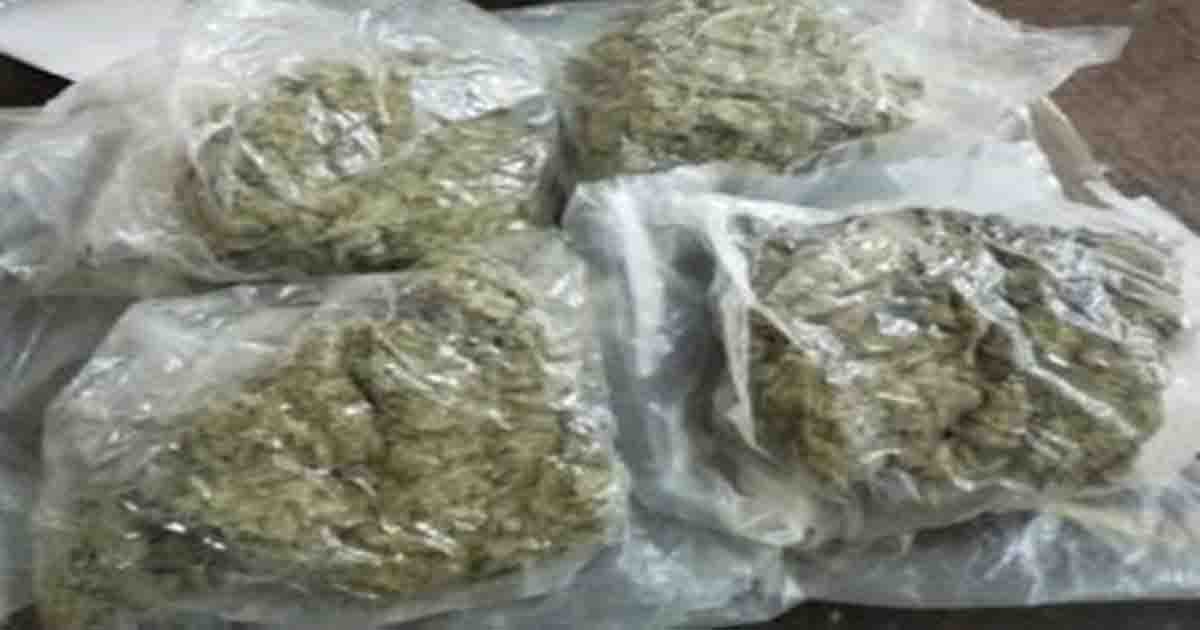
Mexican drug cartels are increasingly exploring local production of narcotics in India, using rented houses as clandestine manufacturing units as tighter border security makes trafficking large consignments riskier, officials said.
Officials said the trend has emerged where the cartel bosses have instructed their India operatives to find small houses and turn them into narco production units. This is the modus operandi being increasingly followed by the Mexican cartel Cártel de Jalisco Nueva Generación. This makes the job of the law enforcement agencies harder, as this is one of the most powerful, influential, and violent transnational criminal syndicates, the official added.
This cartel has realised that India is a major market. It does not want to risk sending big consignments as several of them have been apprehended. The major busts recently by the Indian agencies have shaken up the cartels. Moreover, the cartels understand that there is a huge demand for narcotics in the Indian market and hence, it would be safer to cater to the same by producing locally and at unassuming locations, the official said.
The funds to set up these units are directly pumped in from Mexico. It first transfers funds to Dubai using cryptocurrency, following which it makes its way into India through hawala channels. The modus operandi indicates the operations are deliberately kept low-key.
Officials said the syndicate’s operatives prefer houses in densely populated neighbourhoods, where unusual activity may attract less attention. This helps evade suspicion. Another official said the cartels have taken up multiple houses for rent and have turned them into units to produce narcotics. These units not only pose a threat to national security but also cause environmental hazards. There is a lot of untreated chemical waste these units generate. This has led to contamination of drainages, water bodies, and the local soil.
The Narcotics Control Bureau (NCB) recently appealed to homeowners and property dealers to remain vigilant while giving houses on rent. “Citizens are encouraged to report suspicious indicators such as unusual chemical odors, unexplained storage of drums, or heavy lab equipment to the National Narcotics Helpline MANAS at 1933, reinforcing the nation’s collective stride toward a Nasha Mukt Bharat,” an NCB advisory read.
The Mexican cartels are relatively new players in India. Initially, China was the primary source for synthetic drugs produced by the Mexican cartel. However, after regulations on fentanyl and methamphetamine were tightened, operations moved to India.
Officials say that operations are currently on a smaller scale. This cartel is still testing the waters and, over a period of time, would look to set up many more home production units in India.
The focus is also more on areas around New Delhi and Greater Noida. However, these cartels have links in Mumbai as well and would eventually look to spread their operations to more parts of the country, officials say.
In the most recent operation, the NCB seized 380 kg of methamphetamine worth Rs 50 crore from units in Greater Noida. The facility was equipped with glass reaction vessels, filtration machinery, large-capacity heating mantles and laboratory apparatus. This signals that the unit was set up in a manner to produce huge quantities of narcotics.
An Intelligence Bureau official said the recruitment pattern of the cartels is interesting. If a unit has to be set up in Delhi or Noida, it would never hire locals for the job as their faces are familiar. The preference is for Nigerian nationals or youth from the northeast. Those hired pose as students and then take up the accommodation.
In the case of students, the suspicion of the landlords or property dealers is comparatively less. Moreover, these persons do not bargain hard when it comes to the rent, and this is another reason why landlords give their homes on rent.
For the NCB and other law enforcement agencies, this adds another dimension in the battle against drugs. It is harder to track such units as they are in unassuming locations, and this is exactly what the cartel has in mind as it plans to expand operations to more parts of the country, an official said.
Delhi Police have arrested a father-son duo within two hours of registering an attempt-to-murder case following an assault with a sharp-edged weapon in the Harsh Vihar area, officials said on Tuesday.
The incident took place around 5 p.m. on October 18 near Gullu Ka Mandir, Gali No. 1, Saboli Khadda, Part-II, within the jurisdiction of Harsh Vihar police station.
According to the police, the injured, identified as Ashish, 34, an employee of the Municipal Corporation of Delhi (MCD), was sitting with his co-worker, Sonu Sagar, when an argument broke out over a monetary dispute involving Pratap Singh. During the altercation, Pratap Singh’s 26-year-old son, also named Ashish, and another grandson joined in and assaulted the victim with a sharp-edged object.
The accused subsequently fled the scene, while the injured was taken to Guru Teg Bahadur (GTB) Hospital by his friend.
Following the incident, an FIR was registered at Harsh Vihar police station under Sections 109(1) and 3(5) of the Bharatiya Nyaya Sanhita (BNS).
A dedicated police team led by Inspector Tej Dutt Gaur, Station House Officer (SHO) of Harsh Vihar police station, was formed under the supervision of ACP Nand Nagri Gaurav Kumar Tripathi. The team used CCTV footage, human intelligence and technical surveillance to identify and apprehend the two accused within two hours of the case being registered.
During the investigation, police found that the dispute allegedly stemmed from Rs 3,500 that Pratap Singh had given to Sonu Sagar to help secure an MCD job for his son, Rahul. Pratap Singh allegedly suspected that Sonu had retained the money and demanded its return, triggering the confrontation.
The arrested accused have been identified as Pratap Singh, 54, and his son Ashish, 26. Police said neither accused has any previous criminal involvement.
Further investigation into the case is underway.

Police Sub-Inspector son shot dead, elder offspring critical in Gaya; two suspects detained

Mexican cartels eye India expansion, turn rented homes into local drug production units

Violence is wrong, weakens democracy: Shiv Sena (UBT) leader on Sanjay Raut Albania protest remarks

Father-son duo arrested in Delhi Harsh Vihar for attempt to murder

Kareena Kapoor, Hema Malini and Anil Kapoor celebrate triumph of good over evil on Dussehra

Rahul, Cong ecosystem want to force regime change: BJP after Neha Bora praises B’desh Gen-Z protest

BJP pays tribute to ex-President Abdul Kalam, recalls his enduring influence on generations of India’s youth

Attack on democratic rights: INDIA Bloc leaders on detentions of anti-ECI protestors

INDIA bloc begins protest march against ECI

Maha Congress stages agitation against Gyanesh Kumar
-

 Crime4 years ago
Class 10 student jumps to death in Jaipur
-

 Maharashtra2 years ago
Mumbai Local Train Update: Central Railway’s New Timetable Comes Into Effect; Check Full List Of Revised Timings & Stations
-

 Maharashtra2 years ago
Mumbai To Go Toll-Free Tonight! Maharashtra Govt Announces Complete Toll Waiver For Light Motor Vehicles At All 5 Entry Points Of City
-

 Maharashtra2 years ago
False photo of Imtiaz Jaleel’s rally, exposing the fooling conspiracy
-

 National News2 years ago
Ministry of Railways rolls out Special Drive 4.0 with focus on digitisation, cleanliness, inclusiveness and grievance redressal
-

 Maharashtra2 years ago
Maharashtra Elections 2024: Mumbai Metro & BEST Services Extended Till Midnight On Voting Day
-

 National News2 years ago
J&K: 4 Jawans Killed, 28 Injured After Bus Carrying BSF Personnel For Poll Duty Falls Into Gorge In Budgam; Terrifying Visuals Surface
-

 Crime2 years ago
Baba Siddique Murder: Mumbai Police Unable To Get Lawrence Bishnoi Custody Due To Home Ministry Order, Says Report