
National News
Andhra disburses Rs 708 crore towards fee reimbursement

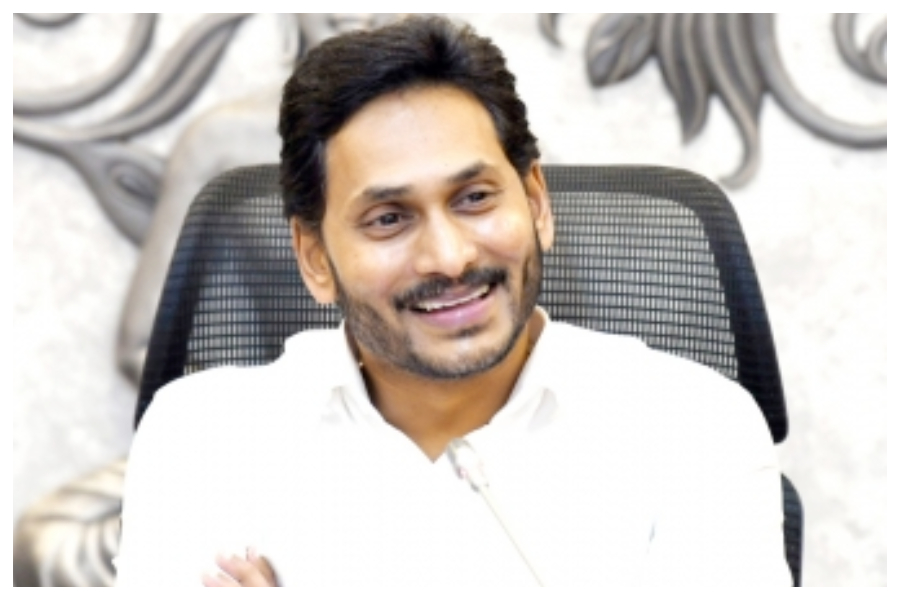
The Andhra Pradesh government on Wednesday disbursed Rs 708 crore to 10.82 lakh students as fee reimbursement under its flagship scheme Jagananna Vidya Deevena.
The amount was credited to the bank accounts of beneficiaries towards fee reimbursement for October – December 2021 quarter.
Chief Minister Y. S. Jagan Mohan Reddy, who transferred the money, reiterated that poverty should not be a hindrance for pursuing higher education
The government had also decided to disburse regular payments on a quarterly basis.
Education is the only solution to eradicate poverty. If a child in a village is educated, the entire village can benefit from it. Further, the government is ensuring to reduce college dropouts across the state. Debt settlement can make a huge difference to lead to successful completion of course/education,” he said.
Under the government’s flagship Jagananna Vidya Deevena, the total fee reimbursement would be directly transferred to the accounts of mothers of the students.
Jagan Mohan Reddy recalled an incident during his padaytra wherein a father narrated how his son committed suicide as the fees could not be paid.
The Chief Minister said that full fee reimbursement was brought in to make education accessible to the poor, especially fulfilling the dream of pursuing higher education without burdening their families.
The government has so far provided assistance of Rs 9,274 crore under Jagananna Vidya Deevena and Jaganna Vasathi Deevena (Lodging and boarding charges). This includes the fee reimbursement arrears of Rs 1,778 crore kept by the previous government, Rs 6969 crore for Jagananna Vidya Deevena, and Rs 2305 crore for Jaganna Vasathi Deevena.
The Chief Minister also noted that there is a significant increase in gross enrollment in schools with the implementation of Amma Vodi. Under this scheme, the government is providing Rs 15,000 assistance to all the mothers who send their children to school.
“We are also making significant changes to the higher education syllabus and taking steps towards job creation,” the Chief Minister added.
The government has not only been providing assistance to the students on fee reimbursement but to their lodging and boarding charges too under Jagananna Vasathi Deevena. The scheme would give assistance of Rs 20,000 to all eligible students pursuing degrees, engineering, and medicine while Rs 15000 for polytechnic students and Rs 10,000 for ITI students in two installments every year.
He said that the second tranche of Vasati Deevena will be credited on April 5 at a public event.
As part of the reforms in the education sector, bilingual textbooks have been introduced, English medium schools with CBSE curriculum are made available, and students are given Vidya Kanuka kits with uniforms, workbooks, notebooks, along with nutritious midday meals under Jagananna Gorumuddha.
He said that the admissions in government schools were increased by 6.5 lakh as students from private schools were shifting to government schools.
Ministers Adimulapu Suresh, Pinepe Viswaroop, Chief Secretary Dr Sameer Sharma, APSCHE Chairman K. Hemachandrareddy, Minority Welfare Special Secretary Gandham Chandradu, and other senior officials were present.

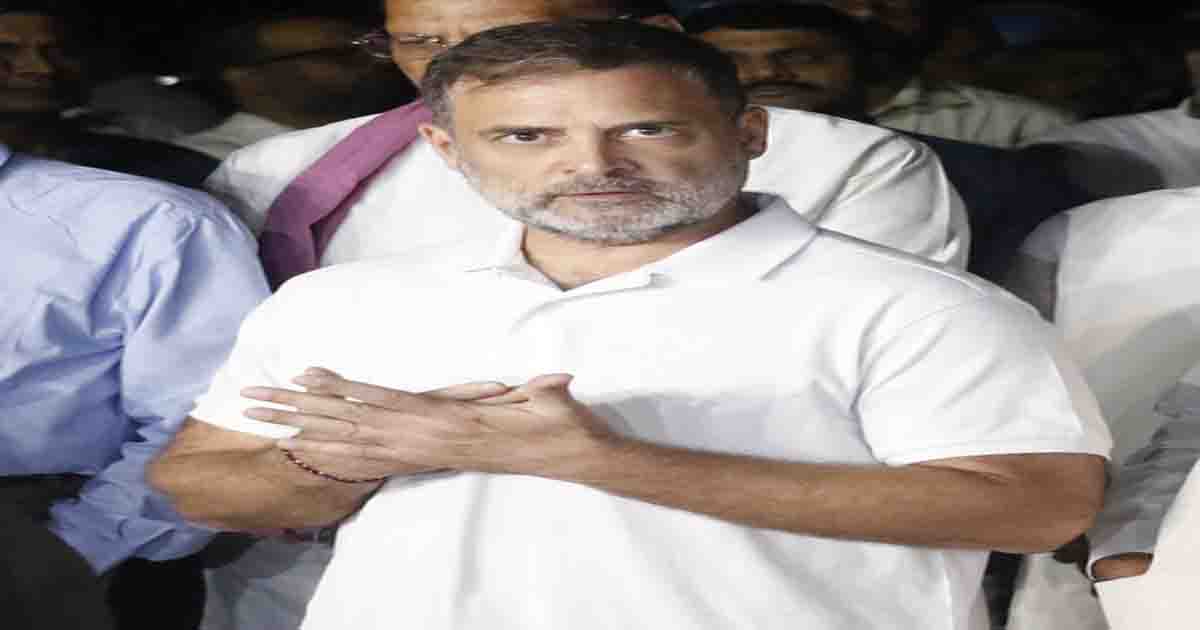
The Supreme Court on Tuesday deferred the hearing on a plea filed by Leader of Opposition in the Lok Sabha Rahul Gandhi and other INDIA bloc leaders challenging the Election Commission of India’s (ECI) Special Intensive Revision (SIR) of electoral rolls.
The Bench of Chief Justice of India (CJI) Surya Kant and Justices Joymalya Bagchi and V. Mohana directed the petitioners to file their response to the ECI’s affidavit within 10 days.
It also granted the poll panel the liberty to file an additional affidavit, if required, within the same period.
The matter will be taken up after the Diwali vacation.
The plea, filed by Rahul Gandhi and 12 other Opposition leaders, alleges large-scale voter deletions and irregularities in the SIR exercise.
The petitioners have challenged the manner in which the electoral roll revision is being conducted.
The respondents in the matter include the ECI, Chief Election Commissioner Gyanesh Kumar and Election Commissioners Sukhbir Singh Sandhu and Vivek Joshi.
The Supreme Court had issued notice to the poll panel on October 15 and directed that the petition be tagged with other pleas already pending before it, challenging the validity of the SIR exercise in various states.
The CJI Kant-led Bench had also indicated that it would examine the conduct of one of the petitioners at the next hearing, later clarifying that the petition filed on behalf of Shiv Sena (UBT) leader Sanjay Raut would be entertained provisionally, subject to his explaining his conduct.
The direction followed controversy over Raut’s remarks concerning CJI Surya Kant after the latter declined to meet Rahul Gandhi and Congress president Mallikarjun Kharge to receive a memorandum on the SIR exercise.
The CJI had observed that holding a meeting to discuss pending cases would be contrary to the constitutional principle of separation of powers.
Meanwhile, the Supreme Court Bar Association (SCBA) has filed a criminal contempt petition against Raut and journalist Nikhil Wagle over their remarks against the CJI.
The apex court issued notice to both on October 16, asking them to show cause why contempt proceedings should not be initiated against them.
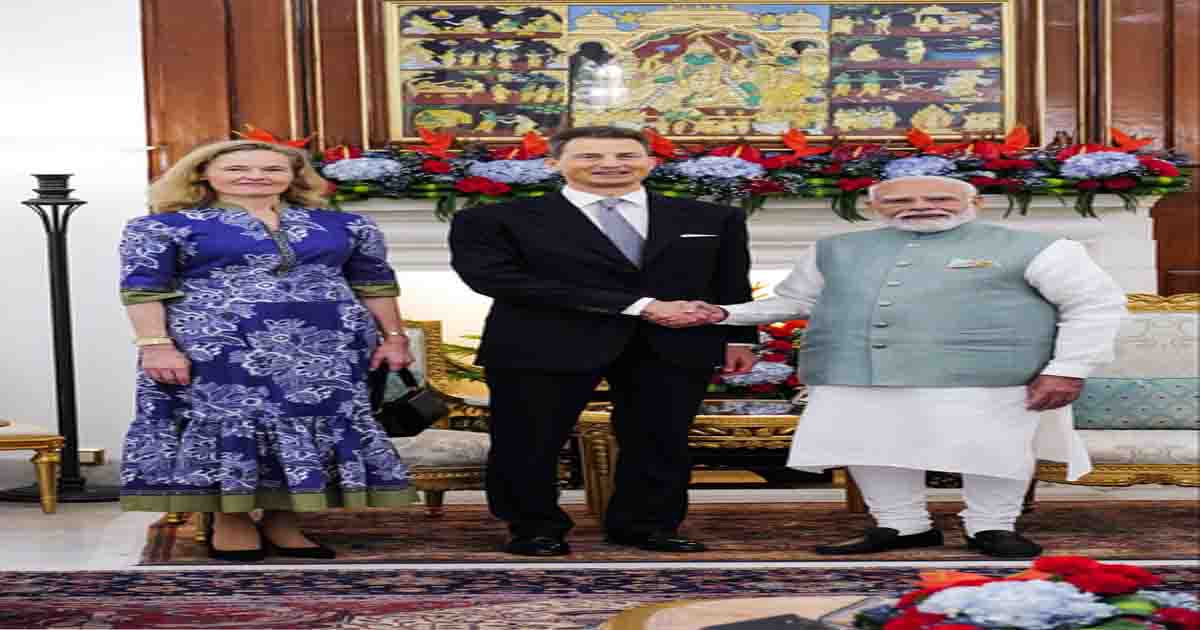
Prime Minister Narendra Modi held a meeting with Liechtenstein’s Prince Alois and Princess Sophie at the Hyderabad House in New Delhi on Tuesday, discussing ways to further deepen cooperation in trade, innovation, science and technology, skill development and people-to-people ties.
During the meeting, the two sides reaffirmed their commitment to working together to reform and strengthen multilateral institutions, including the United Nations. They welcomed the positive momentum generated by the India-European Free Trade Association (EFTA) Trade and Economic Partnership Agreement (TEPA) and reaffirmed their commitment to strengthen bilateral partnership.
“PM Narendra Modi held extensive discussions with H.S.H. Hereditary Prince Alois of Liechtenstein and H.R.H. Hereditary Princess Sophie at Hyderabad House today. The leaders reviewed the entire spectrum of India–Liechtenstein relations and discussed ways to further deepen cooperation in trade and investment, innovation, science and technology, skill development and people-to-people ties,” the Ministry of External Affairs (MEA) wrote on X.
“They also reaffirmed their commitment to working together to reform and strengthen multilateral institutions, including the United Nations. They welcomed the positive momentum generated by the India–EFTA TEPA and reaffirmed their commitment to further strengthening the bilateral partnership,” it added.
Earlier in the day, Prince Alois and Princess Sophie paid tribute to Mahatma Gandhi at Rajghat in New Delhi.
External Affairs Minister (EAM) S Jaishankar also called on Liechtenstein Prince and discussed bilateral ties and emerging opportunities under the India-EFTA TEPA.
“A pleasure to call on H.S.H. Hereditary Prince Alois of Liechtenstein, on a State Visit to India. Our bilateral partnership is witnessing strong momentum across a wide range of domains, driven by the opportunities enabled by India – EFTA TEPA,” the EAM posted on X after the meeting.
Prince Alois was accorded a ceremonial welcome at the forecourt of Rashtrapati Bhavan. President Droupadi Murmu and PM Modi warmly welcomed Prince Alois upon his arrival. Speaking to the reporters, Prince Alois expressed gratitude to President Murmu and PM Modi for the invitation and warm welcome and said, “I am very honoured to be in India on the occasion of Liechtenstein’s first state visit to this remarkable country.”
“This historic visit bears testimony to the importance that Liechtenstein attaches to the relationship with India,” he said.
Speaking about the conclusion of the TEPA with India, which entered into force a year ago, the visiting Prince called it a “significant milestone” in strengthening bilateral ties. “We are determined to build on this momentum and strengthen our ties with India even further.”
“In particular, we see tremendous potential in expanding our economic cooperation in areas such as innovation, advanced manufacturing, financial services, education and technology. Across these and many other areas, our two countries possess complementary strengths that we can bring together for the lasting benefit of both our countries,” Prince Alois added.
Later in the day, Finance Minister Nirmala Sitharaman and Union Minister of State for Skills Development and Entrepreneurship Jayant Chaudhary will call on Prince Alois.
Prince Alois will then meet President Droupadi Murmu, who will also host an official banquet in his honour.
National News
SC says notice issued on pregnant journalist’s plea against Rahul Gandhi, hearing on Nov 3

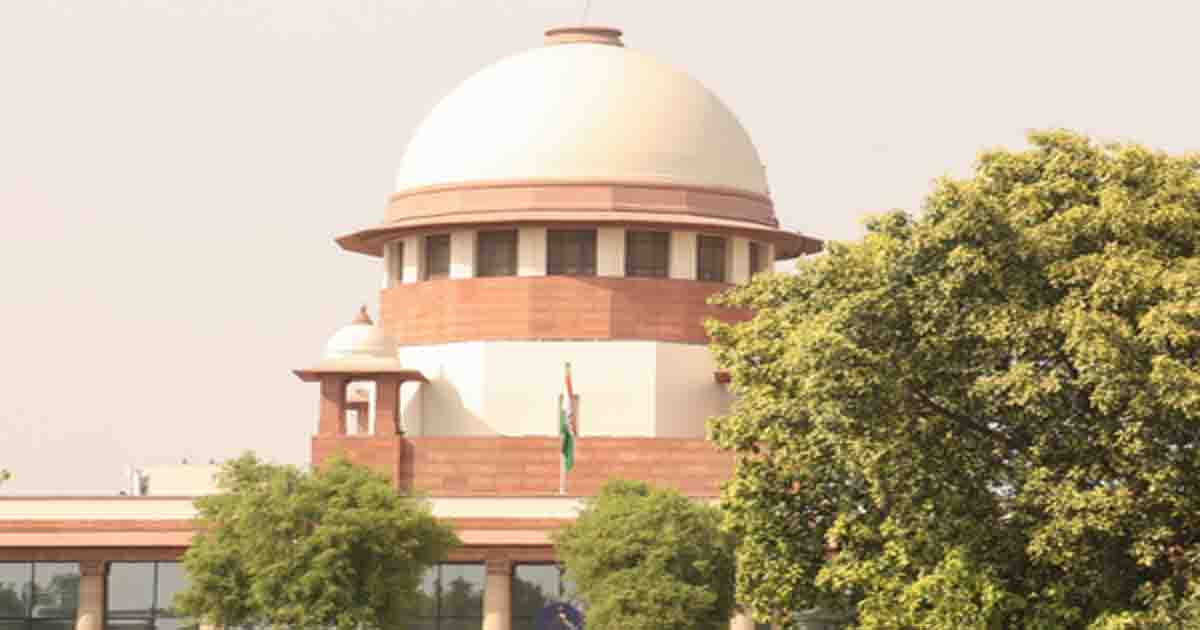
The Supreme Court on Tuesday said it would hear, on November 3, a plea concerning a pregnant woman journalist’s allegation that Leader of the Opposition in the Lok Sabha Rahul Gandhi pushed and pulled her during the Opposition INDIA bloc leaders’ march to the apex court premises over the Special Intensive Revision (SIR) of electoral rolls.
The matter was mentioned before Chief Justice of India (CJI) Surya Kant by senior advocate Gaurav Bhatia, who submitted that the application concerning the woman journalist had not yet been listed for hearing.
Responding to Bhatia, the CJI-led Bench clarified that notice had already been issued in the matter and said it would be taken up on November 3.
The journalist, Richa Parashar, who works with a news website, had alleged that Gandhi grabbed her hand and pulled her aggressively while she was covering the Opposition leaders’ march, following which she was pushed by his security personnel and fell to the ground.
She was subsequently hospitalised. Parashar, who is three months pregnant, alleged that the incident took place amid the commotion during the Opposition leaders’ protest on the Supreme Court premises on October 12.
Congress has denied the allegations, describing them as politically motivated, while party leaders and supporters have circulated videos of the incident, questioning whether the visuals establish that Gandhi pushed the journalist.
The development comes against the backdrop of a separate plea seeking safeguards against political demonstrations in and around the top court premises following the Opposition march.
On October 15, a Bench of CJI Surya Kant and Justice Joymalya Bagchi issued notice on the plea and directed the preservation of CCTV footage and other digital evidence relating to the incident.
The march was undertaken by the INDIA bloc leaders, including Rahul Gandhi, after the CJI declined a request from him and Congress president Mallikarjun Kharge to meet him and submit a memorandum on the SIR exercise.
The CJI had advised the Opposition leaders to approach the Supreme Court through the established legal process, observing that convening a meeting to discuss pending cases would be contrary to the constitutional principle of separation of powers.

SC defers hearing on Rahul Gandhi, other Oppn leaders’ plea against SIR

Maha Cyber arrests one in 4.97 lakh online share market investment fraud case

BB 20: Qazi Touqeer recalls sharing a room with Arijit Singh during struggling days before ‘Fame Gurukul’ win

Maha Cabinet approves Rs 5,000 advance to each of 1.5 crore farmers in drought-hit areas

PM Modi and Liechtenstein’s Prince discuss deepening cooperation across sectors

Rahul, Cong ecosystem want to force regime change: BJP after Neha Bora praises B’desh Gen-Z protest

Attack on democratic rights: INDIA Bloc leaders on detentions of anti-ECI protestors

BJP pays tribute to ex-President Abdul Kalam, recalls his enduring influence on generations of India’s youth

INDIA bloc begins protest march against ECI

Maha Congress stages agitation against Gyanesh Kumar
-

 Crime4 years ago
Class 10 student jumps to death in Jaipur
-

 Maharashtra2 years ago
Mumbai Local Train Update: Central Railway’s New Timetable Comes Into Effect; Check Full List Of Revised Timings & Stations
-

 Maharashtra2 years ago
Mumbai To Go Toll-Free Tonight! Maharashtra Govt Announces Complete Toll Waiver For Light Motor Vehicles At All 5 Entry Points Of City
-

 Maharashtra2 years ago
False photo of Imtiaz Jaleel’s rally, exposing the fooling conspiracy
-

 National News2 years ago
Ministry of Railways rolls out Special Drive 4.0 with focus on digitisation, cleanliness, inclusiveness and grievance redressal
-

 Maharashtra2 years ago
Maharashtra Elections 2024: Mumbai Metro & BEST Services Extended Till Midnight On Voting Day
-

 National News2 years ago
J&K: 4 Jawans Killed, 28 Injured After Bus Carrying BSF Personnel For Poll Duty Falls Into Gorge In Budgam; Terrifying Visuals Surface
-

 Crime2 years ago
Baba Siddique Murder: Mumbai Police Unable To Get Lawrence Bishnoi Custody Due To Home Ministry Order, Says Report