
Business
SAIL fortifies Indian Navy fleet with special-grade indigenous steel

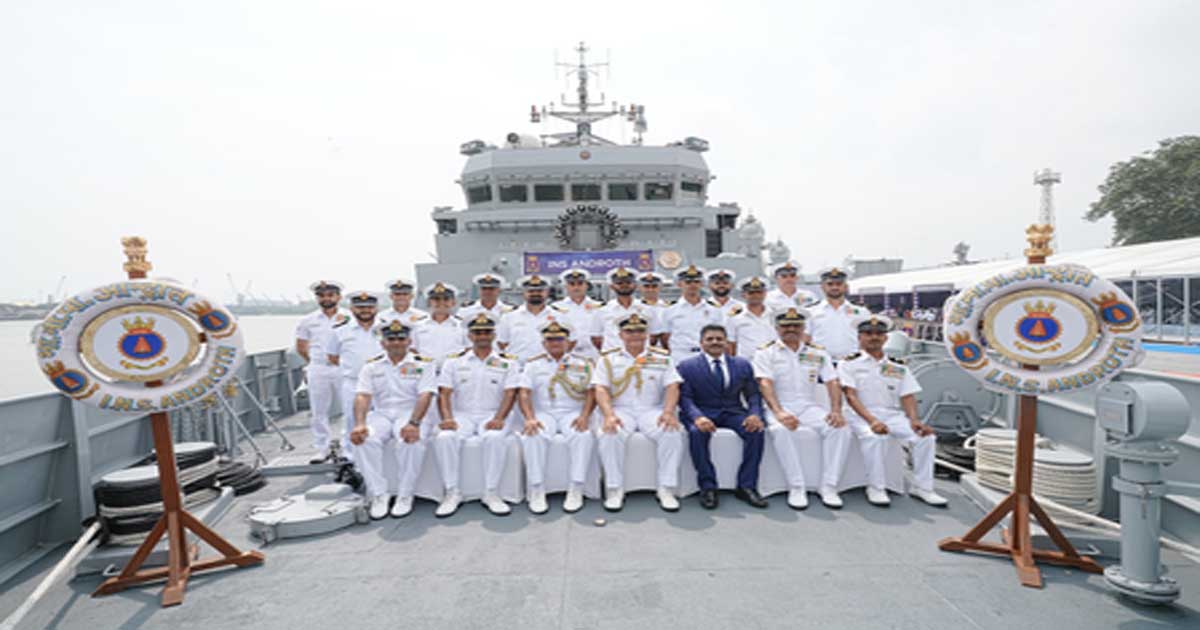
New Delhi, Oct 6: Public sector giant Steel Authority of India Limited (SAIL) has supplied the entire requirement of special grade steel for the INS Androth, commissioned into the Indian Navy on Monday, marking a proud milestone in the country’s journey to achieve self-reliance in the defence sector.
INS Androth is the second vessel in the series of Anti-Submarine Warfare Shallow Water Craft (ASW-SWC) corvettes, the first being INS Arnala, which was commissioned on 18th June this year.
SAIL has supplied the full quantity of special grade steel – including HR Sheets and Plates – for the eight ASW-SWC, including INS Arnala and Androth, being built by Garden Reach Shipbuilders and Engineers Ltd. (GRSE).
The steel was sourced from SAIL’s plants in Bokaro, Bhilai and Rourkela. INS Androth’s commissioning underscores India’s growing maritime capabilities and the nation’s commitment to “Aatmanirbhar Bharat,” according to a SAIL statement.
SAIL had also supplied 8,000 tonnes of critical-grade steel for the country’s advanced frontline warships INS Udaygiri and INS Himgiri, which were inducted into the Indian Navy fleet in August this year.
SAIL played a crucial role in building these two advanced frigates for the Indian Navy. Partnering with Mazagon Dock Shipbuilders Limited (MDL) and Garden Reach Shipbuilders & Engineers Limited (GRSE), SAIL supplied essential critical-grade hot-rolled sheets and plates from its Bokaro, Bhilai, and Rourkela Steel Plants.
By developing and providing critical-grade steel for the Indian Navy, SAIL has made a significant contribution to import substitution and defence self-reliance, directly supporting the ‘Atmanirbhar Bharat’ and ‘Make in India’ initiatives and lessening India’s dependence on imported special quality steel for defence requirements.
Special Plate Plant at RSP alone has supplied over 100,000 tonnes of critical grade steel for defence applications like tanks, warships, and missiles, the statement said.
The commissioning of INS Udaygiri and INS Himgiri powerfully demonstrates the strength and depth of a fully indigenous defence ecosystem – from the foundational steel to the intricate design and dedicated crew.
SAIL’s enduring partnership with India’s defence sector is well-established, with a proud history of supplying critical-grade steel for iconic vessels such as the INS Vikrant, INS Nilgiri, INS Ajay, INS Nistar, INS Vindhyagiri, and INS Surat, among others. This unwavering commitment solidifies SAIL’s standing as a trusted national manufacturer and a vital collaborator in the country’s ongoing naval modernisation, the SAIL statement added.

Business
Nescafé Premix Qualifies As ‘Instant Coffee’, Attracts Lower 8 Per Cent Sales Tax: Bombay HC

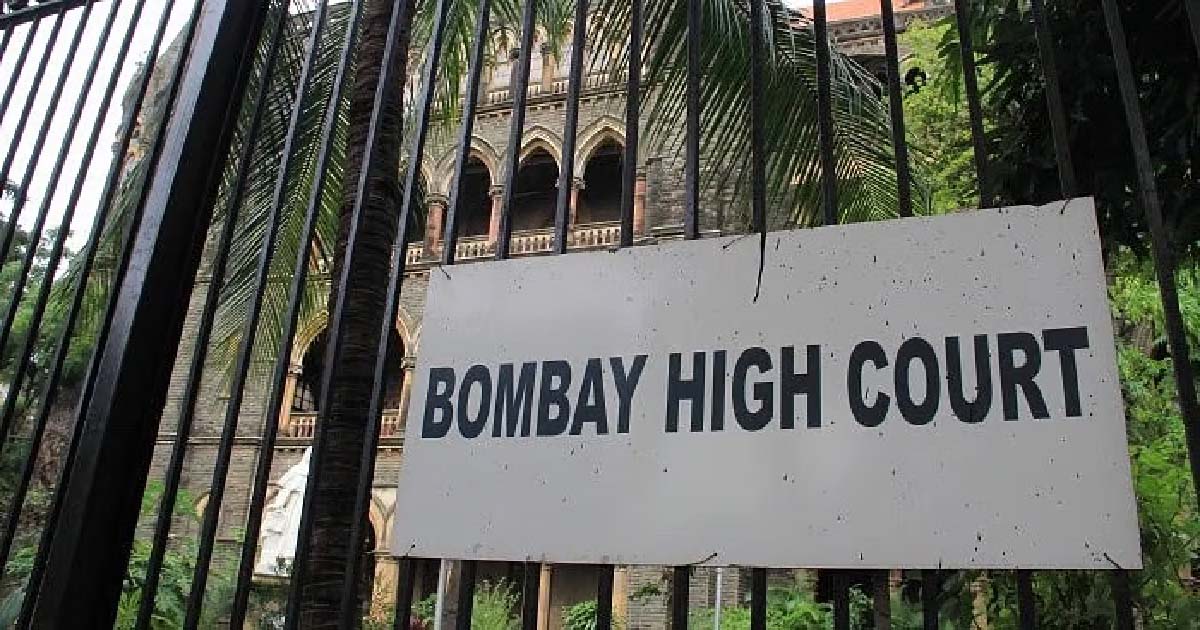
Mumbai: In a significant ruling on product classification under the Bombay Sales Tax Act, 1959, the Bombay High Court has held that Nescafé Premix must be taxed at 8% as “coffee / instant coffee,” and not at the higher rate of 16% applicable to general beverage powders.
A bench of Justices M. S. Sonak and Advait Sethna reiterated the cardinal principle that specific tax entries must prevail over general ones. Applying the common parlance test, the court concluded that Nescafé Premix, as marketed and consumed, had created a clear perception of “instant coffee”.
The case arose from a dispute between Nestlé India Ltd. and the Sales Tax Department regarding whether Nescafé Premix — containing 8.5% soluble coffee powder, 54% sucrose, 37% partially skimmed milk powder and 0.5% maltodextrin — should be classified under Schedule Entry C-II-3 (8%) or Entry C-II-18(2) (16%).
The Commissioner of Sales Tax had earlier ruled in 1998 that the product fell under the higher-taxed general entry for powders used in non-alcoholic beverages, emphasising that the coffee content was “minuscule 8.5%”.
The Maharashtra Sales Tax Tribunal reversed this decision in 2001, holding that ingredient percentage was not decisive — relying on Supreme Court precedent that even small quantities, like salt in food, do not alter the essential character of the final product.
Upholding the Tribunal’s order, the HC stressed that the product’s actual use and consumer understanding were crucial. “Ultimately, in all such matters, we must go by the common parlance test,” the bench said.
It noted that the premix was expressly marketed as Nescafé Premix and used to dispense Nescafé from vending machines simply by adding hot water. “The resultant product, in common parlance, was nothing but Nescafé,” the Court observed.
Rejecting the Department’s argument that low coffee content disqualified it from being considered instant coffee, the Court agreed with the Tribunal that removing coffee powder altogether would fundamentally change the product’s identity — demonstrating that the coffee component, though proportionally small, was determinative of classification.
The bench also emphasised that Entry C-II-3, covering “coffee” and “instant coffee”, was a specific entry and therefore prevailed over the general entry for beverage powders under C-II-18(2). “The concept of instant coffee must conform to modern development and modern perceptions,” the Court added.
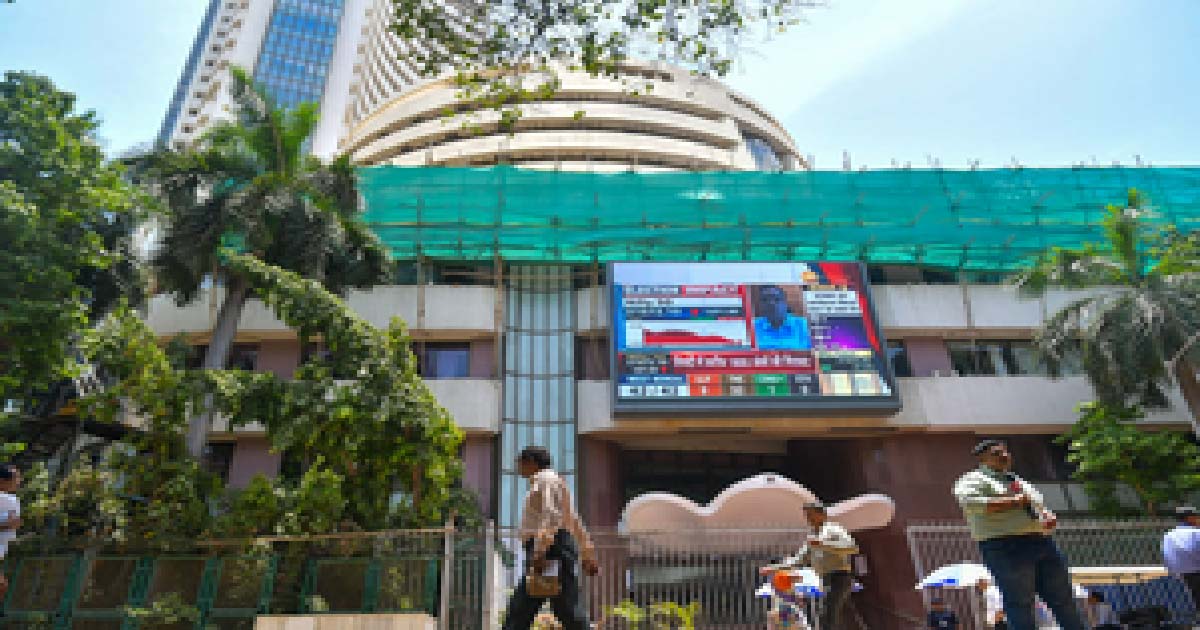
Mumbai, Dec 6: Indian equity benchmarks made marginal losses after hitting record highs and three weeks of consecutive gains due to profit booking. However, the market ended the week in a bullish tone after the Reserve Bank of India (RBI) delivered a 25 bps rate cut that lifted investor sentiment.
Benchmark indices Nifty and Sensex dipped 0.37 and 0.27 per cent during the week to close at 26,186 and 85,712, respectively.
Early optimism driven by strong Q2 GDP print and robust auto sales was overshadowed by persistent FII outflows, sharp rupee depreciation, and uncertainty over trade negotiations.
Broader indices underperformed, with the Nifty Midcap100 and Smallcap100 down 0.73 per cent and 1.80 per cent, respectively in a week.
Sentiment reversed on Friday after the RBI surprised markets with a 25-bps rate cut, supported by lower inflation forecasts and liquidity measures.
Gains during the week were led by auto, IT due to festive demand and favourable currency tailwinds. Banks, Finances, consumer durables, power, chemicals and oil & gas lagged.
As long as Nifty sustains above the 26,050–26,000 band, the bullish structure remains valid. Immediate resistance now lies at 26,350–26,500 zone and a break below 26,000 could lead to profit booking, said market experts.
With India’s economic growth remaining resilient despite tariff pressures and global headwinds, the Indian equity market is well-positioned to benefit if global fund flows begin to rotate back into emerging markets, market watchers said.
Investors are keen on cues from the US Federal Reserve’s monetary policy decision next week. Markets have already begun pricing in a 25 bps rate cut, supported by dovish commentary from several Fed officials and recent data pointing to softening labour market conditions.
Analysts said that shift in US Fed’s policy stance could sway currency movements and materially influence foreign portfolio investor flows into emerging markets including India.
Business
IndiGo Crisis: 75-Yr-Old Woman Waits Hours For Luggage Without Medicines At Mumbai T2 Airport

Mumbai, Dec 05: When IndiGo’s nationwide operational meltdown began disrupting flights earlier this week, thousands of passengers were caught in chaos across the country. Among them was a 75-year-old woman whose ordeal at Mumbai’s Terminal 2 gained attention after her daughter shared a distressed post on X. Thankfully, the woman has now reached home safely, but her experience reflects the scale of frustration travellers are facing.
In her post on X, Punita Toraskar wrote that her elderly mother had been waiting at T2 since noon, and even by 4:42 pm, she still hadn’t received her luggage. The situation was more alarming because the 75-year-old needed to take her medicines but was stuck waiting on an empty stomach, stranded amid the airport chaos.
Toraskar’s post quickly resonated with passengers across India who have been struggling with severe delays, cancellations, and a complete breakdown of communication from India’s largest airline.
IndiGo is currently grappling with one of the biggest operational crises in its history. Nearly 900 flights have been cancelled since Tuesday, triggered by a mix of staff shortages and the airline’s struggle to adapt to stringent new crew duty regulations.
Passengers at major airports — Delhi, Hyderabad, Bengaluru, and Kolkata — are facing hours-long queues, mounting delays, and skyrocketing airfares as alternative flight options shrink. Hotels are filling up, tempers are rising, and social media is flooded with frustration.
IndiGo has issued public apologies and claims it is rebooting its systems and schedules to stabilise operations. But for many travellers like Toraskar’s mother, the damage is already done.
Despite the turmoil, Punita confirmed later that her mother had finally reached home safely, a small relief in a week of aviation chaos.

Mahaparinirvan Diwas 2025: Dr Ambedkar’s Mumbai Memorial To Near Completion By Dec 2026 | All You Need To Know

Thane NDPS Wing Busts Drug Racket; Over 2.2 Kg Hashish Worth ₹1.10 Crore Seized In Mumbra, 1 Accused Arrested

On the 33rd anniversary of the Babri Masjid demolition, Mumbai’s streets reverberated with chants of “Allahu Akbar.”Peaceful protests and prayers for recovery were offered, with police on alert.

Mukesh Ambani, Shiv Sena UBT Chief Uddhav Thackeray & Son Aaditya Share Warm Greetings At Mumbai’s Swadesh Event

Mayawati pays tribute to Ambedkar, asks when will ‘good days’ come for the Bahujan community

Kalyan College Namaz Controversy: SIO Demands Action Against Perpetrators

Good News Navi Mumbaikars! Ulwe Coastal Road 60% Complete, Major Link Between Atal Setu & Upcoming NMI Airport Progresses Smoothly

A powerful explosion near Delhi’s Red Fort… High alert across Delhi after the blast; 8 people killed; forensic team arrives at the scene.

Dharmendra’s Fan, An Auto-Rickshaw Driver, Breaks Down Outside Actor’s Mumbai Home After His Discharge, Says ‘Admired Him Since Childhood

Mumbai Local Train Update: Megablock On Central, Harbour, Trans-Harbour & Western Railway Lines On Nov 16; Check Details
-

 Crime3 years ago
Class 10 student jumps to death in Jaipur
-
 Maharashtra1 year ago
Mumbai Local Train Update: Central Railway’s New Timetable Comes Into Effect; Check Full List Of Revised Timings & Stations
-
 Maharashtra1 year ago
Mumbai To Go Toll-Free Tonight! Maharashtra Govt Announces Complete Toll Waiver For Light Motor Vehicles At All 5 Entry Points Of City
-

 Maharashtra1 year ago
False photo of Imtiaz Jaleel’s rally, exposing the fooling conspiracy
-
 National News1 year ago
Ministry of Railways rolls out Special Drive 4.0 with focus on digitisation, cleanliness, inclusiveness and grievance redressal
-
 Maharashtra1 year ago
Maharashtra Elections 2024: Mumbai Metro & BEST Services Extended Till Midnight On Voting Day
-

 National News1 year ago
J&K: 4 Jawans Killed, 28 Injured After Bus Carrying BSF Personnel For Poll Duty Falls Into Gorge In Budgam; Terrifying Visuals Surface
-

 Crime1 year ago
Baba Siddique Murder: Mumbai Police Unable To Get Lawrence Bishnoi Custody Due To Home Ministry Order, Says Report