
Business
RBI reduces inflation forecast to 3.7 pc for 2025-26

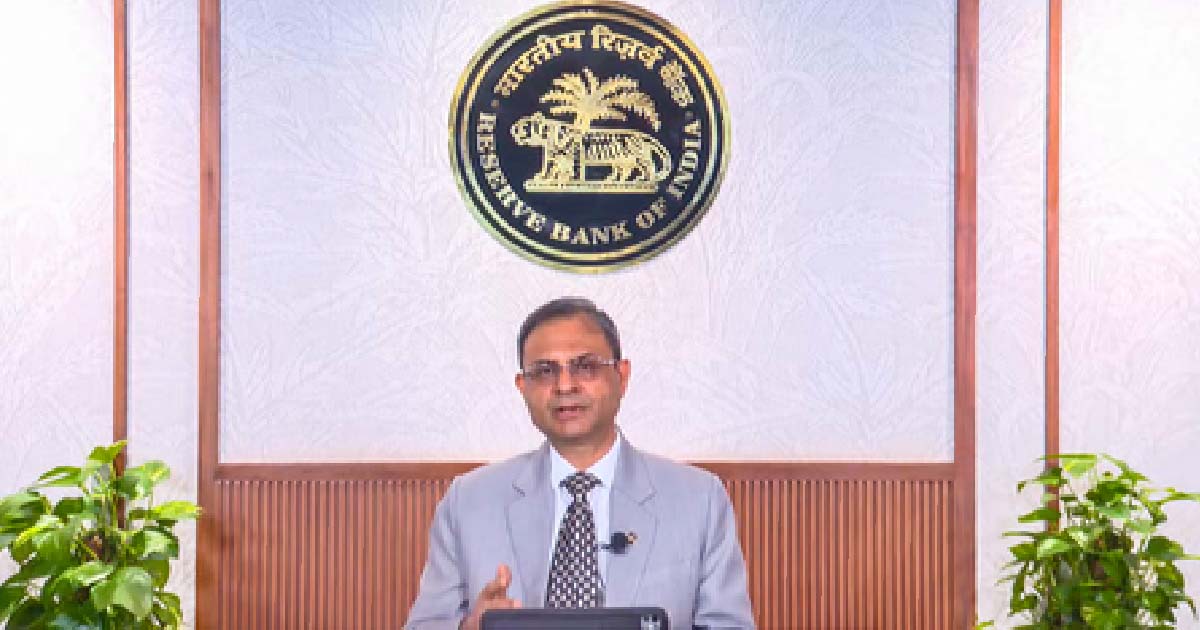
Mumbai, June 6: The RBI has revised its inflation outlook for 2025-26 downwards from the earlier forecast of 4 per cent to 3.7 per cent, Reserve Bank Governor Sanjay Malhotra said on Friday.
Taking all these factors into consideration, and assuming a normal monsoon, CPI inflation for the financial year 2025-26 is now projected at 3.7 per cent, with Q1 at 2.9 per cent, Q2 at 3.4 per cent, Q3 at 3.9 per cent, and Q4 at 4.4 per cent.
He pointed out that Inflation has softened significantly over the last six months from above the tolerance band in October 2024 to well below the target, with signs of a broad-based moderation. The near-term and medium-term outlook now gives us the confidence of not only a durable alignment of headline inflation with the target of 4 per cent, as exuded in the last meeting, but also the belief that during the year, it is likely to undershoot the target at the margin.
While food inflation outlook remains soft, core inflation is expected to remain benign with easing of international commodity prices in line with the anticipated global growth slowdown, Malhotra explained.
He pointed out that CPI headline inflation continued its declining trajectory in March-April, with headline CPI inflation moderating to a nearly six-year low of 3.2 per cent (y-o-y) in April 2025. This was led mainly by food inflation, which recorded the sixth consecutive monthly decline.
Fuel group witnessed a reversal of deflationary conditions and recorded positive inflation prints during March and April, partly reflecting the hike in LPG prices. Core inflation remained largely steady and contained during March-April, despite the increase in gold prices exerting upward pressure, Malhotra said.
The outlook for inflation points towards benign prices across major constituents. The record wheat production and higher production of key pulses in the Rabi crop season should ensure an adequate supply of key food items. Going forward, the likely above normal monsoon along with its early onset augurs well for Kharif crop prospects.
Reflecting this, inflation expectations are showing a moderating trend, more so for the rural households. Most projections point towards continued moderation in the prices of key commodities, including crude oil, the RBI Governor said.
However, at the same time, Malhotra had a word of caution. “Notwithstanding these favourable prognoses, we need to remain watchful of weather-related uncertainties and still evolving tariff-related concerns with their attendant impact on global commodity prices,” he added.



Mumbai, Dec 18: The unified payments interface (UPI) transaction volumes rose 33.5 per cent (year-on-year) to 59.33 billion transactions in the July-September period, as transaction value grew 21 per cent to Rs 74.84 lakh crore, a report showed on Thursday.
India reached 709 million active UPI QRs, marking a 21 per cent increase since July 2024. Dense QR acceptance across kiranas, pharmacies, transport hubs, and rural markets has made scan-and-pay the default payment mode nationwide, according to the report by Worldline India.
Person-to-merchant (P2M) transactions continued to outpace person-to-person (P2P), reflecting UPI’s dominance in everyday retail payments.
P2M transactions were up 35 per cent to 37.46 billion transactions while P2P transactions rose 29 per cent to 21.65 billion transactions, the report said.
The third quarter (Q3 2025) further reinforced India’s position as the world’s most dynamic real-time payments economy — where every scan, tap, and click is reshaping consumer and merchant behaviour.
The average ticket size declined to Rs 1,262 (from Rs 1,363), highlighting increased usage for micro-transactions such as mobility, food, healthcare essentials, and hyperlocal commerce.
Point of sale (PoS) terminals grew 35 per cent to 12.12 million (July 2024–July 2025). Bharat QR stood at 6.10 million, witnessing marginal decline amid the shift toward UPI QR dominance.
Private banks led acceptance deployment, accounting for 84 per cent market share. While credit card issuance grew by 8 per cent (on-year) to 113.39 million cards, debit cards reached 1.02 billion and prepaid cards stood at 470.1 million.
Credit card transactions grew 26 per cent to 1.45 billion, with transaction value at Rs 6.07 lakh crore. Debit card transactions declined 22 per cent, reflecting migration of low-ticket spends to UPI, the report showed.
Mobile and tap-based payments continued to accelerate, with contactless adoption gaining momentum across metros, mobility services, and quick-service retail.
“The outlook for Q4 2025 and early 2026 points to accelerated innovation and deeper ecosystem integration. Interoperable QR is expected to move from pilot phases to everyday usage across mobility, healthcare, fuel stations, and public utilities—delivering a unified scan-and-pay experience,” the report mentioned.
New Delhi, Dec 17: Geopolitical uncertainties driven by the delay in the India-US trade deal have been the single-most important reasons for the rupee sliding against the US dollar, an SBI Research report said on Wednesday, adding that the rupee is likely to bounce back strongly in the second half of the next fiscal.
India’s trade data shows the remarkable resilience in navigating through prolonged uncertainty, more protectionism and labour supply shocks.
“While the geopolitical risk index has moderated since April 2025, the current average value of the index for April-October 2025 is much greater than its decadal average, which indicates how much pressure global uncertainties are exerting on INR,” State Bank of India’s (SBI) Group Chief Economic Advisor, Dr Soumya Kanti Ghosh, said.
Dr Ghosh further stated that consistent with their empirical analysis, “the rupee is currently in a depreciating regime and is likely to exit it”.
After breaching the psychologically important mark of 90 per US dollar, the rupee crossed the 91-level on Tuesday.
However, the rupee staged a sharp recovery on Wednesday, trading as strong as 90.25 during the day, as the cooling of crude prices also contributed to improved sentiment.
According to the SBI report, the data also indicates that the current fall is the quickest (in terms of number of days) of the rupee, scaled to 5 per USD. In less than a year, the rupee has slid from 85 to 90 per dollar.
The current slide appears to be primarily driven by FPI outflows, chiefly equities (after two years of robust inflows) and uncertainty regarding the US-India trade deal.
Since April 2, 2025, when the US announced sweeping tariff hikes across economies, the Indian rupee (INR) has depreciated by 5.7 per cent against USD (most amongst the major economies), notwithstanding sporadic phases of appreciation owing to optimism over the US-India trade deal.
“While INR is the most depreciated currency, it is not the most volatile. This clearly indicates that the 50 per cent tariff imposed on India is one of the major factors behind the current phase of rupee depreciation,” the SBI report noted.
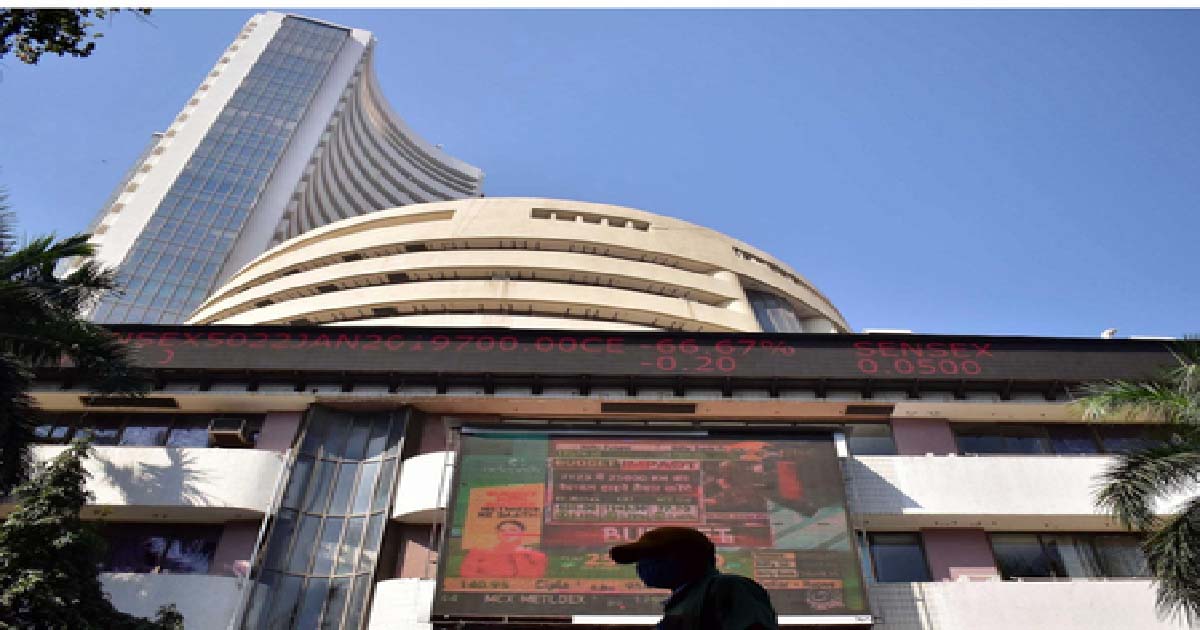
Mumbai, Dec 17: Indian equity markets touched fresh all-time highs in November and clearly outperformed global markets, a new report said on Wednesday.
The data compiled by PL Asset Management said India emerged as a bright spot at a time when many global markets struggled due to weak technology stocks, fading enthusiasm around artificial intelligence and soft economic data from China.
The report noted that record-low inflation, steady domestic growth and reasonable valuations improved the overall outlook for investors.
“While global markets remained uneven, India benefited from strong local demand, supportive liquidity and a predictable policy environment,” the report said.
Inflation played a major role in boosting market sentiment during the month. Consumer price inflation fell sharply to just 0.25 per cent, the lowest level on record and far below the Reserve Bank of India’s target of 4 per cent.
This sharp fall strengthened expectations of further interest rate cuts, which supported equity valuations. Reflecting confidence in the economy, the RBI raised its GDP growth forecast for FY26 to 7.3 per cent.
India also recorded strong GDP growth of 8.2 per cent in the second quarter of FY26, reinforcing its position as the fastest-growing major economy in the world, the report said.
Domestic economic indicators remained healthy despite global challenges. Manufacturing activity stayed strong, even though exports were slightly affected by tariffs.
Goods and Services Tax collections remained robust at Rs 1.70 lakh crore, as per the report.
Festive season spending also supported growth. In addition, India’s current account deficit improved to 1.3 per cent of GDP.
Global markets, meanwhile, showed signs of fatigue. US technology stocks faced profit booking, China and Hong Kong markets weakened due to poor economic data, and investors turned to precious metals for safety.
Crude oil prices softened amid expectations of interest rate cuts by the US Federal Reserve. Against this global backdrop, India’s stable fundamentals helped it continue to outperform.
Siddharth Vora, Head – Quant Investment Strategies & Fund Manager, PL Asset Management, said, “Indian markets continue to demonstrate relative resilience at a time when global risk assets are undergoing a phase of recalibration.”

Mumbai Municipal Commissioner Administrator and Election Chairman Bhushan Gagrani has ordered election officers and agencies to act in a coordinated manner.

Housing fraud case: Ajit Pawar accepts NCP minister Manikrao Kokate’s resignation, forwards it to CM

2 MD vendors in Mumbai sentenced to 20 years, accused sentenced due to improvement in police investigation in ANC case

BMC Elections 2026: Will ‘Marathi Manoos’ Decide The Winner Of Mumbai Civic Polls?

Ahead of BMC Polls 2026, Eknath Shinde Rallies Shiv Sainiks Across North Mumbai, Calls for United Push

Kalyan College Namaz Controversy: SIO Demands Action Against Perpetrators

Sensex, Nifty open lower amid weak global cues

SS Rajamouli Faces FIR For ‘Hurting’ Religious Sentiments Over Controversial Lord Hanuman Remark At Varanasi Event In Hyderabad

Sensex, Nifty open marginally down amid negative global cues

Veteran Bollywood Actor Dharmendra Passes Away at 89
-

 Crime3 years ago
Class 10 student jumps to death in Jaipur
-

 Maharashtra1 year ago
Mumbai Local Train Update: Central Railway’s New Timetable Comes Into Effect; Check Full List Of Revised Timings & Stations
-
 Maharashtra1 year ago
Mumbai To Go Toll-Free Tonight! Maharashtra Govt Announces Complete Toll Waiver For Light Motor Vehicles At All 5 Entry Points Of City
-

 Maharashtra1 year ago
False photo of Imtiaz Jaleel’s rally, exposing the fooling conspiracy
-

 National News1 year ago
Ministry of Railways rolls out Special Drive 4.0 with focus on digitisation, cleanliness, inclusiveness and grievance redressal
-
 Maharashtra1 year ago
Maharashtra Elections 2024: Mumbai Metro & BEST Services Extended Till Midnight On Voting Day
-

 National News1 year ago
J&K: 4 Jawans Killed, 28 Injured After Bus Carrying BSF Personnel For Poll Duty Falls Into Gorge In Budgam; Terrifying Visuals Surface
-

 Crime1 year ago
Baba Siddique Murder: Mumbai Police Unable To Get Lawrence Bishnoi Custody Due To Home Ministry Order, Says Report