
Business
Trump to double steel tariffs to 50 pc from next week

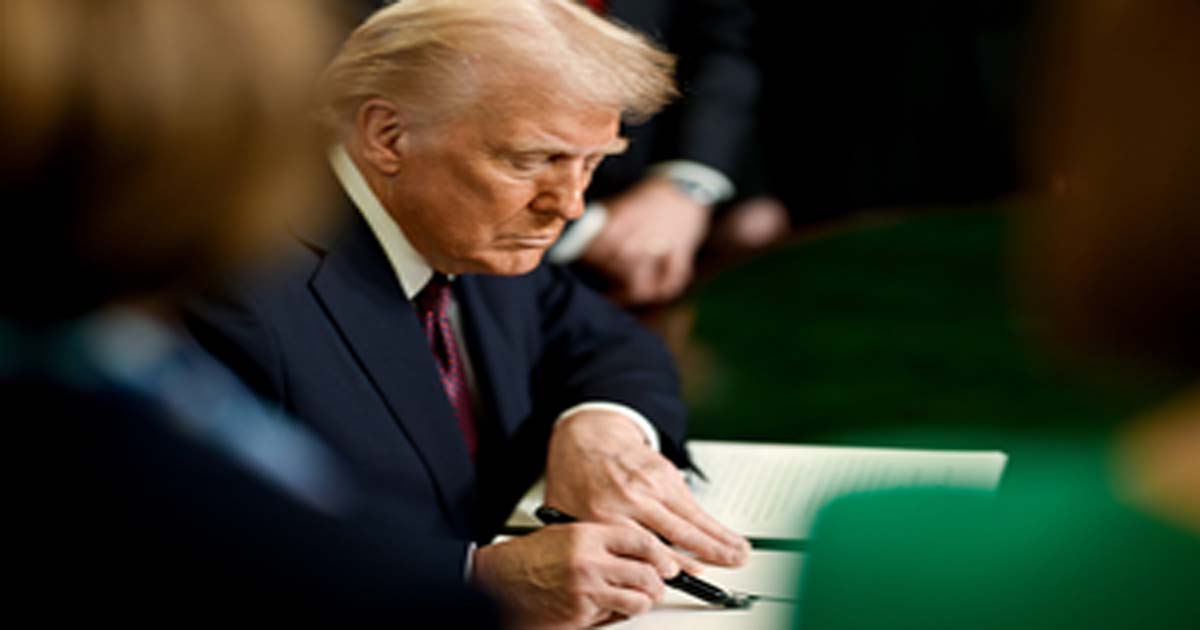
Washington, May 31: US President Donald Trump has said that he planned to double tariffs on foreign imports of steel to 50 percent starting next week, further casting a cloud on steelmakers around the globe.
“We are going to be imposing a 25 per cent increase. We’re going to bring it from 25 per cent to 50 per cent — the tariffs on steel into the United States of America — which will even further secure the steel industry in the United States,” Trump said on X social media platform.
He later posted on social media that the higher tariff rate would take effect from June 4, Yonhap media reported.
“It is my great honour to raise the Tariffs on steel and aluminum from 25% to 50%, effective Wednesday, June 4th. Our steel and aluminum industries are coming back like never before. This will be yet another BIG jolt of great news for our wonderful steel and aluminum workers. MAKE AMERICA GREAT AGAIN!” Trump wrote on his Truth Social platform.
The planned rate hike is the latest in his trade policies that focus on tariff hikes, and came days after a trade court ruled his sweeping reciprocal tariffs illegal, which was later blocked by an appeals court to leave the tariffs temporarily alive.
The 25-percent tariffs on most steel imported to the U.S. went into effect in March as part of the Trump administration’s broader tariff scheme aimed at reducing America’s trade deficits and bolstering local manufacturing.
Data showed earlier Seoul’s U.S.-bound exports of steel products declined nearly 19 percent from a year earlier in March.
Outbound shipments of steel products to the U.S. came to US$340 million in March, down 18.9 percent from the same month last year.
It is difficult to assess the impact of U.S. tariffs on Seoul’s steel exports as transactions are usually made months ahead, but there may still have been some influence.
Korean steelmakers have been devising response measures to the U.S. tariffs, with some companies planning to increase their production in the U.S.
Hyundai Steel Co. plans to invest $5.8 billion to construct an electric arc furnace-based steel mill in Louisiana by 2029, its first overseas production facility.










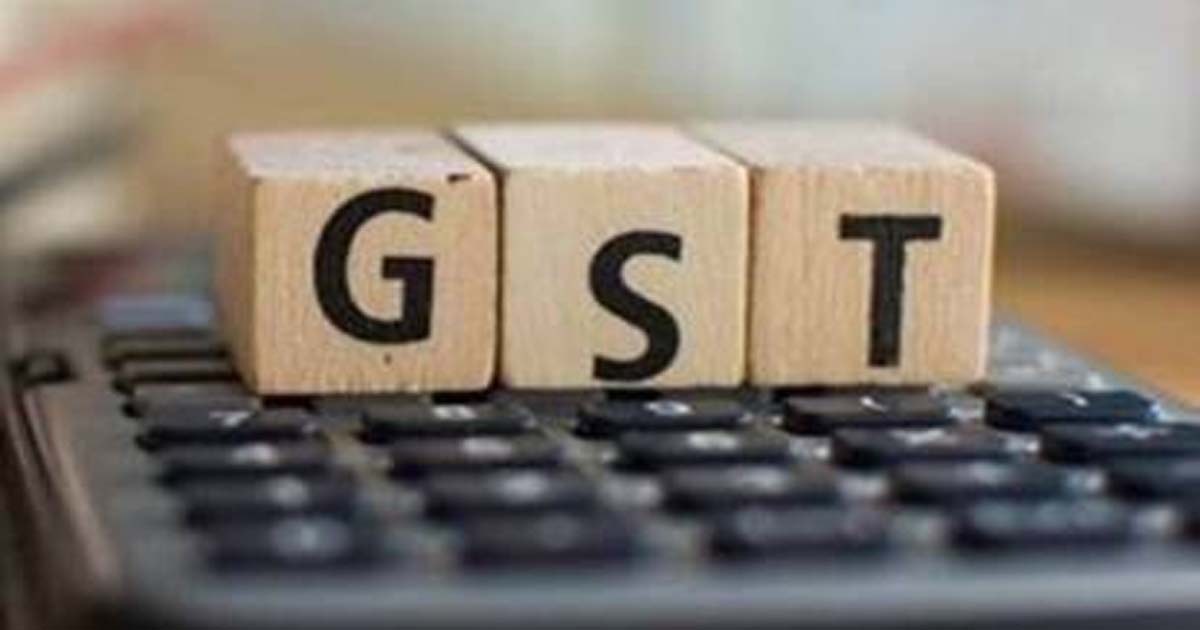
New Delhi, Dec 24: Recent reforms under GST 2.0 show that simplification and tax moderation can coexist with strong revenue growth, a report said on Wednesday, calling for freezing peak tax rates and expanding tax base through technology.
The white paper from Think Change Forum said that recent GST reforms proved wrong the long-held belief that higher tax rates are necessary to boost collections as gross GST collections rose 4.5 per cent (on-year) to Rs 1.95 lakh crore in October 2025.
The report argued that the rise in tax collection validated the principle that in high‑informality economies compliance elasticity outweighs rate elasticity. The report, however, flagged that India’s tax‑to‑GDP ratio of around 17 per cent masks a narrow direct tax base and heavy reliance on regressive indirect levies.
“High taxes — whether direct or indirect — always encourage evasion and corruption. Lower taxes widen the base and improve compliance. GST collections are rising because the economy is formalising — but we must avoid creating a new 40 per cent peak rate that undermines compliance. Ideally, GST should be restricted to just 5 per cent and 18 per cent,” said Yogendra Kapoor, author and public speaker.
The forum called for prioritising freezing peak direct tax rates, expanding the direct tax base through technology, avoiding MRP‑based taxation and completing the GST credit chain in the upcoming Union Budget.
As the compensation cess sunsets, the MRP-based taxation is prone to manipulation in a cash-heavy economy and the government should rely instead on clean, specific duties that are easier to enforce.
The Budget should outline a phased roadmap to bring petroleum, electricity and other excluded inputs under GST to restore tax neutrality and reduce cascading costs for industry, it added.
It also listed other priorities including incentivising productive reinvestment and aggressively curtailing the parallel economy.
“The Budget must strengthen enforcement against smuggling, illicit trade and tax evasion so that non-compliance becomes costlier than compliance and honest taxpayers are no longer penalised,” the report noted.
SHARE MARKET
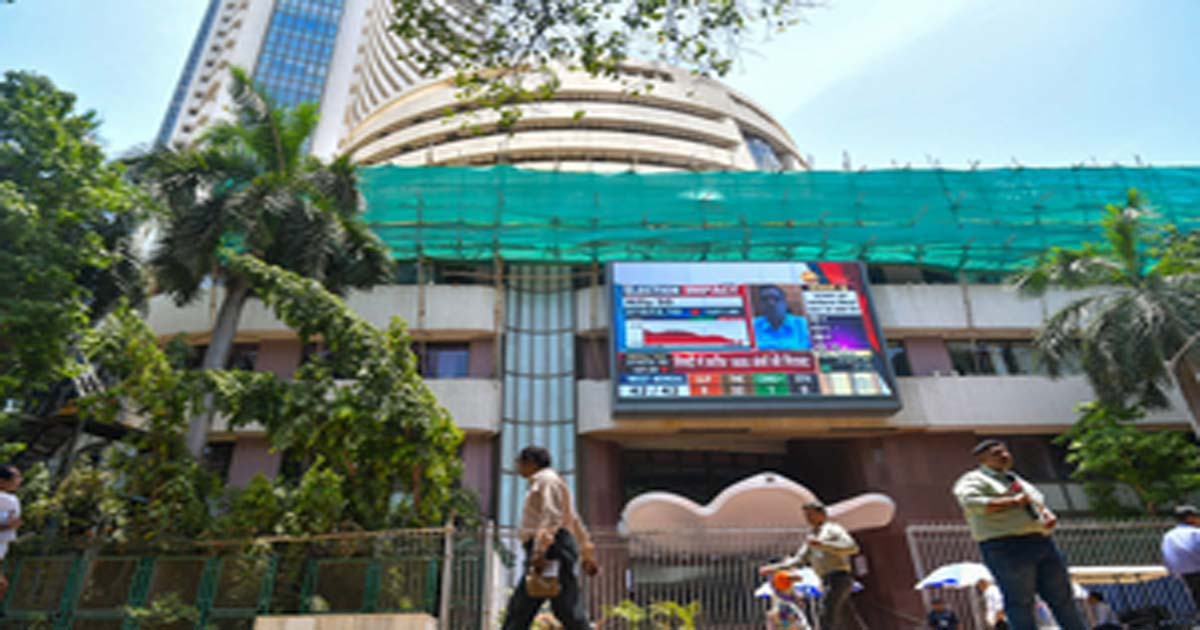
Mumbai, Dec 24: Indian benchmark indices made moderate gains early on Wednesday amid positive global cues, as the stock market appears to be in a consolidation phase.
As of 9.30 am, Sensex advanced 105 points, or 0.12 per cent to 85,630 and Nifty gained 40 points, or 0.16 per cent to 26,217.
Main broad-cap indices outperformed benchmark indices in terms of gains, with the Nifty Midcap 100 advanced 0.31 per cent, while the Nifty Smallcap 100 added 0.53 per cent.
Hindalco Industries, Axis Bank and Cipla were among the major gainers in the Nifty Pack, while losers included Tech Mahindra, TCS, Titan Company, Dr Reddy’s Labs and Tata Consumer.
Among sectoral indices on NSE, Media, Metal and Realty were the major gainers — up around 0.82 per cent, 0.58 per cent and 0.78 per cent respectively. Nifty IT was leading losses down 0.49 per cent.
The Nifty could extend its advance toward resistance levels at 26,202 and 26,330, while 26,000 is expected to provide near-term support, said experts.
Analysts said that the market appears to be consolidating upward as CY2025 ends. Strong domestic macros and earnings growth expectations in Q3 and Q4 of FY26 and FY27 will support the market.
The market will be resilient due to domestic inflows and DII buying but FIIs may sell rallies, preventing a sharp breakout. The revival of the AI trade in US might impact sentiments in favour of a ‘non-AI trade’ in markets like India, they added.
An additional Rs 2 lakh crore OMO by the RBI will boost liquidity and lower yields, providing positive momentum to credit growth and bank stocks. The RBI on Tuesday announced a fresh set of steps to inject a large amount of money into the banking system to ease tight liquidity conditions.
Asia-Pacific markets traded flat with a positive bias, with several indexes set to close early in lieu of the Christmas Eve holiday.
In Asian markets, China’s Shanghai index advanced 0.24 per cent, and Shenzhen edged up 0.31 per cent, Japan’s Nikkei added 0.06 per cent, while Hong Kong’s Hang Seng Index gained 0.08 per cent. South Korea’s Kospi added 0.12 per cent.
The US markets ended mostly in the green zone overnight, as Nasdaq advanced 0.57 per cent, the S&P 500 edged up 0.46 per cent, and the Dow moved up 0.16 per cent.
On Tuesday, foreign institutional investors (FIIs) sold equities worth Rs 1,795 crore, while domestic institutional investors (DIIs) were net buyers of equities worth Rs 3,812 crore.
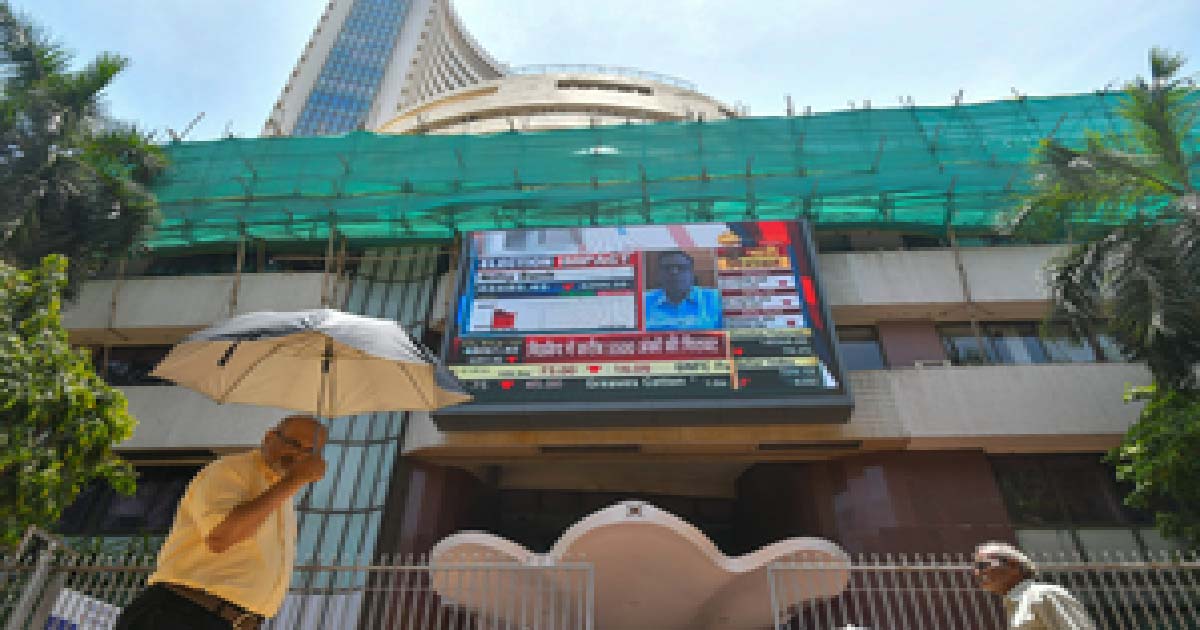
Mumbai, Dec 23: Indian benchmark indices opened in the red zone on Tuesday, weighed down by losses in the IT stocks after artificial intelligence (AI) stocks in the US showed revival.
As of 9.30 am, the Sensex declined 159 points, or 0.19 per cent to 85,407 and the Nifty lost 32 points, or 0.13 per cent to 26,139.
Main broad cap indices showed divergent trends, with the Nifty Midcap 100 down 0.18 per cent, while the Nifty Smallcap 100 added 0.07 per cent.
ONGC, Tata Steel and NTPC were among the major gainers in the Nifty Pack, while losers included Max Healthcare, TCS, Tech Mahindra, Asian Paints and ICICI Bank.
Sectoral indices on NSE were trading in the mixed zone, with IT leading losses down 1.21 per cent. Oil and gas as well as metal were the major gainers, up around 0.43 and 0.41 per cent, respectively.
Immediate resistance for Nifty is placed at 26,300–26,350, while key supports are located at 26,000–26,050 zone, said analysts.
Market watchers found two factors to affect the market in the near term, including positive macros or fundamentals and AI trade revival. Positive macro indicators may embolden bulls to push Nifty and Sensex to new highs. But the strong AI trade revival is a mild negative externally which may delay the anticipated FII outflow reversal, they said.
Defence stocks are seemingly recovering, with more room for growth in the segment, while the IT sector has also turned resilient, analysts said.
Asia-Pacific markets showed moderate gains on Tuesday, after AI trade lifted major Wall Street indexes overnight.
In Asian markets, China’s Shanghai index advanced 0.34 per cent, and Shenzhen edged up 0.65 per cent, Japan’s Nikkei added 0.02 per cent, while Hong Kong’s Hang Seng Index gained 0.33 per cent. South Korea’s Kospi added 0.45 per cent.
The US markets ended mostly in the green zone overnight, as Nasdaq advanced 0.52 per cent, the S&P 500 edged up 0.64 per cent, and the Dow moved up 0.47 per cent.
Investors are keen on rising geopolitical tensions between the US and Venezuela and delays in the Russia-Ukraine peace negotiations. The killing of a Russian army general in a bomb attack on Monday raised concerns over the peace process, lending support to crude oil prices.
On Monday, foreign institutional investors (FIIs) sold equities worth Rs 516 crore, while domestic institutional investors (DIIs) were net buyers of equities worth Rs 3,898 crore.

Delhi HC asks DDA, MCD to act against illegal cafes, restaurants in Majnu Ka Tila, New Aruna Nagar

Mumbai: Husband arrested for killing wife over excess salt in biryani

Kirit Somaiya and Nitesh Rane are only spreading hatred in the name of Hindu-Muslim relations, and creating suspicion is their agenda: Abu Asim Azmi

GST reforms prove tax moderation can boost revenues: Report

Two held with heroin worth Rs 1.5 crore in major drug bust in Delhi

Kalyan College Namaz Controversy: SIO Demands Action Against Perpetrators

Sensex, Nifty open lower amid weak global cues

Mukesh Ambani, Shiv Sena UBT Chief Uddhav Thackeray & Son Aaditya Share Warm Greetings At Mumbai’s Swadesh Event

Kartik Aaryan, Ananya Panday promote ‘Tu Meri Main Tera, Main Tera Tu Meri’ on Amitabh Bachchan’s KBC

Samantha Ruth Prabhu Shares FIRST Wedding Photos With Raj Nidimoru, Exchanges Rings At Sadhguru’s Isha Foundation In Coimbatore
-

 Crime3 years ago
Class 10 student jumps to death in Jaipur
-

 Maharashtra1 year ago
Mumbai Local Train Update: Central Railway’s New Timetable Comes Into Effect; Check Full List Of Revised Timings & Stations
-
 Maharashtra1 year ago
Mumbai To Go Toll-Free Tonight! Maharashtra Govt Announces Complete Toll Waiver For Light Motor Vehicles At All 5 Entry Points Of City
-

 Maharashtra1 year ago
False photo of Imtiaz Jaleel’s rally, exposing the fooling conspiracy
-
 National News1 year ago
Ministry of Railways rolls out Special Drive 4.0 with focus on digitisation, cleanliness, inclusiveness and grievance redressal
-
 Maharashtra1 year ago
Maharashtra Elections 2024: Mumbai Metro & BEST Services Extended Till Midnight On Voting Day
-

 National News1 year ago
J&K: 4 Jawans Killed, 28 Injured After Bus Carrying BSF Personnel For Poll Duty Falls Into Gorge In Budgam; Terrifying Visuals Surface
-

 Crime1 year ago
Baba Siddique Murder: Mumbai Police Unable To Get Lawrence Bishnoi Custody Due To Home Ministry Order, Says Report