
International News
AI, trade, defence, energy, cooperation: All that PM Modi and Trump discussed

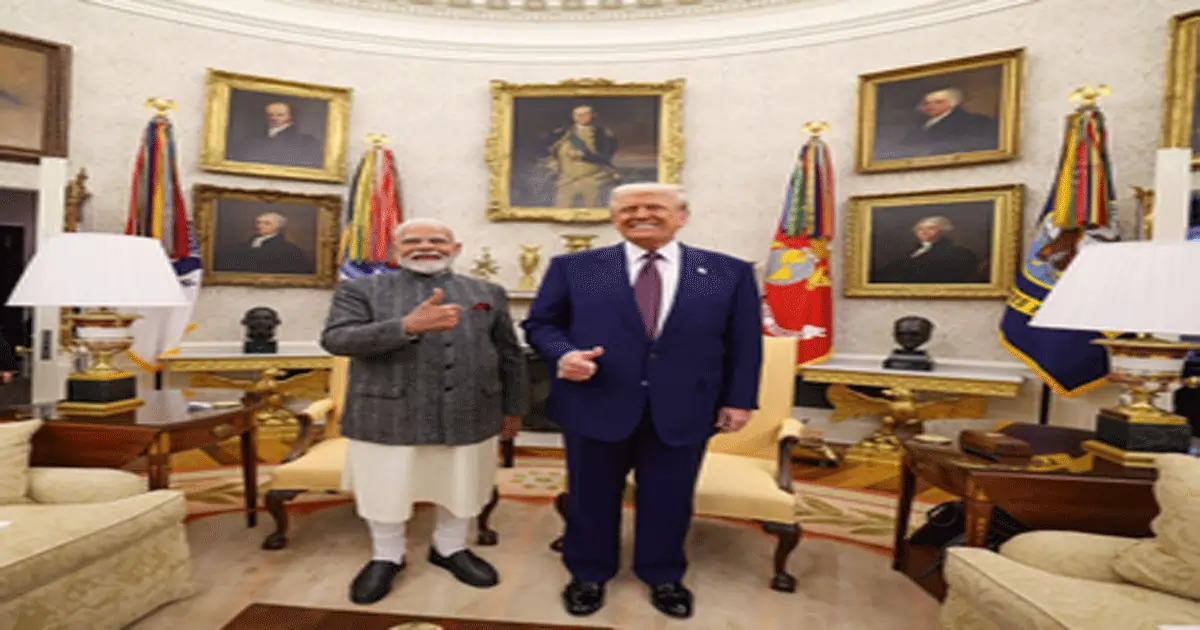
New Delhi, Feb 14: In a significant reaffirmation of their partnership, Prime Minister Narendra Modi and US President Donald Trump highlighted the robust India-US Comprehensive Global Strategic Partnership, rooted in mutual trust and shared democratic values.
During their high-profile meeting in Washington, the leaders emphasised their commitment to freedom, the rule of law, human rights, and pluralism, signalling a strong and vibrant alliance between their nations as per the press release from the Prime Minister’s office.
Prime Minister Modi and President Trump during their recent meeting launched a new initiative — the “US-India COMPACT (Catalysing Opportunities for Military Partnership, Accelerated Commerce & Technology) for the 21st Century” – to drive transformative change across key pillars of cooperation.
“Under this initiative, they committed to a results-driven agenda with initial outcomes this year to demonstrate the level of trust for a mutually beneficial partnership,” said the press release.
Defence
The leaders reaffirmed their unwavering commitment to a dynamic defence partnership spanning multiple domains. To advance defence ties further, the leaders announced plans to sign this year a new ten-year Framework for the ‘US-India Major Defense Partnership’ in the 21st Century.
The leaders welcomed the significant integration of US-origin defence items into India’s inventory to date, including C‑130J Super Hercules, C‑17 Globemaster III, P‑8I Poseidon aircraft; CH‑47F Chinooks, MH‑60R Seahawks, and AH‑64E Apaches; Harpoon anti-ship missiles; M777 howitzers; and MQ‑9Bs. The leaders determined that the US would expand defence sales and co-production with India to strengthen interoperability and defence industrial cooperation.
They also announced plans to pursue this year new procurements and co-production arrangements for “Javelin” Anti-Tank Guided Missiles and “Stryker” Infantry Combat Vehicles in India to rapidly meet India’s defence requirements expecting completion of procurement for six additional P-8I Maritime Patrol aircraft to enhance India’s maritime surveillance reach in the Indian Ocean Region following agreement on sale terms.
Recognising that India is a Major Defence Partner with Strategic Trade Authorization-1 (STA‑1) authorization and a key Quad partner, the US and India will review their respective arms transfer regulations, including International Traffic in Arms Regulations (ITAR), to streamline defence trade, technology exchange and maintenance, spare supplies and in-country repair and overhaul of US-provided defence systems.
The leaders also urged the commencement of negotiations this year for a Reciprocal Defence Procurement (RDP) agreement, aimed at better aligning their procurement systems and facilitating the mutual supply of defence goods and services. They committed to accelerating cooperation in defence technology across various domains, including space, air defence, missile systems, maritime operations, and undersea technologies. Additionally, the US announced a review of its policy regarding the release of fifth-generation fighter jets and undersea systems to India.
Building on the US-India Roadmap for Defence Industrial Cooperation and recognising the rising importance of autonomous systems, the leaders announced a new initiative – the Autonomous Systems Industry Alliance (ASIA) – to scale industry partnerships and production in the Indo-Pacific.
The leaders welcomed a new partnership between ‘Anduril Industries and Mahindra Group’ on advanced autonomous technologies to co-develop and co-produce state-of-the-art maritime systems and advanced AI-enabled counter Unmanned Aerial Systems (UAS) to strengthen regional security, and between L3 Harris and Bharat Electronics for co-development of active towed array systems.
The leaders also pledged to elevate military cooperation across all domains – air, land, sea, space, and cyberspace – through enhanced training, exercises, and operations, incorporating the latest technologies. The leaders welcomed the forthcoming “Tiger Triumph” tri-service exercise (first inaugurated in 2019) with a larger scale and complexity to be hosted in India.
Finally, the leaders committed to breaking new ground to support and sustain the overseas deployments of the US and Indian militaries in the Indo-Pacific, including enhanced logistics and intelligence sharing, as well as arrangements to improve force mobility for joint humanitarian and disaster relief operations along with other exchanges and security cooperation engagements.
Trade and investments
The leaders agreed to enhance trade and investment to improve prosperity for their citizens, strengthen their nations, foster innovation in their economies, and create more resilient supply chains. They committed to deepening the US-India trade relationship to promote growth that ensures fairness, enhances national security, and generates job opportunities. To achieve this, they established an ambitious target for bilateral trade, called “Mission 500,” which aims to more than double total bilateral trade to $500 billion by 2030.
Recognising that this level of ambition would require new, fair-trade terms, the leaders announced plans to negotiate the first tranche of a mutually beneficial, multi-sector Bilateral Trade Agreement (BTA) by the fall of 2025. The leaders committed to designate senior representatives to advance these negotiations and to ensure that the trade relationship fully reflects the aspirations of the COMPACT.
To advance this innovative, wide-ranging BTA, the US and India will take an integrated approach to strengthen and deepen bilateral trade across the goods and services sector, and will work towards increasing market access, reducing tariff and non-tariff barriers, and deepening supply chain integration.
The leaders welcomed early steps to demonstrate a mutual commitment to address bilateral trade barriers. The US welcomed India’s recent measures to lower tariffs on US products of interest in the areas of bourbon, motorcycles, ICT products and metals, as well as measures to enhance market access for US agricultural products.
India also expressed appreciation for US measures taken to enhance exports of Indian mangoes and pomegranates to the US. Both sides also pledged to collaborate to enhance bilateral trade by increasing US exports of industrial goods to India and Indian exports of labour-intensive manufactured products to the US. The two sides will also work together to increase trade in agricultural goods.
Finally, the leaders committed to driving opportunities for US and Indian companies to make greenfield investments in high-value industries in each other’s countries.
In this regard, the leaders welcomed ongoing investments by Indian companies worth approximately $7.35 billion, such as those by Hindalco’s Novelis in finished aluminium goods at their state-of-the-art facilities in Alabama and Kentucky; JSW in steel manufacturing operations at Texas and Ohio; Epsilon Advanced Materials in the manufacture of critical battery materials in North Carolina; and Jubilant Pharma in the manufacture of injectables in Washington. These investments support over 3,000 high-quality jobs for local families.
Energy Security
The leaders underscored the importance of US-India collaboration to ensure energy affordability, reliability, availability and stable energy markets. Realising the consequential role of the US and India, as leading producers and consumers, in driving the global energy landscape, the leaders re-committed to the US-India Energy Security Partnership, including in oil, gas, and civil nuclear energy.
The leaders underscored the importance of enhancing the production of hydrocarbons to ensure better global energy prices and secure affordable and reliable energy access for their citizens. The leaders also underscored the value of strategic petroleum reserves to preserve economic stability during crises and resolved to work with key partners to expand strategic oil reserve arrangements.
In this context, the US side affirmed its firm support for India to join the International Energy Agency as a full member.
The leaders reaffirmed their commitment to increase energy trade, as part of efforts to ensure energy security and to establish the US as a leading supplier of crude oil and petroleum products and liquified natural gas to India.
The leaders announced their commitment to fully realise the US-India 123 Civil Nuclear Agreement by moving forward with plans to work together to build US-designed nuclear reactors in India through large-scale localisation and possible technology transfer. Both sides welcomed the recent Budget announcement by the Government of India to take up amendments to the Atomic Energy Act and the Civil Liability for Nuclear Damage Act (CLNDA) for nuclear reactors and further decided to establish bilateral arrangements under CLNDA, that would address the issue of civil liability and facilitate the collaboration of Indian and US industry in the production and deployment of nuclear reactors.
Technology and Innovation
The leaders announced the launch of the US-India TRUST (“Transforming the Relationship Utilizing Strategic Technology”) initiative, which will catalyse government-to-government, academia and private sector collaboration to promote the application of critical and emerging technologies in areas like defence, artificial intelligence, semiconductors, quantum, biotechnology, energy and space while encouraging the use of verified technology vendors and ensuring sensitive technologies are protected.
As a central pillar of the “TRUST” initiative, the leaders committed to work with US and Indian private industry to put forward a US-India Roadmap on Accelerating AI Infrastructure by the end of the year, identifying constraints to financing, building, powering, and connecting large-scale US-origin AI infrastructure in India with milestones and future actions.
Two nations will work together to enable industry partnerships and investments in next-generation data centres, cooperation on development and access to compute and processors for AI, innovations in AI models and building AI applications for solving societal challenges while addressing the protections and controls necessary to protect these technologies and reduce regulatory barriers.
The leaders announced the launch of INDUS Innovation, a new innovation bridge modelled after the successful INDUS-X platform, that will advance US-India industry and academic partnerships and foster investments in space, energy, and other emerging technologies to maintain US and India leadership in innovation and to meet the needs of the 21st century. The leaders also reinforced their commitment to the INDUS-X initiative, which facilitates partnerships between US and Indian defence companies, investors and universities to produce critical capability for our militaries, and welcomed the next summit in 2025.
Recognising the strategic importance of critical minerals for emerging technologies and advanced manufacturing, India and the US will accelerate collaboration in research and development and promote investment across the entire critical mineral value chain, as well as through the Mineral Security Partnership, of which both the US and India are members. Both countries have committed to intensifying efforts to deepen cooperation in the exploration, beneficiation, and processing as well as recycling technologies of critical minerals. To this end, the leaders announced the launch of the Strategic Mineral Recovery initiative, a new US-India program to recover and process critical minerals from heavy industries like aluminium, coal mining, oil and gas.
The leaders hailed 2025 as a pioneering year for US-India civil space cooperation, with plans for a NASA-ISRO effort through AXIOM to bring the first Indian astronaut to the International Space Station (ISS), and early launch of the joint “NISAR” mission, the first of its kind to systematically map changes to the Earth’s surface using dual radars.
The leaders called for more collaboration in space exploration, including on long-duration human spaceflight missions, spaceflight safety and sharing of expertise and professional exchanges in emerging areas, including planetary protection.
The leaders underscored the value of deepening ties between the US and Indian scientific research communities, announcing a new partnership between the US National Science Foundation and the Indian Anusandhan National Research Foundation in researching critical and emerging technologies. This partnership builds on ongoing collaboration between the US National Science Foundation and several Indian science agencies to enable joint research in the areas of semiconductors, connected vehicles, machine learning, next-generation telecommunications, intelligent transportation systems, and future biomanufacturing.
The leaders determined that their governments redouble efforts to address export controls, enhance high-technology commerce, and reduce barriers to technology transfer between our two countries while addressing technology security.
Multilateral Cooperation
The leaders emphasised that a strong partnership between the US and India is crucial for ensuring a free, open, peaceful, and prosperous Indo-Pacific region. As partners in the Quad, they reiterated that this collaboration is founded on several key principles: the importance of ASEAN’s central role; adherence to international law and good governance; support for the safety and freedom of navigation, overflight, and other lawful uses of the seas; the promotion of unimpeded lawful commerce; and the encouragement of peaceful resolutions to maritime disputes in line with international law.
PM Modi looks forward to hosting President Trump in New Delhi for the Quad Leaders’ Summit, ahead of which the leaders will activate new Quad initiatives on shared airlift capacity to support civilian response to natural disasters and maritime patrols to improve interoperability.
The leaders resolved to increase cooperation, enhance diplomatic consultations, and increase tangible collaboration with partners in the Middle East. The leaders plan to convene partners from the India-Middle East-Europe Corridor and the I2U2 Group within the next six months to announce new initiatives in 2025.
The US appreciates India’s role as a developmental, humanitarian assistance and net security provider in the Indian Ocean Region. In this context, the leaders committed to deepening bilateral dialogue and cooperation across the vast Indian Ocean region and launched the Indian Ocean Strategic Venture, a new bilateral, whole-of-government forum to advance coordinated investments in economic connectivity and commerce.
Supporting greater Indian Ocean connectivity, the leaders also welcomed Meta’s announcement of a multi-billion, multi-year investment in an undersea cable project that will begin work this year and ultimately stretch over 50,000 km to connect five continents and strengthen global digital highways in the Indian Ocean region and beyond. India intends to invest in the maintenance, repair and financing of undersea cables in the Indian Ocean, using trusted vendors.
The leaders recognised the need to build new plurilateral anchor partnerships in the Western Indian Ocean, Middle East, and Indo-Pacific to grow relationships, commerce and cooperation across defence, technology, energy and critical minerals.
The leaders also resolved to advance military cooperation in multinational settings to advance global peace and security. The leaders applauded India’s decision to take on a future leadership role in the Combined Maritime Forces naval task force to help secure sea lanes in the Arabian Sea.
The leaders reaffirmed that the global scourge of terrorism must be fought and terrorist safe havens eliminated from every corner of the world. They committed to strengthen cooperation against terrorist threats from groups, including Al-Qa’ida, ISIS, Jaish-e Mohammad, and Lashkar-e-Tayyiba to prevent heinous acts like the attacks in Mumbai on 26/11 and the Abbey Gate bombing in Afghanistan on August 26, 2021.
Recognising a shared desire to bring to justice those who would harm our citizens, the US announced that the extradition to India of Tahawwur Rana has been approved.
The leaders further called on Pakistan to expeditiously bring to justice the perpetrators of the 26/11 Mumbai, and Pathankot attacks and ensure that its territory is not used to carry out cross-border terrorist attacks. The leaders also pledged to work together to prevent the proliferation of weapons of mass destruction and their delivery systems and to deny access to such weapons to terrorists and non-state actors.
People to People Cooperation
US President Trump and PM Modi noted the importance of advancing the people-to-people ties between the two countries. They noted that more than 3,00,000 strong Indian student communities contribute over $8 billion annually to the US economy and helped create several direct and indirect jobs.
They recognised that the talent flow and movement of students, researchers and employees, has mutually benefitted both countries.
Both leaders emphasised that the evolution of the world into a global workplace calls for putting in place innovative, mutually advantageous and secure mobility frameworks.
The leaders also committed to strengthening law enforcement cooperation to take decisive action against illegal immigration networks, organised crime syndicates, including narco-terrorists human and arms traffickers, as well as other elements who threaten public and diplomatic safety and security, and the sovereignty and territorial integrity of both nations.
US President Trump and PM Modi committed to maintaining strong engagement between our governments, industries, and academic institutions. They aim to achieve an enduring partnership between India and the US that meets the aspirations of both nations for a bright and prosperous future, contributes to the global good, and supports a free and open Indo-Pacific region.


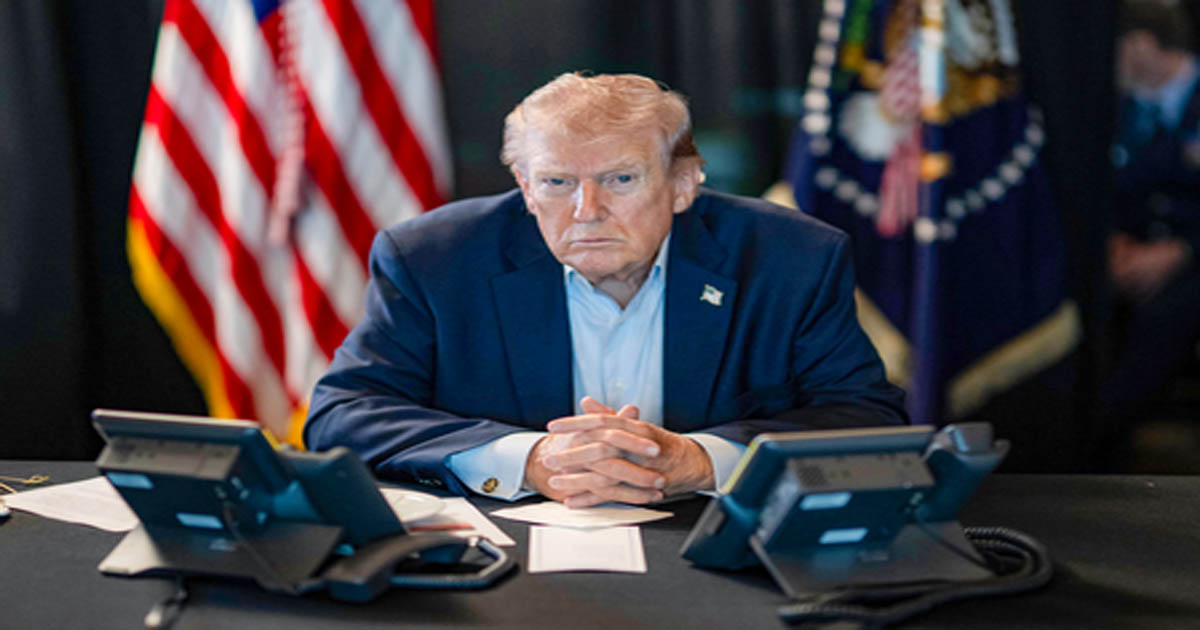
Washington, March 15: US President Donald Trump has rejected a potential deal with Iran to end the ongoing conflict, saying the proposed terms were “not good enough yet”, even as he called on countries around the world to deploy naval forces to help secure the Strait of Hormuz and keep global oil shipments moving.
In a wide-ranging telephone interview with NBC News on Saturday, Trump said Iran had signalled interest in negotiations but insisted Washington would not rush into a ceasefire agreement while the war continues.
“Iran wants to make a deal, and I don’t want to make it because the terms aren’t good enough yet,” Trump said in the interview.
Asked what the terms of a possible agreement would include, the president declined to elaborate. “I don’t want to say that to you,” he said, though he suggested that abandoning nuclear ambitions would likely be central to any deal.
The remarks came as the war between the US, Israel, and Iran entered its third week, with fighting spreading across the Middle East and global energy markets shaken by tensions around the Strait of Hormuz.
Trump said the US is urging countries affected by disruptions to oil shipments to help secure the strategic waterway.
“They’ve not only committed, but they think it’s a great idea,” Trump said when asked about possible international participation.
Earlier in the day, Trump also appealed publicly for a multinational effort to protect the route.
In a Truth Social post, he wrote that “Many Countries, especially those who are affected by Iran’s attempted closure of the Hormuz Strait, will be sending War Ships, in conjunction with the United States of America, to keep the Strait open and safe.”
He added that he hoped nations including China, France, Japan, South Korea, and the UK would deploy naval vessels to the area.
The Strait of Hormuz is widely regarded as the world’s most critical oil shipping lane, carrying a large share of global crude exports.
The president also confirmed in the NBC interview that US forces had carried out strikes on Kharg Island, a strategic Iranian oil export hub.
“We totally demolished Kharg Island, but we may hit it a few more times just for fun,” Trump said.
However, he said US forces had deliberately avoided destroying key energy infrastructure on the island.
“Except, as you know, I didn’t do anything having to do with the energy lines, because having to rebuild that would take years,” he added.
The fighting has already taken a toll on US forces. According to reporting by The New York Times, six American service members died this week when a US Air Force refuelling aircraft crashed in Iraq while supporting operations linked to the war.
The crash brought the total number of American service members killed in the conflict to at least 13.
The conflict has also spilled across the region.
According to The Washington Post, the US Embassy compound in Baghdad was struck in an attack early Saturday. Air raid sirens sounded, and smoke was seen rising from inside the diplomatic compound after an explosion damaged a structure on the roof.
The embassy warned Americans not to approach the facility because of security risks.
Iran-aligned militias have carried out multiple attacks across Iraq in recent days, targeting diplomatic facilities, infrastructure, and locations linked to the US and its allies, according to reporting by The New York Times.
Iran has also continued missile and drone attacks across the Gulf region. The governments in the UAE, Saudi Arabia, and Bahrain reported intercepting numerous drones and missiles during the latest wave of strikes.
Despite rising tensions and surging oil prices, Trump dismissed concerns that higher gasoline prices could hurt his political standing.
“I think they’ll go lower than they were before, and I had them at record lows,” Trump said, predicting prices would fall once the war ends.
“I’m not concerned at all,” he added. “The only thing I want to do is make sure that Iran can never be the bully of the Middle East again.”
The war began after the US and Israel launched a joint military campaign against Iran on February 28, targeting military infrastructure and facilities linked to Tehran’s missile and drone programmes.
Since then, the Strait of Hormuz has emerged as the central geopolitical flashpoint in the conflict. Iran has threatened to block tanker traffic through the narrow passage, raising fears of a major global energy shock and prompting the US and its allies to consider naval operations to keep the route open.
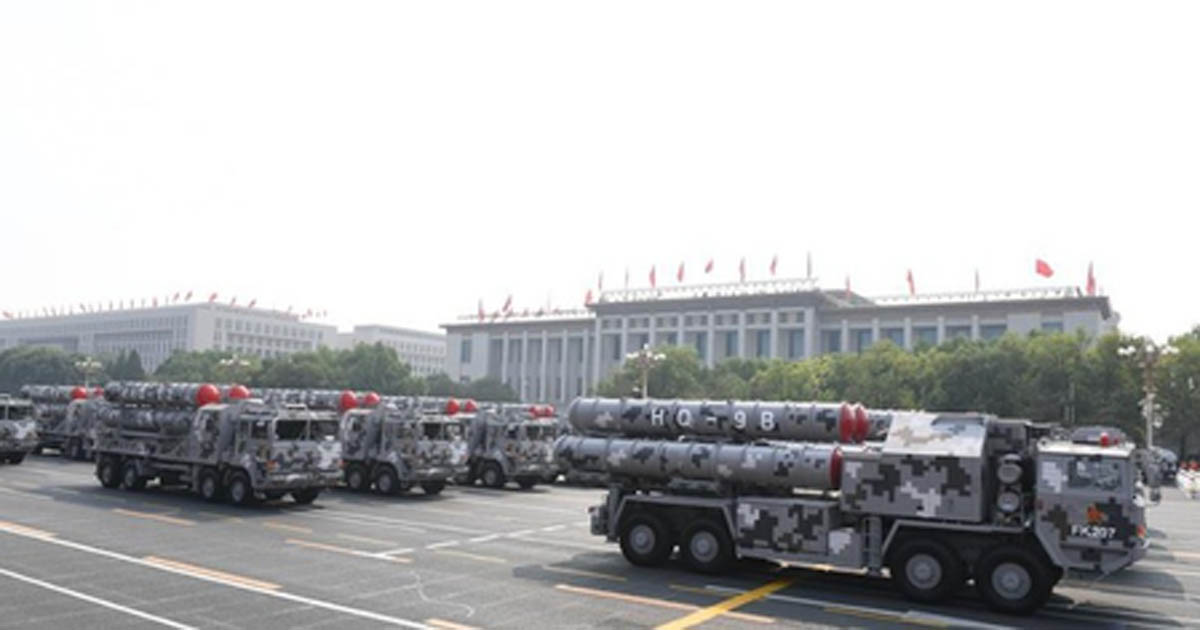
Washington, March 15: China has become a subject of international ridicule as its HQ-9B missiles, once touted as the best air defence system, have failed catastrophically in Pakistan, Venezuela and now Iran within a year, according to a latest report.
While China’s HQ-9B missiles and JY-27A radars impressed on military parades, in actual combat, they have proven ineffective, appearing “blind, deaf, and mute”, the report highlighted.
“The HQ-9B, also known as Red Flag 9, is a cheap copy of the powerful US Patriot missiles and the Russian S-300. In theory, they have built-in radar systems to track and engage multiple targets simultaneously. In practice, they have demonstrated the opposite. Since May of last year, serious concerns have been raised about the HQ-9B’s inadequacy. In India’s Operation Sindoor against Pakistan, the Chinese missiles were soundly defeated for four consecutive days. They were unable to defend, destroy or track anything,” American newspaper ‘The Hill’ detailed.
According to the report, China’s JY-27 radar is a system “capable of identifying and scanning targets” between 280 and 390 kilometres away and “specialises in the early detection of fast, supersonic F-22 and F-35 fighter jets”.
“But in real combat, when Maduro was captured in Venezuela, the Chinese radars became a point of national humiliation and shame, failing to detect even one of the 150 aircraft that penetrated Venezuelan airspace,” it added.
According to the report, during US-launched Operation Epic Fury in Iran, resulting in deadly strikes killing Iranian Supreme leader Ayatollah Ali Khamenei and some 49 high-ranking military officers, the Iranian defence system — including the Chinese HQ-9B missile system — failed.
“Chinese power failed miserably. The US has demonstrated technological capability and extraordinary military expertise. China’s propaganda is effective, but its military technology is not. A few years ago, countries like Egypt, Azerbaijan, Pakistan and Iran spent billions on Chinese air defence systems; today, they regret it,” it mentioned.
“Events in Pakistan, Venezuela and Iran also give hope to Taiwan. China has lost credibility, and its arms race is no longer as formidable. Although Beijing is still a nuclear power, its combat technology and radars have already proven unreliable, vulnerable and of low quality when compared to those of the US,” it noted.

Dhaka, March 15: India has repeatedly raised concerns over the safety of the minority communities with Bangladeshi authorities, and expects thorough investigations and accountability. However, the responsibility to ensure the protection of all citizens lies with the government of Bangladesh, a report highlighted.
Citing rights groups, it stated that preventing recurring violence requires more than reactive policing; it demands “sustained legal protection, swift prosecution of offenders, and community reconciliation efforts”.
“Without transparent, independently verifiable data, the full picture remains contested. Yet the allegations alone underscore a broader concern: when minorities in any country face persistent insecurity, it challenges the region’s commitment to pluralism, rule of law, and fundamental human dignity,” The Morning Voice newspaper detailed.
According to the report, a recent disclosure in India’s Parliament revealed that nearly 3,100 incidents of violence targeting Hindus and other minorities took place in Bangladesh between August 2024 and February 2026, raising serious concerns about minority safety in the neighbouring country.
“Attacks allegedly targeted homes, businesses, and places of worship, with reports of killings and arson. If accurate, such acts would represent not only communal violence but also a grave violation of internationally recognised human rights principles, including freedom of religion, equality before the law, and the right to life and security,” the report stressed.
“The issue carries particular sensitivity for India, which shares a long and porous border with Bangladesh and deep historical, cultural, and demographic ties. Instability affecting minorities across the border can have humanitarian, diplomatic, and security implications, including displacement pressures and cross-border tensions,” it added.
The report further said that if verified, the violence against minorities would be more than just a domestic problem, emerging as a human rights concern that calls for sustained global attention.
Bangladesh witnessed escalating attacks on minorities, particularly Hindus, sparking grave human rights concerns, which intensified during the eighteen-month tenure of Muhammad Yunus-led interim government.

Mumbai: Not only Muslims but also Hindus are worried about SIR, SP national president Akhilesh Yadav criticizes UP government and Election Commission

BMC Removes Flashing Lights From Mumbai Mayor Ritu Tawde’s Car Following Social Media & RTI Protest

Trump rejects deal with Iran, seeks global help on Hormuz

China’s air defence system fails miserably, becomes ‘laughing stock’: Report

Mumbai: Shiv Sena (UBT) leader Sanjay Raut Alleges Election Commission Acting As ‘Extended Branch Of BJP’, Says Opposition Does Not Trust Poll Body

Salim Khan hospitalised following complaints of swelling

Mulund Horror: Maharashtra CM Devendra Fadnavis Expresses Grief After 1 Killed In Mumbai Metro 4 Slab Collapse; ₹5 Lakh Aid Announced For Deceased

Mumbai: JBCN International School In Borivali Gets Bomb Threat, Search Reveals Hoax, Students Safe

Former Arsenal Star Mesut Ozil’s Convoy Gets Involved In Road Accident During Bangladesh Visit

Gold and silver surge on safe haven demand, margin cut
-

 Crime4 years ago
Class 10 student jumps to death in Jaipur
-

 Maharashtra1 year ago
Mumbai Local Train Update: Central Railway’s New Timetable Comes Into Effect; Check Full List Of Revised Timings & Stations
-

 Maharashtra1 year ago
Mumbai To Go Toll-Free Tonight! Maharashtra Govt Announces Complete Toll Waiver For Light Motor Vehicles At All 5 Entry Points Of City
-

 Maharashtra1 year ago
False photo of Imtiaz Jaleel’s rally, exposing the fooling conspiracy
-

 National News1 year ago
Ministry of Railways rolls out Special Drive 4.0 with focus on digitisation, cleanliness, inclusiveness and grievance redressal
-

 Maharashtra1 year ago
Maharashtra Elections 2024: Mumbai Metro & BEST Services Extended Till Midnight On Voting Day
-

 National News1 year ago
J&K: 4 Jawans Killed, 28 Injured After Bus Carrying BSF Personnel For Poll Duty Falls Into Gorge In Budgam; Terrifying Visuals Surface
-

 Crime1 year ago
Baba Siddique Murder: Mumbai Police Unable To Get Lawrence Bishnoi Custody Due To Home Ministry Order, Says Report