
National News
Pictures of Hindu Gods thrown into river ahead of Buddha Dharma Deeksha in K’taka

An incident of pictures of Hindu Gods being thrown into the river ahead of the Buddha Dharma Deeksha in Karnataka’s Yadgir district was reported on Tuesday stirring a controversy.
The Buddha Dharma Deeksha (conversion to Buddhist religion) will be organised in Hunasagi near the Surapura town in Yadgir district on October 14. The day also marks the “Dhammachakra Pravartan Dina, on which Dr B.R. Ambedkar, the architect of the Indian constitution, renounced Hinduism and accepted Buddhism.
The organizers have also invited Rama Taayi Ambedkar, the granddaughter of Ambedkar to the event. The programme is being organised by the Golden Cave Buddha Vihara Trust and Dalit organisations.
A group of people led by the Golden Cave Buddha Vihara Trust President Venkatesh Hosamani and his aides threw the pictures into the river on Monday. The images were kept and worshipped at his house. They had also taken a video of the act, which went viral on social media triggering controversy.
Nagaraja Kalladevarahalli, one among the group who threw away the pictures, said that Venkatesh was asked to remove the pictures since he was the president of Golden Cave Buddha Vihara Trust. Following this, Venkatesh decided to do away with pictures of Lakshmi, Venkateshwara, Saraswati and other Hindu Gods.
Venkatesh is converting to Buddhism on October 14 along with many others. “That is why we are trying to forget the Hindu religion and embrace Buddhism,” he maintained.
The Hindu activists have slammed the act of throwing of gods of Hindu religion into the river. The police are yet to react to the incident.







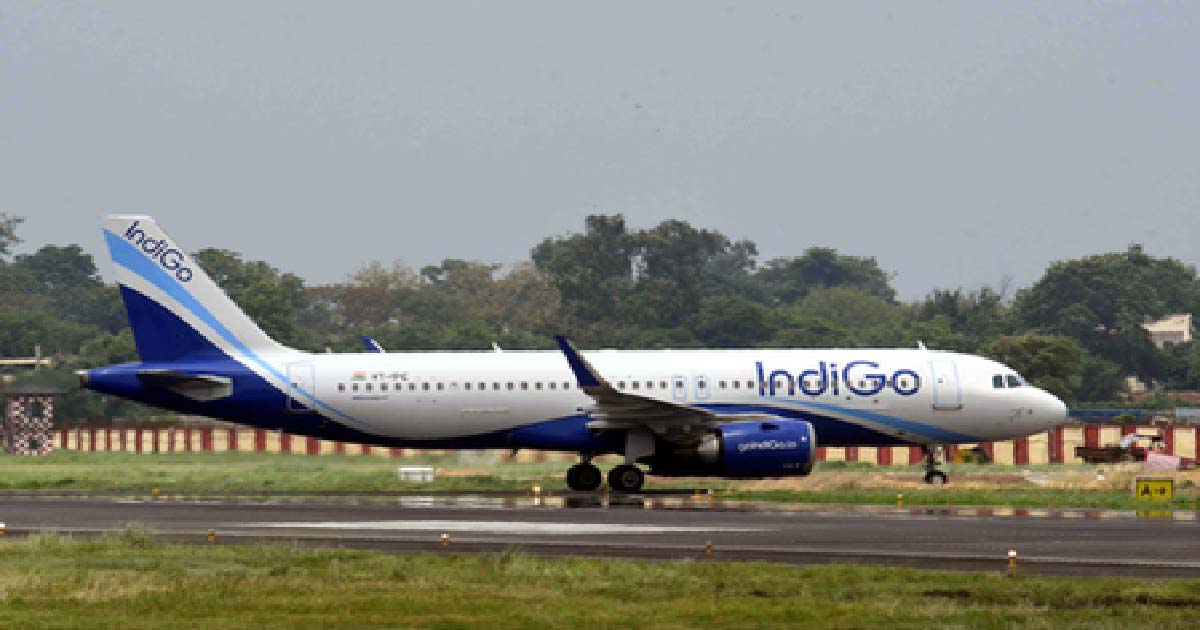
New Delhi, Dec 12: India’s aviation regulator, the Directorate General of Civil Aviation (DGCA) has dismissed four flight inspectors who were responsible for monitoring the safety and operational standards of IndiGo.
The action comes amid a deepening crisis at the airline, which has cancelled thousands of flights this month due to poor planning and failure to meet stricter safety norms.
The cancellations have left tens of thousands of passengers stranded across the country. IndiGo CEO Pieter Elbers has again been summoned by the DGCA and will appear before the officials again on Friday.
According to sources, the DGCA acted against the inspectors after finding negligence in their inspection and monitoring duties.
The regulator has now deployed two special oversight teams at IndiGo’s Gurugram office to closely track the airline’s operations.
These teams will submit a daily report to the DGCA by 6 p.m. One team is monitoring IndiGo’s fleet strength, pilot availability, crew utilisation hours, training schedules, split-duty patterns, unplanned leave, standby crew, and the number of flights affected due to crew shortage.
It is also reviewing the airline’s average stage length and network to understand the full scale of the operational disruption.
The second team is focusing on the impact of the crisis on passengers. This includes checking the status of refunds from both the airline and travel agents, compensation offered under Civil Aviation Requirements (CAR), on-time performance, baggage return, and the overall cancellation status.
IndiGo has been ordered to reduce its operations by 10 per cent to stabilise its schedules and control further disruptions.
The airline usually operates around 2,200 flights per day, which means more than 200 flights will now be cancelled daily.
Civil Aviation Minister Ram Mohan Naidu said passengers had suffered “severe inconvenience” because of IndiGo’s mismanagement of crew rosters, flight timings, and communication.
After a meeting with IndiGo CEO Elbers, the minister said the airline must follow all ministry directives, including fare caps and measures to support affected passengers.
As the DGCA probe continues and IndiGo’s CEO has been summoned for further explanations, the airline has announced compensation for travellers who faced extreme delays between December 3 and 5.

New Delhi, Dec 12: Meta India on Friday announced the appointment of Aman Jain as its new Head of Public Policy.
He will take charge early next year and will report to Simon Milner, Meta’s Vice President of Policy for the Asia Pacific region.
Jain will also join the company’s India leadership team as part of his new role.
“Jain will join the company early next year and will report to Simon Milner, Vice President of Policy, Asia Pacific (APAC). In this role, Aman will also be a member of the India leadership team,” the firm said in a statement.
Aman Jain comes with more than two decades of experience in public policy and business strategy.
He has worked with major global companies such as Amazon and Google, as well as with the Indian Government and international organisations.
At Google India, he served in key leadership positions, including Country Head for Government Affairs and Public Policy.
Most recently, he was the Director of Public Policy at Amazon, where he led policy strategy across areas like marketplace operations, competition, and technology.
Welcoming Jain to the company, Simon Milner said that India remains a crucial market for Meta, especially as the country’s digital economy continues to grow in areas like artificial intelligence, emerging technologies, and the creator economy.
He added that Meta aims to support the development of a more inclusive and trusted internet ecosystem in India.
“As the country’s digital economy accelerates across areas such as AI, emerging tech and the creator economy, Meta aims to help build a more inclusive, trusted, and future-ready internet ecosystem for India,” it added.
Milner said he is pleased to have Aman Jain on board and believes his deep experience in technology and public policy will strengthen Meta’s engagement with regulators and industry partners.
He also noted that Jain will play an important role in Meta’s wider APAC policy leadership team.
National News
Mumbai Weather Update For Dec 12, 2025: City Wakes Up To Cold Morning, Reels Under Haze; AQI Lingers In Poor Category At 148, Wadala Reports Severe Air Quality

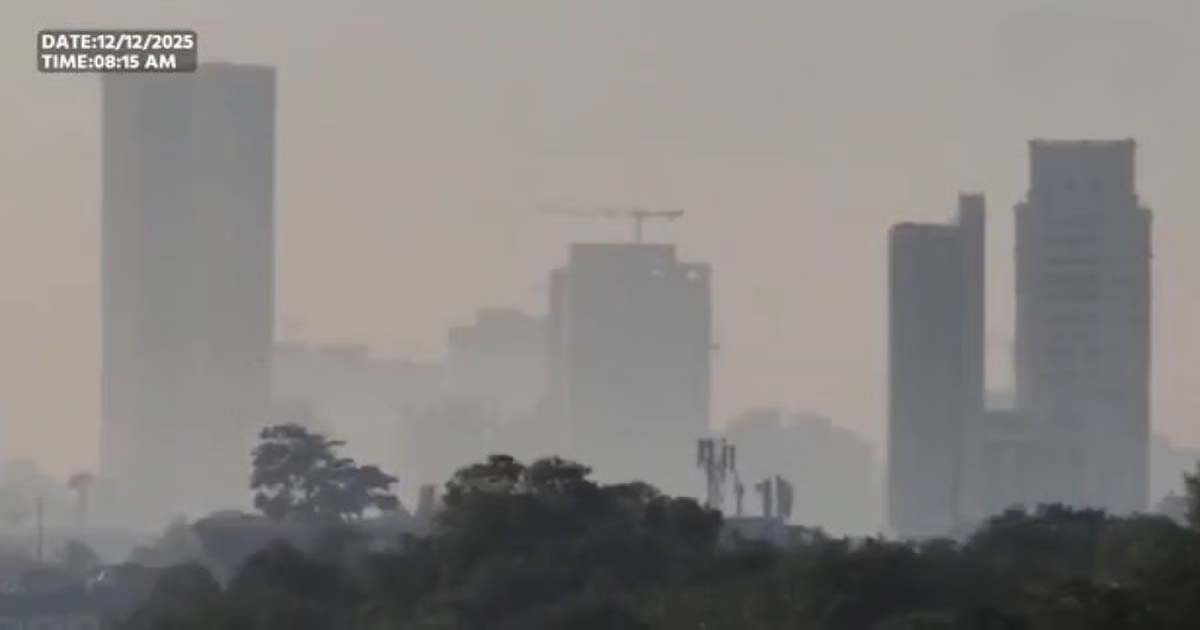
Mumbai: Mumbai experienced a refreshing winter nip on Friday morning as clear skies, cooler winds and mild temperatures offered residents a pleasant start to the day. The India Meteorological Department (IMD) reported that the temperature was likely to hover between a minimum of around 15°C and a maximum of 32°C, marking one of the season’s more comfortable days. However, the seemingly picture-perfect morning masked a persistent environmental challenge: the city’s steadily deteriorating air quality.
Despite the pleasant weather, a thin layer of haze settled over Mumbai, signalling that pollution levels continue to be a concern. According to data from AQI.in, the city’s Air Quality Index (AQI) stood at 148 early Friday morning, categorised as ‘poor’. While this reading is slightly better than the alarming spikes seen in recent weeks, it remains harmful, especially for children, the elderly and those with respiratory issues.
Experts attribute the worsening pollution primarily to dust and particulate matter emitted by Mumbai’s massive infrastructure boom. Large-scale government projects, metro corridors, coastal road construction, bridges and extensive road widening, along with rising private construction continue to add significant pollution load into the atmosphere.
The AQI readings across different areas of the city highlighted stark contrasts. The Wadala Truck Terminal was the worst-hit, recording a staggering AQI of 305, placing it in the ‘severe’ category. Such levels pose health risks even to healthy and active individuals. Mulund West also fared poorly with an AQI of 207, in the ‘unhealthy’ bracket.
Other areas reflected similar patterns. Deonar (200) and Bhandup (187) remained in the ‘poor’ category, while Govandi and Chembur registered AQI levels of 187 and 183, respectively.
Suburban regions performed slightly better but were far from ideal. Parel–Bhoiwada and Kandivali East recorded moderate AQI levels of 73, while Jogeshwari East stood at 95. On the other hand, Charkop (107) and Malad West (117) slid into the ‘poor’ bracket.
For context, an AQI of 0–50 is considered ‘good’, 51–100 ‘moderate’, 101–150 ‘poor’, 151–200 ‘unhealthy’ and anything above 200 ‘hazardous’.

Mumbai Professor Seeks Anticipatory Bail After Molestation Case, Claims Mental Illness And Attempt To Tarnish Image

Celebrate Rajinikanth’s 75th Birthday: Evergreen Films Of Superstar Rajini To Stream On OTT Platform

IndiGo crisis: DGCA fires inspectors, CEO summoned again

Meta India appoints Aman Jain as new head of public policy

Mumbai Weather Update For Dec 12, 2025: City Wakes Up To Cold Morning, Reels Under Haze; AQI Lingers In Poor Category At 148, Wadala Reports Severe Air Quality

Kalyan College Namaz Controversy: SIO Demands Action Against Perpetrators

Mumbai Local Train Update: Megablock On Central, Harbour, Trans-Harbour & Western Railway Lines On Nov 16; Check Details

SS Rajamouli Faces FIR For ‘Hurting’ Religious Sentiments Over Controversial Lord Hanuman Remark At Varanasi Event In Hyderabad

Sensex, Nifty open marginally down amid negative global cues

Mega Block On Sunday, 23-11-2025: Mumbai Local Train Services To Be Affected On CR’s Main Line, No Block On Harbour & Trans-Harbour Line; Check Details
-

 Crime3 years ago
Class 10 student jumps to death in Jaipur
-
 Maharashtra1 year ago
Mumbai Local Train Update: Central Railway’s New Timetable Comes Into Effect; Check Full List Of Revised Timings & Stations
-
 Maharashtra1 year ago
Mumbai To Go Toll-Free Tonight! Maharashtra Govt Announces Complete Toll Waiver For Light Motor Vehicles At All 5 Entry Points Of City
-
 Maharashtra1 year ago
False photo of Imtiaz Jaleel’s rally, exposing the fooling conspiracy
-
 National News1 year ago
Ministry of Railways rolls out Special Drive 4.0 with focus on digitisation, cleanliness, inclusiveness and grievance redressal
-
 Maharashtra1 year ago
Maharashtra Elections 2024: Mumbai Metro & BEST Services Extended Till Midnight On Voting Day
-

 National News1 year ago
J&K: 4 Jawans Killed, 28 Injured After Bus Carrying BSF Personnel For Poll Duty Falls Into Gorge In Budgam; Terrifying Visuals Surface
-
 Crime1 year ago
Baba Siddique Murder: Mumbai Police Unable To Get Lawrence Bishnoi Custody Due To Home Ministry Order, Says Report