
Business
Indian government extends helping hands to poor people by building houses for them


In order to provide the under-priviledged better living conditions, the Indian government initiated the PM Awas Yojana in 2014. Under it, till March 24, 2022, more than 2 crores 32 lakh pucca (concrete) houses have been completed.
People who had believed that life would now pass on pavements and huts, the government itself handed over the keys of the houses to these families. These houses consist of all the amenities including toilets, electricity connection under the Saubhagya scheme, LED bulb under the Ujala scheme, gas connection under the Ujjwala scheme, and water connection under Har Ghar Jal Yojana. That is, the poor beneficiary no longer needs to visit government offices separately for these facilities. Despite the hurdles caused by Corona in the last two years, this work was not allowed to slow down.
Pradhan Mantri Awas Yojana – Urban (PMAY-U), a flagship Mission of Government of India being implemented by Ministry of Housing and Urban Affairs (MoHUA), was launched on June 25, 2015. The Mission addresses urban housing shortage among the EWS/LIG and MIG categories including the slum dwellers by ensuring a pucca house to all eligible urban households by the year 2022, when Nation completes 75 years of its Independence.
The Mission provides Central Assistance to the implementing agencies through States/Union Territories (UTs) and Central Nodal Agencies (CNAs) for providing houses to all eligible families/ beneficiaries against the validated demand for houses for about 1.12 crore. As per PMAY(U) guidelines, the size of a house for Economically Weaker Section (EWS) could be upto 30 sq. mt. carpet area, however States/UTs have the flexibility to enhance the size of houses in consultation and approval of the Ministry.
In continuation to this government’s efforts towards empowerment of women from EWS and LIG unlike earlier schemes, PMAY (U) has made a mandatory provision for the female head of the family to be the owner or co-owner of the house under this Mission.
Jamna of Lanji block of Balaghat, Madhya Pradesh lives with her two daughters. They were living in a dilapidated house that could fall any day. Jamna says that in such a situation, the Modi government has supported, my house has become pucca now. Bhagwanta Devi of Dewas is also happy that now there will be no problem during the monsoon. Such stories from every state and district of the country that poor people are getting pucca houses.
The Ministry of Housing & Urban Affairs has initiated Affordable Rental Housing Complexes (ARHCs), a sub-scheme under Pradhan Mantri Awas Yojana – Urban (PMAY-U). This will provide ease of living to urban migrants/ poor in Industrial Sector as well as in non-formal urban economy to get access to dignified affordable rental housing close to their workplace.
MoHUA has initiated the Global Housing Technology Challenge – India (GHTC-India) which aims to identify and mainstream a basket of innovative construction technologies from across the globe for the housing construction sector that are sustainable, eco-friendly and disaster-resilient.
In Madhya Pradesh, 5.25 lakh such beneficiaries were handed over the keys of the house under the ‘Griha Pravesham’ program. During the event, Prime Minister Narendra Modi himself interacted with many beneficiaries. The Prime Minister said in the programme, “When efforts of an honest government and efforts of empowered poor come together, poverty is defeated”.
He further said the campaign of providing pucca houses to the poor is not just a government scheme but a commitment to instill confidence in the rural poor. It is the first step to give courage to the poor to come out of poverty. When poor people have a roof over their head, they can focus on educating their children. The Prime Minister said the previous government had built “only a few lakh houses for the poor in their tenure. My government has built 2.5 crore houses for them. Of these, 2 crores are in villages. Women too have the ownership rights of around two crore houses built under the Pradhan Mantri Awas Yojana. And, work didn’t slow down despite Corona.”




New Delhi, Dec 15: The government on Monday said it has released Rs 260.20 crore to rural local bodies in Kerala as part of the 15th Finance Commission grants for the financial year 2025-26.
The amount represents the first instalment of untied grants and covers all 14 district panchayats, 152 block panchayats and 9,414 gram panchayats (GPs) in the state, according to an official statement.
Untied grants are meant to be utilised by rural local bodies/PRIs for location-specific felt needs under the 29 subjects listed in the Eleventh Schedule of the Constitution, except for salaries and other establishment expenditures.
Tied Grants, on the other hand, are earmarked for basic services relating to sanitation and maintenance of ODF (open defecation-free) status, including management and treatment of household waste, human excreta and faecal sludge, and supply of drinking water, rainwater harvesting, and water recycling.
Last week, the government released Rs 717.17 crore to strengthen rural local bodies in Maharashtra as part of the first instalment of untied grants for the financial year 2025-26. The funds were released to duly elected and eligible rural local bodies in the state, covering two district panchayats (Zilla Parishads), 15 block panchayats (panchayat samitis), and 26,544 gram panchayats.
The government, through the Ministry of Panchayati Raj and the Ministry of Jal Shakti (Department of Drinking Water and Sanitation), recommends release of 15th Finance Commission grants to states for Panchayati Raj Institutions, which are then released by the Ministry of Finance.
The allocated grants are recommended and released in two instalments in a financial year.
Earlier in November this year, the Centre released over Rs 223 crore for rural local bodies in Assam and another Rs 444.38 crore to strengthen panchayat bodies in Odisha as part of the 15th Finance Commission grants.
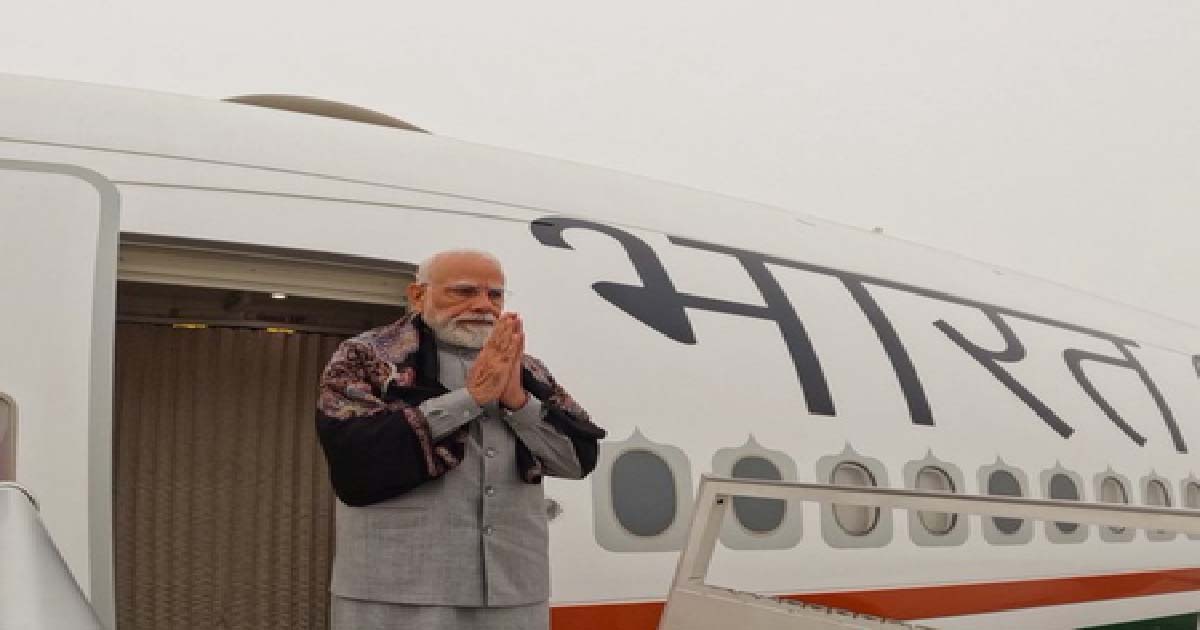
New Delhi, Dec 15: As Prime Minister Narendra Modi embarked on a three-nation visit to Jordan, Ethiopia and Oman on Monday, bolstering economic and trade ties is among the key agenda items of his visit.
PM Modi’s visit is expected to open far-reaching opportunities to enhance the country’s economic footprint across West Asia and Africa.
Last week, the Union Cabinet, chaired by the Prime Minister, approved the proposed Free Trade Agreement (FTA) between India and Oman, aimed at deepening trade and investment relations between the two countries.
The approval also came after Oman’s Shura Council approved the Gulf nation’s proposed FTA with India. The talks for the trade agreement, officially termed the Comprehensive Economic Partnership Agreement (CEPA), formally began in November 2023.
India and Oman share a long-standing and multidimensional Strategic Partnership supported by strong trade ties, energy cooperation and cultural linkages. The economic and commercial relations between India and Oman are robust and buoyant.
The bilateral trade between the two nations reached $8.947 billion during FY 2023-2024, and for FY 2024-25, it stood at $10.613 billion, according to an official statement. Bilateral investment flows have also been strong, as reflected in numerous joint ventures established both in India and Oman.
Moreover, there are over 6,000 India-Oman joint ventures present in Oman, estimated to be adding $7.5 billion to Oman’s economy in the form of total capital investment over a long period.
PM Modi will hold high-level talks with the Sultan of Oman in Muscat and discuss strengthening the Strategic Partnership as well as the strong commercial and economic relationship between the two nations.
Notably, India is Jordan’s third-largest partner, with bilateral trade at around $2.8 billion. Jordan is a key supplier of fertilisers to India, particularly phosphates and potash.
Although the size of India-Ethiopia bilateral trade was around $550 million in FY25, India was the second largest trading partner for the African nation. India’s key exports include primary and semi-finished iron and steel products, drugs and pharmaceuticals, fertilisers and machinery, among others.
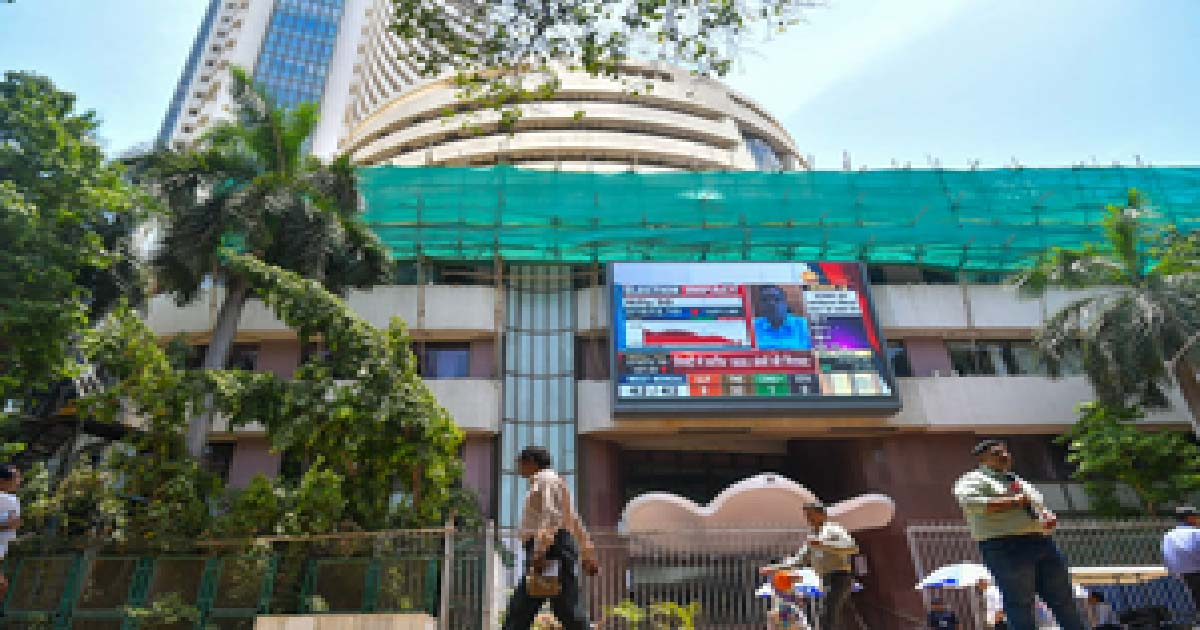
Mumbai, Dec 13: Indian equity benchmarks made marginal losses during the week amid sustained FII outflows and uncertainty surrounding the US-India trade negotiations.
However, the market ended the week in a bullish tone with Nifty surging 0.57 per cent on the last trading day after the US Federal Reserve announced a 25-bps rate cut.
Benchmark indices Nifty and Sensex dipped 0.36 and 0.17 per cent during the week to close at 26,046 and 85,267, respectively.
Indian equities opened the week on a subdued note, amid continued rupee depreciation and negative global cues due to rising Japanese bond yields.
The US Fed rate cut later in the week eased liquidity concerns and fuelled hopes of renewed FII inflows. With supportive central bank policies, steady domestic investments, and optimism over trade progress despite unclear timelines, benchmarks closed the week on a strong note.
India’s year-on-year inflation rate based on the Consumer Price Index (CPI) was estimated at 0.71 per cent for November this year which was marginally higher than the 0.25 per cent in October, according to figures released by the Ministry of Statistics.
Broader indices underperformed, with the Nifty Midcap100 and Smallcap100 down 0.51 per cent and 0.67 per cent, respectively, in a week.
Sectoral performance was mixed, with IT under pressure while PSU banks, real estate and consumer durables witnessed selective buying.
Hrishikesh Yedve, AVP Technical and Derivative Research, Asit C. Mehta Investment Interrmediates, said that Nifty’s weekly chart shows buying interest at lower levels.
Nifty has 26,200 and 26,325 as stiff resistance levels while 25,700 will act as support zone, he added.
Analysts said that markets will likely remain positive in near future but sensitive to rupee stability, FII flow trends, trade agreement clarity, and cues from major central banks abroad.
Amidst risks from currency fluctuations and global trade uncertainties, improving earnings visibility and liquidity support provide a constructive backdrop and downside protection, they added.

Mumbai Civic Healthcare Goes Digital: BMC Launches Health Chatbot To Improve Access, Transparency And Efficiency

Mumbai Crime: TV Actor Anuj Sachdeva Assaulted Over Parking Dispute In Goregaon Housing Society; FIR Registered

Police attacked during group clash in Kandivali… Five arrested, police in action mode, case registered

Mumbai Civic Body Elections to Be Held on January 15; Counting Scheduled for January 16

ED seizes Rs 79 crore properties of Punjab firm involved in water pollution

Kalyan College Namaz Controversy: SIO Demands Action Against Perpetrators

SS Rajamouli Faces FIR For ‘Hurting’ Religious Sentiments Over Controversial Lord Hanuman Remark At Varanasi Event In Hyderabad

Sensex, Nifty open lower amid weak global cues

Sensex, Nifty open marginally down amid negative global cues

Mega Block On Sunday, 23-11-2025: Mumbai Local Train Services To Be Affected On CR’s Main Line, No Block On Harbour & Trans-Harbour Line; Check Details
-

 Crime3 years ago
Class 10 student jumps to death in Jaipur
-
 Maharashtra1 year ago
Mumbai Local Train Update: Central Railway’s New Timetable Comes Into Effect; Check Full List Of Revised Timings & Stations
-
 Maharashtra1 year ago
Mumbai To Go Toll-Free Tonight! Maharashtra Govt Announces Complete Toll Waiver For Light Motor Vehicles At All 5 Entry Points Of City
-

 Maharashtra1 year ago
False photo of Imtiaz Jaleel’s rally, exposing the fooling conspiracy
-
 National News1 year ago
Ministry of Railways rolls out Special Drive 4.0 with focus on digitisation, cleanliness, inclusiveness and grievance redressal
-
 Maharashtra1 year ago
Maharashtra Elections 2024: Mumbai Metro & BEST Services Extended Till Midnight On Voting Day
-

 National News1 year ago
J&K: 4 Jawans Killed, 28 Injured After Bus Carrying BSF Personnel For Poll Duty Falls Into Gorge In Budgam; Terrifying Visuals Surface
-
 Crime1 year ago
Baba Siddique Murder: Mumbai Police Unable To Get Lawrence Bishnoi Custody Due To Home Ministry Order, Says Report