
Business
Petrol, diesel prices raised again for 2nd consecutive day

State-owned oil marketing companies on Wednesday raised petrol and diesel prices for the second consecutive day.
These prices were revised for the very first time on Tuesday after a gap of more than 4-months.
Accordingly, the increase in selling price which includes state levies, central excise and cess amongst others came days after crude oil prices saw astronomical rise due to the Russian-Ukrainian crisis.
In New Delhi, the price of petrol and diesel were increased again by 80 paise per litre.
As per pump prices, petrol now costs Rs 97.01 per litre and diesel Rs 88.27 per litre in Delhi.
On Tuesday, petrol prices were increased to Rs 96.21 per litre and diesel to Rs 87.47 per litre.
In the financial capital Mumbai, prices were hiked to Rs 111.67 per litre for petrol and diesel to Rs 95.85 per litre.
Besides, the prices of both the transport fuels were raised in Kolkata. The petrol prices rose to Rs 106.34 and diesel to Rs 91.42 per litre.
In Chennai too, they were increased. Petrol there now costs Rs 102.91 and Rs 92.95 per litre.
Till Tuesday, fuel prices were steady since early November when the Centre reduced excise duty on petrol and diesel by Rs 5 and Rs 10 per litre, respectively.
The OMCs revise the transportation fuel cost based on various factors such as rupee to US Dollar exchange rate, cost of crude oil and demand of fuel amongst others.
Resultantly, the final price includes excise duty, value added tax and dealer’s commission.
It was widely expected that the OMCs will revise the current prices due to high crude oil cost.
Lately, crude oil prices have been volatile surging by nearly 35-40 per cent on fear of tight supplies.
Furthermore, it is feared that current sanctions against Russia will curtail more global supplies and stifle growth.
The crude oil price range is a cause of concern for India as it may ultimately add Rs 15-Rs 25 in petrol and diesel selling prices.
At present, India imports nearly 85 per cent of its crude oil requirements.


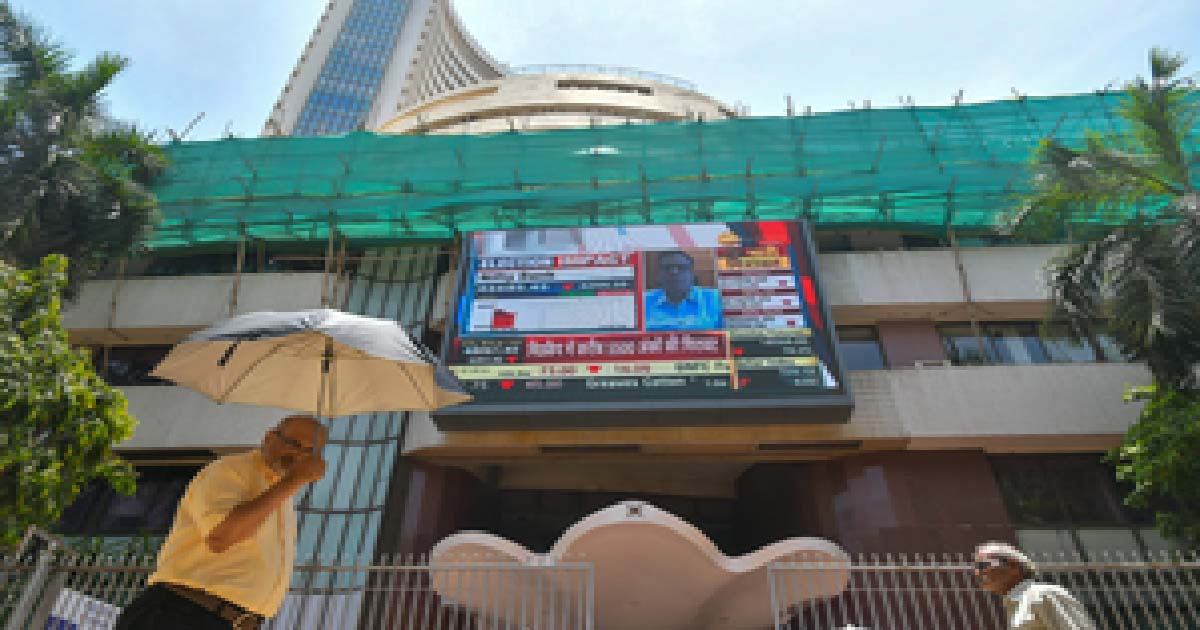
Mumbai, Dec 2: Indian stock markets opened with a sharp gap-down on Tuesday but soon recovered some losses as investors continued to book profits after the recent rally.
The Sensex was trading at around 85,508, down 134 points or 0.16 per cent, while the Nifty slipped 31 points or 0.12 per cent to 26,145.
“The Nifty’s positional trend remains bullish, with strong support at the 26000-26050 zone. On the higher side, 26300 could offer resistance on a closing basis,” market watchers added.
Heavyweights such as HDFC Bank, ICICI Bank, Ultratech Cement, Axis Bank, Bajaj Finserv, Tata Steel, Tata Motors PV, Titan Company and Power Grid dragged the indices lower.
Eternal also remained under pressure during the early trade.
However, selective buying in stocks like Asian Paints, Infosys, Bharti Airtel, Bajaj Finance, SBI, Maruti Suzuki, NTPC, HUL, and L&T helped the Sensex limit its losses and attempt a mild recovery.
In the broader market space, the Nifty MidCap index edged up 0.27 per cent, indicating some buying interest in mid-sized companies. On the other hand, the Nifty SmallCap index slipped 0.12 per cent.
Sector-wise, financial stocks were among the worst performers, with the Nifty Financial Services index falling 0.7 per cent and the Nifty Bank index dropping 0.4 per cent.
Meanwhile, the Nifty PSU Bank index gained 0.9 per cent, emerging as the top performer, followed by the Nifty Auto index, which rose 0.4 per cent.
Analysts said that markets remained volatile as traders continued to take profits amid mixed global cues.
“Investors can use the current period of consolidation to slowly accumulate fairly-valued largecaps and growth-oriented midcaps which will lead the next leg of rally in the market,” analysts stated.
The Smallcap segment continues to be over-valued. The Bank Nifty, despite the recent run up, have the potential to impart resilience to the market since there is valuation comfort in this segment. The pick up in credit growth is another positive for the segment.

New Delhi, Dec 1: Gross enrolment under the Atal Pension Yojana (APY), a bid to create a universal social security system for all, especially the poor, the under-privileged and the workers in the unorganised sector, has reached 8,34,13,738 (as on October 31), the Parliament was informed on Monday.
APY was launched in 2015 with the objective of creating a universal social security system for all Indians. It is open to all citizens of India between 18 and 40 years of age who have a savings account in a bank or post office.
As per the Scheme, the subscriber will receive pension benefits on attaining the age of 60 years.
“Hence, the pension benefit under APY is expected to start from 2035 onwards. However, the gross enrolment under Atal Pension Yojana as on 31.10.2025 is 8,34,13,738,” Finance Minister Nirmala Sitharaman told the Lok Sabha in a written reply to a question.
As on October 31, the female gross enrolment under APY is 4,04,41,135, which is 48 per cent of the total enrolment, she noted.
Further, in Bihar, the female gross enrolment under APY is 42,07,233, which is 57 per cent of the total enrolment in the state.
“As on 31.10.2025, a total of 7,153 Bank branches and 461 Post Office branches are enrolling people into APY in Bihar,” the Finance Minister stated.
The government and the Pension Fund Regulatory and Development Authority (PFRDA) have taken several steps to increase awareness and coverage of APY across the country, including rural and remote areas of Bihar.
These include periodic advertisements; APY Subscribers Information Brochure in 13 vernacular languages; and virtual capacity building programmes for Banking Correspondents (BCs) and field staff of Banks, Self Help Group (SHG) members, and bank-sakhis of State Rural Livelihoods Missions (SRLMs).
During the last five years, such programmes have been conducted across various districts of Bihar, including in Muzaffarpur, Patna, Bhojpur, and Nalanda.
Recently, financial inclusion campaigns for pension saturation were organised pan-India India including 8,093 such campaigns in Bihar, said Sitharaman.
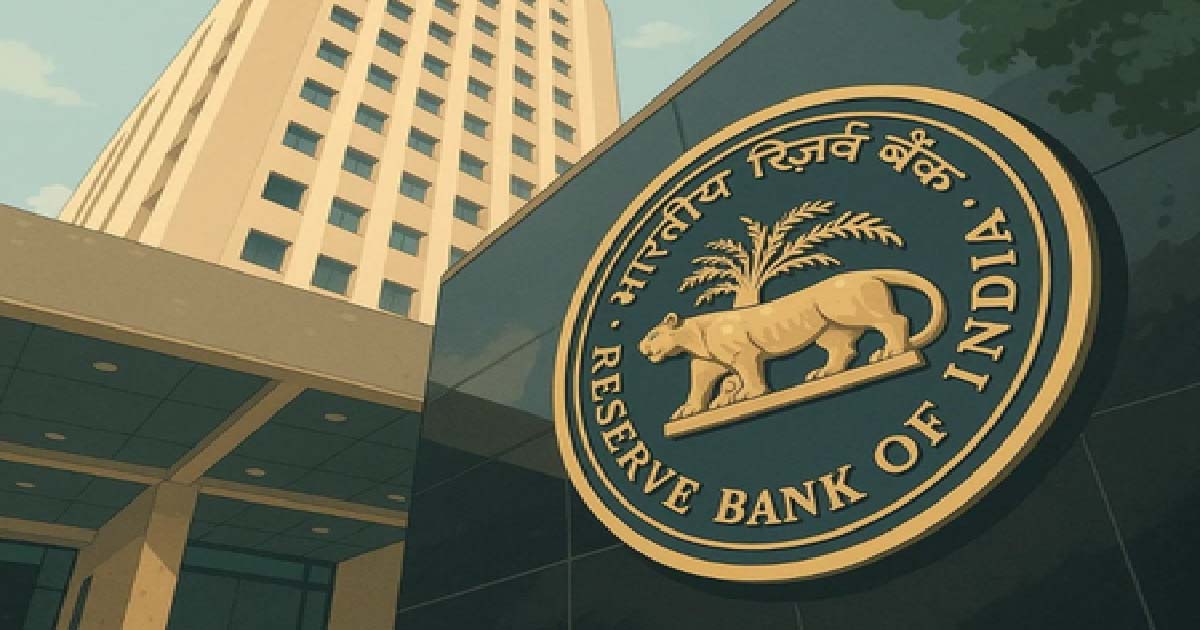
New Delhi, Dec 1: Since inflation is set to remain well below target for the foreseeable future, HSBC Global Investment Research on Monday projected that the RBI will cut rates by 25 bp during its monetary policy committee (MPC) meeting on December 5 — taking the policy repo rate to 5.25 per cent.
Growth has been strong so far, benefitting from the front loading of government spending and GST-cut led retail spending.
However, the November Flash manufacturing PMI (56.6) indicated that GST-led boost may have peaked with the overall new orders coming in soft, said the report.
“Growth is strong for now, but could soften in the March 2026 quarter as the fiscal impulse becomes contractionary and exports slow. We expect the RBI to ease policy rates in the upcoming December policy meeting,” the report mentioned.
The July-September quarter GDP growth came in at 8.2 per cent YoY, higher than 7.8 per cent in the previous quarter and higher than “our above-consensus forecast of 7.5 per cent”. While GVA growth came in at 8.1 per cent, nominal GDP grew 8.7 per cent.
The GDP momentum was clearly higher than our above-consensus forecast. There are some good reasons for the strength, said the report.
One, GST rate cuts were implemented on the September 22, but the announcement was made on August 15.
“We think that production picked up in anticipation of a rise in consumer demand. Two, our recent work indicates that lower income states are starting to rise, even growing faster than the higher income states,” the HSBC report mentioned.
This, too, could possibly explain the strength in India’s growth momentum. After all, national GDP is the sum of state Gross State Domestic Products (GSDP).
According to the report, India’s growth has held up decently despite the 50 per cent reciprocal tariff on India’s exports by the US since August.

Virat Kohli and Rohit Sharma show will continue: Dale Steyn

Navi Mumbai Crime: Anti-Human Trafficking Unit Busts Prostitution Racket At Vashi Spa; 6 Women Rescued, Manager Arrested

Maharashtra Minister Chandrashekhar Bawankule Blames SEC For HC Order Deferring Maharashtra Civic Poll Counting To Dec 21

Mumbai Air Quality Improving, BMC Claims As Crackdown On Polluting Sites Intensifies Across City

RS adjourned till 2 pm amid Oppn’s renewed uproar over SIR

Kalyan College Namaz Controversy: SIO Demands Action Against Perpetrators

FIR filed against unidentified person in Bilaspur train collision

Good News Navi Mumbaikars! Ulwe Coastal Road 60% Complete, Major Link Between Atal Setu & Upcoming NMI Airport Progresses Smoothly

A powerful explosion near Delhi’s Red Fort… High alert across Delhi after the blast; 8 people killed; forensic team arrives at the scene.

Dharmendra’s Fan, An Auto-Rickshaw Driver, Breaks Down Outside Actor’s Mumbai Home After His Discharge, Says ‘Admired Him Since Childhood
-

 Crime3 years ago
Class 10 student jumps to death in Jaipur
-
 Maharashtra1 year ago
Mumbai Local Train Update: Central Railway’s New Timetable Comes Into Effect; Check Full List Of Revised Timings & Stations
-
 Maharashtra1 year ago
Mumbai To Go Toll-Free Tonight! Maharashtra Govt Announces Complete Toll Waiver For Light Motor Vehicles At All 5 Entry Points Of City
-

 Maharashtra1 year ago
False photo of Imtiaz Jaleel’s rally, exposing the fooling conspiracy
-
 National News1 year ago
Ministry of Railways rolls out Special Drive 4.0 with focus on digitisation, cleanliness, inclusiveness and grievance redressal
-
 Maharashtra1 year ago
Maharashtra Elections 2024: Mumbai Metro & BEST Services Extended Till Midnight On Voting Day
-

 National News1 year ago
J&K: 4 Jawans Killed, 28 Injured After Bus Carrying BSF Personnel For Poll Duty Falls Into Gorge In Budgam; Terrifying Visuals Surface
-

 Crime1 year ago
Baba Siddique Murder: Mumbai Police Unable To Get Lawrence Bishnoi Custody Due To Home Ministry Order, Says Report