
Crime
Kids’ kidnap-murder case: Bombay HC commutes death verdict for 2 to life


Bombay High Court.
The Bombay High Court on Tuesday commuted the death sentences on two prime accused – both step-sisters – to life term till death in jail, in the sensational case of the kidnapping of 13 minor children and murdering at least 5 of them, that rocked the state in the early 1990s.
The accused, Seema Mohan Gavit, 39, and Renuka Kiran Shinde, 45, were arrested by Maharashtra Police in 1996 and have so far spent around 25 years under the shadow of the hangman’s noose, at the Yerawada Central Jail, Pune.
Another prime accused and their mother, Anjana, who was also arrested and charged in the case, passed away in 1998 during the pendency of the trial.
A division bench of Justice Nitin Jamdar and Justice Sarang Kotwal commuted the death penalty, rapping the delays by the government authorities in taking a decision on the mercy pleas of the two.
In 2001, the half-sisters were convicted and awarded the death penalty by the Kolhapur Sessions Court for the stunning kidnappings of 13 children and killing 5 of them brutally.
The death sentence was confirmed by the Bombay High Court in 2004 and then the Supreme Court in 2006.
The sisters had earlier filed mercy pleas before the Governor in 2008 that were declined in August 2013, and later to the President, which was rejected in July 2014, even as people from the USA Japan, Canada, and India appealed to the President for commuting the death verdict, saying that execution of women is extremely rare.
After the rejection of their appeals from both the Governor and the President, they moved the Bombay High Court.
The matter was taken up urgently on August 19, 2014, as the two sisters awaited the gallows that day.
The Public Prosecutor issued telephonic instructions to the YCJ Jail Superintendent Yogesh Desai to stop the hangings till their pleas were heard and the matter came up on the board the following day.
The petitioners contended that the government machinery did not adhere to the rules that required utmost expediency and resorted to a “most casual approach” resulting in a delay of nearly 8 years, which the division bench upheld.
The sisters contended, through their lawyer Aniket Vagal, that the delay was attributable to the executive including the Governor and the Maharashtra Government, the Ministry of Home Affairs, and the President, which was denied by the Centre’s lawyer Sandesh Patil.
The judges noted that from the date of the sisters submitting their mercy plea on September 1, 2006 till it was finally disposed of on July 30, 2014, it took 7 years, 10 months and 15 days.
Justice Jamdar and Justice Kotwal also observed how the chronology showed that there was “nothing but the movement of files, delay, and casual approach demonstrated at each stage” and the state government moved “as if it was a routine file, perhaps even slower than that”, at each stage “officers exhibited utter casualness”.
The court also frowned at how, in the period between 2006-2014, modern electronic communication facilities, email, courier, transportation were easily available to all government officers, and termed as “abhorrent” the movement of files/papers in such a crucial matter within the state or the city after gaps of 15 days, month, six months or up to one year.
It also commented on how the matter was circulated before the court only by the petitioner-sisters in 2021 and not by the government since 2016, and the manner in which the two convicts were kept isolated in the ‘Death Convict Yard’ which has an ominous connotation, and was described as “brooding horror of hanging, daunting the prisoner in the condemned cell” by the late Justice Krishna Iyer.
However, the evidence on record shows the kids were brutally murdered, showing the “depravity” of the two convict-sisters which was “heinous and beyond words to condemn”, the bench said, ordering “life imprisonment is till the life of the convict” unless the competent authority decides otherwise, though the (convicts) were beyond reform for society.
The court also cancelled the unexecuted death warrants against the two sisters and disposed of the petition.


Crime
Mumbai: Mulund Gym Owner, Trainer Booked For Cheating 205 Members Of ₹20 Lakh After Sudden Shutdown


Mumbai: Police registered a case against the owner and a trainer of a gym in Mulund East for allegedly cheating over 200 members by abruptly shutting down the facility after collecting annual subscription fees amounting to more than Rs 20 lakh. The case came to light after several members complained that the gym closed without notice and their money was not refunded.
According to police officials, the accused have been identified as Swapnil Nigot, the owner, and Salokhe, a trainer who was managing the facility. The duo allegedly collected approximately Rs 20.05 lakh from 205 members before shutting down Flexfit Gymnasium, located near Hanuman Chowk in Mulund East.
Police stated Nigot had rented the premises and started Flexfit Gymnasium in February 2024. A few months later, in July 2024, the gym’s operations were handed over to Salokhe, who began managing day-to-day activities. The accused allegedly attracted customers by offering heavily discounted annual membership plans, assuring them of long-term access to the facility.
The case was registered based on a complaint filed by Nilesh Nandre (53), one of the gym’s members. In his statement to the police, Nandre said he visited Flexfit Gymnasium in May 2025 while searching for a fitness centre in the area. During his visit, he met Salokhe, who offered him an annual membership for Rs 10,000, which appeared to be a lucrative deal compared to prevailing market rates.
After enrolling, Nandre recommended the gym and its discounted scheme to several of his friends and acquaintances. Many of them also signed up for annual memberships and paid the required fees. The members were able to use the gym facilities for around two months without any issues.
However, on August 9, members were suddenly informed that the gym would be temporarily shut. The management reportedly told them that there was a dispute with the property owner and assured them that the issue would be resolved within two to three days. Despite these assurances, the situation did not improve.
The accused had failed to pay the rent for the premises, following which the landlord locked the gym, leading to its abrupt closure, confirmed police. When members repeatedly contacted the management seeking refunds of their subscription amounts, they allegedly received no response.
With no refunds forthcoming and the gym remaining shut, Nandre approached the police, prompting an investigation. Based on preliminary findings, a case has been registered against Nigot and Salokhe under Section 318 (cheating) of the Bharatiya Nyaya Sanhita, according to the report. Further investigation is underway.
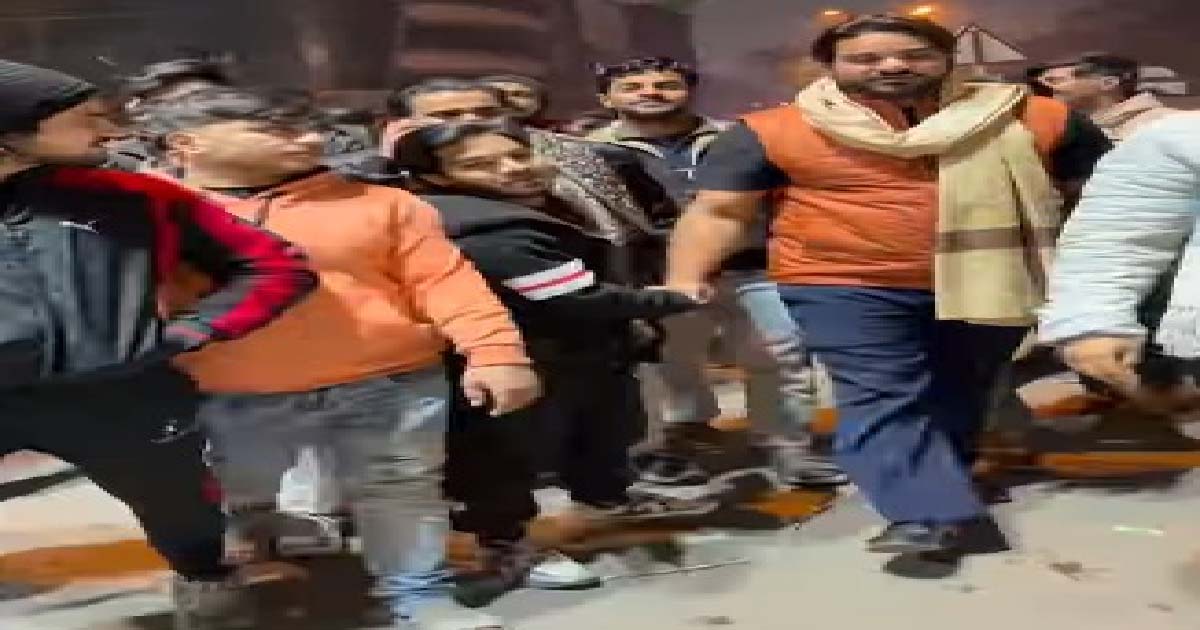
New Delhi, Jan 8: Delhi Police on Thursday intensified its search for YouTuber Salman in connection with the violence that erupted during the Municipal Corporation’s demolition drive near the Faiz-e-Ilahi Mosque in the Turkman Gate area.
According to police sources, Salman allegedly attempted to disrupt peace by using social media platforms. He is accused of calling upon locals to gather at the site during the demolition drive.
The investigation has also revealed that some influential people in the area allegedly incited residents to assemble through their respective WhatsApp groups. Police said their objective was to create unrest and obstruct the work of the administration and law enforcement agencies during the operation.
Meanwhile, an anti-encroachment drive is underway near Faiz-e-Ilahi Mosque at Turkman Gate. Debris is being cleared from the site, and peace is being maintained in the area. Security forces are deployed to ensure order during the operation.
Earlier in the day, Delhi Police said they have identified 30 people involved in the violence that erupted during the municipal corporation’s demolition drive near the Faiz-e-Ilahi Mosque in the Turkman Gate area. The identification was made on the basis of CCTV footage, body-worn camera recordings of police personnel, and several viral videos from the area.
Police officials said a summons will soon be sent to Samajwadi Party MP Mohibbullah Nadvi to join the investigation, as he was allegedly present at the site before the violence broke out.
According to Delhi Police, senior officials had requested the MP to stay away from the immediate vicinity, but he continued to remain near the area before the incident.
Meanwhile, Delhi Police have till now arrested five people in connection with the stone pelting incident during the demolition drive near the mosque. Several police teams have been formed, and raids are being conducted to take the identified individuals into custody.
The copy of FIR, accessed by Media, documented the sequence of events, right from barricading of the encroached land to provocative slogans by locals and then hurling of stones at the policemen, even as the latter tried to explain to them that the demolition drive was limited to illegal constructions and freeing of illegally occupied government land.
According to the FIR, the unrest occurred at 12.40 a.m. when the policemen started barricading the area. A group of 30-35 people gathered at the spot and started shouting slogans, hindering cops from blockading the area.
Crime
Mumbai Crime: Oshiwara Police Arrest Habitual Thief, Recover Stolen Valuables Worth ₹1.26 Crore

Mumbai: The Oshiwara Police have arrested a habitual offender involved in a major housebreaking case and successfully recovered stolen property worth ₹1,26,10,450.
According to police officials, between 11:00 pm on December 29, 2025, and 7:30 am on December 30, 2025, an unidentified person gained entry through the bathroom window of a bungalow (No. 15, Magnum Tower, Bank Road, 2nd Cross Road, Lokhandwala, Andheri West). The accused broke into the complainant’s cupboard and stole a safe containing gold, diamond and silver ornaments along with cash altogether valued at approximately ₹1,37,20,000.
Based on the complaint, Oshiwara Police registered an FIR on December 30, 2025, under sections 331(4) and 305(A) of BNS. Following the registration of the case, the Senior Police Inspector, Crime Detection Officer and the police team visited the crime scene and conducted a detailed inspection.
Even without knowing the suspect’s residence, officers skillfully gathered intelligence. Sub-Inspector Vikas Kadam and his team laid a trap in the locality where the accused was suspected to be hiding and kept watch for two days. The suspect finally appeared, and on January 3, 2026, the team detained him for interrogation.
During questioning, the accused confessed that he had kept the stolen valuables at his residence and some with a jeweller. Acting promptly, the police recovered stolen diamond, gold and silver ornaments valued at ₹1,26,10,450.
Further investigation revealed that the arrested accused has a criminal history with 14 previous cases registered against him. Police officials also stated that more cases from Oshiwara Police Station and other police jurisdictions are likely to be detected during further interrogation.

Navi Mumbai Police Impose Traffic Restrictions Near D Y Patil Stadium During WPL 2026

Providing basic amenities to Mumbai is our priority, Samajwadi Party’s election manifesto released, Abu Asim Azmi claims to solve urban problems

BMC Elections 2026: Mumbai Candidates Declare Massive Surge In Assets, Multi-Crore Wealth Revealed In Affidavits

Major Accident On Ghodbunder Road: Multi-Vehicle Crash Near Gaimukh Disrupts Traffic Between Thane & Mira Road

Plot to shift Mumbai assets to Gujarat: Raj Thackeray in Saamana

Mamata Banerjee announces judicial committee to probe chaos at Salt Lake Stadium over Lionel Messi’s visit

One more accused arrested for vandalism during Lionel Messi’s Kolkata event

Jannat Zubair and Elvish Yadav meet Messi, call it an ‘amazing day’

Andhra Pradesh CM congratulates Koneru Humpy

Sensex, Nifty open lower amid tariff-related concerns
-

 Crime3 years ago
Class 10 student jumps to death in Jaipur
-

 Maharashtra1 year ago
Mumbai Local Train Update: Central Railway’s New Timetable Comes Into Effect; Check Full List Of Revised Timings & Stations
-

 Maharashtra1 year ago
Mumbai To Go Toll-Free Tonight! Maharashtra Govt Announces Complete Toll Waiver For Light Motor Vehicles At All 5 Entry Points Of City
-

 Maharashtra1 year ago
False photo of Imtiaz Jaleel’s rally, exposing the fooling conspiracy
-

 National News1 year ago
Ministry of Railways rolls out Special Drive 4.0 with focus on digitisation, cleanliness, inclusiveness and grievance redressal
-

 Maharashtra1 year ago
Maharashtra Elections 2024: Mumbai Metro & BEST Services Extended Till Midnight On Voting Day
-

 National News1 year ago
J&K: 4 Jawans Killed, 28 Injured After Bus Carrying BSF Personnel For Poll Duty Falls Into Gorge In Budgam; Terrifying Visuals Surface
-

 Crime1 year ago
Baba Siddique Murder: Mumbai Police Unable To Get Lawrence Bishnoi Custody Due To Home Ministry Order, Says Report