
Business
Italian watchdog fines Amazon $1.3 bn for abusing its market position

The Italian Competition Authority on Thursday fined e-commerce giant Amazon $1.3 billion (1.1 billion euros) for using its dominance in the online shopping world and harming competing operators in the logistics space via its ‘Fulfilment by Amazon’ (FBA) service.
The antitrust watchdog called AGCM was particularly concerned with the benefits Amazon gives to sellers on its platform that also pay to use its FBA logistics service.
“The investigation found that these are functions of the Amazon.it platform that are crucial for the success of sellers and for increasing their sales. Finally, the stringent performance measurement system to which Amazon subjects non-FBA sellers is not applied to third-party sellers who use FBA, and failure to pass this can also lead to the suspension of the seller’s account,” the AGCM said in a statement.
In doing so, said the authority, Amazon has harmed competing e-commerce logistics operators by preventing them from proposing themselves to online sellers as providers of services of a quality comparable to that of Amazon’s fulfillment.
“These conducts have, thus, increased the gap between the power of Amazon and that of the competition in the e-commerce order delivery business,” the statement read.
In a statement to Engadget, Amazon said: “We strongly disagree with the decision of the Italian Competition Authority (ICA) and we will appeal. The proposed fine and remedies are unjustified and disproportionate.”
The Italian watchdog said that Amazon must grant sales and visibility privileges on its platform to all the third-party sellers. The ACGM has given Amazon a year to comply with its rulings.
The fine is one of the largest levied by a EU country over online anti-trust issues.
Last month, the AGCM fined tech giants Apple and Google around $11.3 million each over violations of the Consumer Code – one for lack of information and another for aggressive practices regarding the acquisition and use of consumer data for commercial purposes.
This was the second time Apple was fined by the Italian regulator last month, after it and Amazon were hit with fines totalling over around $225 million for restricting who’s allowed to sell Apple and Beats products on Amazon’s Italian store.
Earlier this month, a significant report from a US-based nonprofit organisation claimed that Amazon is exploiting its position as a gatekeeper to impose steep and growing fees on third-party sellers, raking in big moolah.
In 2019, Amazon pocketed $60 billion in seller fees and this year, its take will soar to $121 billion, according to the report titled ‘Amazon’s Toll Road’ by the Institute for Local Self-Reliance.


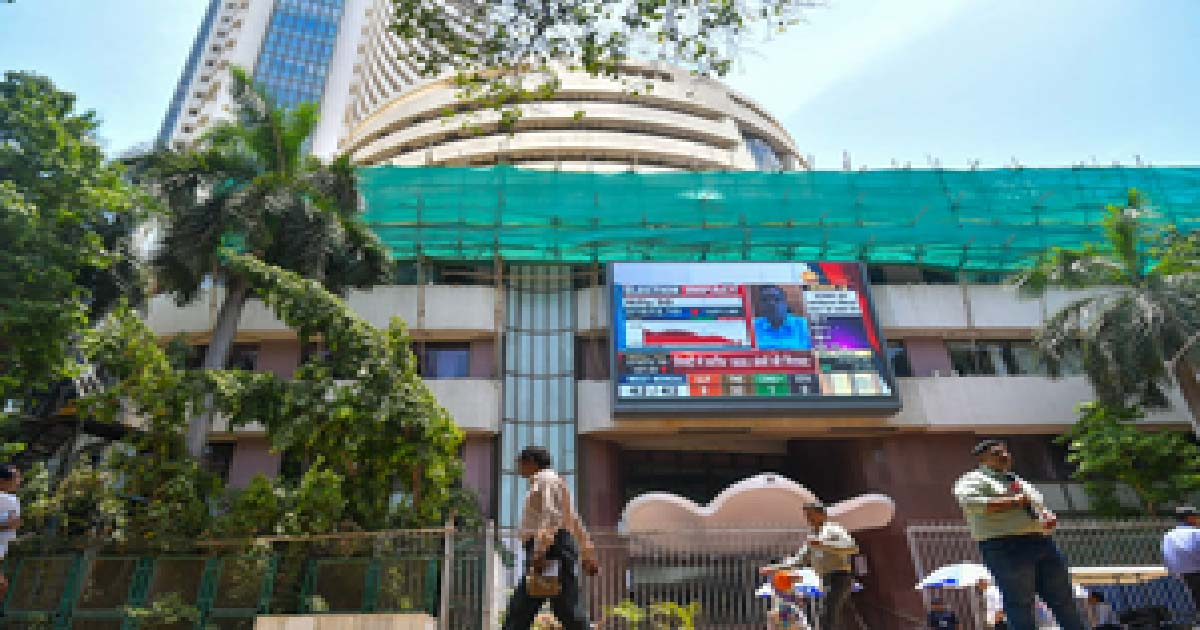
Mumbai, Dec 13: Indian equity benchmarks made marginal losses during the week amid sustained FII outflows and uncertainty surrounding the US-India trade negotiations.
However, the market ended the week in a bullish tone with Nifty surging 0.57 per cent on the last trading day after the US Federal Reserve announced a 25-bps rate cut.
Benchmark indices Nifty and Sensex dipped 0.36 and 0.17 per cent during the week to close at 26,046 and 85,267, respectively.
Indian equities opened the week on a subdued note, amid continued rupee depreciation and negative global cues due to rising Japanese bond yields.
The US Fed rate cut later in the week eased liquidity concerns and fuelled hopes of renewed FII inflows. With supportive central bank policies, steady domestic investments, and optimism over trade progress despite unclear timelines, benchmarks closed the week on a strong note.
India’s year-on-year inflation rate based on the Consumer Price Index (CPI) was estimated at 0.71 per cent for November this year which was marginally higher than the 0.25 per cent in October, according to figures released by the Ministry of Statistics.
Broader indices underperformed, with the Nifty Midcap100 and Smallcap100 down 0.51 per cent and 0.67 per cent, respectively, in a week.
Sectoral performance was mixed, with IT under pressure while PSU banks, real estate and consumer durables witnessed selective buying.
Hrishikesh Yedve, AVP Technical and Derivative Research, Asit C. Mehta Investment Interrmediates, said that Nifty’s weekly chart shows buying interest at lower levels.
Nifty has 26,200 and 26,325 as stiff resistance levels while 25,700 will act as support zone, he added.
Analysts said that markets will likely remain positive in near future but sensitive to rupee stability, FII flow trends, trade agreement clarity, and cues from major central banks abroad.
Amidst risks from currency fluctuations and global trade uncertainties, improving earnings visibility and liquidity support provide a constructive backdrop and downside protection, they added.
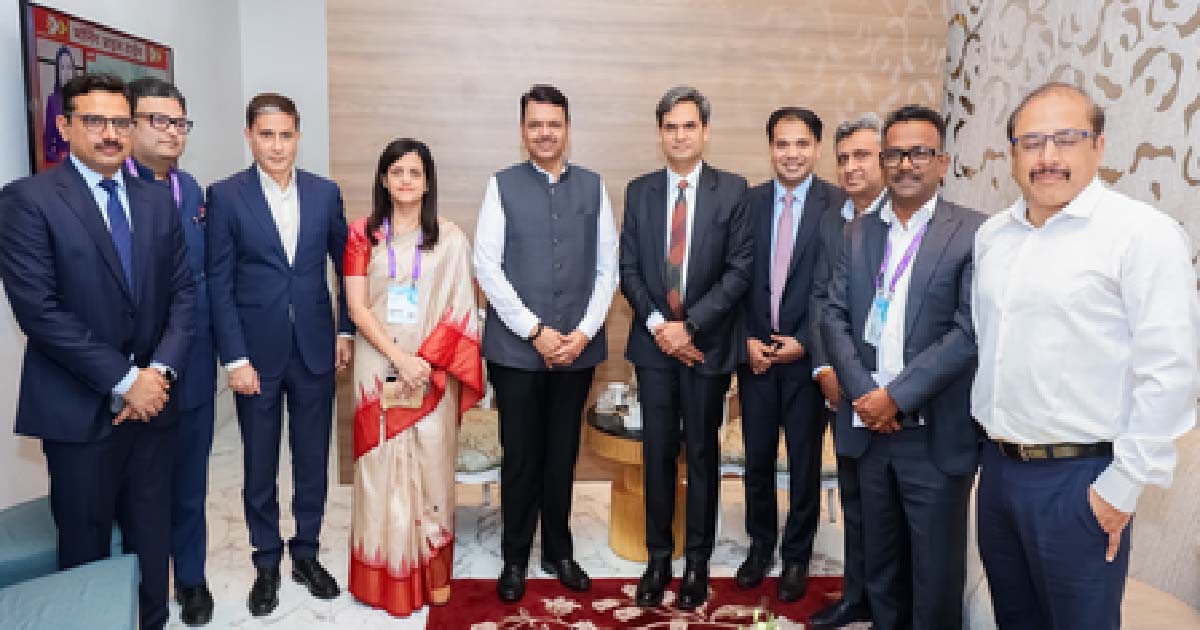
Nagpur, Dec 12: Chief Minister Devendra Fadnavis on Friday announced that a crucial milestone has been achieved in the journey to establish Maharashtra as a GCC (Global Capability Centre) Hub.
He said that the Brookfield company is set to build Asia’s largest Global Capability Centre (GCC) in Mumbai, spanning approximately 2 million square feet.
The Chief Minister said that this project is expected to generate a total of 45,000 jobs, including 15,000 direct and 30,000 indirect jobs.
He stated that due to the state’s talent pool, infrastructure, and industry-friendly environment, Maharashtra is becoming a preferred destination for Global Capability Centres.
“The new GCC policy will lead to large-scale skill-based job creation and economic growth,” he added.
He also mentioned that FedEx, a global leader in the logistics sector, is keen to invest in its GCC and other operations near the Mumbai-Navi Mumbai airport area, said the government release.
The Chief Minister informed that he requested Microsoft to consider Maharashtra for their investments, noting that their largest existing investment is already in the state.
He expressed confidence that Microsoft will make a major investment in the future and take the lead in making Maharashtra an Artificial Intelligence (AI) centre.
The Chief Minister said that Maharashtra’s model for crime control with the help of Artificial Intelligence is a guiding light for the entire country.
Chief Minister Fadnavis confirmed that Microsoft has assured priority to Maharashtra in their largest ever investment in India, amounting to $17 billion.
He further highlighted the ‘Marble’ platform developed by Maharashtra, which helps detect cyber and financial crimes in just 24 hours instead of 3-4 months.
He said that this has resulted in saving people’s money and has expedited the process of tracking criminals.
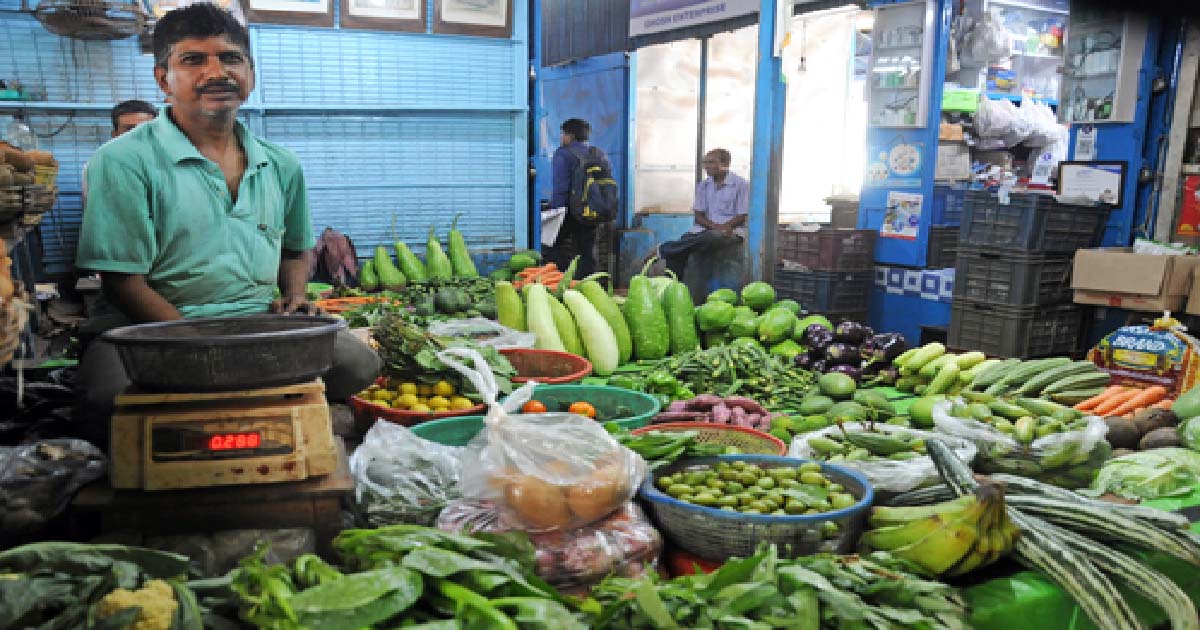
New Delhi, Dec 12: India’s year-on-year inflation rate, based on the Consumer Price Index (CPI), was estimated at 0.71 per cent for November this year which was marginally higher than the 0.25 per cent in October, according to figures released by the Ministry of Statistics on Friday.
Food inflation stayed in the negative zone during November at (-) 3.91 per cent as prices of food goods fell compared to the same month of the previous year. Food inflation has now stayed negative for the sixth month in a row, easing the burden on household budgets.
However, the increase in headline inflation during November 2025 is mainly attributed to an increase in the inflation of vegetables, eggs, meat and fish, spices, and fuels compared to October, according to an official statement.
The retail inflation had eased further in October, after having plummeted to an over 8-year low of 1.54 per cent in September, as prices of food items and goods across sectors fell during the month.
The declining trend in food prices continued in October as food inflation fell deeper in the negative zone at (-) 5.02 per cent from (-) 2.28 per cent in September.
However, the overall outlook for inflation remains benign.
The RBI’s monetary policy committee (MPC) last week slashed its forecast for India’s inflation rate for the financial year 2025-26 to 2 per cent from 2.6 per cent predicted in October due to the sharp decline in food prices and the GST rate cuts playing out.
RBI Governor Sanjay Malhotra announced a reduction in the repo rate by 25 basis points to 5.25 per cent from 5.5 per cent earlier, as inflation had come down and the monetary policy could focus on boosting growth.
Malhotra said that the surge in economic growth to 8.2 per cent in the second quarter of the current financial year and the sharp decline in inflation to 1.7 per cent had provided a rare “Goldilocks period” for the Indian economy.
“The MPC noted that headline inflation has eased significantly and is likely to be softer than the earlier projections, primarily on account of the exceptionally benign food prices. Reflecting these favourable conditions, the projections for average headline inflation in 2025-26 and Q1:2026-27 have been further revised downwards.”
Malhotra also pointed out that core inflation (which excludes food and fuel) remained largely contained in September-October, despite continued price pressures exerted by precious metals. Excluding gold, core inflation moderated to 2.6 per cent in October. Overall, the decline in inflation has become more generalised, he added.
The RBI Governor observed that food supply prospects have improved on the back of higher kharif production, healthy rabi sowing, adequate reservoir levels and conducive soil moisture. Barring some metals, international commodity prices are likely to moderate going forward.

J&K to receive Rs 5.5 billion investment in tourism sector: Omar Abdullah

Maharashtra: Abu Asim Azmi presents bill in the House against religious hatred and blasphemy, application of MCOCA and UAPA also included in the draft bill

Mumbai fuel theft gang busted, 13 accused arreste, The gang of thieves had attempted to steal fuel in November

Mamata Banerjee announces judicial committee to probe chaos at Salt Lake Stadium over Lionel Messi’s visit

Lionel Messi GOAT India Tour: Traffic Diversions Announced In Mumbai On December 14 | Know Restrictions For Roads Around Wankhede Stadium

Kalyan College Namaz Controversy: SIO Demands Action Against Perpetrators

SS Rajamouli Faces FIR For ‘Hurting’ Religious Sentiments Over Controversial Lord Hanuman Remark At Varanasi Event In Hyderabad

Mumbai Local Train Update: Megablock On Central, Harbour, Trans-Harbour & Western Railway Lines On Nov 16; Check Details

Sensex, Nifty open marginally down amid negative global cues

Mega Block On Sunday, 23-11-2025: Mumbai Local Train Services To Be Affected On CR’s Main Line, No Block On Harbour & Trans-Harbour Line; Check Details
-

 Crime3 years ago
Class 10 student jumps to death in Jaipur
-

 Maharashtra1 year ago
Mumbai Local Train Update: Central Railway’s New Timetable Comes Into Effect; Check Full List Of Revised Timings & Stations
-
 Maharashtra1 year ago
Mumbai To Go Toll-Free Tonight! Maharashtra Govt Announces Complete Toll Waiver For Light Motor Vehicles At All 5 Entry Points Of City
-

 Maharashtra1 year ago
False photo of Imtiaz Jaleel’s rally, exposing the fooling conspiracy
-
 National News1 year ago
Ministry of Railways rolls out Special Drive 4.0 with focus on digitisation, cleanliness, inclusiveness and grievance redressal
-
 Maharashtra1 year ago
Maharashtra Elections 2024: Mumbai Metro & BEST Services Extended Till Midnight On Voting Day
-

 National News1 year ago
J&K: 4 Jawans Killed, 28 Injured After Bus Carrying BSF Personnel For Poll Duty Falls Into Gorge In Budgam; Terrifying Visuals Surface
-

 Crime1 year ago
Baba Siddique Murder: Mumbai Police Unable To Get Lawrence Bishnoi Custody Due To Home Ministry Order, Says Report