
Business
Petrol, diesel price hike continues unabated


The prices of petrol and diesel prices rose again on Monday completing one full week of increases that has taken in retail rate to record high levels across the country.
In the national capital, petrol price rose 30 paise per litre and diesel was hiked by 35 paise per litre. The prices of petrol and diesel have crossed the Rs 100 per litre mark in many states, pinching the common man’s pocket.
In Delhi, petrol is now retailing at Rs 104.44 per litre and diesel is available at Rs 93.17 per litre after the latest price revision. On the other hand, in India’s financial capital, Mumbai, petrol became costlier by 29 paise per litre and its rate stands at Rs 110.41 the highest across all the four metro cities. Diesel costs Rs 101.03 for one litre in Mumbai, a hike of 37 paise.
There has been a constant rise in the prices of petrol and diesel for the past six days and the rates are soaring at an all-time high. The prices of petrol and diesel remained steady on October 4, 2021 but saw a hike after that.
Diesel prices have now increased on 15 out of the last 18 days taking up its retail price by Rs 4.55 per litre in Delhi. The prices of diesel has increased between 20-30 paisa per litre so far but since Wednesday it has been increasing by 35 paisa per litre.
With diesel price rising sharply, the fuel is now available at over Rs 100 a litre in several parts of the country. This dubious distinction was earlier available to petrol that had crossed Rs 100 a litre mark across the country a few months earlier.
Petrol prices had maintained stability since September 5 but oil companies finally raised its pump prices last week and this week given a spurt in the product prices lately. Petrol prices have also risen on 12 of the previous 14 days taking up its pump price by Rs 3.25 per litre.
OMCs had preferred to maintain their watch prices on global oil situation before making any revision in prices. This is the reason why petrol prices were not revised for last three weeks. But extreme volatility in global oil price movement has now pushed OMCs to effect the increase.
Across the country as well petrol and diesel increased between 30-40 paisa per litre but their retail rates varied depending on the level of local taxes in the state.
Crude price has been on a surge rising over three year high level of over $83.5 a barrel now. Since September 5, when both petrol and diesel prices were revised, the price of petrol and diesel in the international market is higher by around $9-10 per barrel as compared to average prices during August.
Under the pricing formula adopted by oil companies, rates of petrol and diesel are to be reviewed and revised by them on a daily basis. The new prices becomes effective from morning at 6 a.m.
The daily review and revision of prices is based on the average price of benchmark fuel in the international market in the preceding 15-days, and foreign exchange rates.
But, the fluctuations in global oil prices have prevented OMCs to follow this formula in totality and revisions are now being made with longer gaps. This has also prevented companies from increasing fuel prices whenever their is a mismatch between globally arrived and pump price of fuel.

Business
HM Shah lays foundation stone for 1,655 industrial units ensuring Rs 2 lakh crore investment in MP

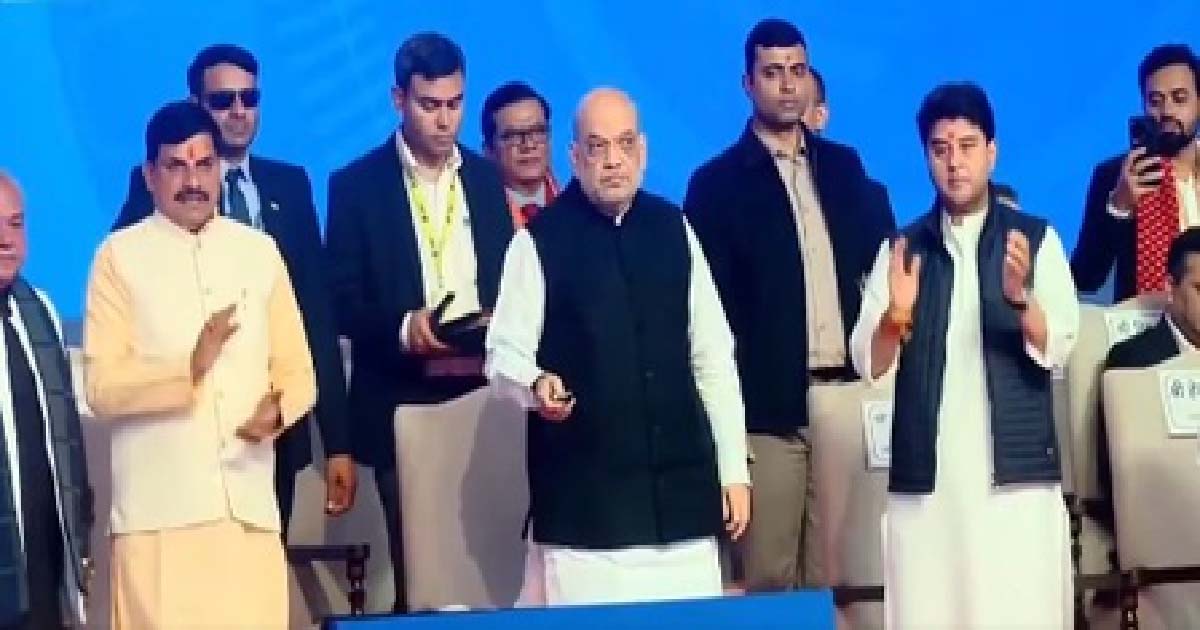
Gwalior, Dec 25: Union Home and Cooperation Minister Amit Shah delivered an inspiring address at the ‘Abhyudaya Madhya Pradesh Growth Summit’ here on Thursday, marking the 101st birth anniversary of former Prime Minister and Bharat Ratna recipient Atal Bihari Vajpayee.
Speaking on the theme ‘Investment to Employment – Atal’s Resolve, a Bright Madhya Pradesh’, HM Shah hailed the state’s rapid transformation under the double-engine government, declaring that Madhya Pradesh is emerging as the growth engine of ‘Viksit Bharat’.
HM Shah lavished praise on Chief Minister Mohan Yadav for pioneering initiatives aimed at balanced regional development across the state.
He highlighted CM Yadav’s innovative approach of organising regional investment promotion events and ground-breaking ceremonies in every division, ensuring equitable growth and unlocking the untapped potential of all areas.
“Chief Minister Mohan Yadav has taken thoughtful steps to establish a strong foundation for all-round development through his regional investment committees,” he said, adding that these efforts surpass even the energetic pace set by previous long-serving BJP Chief Minister Shivraj Singh Chouhan.
The Home Minister emphasised the critical importance of symmetrical industrial establishment to leverage Madhya Pradesh’s strategic geographical location.
He pointed to the traditional strength of cotton production in the Malwa and Gwalior-Chambal regions, noting that declining farmer incomes due to unfair prices could be reversed by setting up processing and allied industries locally. This would minimise transportation costs, make cotton farming profitable again, and connect seamlessly to markets in Delhi, western states, and nearby districts.
HM Shah described the day’s massive investment push – with foundation stones laid for 1,655 industrial units worth over Rs 2 lakh crore, expected to create 193,000 jobs – as a fitting tribute to former Prime Minister Vajpayee’s vision of good governance and national progress.
Held in Vajpayee’s birthplace, the summit, he said, embodied the late leader’s ideology of self-reliance, development, and inclusive growth, giving it a grand resonance on this auspicious occasion.
HM Shah expressed hope for continued central support, promising that true welfare stems from aligning with Prime Minister Narendra Modi’s vision for a prosperous India. The event, attended by prominent industrialists and cabinet ministers, reinforced Madhya Pradesh’s commitment to converting investments into widespread employment and regional prosperity.
Business
Gautam Adani hails war heroes, workers, farmers, and specially-abled as NMIA commences operations
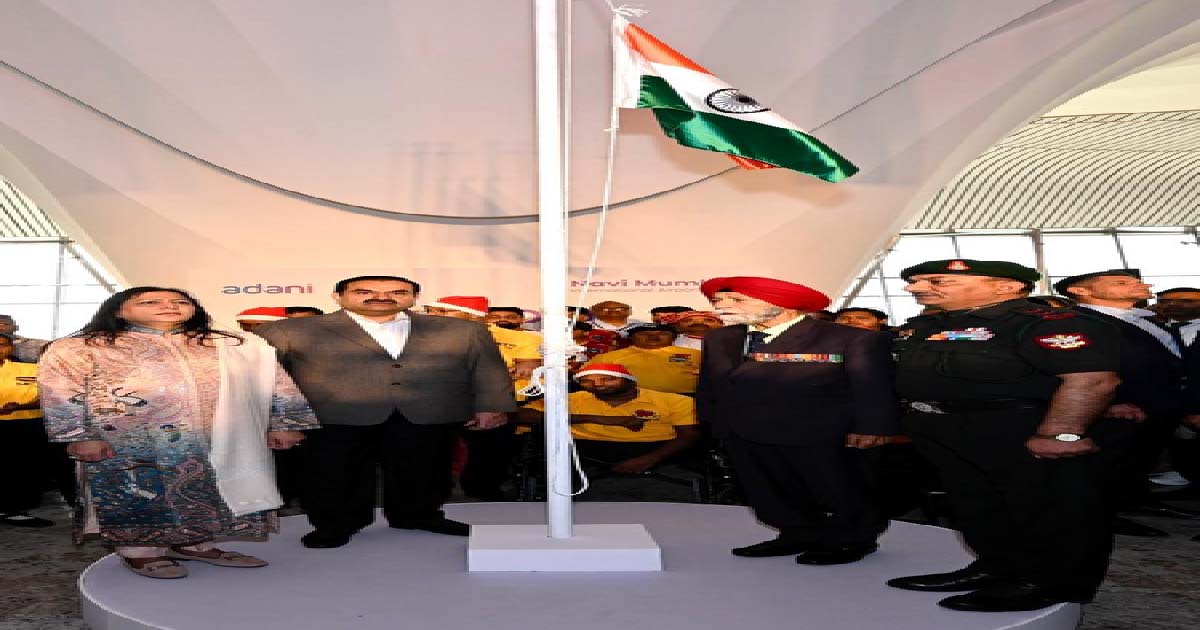
Mumbai, Dec 25: Gautam Adani, Chairman of the Adani Group, hailed war heroes, farmers, and the specially abled as the Navi Mumbai International Airport (NMIA) — India’s newest Greenfield airport — welcomed its first passengers on Thursday.
The airport, inaugurated by Prime Minister Narendra Modi on October 8, began its operations on the day of Christmas.
Welcoming the first passengers, the Adani Group Chairman saluted the soldiers who protect the nation, workers who built the airport for their “unbreakable spirit”, farmers who feed the country, and the specially abled who inspire the nation.
“It was a deeply moving moment to stand beside Param Vir Chakra awardees Captain Bana Singh and Subedar Major Sanjay Kumar as the Navi Mumbai International Airport (NMIA) welcomed its very first passengers,” said Gautam Adani, in a post on social media platform X.
“In that moment, alongside the war heroes, stood the other quiet architects of the nation — the workers who built this airport with their bare hands and unbreakable spirit; the farmers and their families who feed India; the social workers who selflessly serve millions alongside the @AdaniFoundation; and our specially abled colleagues who inspire us every single day. For many of them, this was the first flight of their lives,” the Adani Group Chairman added.
“Soldiers who protect Bharat. Workers who build Bharat. Farmers who sustain Bharat. Social workers who serve Bharat. The specially abled who inspire Bharat,” the industrialist said.
Gautam Adani stated that NMIA showcases an opportunity for the country to move forward without leaving anyone behind.
“@AdaniPriti and I were deeply honoured to stand with them at NMIA – a moment that captured what this airport truly represents – opportunity with dignity, and a rising India that moves forward without leaving anyone behind,” the Adani Group Chairman said.
“Their blessings, their courage, and their resilience drive us every single day to build bigger, serve better, and work harder in service of the nation. Jai Hind,” the businessman added.
NMIA is a public-private partnership (PPP) between Mumbai International Airport Limited (MIAL), a subsidiary of Adani Airports Holdings Limited (AAHL), which holds the majority stake of 74 per cent, while the City and Industrial Development Corporation of Maharashtra Limited (CIDCO) hold the remaining 26 per cent.
In the first month, NMIA will operate for 12 hours — between 08:00 hours and 20:00 hours — handling 23 scheduled daily departures.
During the initial launch period, passengers will benefit from services operated by IndiGo, Air India Express, and Akasa Air, connecting Mumbai to 16 major domestic destinations.
Starting February 2026, the airport will transition to round-the-clock operations, expanding to 34 daily departures to meet the increasing needs of the MMR.
NMIA is also conducting comprehensive Operational Readiness and Airport Transfer (ORAT) trials in collaboration with all stakeholders, including security agencies and airline partners.

Mumbai, Dec 25: In a year marked by heightened global uncertainty, precious metals delivered exceptional returns for investors, with silver emerging as a surprise winner.
Silver prices surged by more than 137 per cent — outperforming gold — which also posted a strong gain of around 68 per cent this year.
With equity markets facing volatility, both metals strengthened their position as preferred safe investment options, but silver clearly outshone all traditional choices.
Gold’s strong performance was supported by geopolitical tensions, inflation concerns, and expectations of interest rate cuts by the US Federal Reserve.
A major driving force behind gold’s rally was steady buying by global central banks. For three consecutive years — 2022, 2023 and 2024 — central banks have purchased more than 1,000 tonnes of gold each year.
Alongside this, global investors continued to invest through gold ETFs, using them as a safe place to park funds.
Big global banks have turned increasingly bullish on gold’s outlook. Goldman Sachs has raised its 2026 year-end gold price target to $4,900 per ounce, citing strong central bank demand and ETF inflows.
Deutsche Bank has also upgraded its outlook, projecting gold prices at $4,450 per ounce in 2026.
Silver’s rally, however, has been driven by more than just safe-haven demand. Strong industrial usage has played a crucial role.
Growing demand from sectors such as solar power, electric vehicles, and electronics has significantly increased silver consumption.
At the same time, supply constraints have tightened the market, pushing prices sharply higher.
This dual role — as a precious metal and an industrial input — has helped silver deliver more than double the returns of gold in 2025.
Looking ahead, experts believe the positive momentum in silver could continue into 2026.
Market specialists say that strong industrial demand, limited supply, and supportive global trends could help silver rise by another 15 to 20 per cent next year.
Some analysts expect that in the first half of 2026 alone, silver may generate an additional 20 to 25 per cent return from current levels, though they advise investors to invest gradually, especially if prices see short-term corrections.
Gold’s outlook also remains positive for 2026. Continued central bank buying, possible US rate cuts, and ongoing geopolitical risks are expected to support prices.
Analysts suggest that keeping an eye on central bank activity — whether they continue buying, hold their reserves, or start selling — will be critical, as their actions often signal future price trends well in advance.
“With uncertainty still dominating the global economic landscape, precious metals are likely to continue playing an important role in investor portfolios, offering a mix of safety and growth potential,” experts stated.
Meanwhile, both metal’s prices climbed to new record highs on the MCX on Wednesday morning, helped by a weak US dollar and expectations that the US Federal Reserve may cut interest rates further.
Gold futures for February rose 0.42 per cent to touch an all-time high of Rs 1,38,469 per 10 grams. Silver futures for March jumped nearly 2 per cent to hit a fresh record of Rs 2,23,742 per kg.
In the global market, gold prices crossed the $4,500 per ounce level for the first time. The rise was driven by strong demand for safe-haven assets as investors expect more interest rate cuts by the US Federal Reserve next year.

Maharashtra Politics: Thackeray Brothers’ Reunion Sparks Jubilation Among Shiv Sena-UBT & MNS Workers In Mira-Bhayandar

Properties worth Rs 41.64 lakh of notorious drug smuggler Naveen Gurunath Chechakar of Navi Mumbai frozen, Mini Cooper car also seized

Maharashtra Politics: AAP Releases 2nd BMC Candidate List, Takes Tally To 36

ED raids Ruchi Group’s Indore, Mumbai premises; freezes assets, seizes cash in bank fraud case

HM Shah lays foundation stone for 1,655 industrial units ensuring Rs 2 lakh crore investment in MP

Kalyan College Namaz Controversy: SIO Demands Action Against Perpetrators

Sensex, Nifty open lower amid weak global cues

Mukesh Ambani, Shiv Sena UBT Chief Uddhav Thackeray & Son Aaditya Share Warm Greetings At Mumbai’s Swadesh Event

Kartik Aaryan, Ananya Panday promote ‘Tu Meri Main Tera, Main Tera Tu Meri’ on Amitabh Bachchan’s KBC

Samantha Ruth Prabhu Shares FIRST Wedding Photos With Raj Nidimoru, Exchanges Rings At Sadhguru’s Isha Foundation In Coimbatore
-

 Crime3 years ago
Class 10 student jumps to death in Jaipur
-
 Maharashtra1 year ago
Mumbai Local Train Update: Central Railway’s New Timetable Comes Into Effect; Check Full List Of Revised Timings & Stations
-
 Maharashtra1 year ago
Mumbai To Go Toll-Free Tonight! Maharashtra Govt Announces Complete Toll Waiver For Light Motor Vehicles At All 5 Entry Points Of City
-

 Maharashtra1 year ago
False photo of Imtiaz Jaleel’s rally, exposing the fooling conspiracy
-
 National News1 year ago
Ministry of Railways rolls out Special Drive 4.0 with focus on digitisation, cleanliness, inclusiveness and grievance redressal
-
 Maharashtra1 year ago
Maharashtra Elections 2024: Mumbai Metro & BEST Services Extended Till Midnight On Voting Day
-

 National News1 year ago
J&K: 4 Jawans Killed, 28 Injured After Bus Carrying BSF Personnel For Poll Duty Falls Into Gorge In Budgam; Terrifying Visuals Surface
-
 Crime1 year ago
Baba Siddique Murder: Mumbai Police Unable To Get Lawrence Bishnoi Custody Due To Home Ministry Order, Says Report