
National News
P. Chidambaram poses 20 tough questions on Rs 6 lakh Cr NMP


Senior Congress leader and former Union Finance Minister P. Chidambaram on Friday posed 20 questions on the Centre’s proposed National Monetization Pipeline (NMP) intended to ‘monetise’ certain assets and earn Rs 6,00,000 crore revenue over the next four years.
Stating that the government should answer the questions, he demanded to know the NMP objectives and whether it was solely intended to raise the revenues over the next four years.
Referring to the criteria adopted upfront to identify the PSUs that would be disinvested or privatised during the previous UPA government, Chidambaram queried whether the same is the case with the current NDA regime.
Pointing out that for infra projects like roads/highways, a PPP policy already exists, he asked what is the difference, if any, between this (PPP) model and the one that would be adopted by the Centre under the NMP, while addressing the media in the country’s commercial capital.
Moreover, if an asset is ‘monetised’ for 30-50 years, what is the value of the piece of paper that declares the government to be the ‘owner’ of that asset, what kind of asset will be returned to the government at the end of the period or would it be a “fully depreciated asset” worth practically nothing.
“Since the NMP is silent on the subject, will the government stipulate in the contract that the amount of depreciation should be put in a Depreciation Reserve Account which was used only to maintain, upgrade or add to the asset so that at the end of the lease period a valuable asset is returned to the government,” Chidambaram asked.
He also sought answers on whether there will be provision in the contract to prevent asset-stripping by the lessee, the terms included in the Invitation to Bid (ITB) to ensure that the ‘monetisation’ process does not create monopolies or duopolies in that sector, especially to prevent such (monopolies/duopolies) emerging in the ports, airports, telecom and power sectors.
The finance expert queried whether the lessee will manage the current levels of employment and the policy of reservations, or other policies, subject to sectoral regulators, etc., in the ‘monetised’ asset.
Harking to the UPA which identified the Railways as a ‘strategic sector’, he asked what are the other sectors the Centre has identified as ‘core’ or ‘strategic’ that would be kept out of the NMP purview.
“Has the government examined the impact of implementation of the NMP on the prices of goods and services in the sector/industry concerned? What will the government or the regulator do in case prices are increased by the lessee of the ‘monetized’ asset,” Chidambaram demanded.
Referring to the government’s revelation of the expected revenue of Rs 6,00,000 crore in four years, he asked whether the government would shed light on the total capital investment in the identified assets that are expected to yield the aforesaid revenue.
“The identified assets must be currently yielding a certain revenue every year. Has the government calculated the difference between the current revenue (undisclosed) and the expected revenue (of Rs 6,00,000 crore) over a period of four years? If so, what is the difference between the two amounts each year during the four year period,” Chidambaram asked.
On the government’s announcement that the NMP would be co-terminus with the National Infrastructure Pipeline (NIP) that is expected to require Rs 100 lakh crore, the ex-FM sought to know how the Rs 6,00,000 crore over a four year period be sufficient to finance a Rs 100 lakh crore NIP.
Furthermore, he sought an assurance from the Centre that the expected sum of Rs 6,00,000 crore “would not be merged with general revenues or used for general expenditure”.
Chidambaram further posed if the Rs 6,00,000 crore, when released, would not be diverted to partly-finance the fiscal deficit (Rs 5,50,000-crore in 2021-2022) or retiring old debts.
The Congress leader asked if the government floated a consultation paper on NMP, consulted various stakeholders including the workers or trade unions and demanded to know the outcome/minutes of these consultations.
He also asked whether the NMP was discussed in Parliament, and if not, whether the Centre plans to consult the Opposition Parties or debate in parliament.
Chidambaram said that the US is contemplating measures to contain monopolization and unfair trade practices of giants like Google, Amazon and Facebook, China has announced plans to rein in its giant tech firms and South Korea contained the influence of its huge family-controlled business conglomerates.
“Does the government intend to introduce similar measures while implementing the NMP,” Chidambaram asked, saying the Centre “is obliged to answer these questions”, and the media must demand replies from the government.


Business
Mumbai-Bound Air India Flight Returns To Delhi Airport Minutes After Take Off Due To Technical Glitch


New Delhi: A Mumbai-bound Air India flight AI887 returned to the Delhi Airport minutes after take-off due to a technical issue. The Delhi–Mumbai flight made an emergency landing according to standard operating procedure.
As perv an Air India spokesperson, the aircraft (Boeing 777) landed safely at Delhi, and the passengers and crew disembarked.
The Boeing 777 suffered an engine issue soon after take-off, reported The Times of India. The aircraft reportedly took off at 6.10 am and returned to the airport at 6.52 am. The aircraft is currently undergoing necessary checks.
As per the report, the airline arranged another B777 (VT-ALP) for passengers and even provided refreshments for them.
On Sunday, over 100 flights were cancelled from the Delhi Airport due to dense fog conditions in the national capital. Meanwhile, more than 400 flights were also delayed at the airport.
Over the past few days, most parts of the nothern and northwestern regions of the country are witnessing dense fog condition.
“Dense to very dense fog conditions during night/morning hours very likely in some parts of Uttarakhand, Uttar Pradesh, Haryana till morning hours of 21st; in isolated pockets of Punjab, Haryana during 25th-27,” the India Meteorological Department (IMD) had said in its press statement on Sunday.
On Friday also, an Air India flight travelling from Mumbai to Varanasi was forced to make an emergency diversion to Bhubaneswar after deteriorating weather conditions made landing at the destination airport unsafe. The aircraft landed at Biju Patnaik International Airport (BPIA) as a precautionary measure, airline officials confirmed.
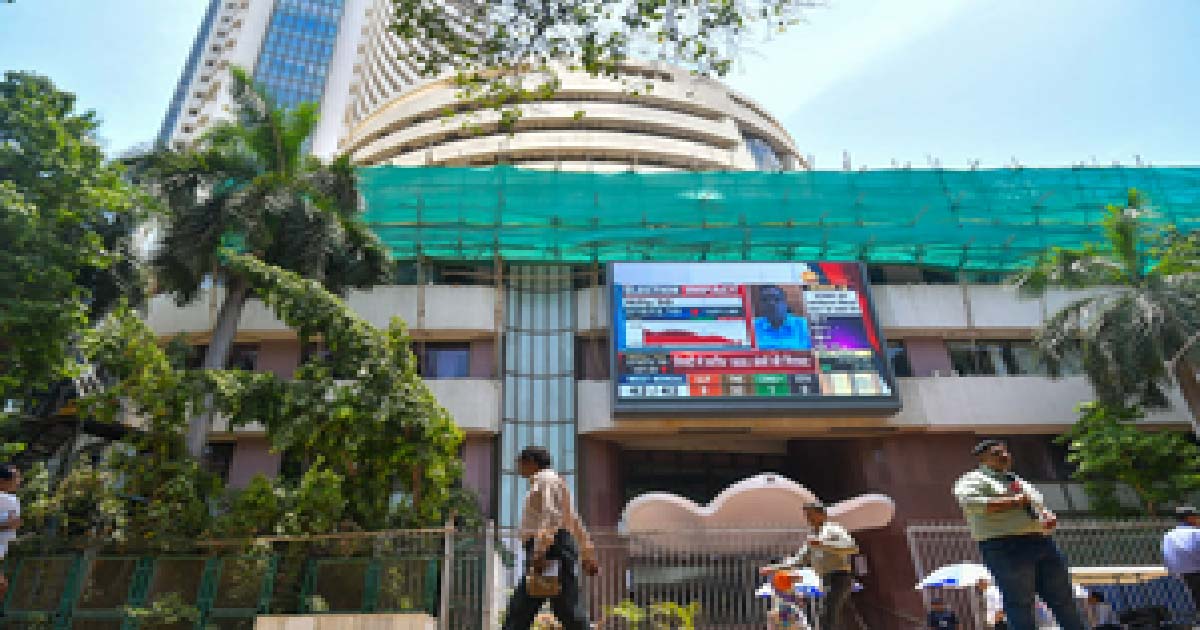
Mumbai, Dec 22: Indian benchmark indices opened in green zone on Monday, breaking the last week’s trend of edging lower, amid strong buying in the US and China markets.
As of 9.30 am, the Sensex advanced 507 points, or 0.60 per cent, at 84,436 and the Nifty added 165 points, or 0.64 per cent to 26,132.
The broad cap indices performed in line with the benchmarks, with the Nifty Midcap 100 up 0.58 per cent and the Nifty Smallcap 100 adding 0.51 per cent.
Hindalco, Tech Mahindra and TCS were among the major gainers in the Nifty Pack, while losers included Asian Paints, Bajaj Finance, Max Healthcare and Cipla.
All the sectoral indices on NSE were trading in the green with metal, IT and media being the major gainers — up around 1.48, 1.23 and 0.77 per cent, respectively.
Analysts noted that market is likely heading for a year-end rally. The rupee’s sharp reversal and FIIs’ cash market purchases can accelerate this rally, as they lead to short covering, pushing benchmark indices higher. The Goldilocks domestic economic set up and potential earnings growth uptrend can support a market upturn, they added.
The US markets ended mostly in the green zone on the last trading day, as Nasdaq advanced 1.31 per cent, the S&P 500 edged up 0.88 per cent, and the Dow moved up 0.38 per cent.
As investors parsed China’s central bank keeping loan prime rate steady, Asia-Pacific markets rose on Monday.
The People’s Bank of China maintained its 1-year and 5-year loan prime rates steady, which affects most new and outstanding loans and mortgages.
In Asian markets, China’s Shanghai index advanced 0.64 per cent, and Shenzhen dropped 1.36 per cent, Japan’s Nikkei edged up 1.75 per cent, while Hong Kong’s Hang Seng Index added 0.29 per cent. South Korea’s Kospi added 1.72 per cent.
On Friday, foreign institutional investors (FIIs) sold equities worth Rs 2,387 crore, while domestic institutional investors (DIIs) were net buyers of equities worth Rs 5,200 crore.
National News
Mumbai Weather Update For 22 Dec, 2025: City Wakes Up To Sunny Skies, Thin Haze Persists; AQI Remains In Poor Range At 181
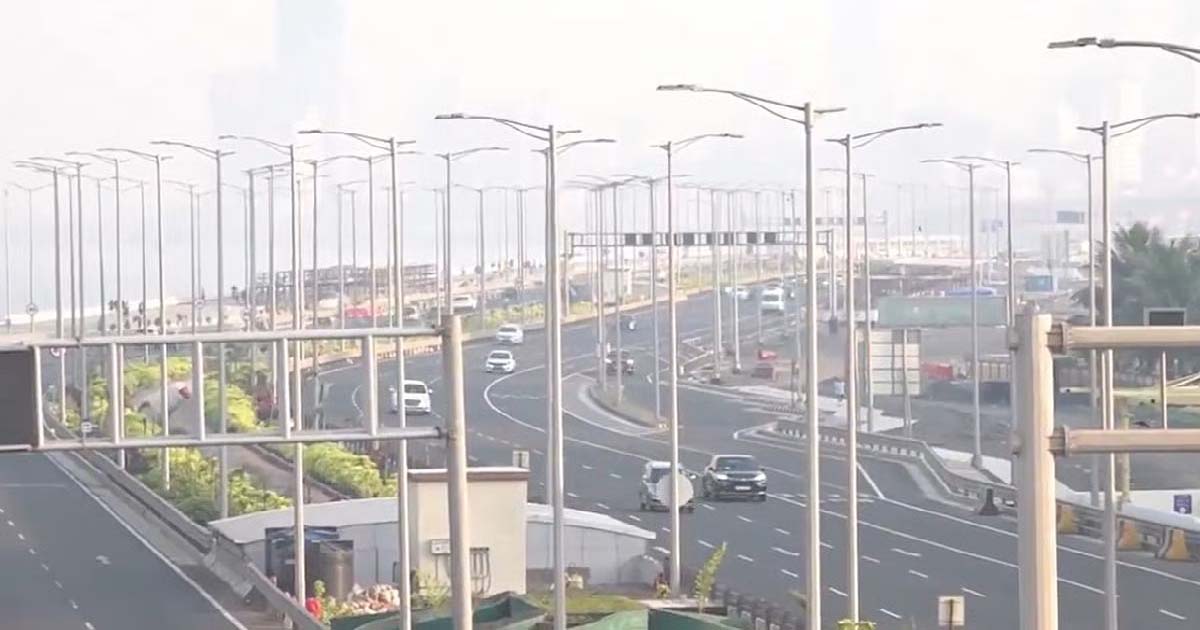
Mumbai: woke up to what initially appeared to be an ideal winter morning on Monday, with clear blue skies, cool temperatures and light winds offering brief relief from the city’s otherwise relentless humidity. However, the pleasant start did not last long, as a thin layer of haze soon enveloped large parts of the city, reducing visibility and once again drawing attention to Mumbai’s worsening air quality.
The India Meteorological Department (IMD) had predicted a bright and comfortable day, with minimum and maximum temperatures expected to hover between 20°C and 33°C. While weather conditions remained favourable, residents stepping out early were met with hazy surroundings and a faintly acrid smell in the air. Commuters, morning walkers and schoolchildren experienced reduced visibility across several areas, dampening what should have been a refreshing winter day.
Data from air quality monitoring platform AQI.in showed that Mumbai’s overall Air Quality Index (AQI) stood at 181 in the early hours, placing the city in the ‘poor’ category. Although this marked a slight improvement compared to the severe pollution levels recorded towards the end of last month, the air remained unhealthy, especially for vulnerable groups such as children, senior citizens and people suffering from respiratory conditions.
The persistent pollution is largely due to dust and fine particulate matter generated by extensive construction activity across the city. Multiple large-scale infrastructure projects, including metro rail corridors, flyovers, coastal road works and road-widening initiatives, along with ongoing private real estate development, continue to add majorly to Mumbai’s pollution burden.
Several areas recorded alarmingly high AQI levels, emerging as major pollution hotspots. Chembur reported an AQI of 304, categorised as ‘severe’, posing serious health risks even to healthy individuals. The Wadala Truck Terminal and Chembur registered AQI levels of 253 and 237 respectively, both falling under the ‘unhealthy’ category. Deonar recorded an AQI of 227, while Govandi stood at 217.
In comparison, some suburban areas showed relatively better air quality, though conditions remained far from ideal. Kandivali East recorded an AQI of 63 and Parel-Bhoiwada 98, both falling in the ‘moderate’ category. However, areas such as Jogeshwari East recorded 110, while Charkop and Sion reported AQI levels of 117 and 160 respectively, slipping back into the ‘poor’ bracket.
As per standard classifications, AQI levels between 0 and 50 are considered ‘good’, 51 to 100 ‘moderate’, 101 to 150 ‘poor’, 151 to 200 ‘unhealthy’, and above 200 ‘hazardous’. With several parts of Mumbai nearing or crossing unhealthy thresholds, concerns are mounting over long-term health impacts if pollution levels remain unchecked.

Mumbai-Bound Air India Flight Returns To Delhi Airport Minutes After Take Off Due To Technical Glitch

Sensex, Nifty open in green zone amid positive global cues

Mumbai Weather Update For 22 Dec, 2025: City Wakes Up To Sunny Skies, Thin Haze Persists; AQI Remains In Poor Range At 181

Abu Asim Azmi praised for introducing a bill against hate speeches and hate crimes, Muslim organizations called Abu Asim Azmi’s step commendable.

A split in Maha Vikas Aghadi before BMC elections, Congress’s slogan is ‘akela Chalo’

Kalyan College Namaz Controversy: SIO Demands Action Against Perpetrators

Sensex, Nifty open lower amid weak global cues

Veteran Bollywood Actor Dharmendra Passes Away at 89

Mega Block On Sunday, 23-11-2025: Mumbai Local Train Services To Be Affected On CR’s Main Line, No Block On Harbour & Trans-Harbour Line; Check Details

Mukesh Ambani, Shiv Sena UBT Chief Uddhav Thackeray & Son Aaditya Share Warm Greetings At Mumbai’s Swadesh Event
-

 Crime3 years ago
Class 10 student jumps to death in Jaipur
-
 Maharashtra1 year ago
Mumbai Local Train Update: Central Railway’s New Timetable Comes Into Effect; Check Full List Of Revised Timings & Stations
-
 Maharashtra1 year ago
Mumbai To Go Toll-Free Tonight! Maharashtra Govt Announces Complete Toll Waiver For Light Motor Vehicles At All 5 Entry Points Of City
-
 Maharashtra1 year ago
False photo of Imtiaz Jaleel’s rally, exposing the fooling conspiracy
-
 National News1 year ago
Ministry of Railways rolls out Special Drive 4.0 with focus on digitisation, cleanliness, inclusiveness and grievance redressal
-
 Maharashtra1 year ago
Maharashtra Elections 2024: Mumbai Metro & BEST Services Extended Till Midnight On Voting Day
-

 National News1 year ago
J&K: 4 Jawans Killed, 28 Injured After Bus Carrying BSF Personnel For Poll Duty Falls Into Gorge In Budgam; Terrifying Visuals Surface
-

 Crime1 year ago
Baba Siddique Murder: Mumbai Police Unable To Get Lawrence Bishnoi Custody Due To Home Ministry Order, Says Report