
National News
26 years ago, IAF’s op ‘Safed Sagar’ employed India’s air power in unconventional roles for first time


New Delhi, May 26: May 26, 1999 marks a memorable day for the country as well as the Indian Air Force (IAF). It was on this day, twenty-six years ago that the IAF launched a major military operation titled ‘Safed Sagar’ to break the back of Pakistani intruders and its Army regulars who surreptitiously entered the Indian side of Line of Control (LoC) and occupied crucial positions in Kargil sector.
The IAF’s ‘Operation Safed Sagar’ set a new paradigm for the forces in defending the country’s borders as it not only destroyed the illegally-occupied positions but also helped the ground forces in mounting its operations and going for the kill.
‘Operation Safed Sagar’ was the IAF’s codename for its air operations during the Kargil War 1999. It marked a milestone in the history of military operation by the IAF as this was the first time that air power was employed in such an environment.
It was also the first large-scale use of air power in the Kashmir region since the 1971 Indo-Pak War. It helped the ground forces flush out Pakistani regulars and intruders who had occupied Indian positions along the LoC in the Kargil sector.
The IAF took to social media on Monday morning and shared how the calibrated air strikes – the first in Kashmir region after the 1971 India-Pak war, helped gain strategic advantage over the enemy and also served as a strong deterrent.
In a post on X, the IAF states that ‘Operation Safed Sagar’ stood as a trailblazer in many ways and stated, “It saw air power employed in unconventional roles, demonstrated the effectiveness of limited use of air assets in a localised conflict, and shattered the long-held notion that use of air power would inevitably escalate into full-scale war.”
“The operation not only showcased the versatility and resolve of the Indian Air Force but also established the deterrent value of calibrated air strikes — even in a low-intensity conflict. It proved that air power could decisively alter the course of battle without crossing international boundaries,” it further said.
Twenty-six years later, the remembrance of ‘Operation Safed Sagar’ assumes significance as the IAF has again shown to the countrymen and the world – how its firepower can shake the foundations of the enemy and make them shudder to the core.
‘Operation Sindoor’ has garnered appreciation from many quarters as rightful retribution to Pakistan’s brazen attempts to spread terror in the Valley.
With ‘Operation Sindoor’ marking a “new normal” in India-Pak ties and also benchmarking the country’s future response in case of any terror bid by Pakistan, this holds striking similarity with ‘Operation Safed Sagar’ as both military operations by the IAF proved the efficacy of altering the course of battle, without crossing international boundaries.

National News
BJP pays tribute to ex-President Abdul Kalam, recalls his enduring influence on generations of India’s youth

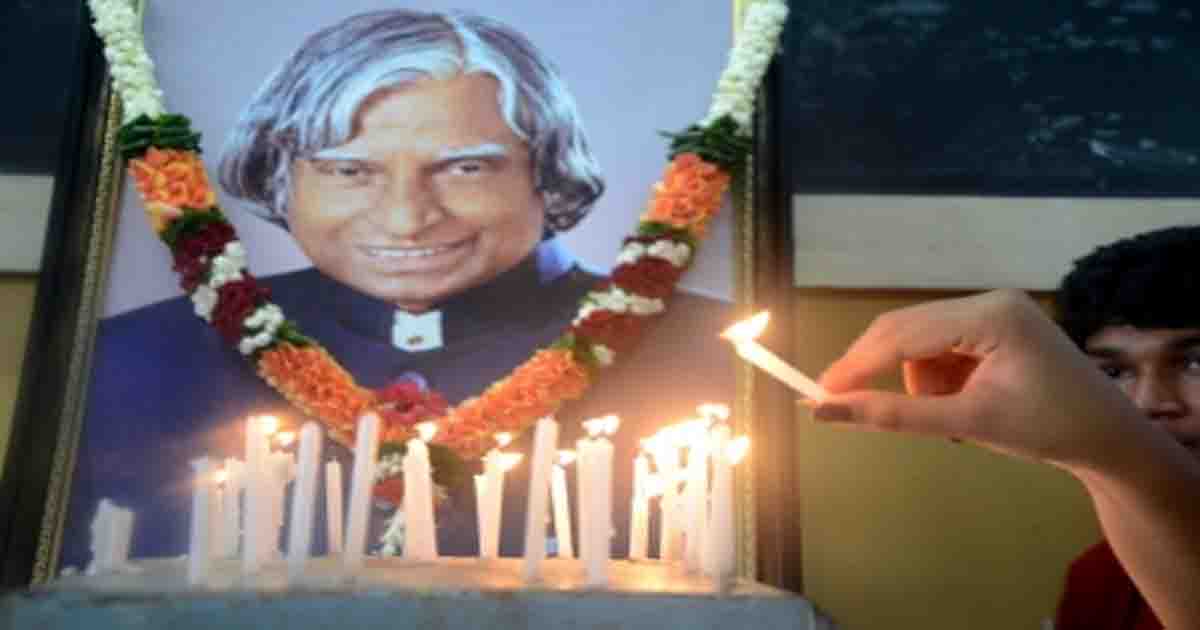
Chennai, Oct 15: Tamil Nadu BJP President Nainar Nagendran paid tribute to former President late A.P.J. Abdul Kalam on his birth anniversary on Thursday, recalling his contributions to India’s scientific development and his enduring influence on generations of young people.
Born on October 15, 1931, in Rameswaram, A.P.J. Abdul Kalam became one of India’s most admired public figures, earning recognition as a scientist, the country’s ‘Missile Man’ and a leader who encouraged students to pursue ambitious goals.
His birthday is observed by the Tamil Nadu government as Youth Renaissance Day, reflecting his close association with young people and his emphasis on education, scientific curiosity and national development.
In a message posted on social media platform X, Nagendran described Kalam as a distinguished scientist whose life and ideas continued to inspire the country’s youth.
“Today marks the birth anniversary of Dr. A.P.J. Abdul Kalam, India’s former President, the Missile Man and a great scientist who inspired young people,” the BJP leader said.
Nagendran said Kalam had made significant contributions to India’s progress in science and technology while encouraging young people to dream, develop their abilities and strive for achievement.
He said the former President’s message went beyond aspirations, urging people to translate their dreams into sustained effort and meaningful accomplishments.
Recalling Kalam’s call to dream and work towards realising those dreams, Nagendran said the message would remain deeply embedded in the minds of Indians.
He urged people to remember Kalam’s lofty ideals and the work he had undertaken for the nation’s advancement, and to honour his memory on his birth anniversary.
The tribute highlighted two closely connected aspects of Kalam’s public life: His role in strengthening India’s scientific capabilities and his commitment to motivating young people to contribute to the country’s future.
His journey from Rameswaram to the presidency remains central to the admiration he commands, particularly among students who associate his name with perseverance, learning and the pursuit of excellence.
Political leaders and public figures also remembered Kalam on the occasion, paying homage to his achievements and recalling the values he championed.
The annual observance of Youth Renaissance Day in Tamil Nadu places particular emphasis on that legacy, linking the remembrance of the former President with the aspirations of younger generations and the importance of turning individual ambition into contributions to society and national progress.
National News
Rahul, Cong ecosystem want to force regime change: BJP after Neha Bora praises B’desh Gen-Z protest
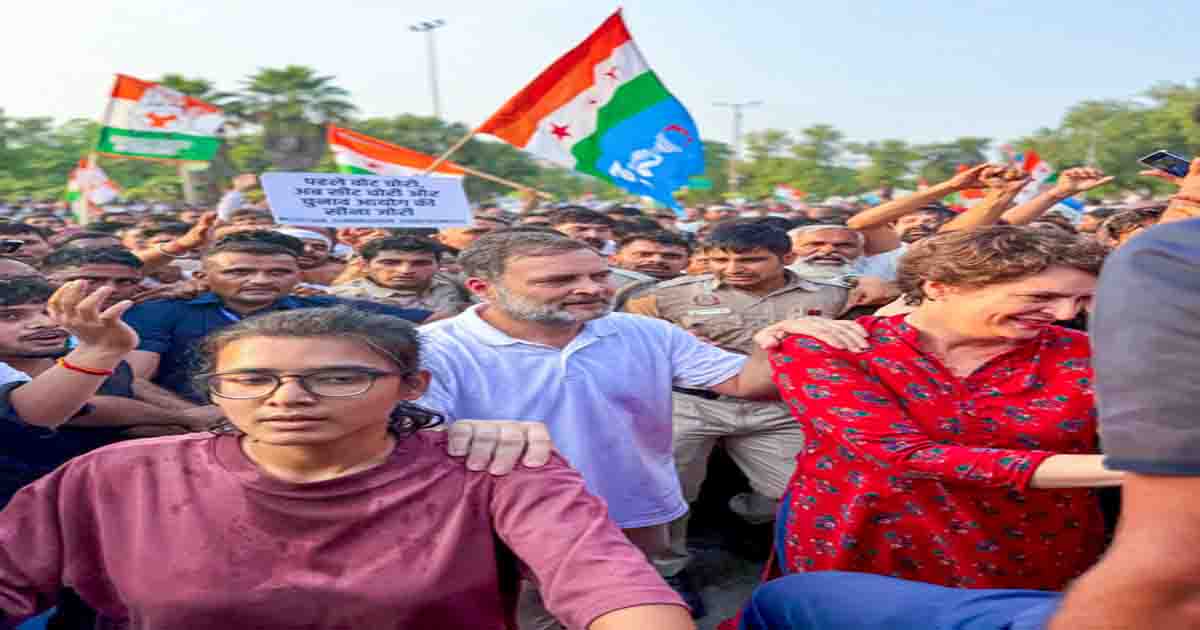
New Delhi, Oct 15: The Bharatiya Janata Party (BJP) on Thursday accused the Congress and Leader of Opposition in the Lok Sabha Rahul Gandhi of attempting to “destroy Indian democracy” and facilitate a “regime change”, following remarks by All India Students’ Association (AISA) President Neha Bora praising Bangladesh’s Gen-Z movement, which she claimed, served as “inspiration” for young people in India.
The BJP’s reaction came after Bora, speaking at an event on Wednesday, praised Bangladesh’s Gen-Z movement and said it had inspired young people in India to stand up for democracy and voting rights.
“Revolutionary greetings to the Socialist Students Front on your sixth National Conference. We present you our red salute. And we know that the Gen-Z movement that we are seeing everywhere in this country first started in Bangladesh. And congratulations to you for showing us the way,” Bora said.
The AISA leader also spoke about young people in India participating in and leading movements to defend democratic principles and voting rights, drawing parallels between the struggles of students in India and those in the neighbouring country.
Reacting to her remarks, BJP National Spokesperson Pradeep Bhandari alleged that Rahul Gandhi and the Congress ecosystem were not interested in pursuing political resistance through democratic means but were instead attempting to bring about a change of regime.
“Rahul Gandhi and the entire ecosystem do not want to engage in political resistance; they want to bring about regime change,” Bhandari said.
Notably, Rahul Gandhi had backed Bora during the student protests earlier this year.
“Neha Bora, who is the poster girl of Rahul Gandhi’s entire protest movement, stated in an interview that she is inspired by the Gen-Z movement in Bangladesh, and they want to do the exact same thing in India as what happened in Bangladesh. This proves that Rahul Gandhi’s intention is not political resistance; his intention is to destroy the Constitution and the democracy of India,” Bhandari said.
Bhandari also referred to remarks allegedly made by advocate Prashant Bhushan, claiming that they indicated a wider effort to undermine India’s democratic system.
“Prashant Bhushan had also said that there should be a revolution in which blood will flow. This proves that the entire Congress ecosystem’s only focus is to destroy Indian democracy and bring about regime change like Bangladesh. Rahul Gandhi and the Congress ecosystem are dangerous for Indian democracy, and everyone who believes in the Indian Constitution should oppose Rahul Gandhi and his ecosystem,” Bhandari said.
Bora has emerged as a prominent face in the ongoing protests against the Election Commission of India (ECI) over allegations of ‘vote theft’. The Opposition has raised concerns over the electoral process and alleged irregularities in the revision of electoral rolls.
Rahul Gandhi has been leading the INDIA bloc’s campaign on the issue, with Opposition parties demanding the resignation of Chief Election Commissioner (CEC) Gyanesh Kumar over alleged irregularities in the Special Intensive Revision (SIR) of electoral rolls.
Neha Bora was also invited for a tea meeting hosted by the LoP Rahul Gandhi, attended by INDIA bloc leaders, activists and members of civil society earlier this week.The gathering was part of the Opposition’s efforts to coordinate its campaign against the ECI and strengthen its collective stand on the allegations surrounding the electoral roll revision exercise.
The BJP, however, accused the Congress of politicising the matter and attempting to discredit democratic institutions.

New Delhi, Oct 15: A man was allegedly stabbed to death by a group of assailants in southeast Delhi’s Kalindi Kunj area in a suspected revenge killing linked to a past rivalry in jail, police said. Three accused have been arrested so far, and further investigation is underway.
The deceased, Shahid Hussain, a resident of Abul Fazal Enclave-II in Shaheen Bagh, was taken to Apollo Hospital by Constable Avdesh of Kalindi Kunj police station. A medico-legal certificate issued at 5.32 p.m. by the hospital stated that Hussain had been brought dead.
Police reached Shriram Chowk after Head Constable Manish informed the duty officer about the stabbing. An abandoned scooter was found at the scene, with bloodstains nearby.
According to the preliminary account shared with the police, Hussain had gone to meet Shabid Malik alias Monu, a resident of Madanpur Khadar, in Basantpur, Haryana. The two allegedly met at a restaurant and consumed beer. While Hussain was returning on his scooter, four men riding a black Splendor motorcycle with silver stripes allegedly intercepted him and stabbed him before fleeing.
Shabid Malik was detained for questioning. Police later apprehended Karan alias Karam Shah, 21, a resident of JJ Colony in Madanpur Khadar, near Samosa Chowk. Investigators were informed that Karan had been riding the motorcycle and had sustained a stab injury to his left leg during the attack, according to the police account.
During questioning, Karan allegedly told investigators that the murder was planned to avenge an earlier rivalry between Hussain, also known as Chhota Chor, and Tarun alias Ranjan, who had allegedly been injured by Hussain while in jail. Tarun reportedly feared that Hussain might target him after his release.
Police said Tarun and Shabid allegedly planned to lure Hussain to a beer party and attack him on his return journey. The police account also names Gaurav Gumma, Aman and Raja as alleged participants in the conspiracy. Abuzar alias Sonu, 27, allegedly provided his newly purchased Splendor motorcycle for the crime.
Police said three accused have been arrested and will be produced before a judicial magistrate. Investigators will seek four days of police custody remand. Further investigation is underway.

BJP pays tribute to ex-President Abdul Kalam, recalls his enduring influence on generations of India’s youth

Rahul, Cong ecosystem want to force regime change: BJP after Neha Bora praises B’desh Gen-Z protest

17 children, one teacher killed after school’s roof collapses in Pakistan’s Peshawar

‘Illegal, ineffective’: Trump under fire for Russia oil deal as Graham Act deadline nears

Salman Khan shares pic with Salim Khan, says he’s the real monster at 91: God’s been kind

INDIA bloc begins protest march against ECI

Maha Congress stages agitation against Gyanesh Kumar

Complaint against Netflix & Mukesh Chhabra for inappropriate language on ‘India’s Got Latent 2’

Delhi court grants three-week interim bail to influencer Swatantra Bhardwaj

Mumbai Cyber Cell arrests 6 members of organized gang in major operation; Beware of cyber fraudsters; Digital arrest has no legal status; DCP Bajrang Bansode
-

 Crime4 years ago
Class 10 student jumps to death in Jaipur
-

 Maharashtra2 years ago
Mumbai Local Train Update: Central Railway’s New Timetable Comes Into Effect; Check Full List Of Revised Timings & Stations
-

 Maharashtra2 years ago
Mumbai To Go Toll-Free Tonight! Maharashtra Govt Announces Complete Toll Waiver For Light Motor Vehicles At All 5 Entry Points Of City
-

 Maharashtra2 years ago
False photo of Imtiaz Jaleel’s rally, exposing the fooling conspiracy
-

 National News2 years ago
Ministry of Railways rolls out Special Drive 4.0 with focus on digitisation, cleanliness, inclusiveness and grievance redressal
-

 Maharashtra2 years ago
Maharashtra Elections 2024: Mumbai Metro & BEST Services Extended Till Midnight On Voting Day
-

 National News2 years ago
J&K: 4 Jawans Killed, 28 Injured After Bus Carrying BSF Personnel For Poll Duty Falls Into Gorge In Budgam; Terrifying Visuals Surface
-

 Crime2 years ago
Baba Siddique Murder: Mumbai Police Unable To Get Lawrence Bishnoi Custody Due To Home Ministry Order, Says Report