
Crime
10 Kerala CPI-M activists get double life term; ex-MLA gets 5 years’ jail for murder of 2 Cong workers


Kochi, Jan 3: A CBI court here on Friday sentenced 10 CPI-M workers to a double life term and four others including a former party legislator to five years’ imprisonment in the Periya twin murder case.
On Saturday last, the CBI court had convicted 14 people and exonerated 10 in the case pertaining to the brutal murders of Kerala Youth Congress workers Kripesh (19) and P.K. Sarath Lal (24) on February 17, 2019, in Periya, Kasaragod district.
However, the families of the victims said they were expecting capital punishment for the accused and since that has not been given and 10 others were exonerated, they will speak with the Congress leadership and appeal against the verdict.
The victims were allegedly killed by CPI-M workers in a politically-motivated attack.
According to the court, eight of the accused were directly involved in the twin murders, while six others played indirect roles.
The court gave a double life term to the eight who were directly involved in the cold blooded murder, while two others, who were part of the conspiracy, were also given a double life term.
Among the convicted is former MLA and CPI-M district leader K.V. Kunhiraman, accused of forcibly removing the second accused from police custody. Kunhiraman has been given five years’ imprisonment.
Initially investigated by the Crime Branch, the case was handed over to the CBI after a plea was filed by the victims’ families in the High Court.
The CBI concluded that the murders stemmed from a cycle of politically-motivated attacks between CPI-M and Congress workers in the region.
At Periya in Kasargod there was a huge gathering of Congress party workers and family members of the two victims at their memorial site. After hearing the verdict, some of the women of the two workers’ families were seen in tears.
Leader of Opposition, V.D. Satheesan while talking about the verdict said it was notable that among the accused are a former CPI-M legislator and workers.
“All along, the CPI-M leadership and party denied their leader’s and party workers’ role in the brutal crime. Now see, they have been sentenced. This is the way the CPI-M works,” said Satheesan.
K.K. Rema, an independent legislator who won with the Congress-led UDF’s support, whose husband, T.P. Chandrasekharan, was also murdered by CPI-M workers, criticised the party’s attempts to protect the accused.
“Just look at the way the CPI-M employed high priced lawyers from Delhi to fight the case and more than Rs 1 crore have been spent to save the guilty,” said Rema.
AICC general secretary and Alappuzha Congress Lok Sabha member, K.C. Venugopal, said the verdict brings out the real face of the CPI-M as they engage in annihilating political opponents.
The counsel for the accused said once the papers of the verdict come, they will file an appeal against it.
The 10 accused, who have been sentenced to the double life term, will each have to pay a fine of Rs 2 lakh, while the remaining four have to pay a fine of Rs 10,000, and all of this will go to the families of the two victims.

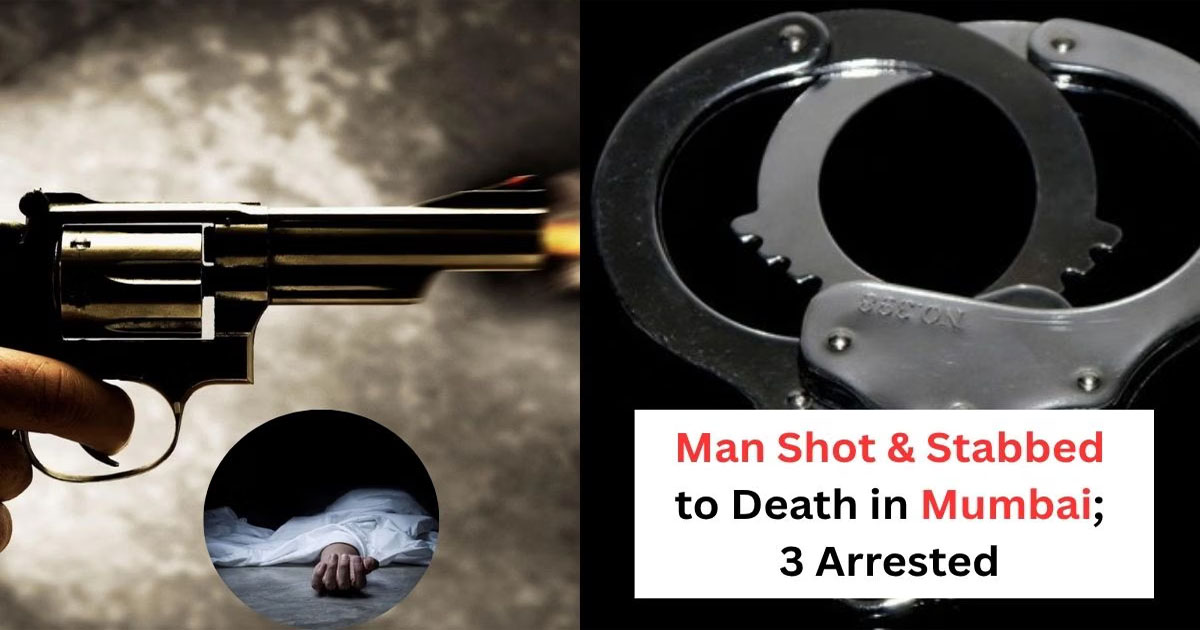
Mumbai: A shocking incident has come to light from Mumbai’s Kurla, where a man was shot and stabbed to death. According to the Mumbai Police, three accused have been arrested in the case.
the incident took place on April 29 at around 10 pm near Pipeline Block No. 3 in Kurla’s V B Nagar. The deceased, identified as Baba Pawar, was shot by one person while two others stabbed him.
After the information was received, Pawar was rushed to Bhabha Hospital for treatment. However, he succumbed to his injuries while undergoing treatment.
A case was registered at V B Nagar police station under Bharatiya Nyaya Sanhita and Arms Act for murder and other offences. Later, it was reported that the police arrested all the three accused involved in the crime. Currently, further investigation is underway to determine the circumstances and motive behind the gruesome killing.
Meanwhile, in another recent incident, a man allegedly stabbed a shopkeeper five to six times after thinking that he and his brother were laughing at him. The incident occurred in Agripada’s Baby Garden area, where two brothers were chatting and laughing over something in their shop.
When the accused arrived at the shop, he thought the two brothers were laughing and mocking him and in a sudden outburst, Mansuri pulled out a knife and attacked one of the brothers multiple times.
Prior to this, another stabbing incident took place in Mira Road’s Naya Nagar, where a 31-year-old man, Zaib Zubair Ansari, attacked two security guards after being questioned about their religion. The attack took place near Asmita Grand Mansion in Mira Road East, where two security guards were on duty when Ansari approached them, initially asking for directions to a nearby mosque. Later, Ansari questioned one of the guards about his religion before attacking him with a knife. He then entered the security cabin and allegedly asked the second guard to recite the ‘Kalma’.
Ansari was arrested within hours after police reviewed CCTV footage. He was later produced before a Thane district court, which remanded him to police custody until May 4.
Crime
Thane Woman, 61, Duped Of ₹15.76 Lakh By Fraudsters Posing As Officials; Police Register Case, Launch Probe To Trace Accused

Thane: A 61-year-old woman from Thane, who had worked as a baby caretaker in Dubai, has allegedly been cheated of Rs 15.76 lakh under the pretext of receiving a parcel containing valuables from abroad, police said on Thursday.
The woman, who lives near Thane railway station in Maharashtra, alleged that two persons contacted her on her Dubai mobile number on April 14 and informed her that her gold ornaments and a high-end phone had arrived at the Mumbai airport from Italy, an official from Naupada police station said.
“They told her that the consignment needed to be cleared before April 22 and threatened that if she failed to do so, she would face legal action and would not be allowed to go back to Dubai,” the official said.
The fraudsters allegedly made multiple calls to the woman from different numbers and shared bank account details via WhatsApp, coercing her into transferring money on several occasions, he said.
“Under pressure and fear of arrest, the woman transferred Rs 15,76,000 into various bank accounts provided by the fraudsters,” the official said.
The woman approached the police on Tuesday, following which a case was registered against two unidentified persons under sections 318(4) (cheating) and 3(5) (common intention) of the Bharatiya Nyaya Sanhita.
Efforts were underway to trace the culprits, the police added.
Crime
‘No Fear, I Am Not Scared’: Dawood Ibrahim’s Aide Salim Dola’s 1st Reaction After Being Brought To Mumbai Following Istanbul Arrest
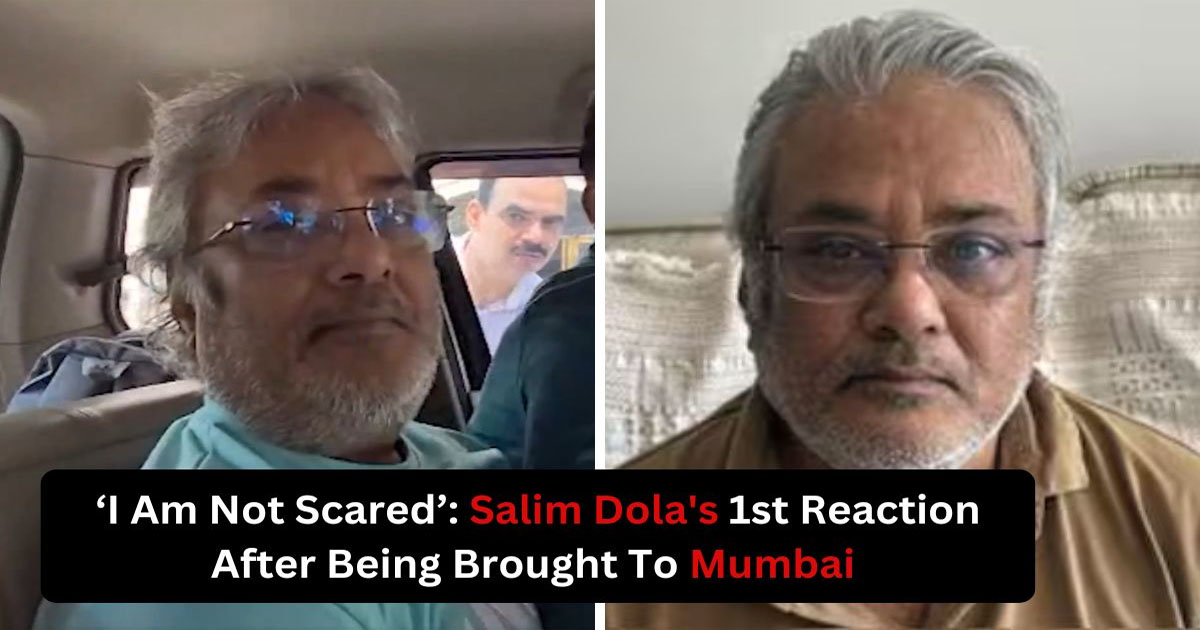
Mumbai: Salim Dola, a close aide of fugitive underworld don Dawood Ibrahim, displayed defiance upon his arrival in Mumbai following his arrest in Turkey, declaring, “No fear. I am not scared,” as he was escorted by officials. His statement came while he was being taken for a medical examination before being produced in court on Thursday.
Dola, considered a key figure in the operations of the infamous D-Company, was brought to the city yesterday by the Narcotics Control Bureau (NCB) after being granted a two-day transit remand by a Delhi court.
The arrest marks a major breakthrough for Indian agencies, as Dola had been on the run for several years and was allegedly managing international drug trafficking operations from Turkey. He was held on April 25 in Istanbul’s Beylikduzu district during a coordinated operation involving Indian intelligence and Turkish law enforcement authorities.
Following his arrest, Dola was deported to India and first produced before the Patiala House Court, which approved his transfer to Mumbai for further investigation. Special Public Prosecutor Manish Gupta appeared for the NCB and sought his custody in connection with a 2023 narcotics case registered in Mumbai.
Upon reaching Mumbai yesterday, Dola was taken to the NCB’s zonal office, where he is currently being interrogated. Officials believe he holds critical information about the functioning of D-Company’s global drug network, including smuggling routes across West Asia and Europe and the use of hawala channels to move illicit funds. Investigators are also looking to uncover details about sleeper cells and local distributors linked to the syndicate in Mumbai and surrounding regions.
Dola will be produced before a Mumbai court following initial procedures. His arrest and the later transfer to Delhi and now Mumbai are being seen as a major step in efforts to dismantle transnational organised crime networks with links to India.

Mumbai Shocker! Man Shot, Stabbed To Death In Kurla; 3 Arrested

Marathi language requirement: Senior drivers should be given concessions for their language skills, no one’s permit should be cancelled immediately on the basis of language: Abu Asim

Bhiwandi Samadia School road in dilapidated condition, Eknath Shinde assures of resolution of public issues and redressal of complaints

A gangster named Baba killed in Kurla VB Nagar, Mumbai, three attackers arrested, tension in the area but situation peaceful.

BMC Announces Water Cut In Mumbai’s Eastern Suburbs On May 5-6, Ghatkopar, Chembur & Mankhurd Among Areas Affected; Check Details

Iran-Israel Conflict Hits India’s Real Estate: Supply Disruptions & Rising Costs Delay Project Possessions

‘Son Falsely Implicated, We Are Well-Educated’: Father Of Accused Tausif Attar Defends Son After Skullcap, Namaz Coercion Allegations Rock TCS Nashik

Mumbai: Pan-India Hawala Trail Exposes Chilling Conspiracy Behind Rohit Shetty House Firing Case

Asha Bhosle’s son says last respects to be paid at residence in Lower Parel, followed by last rites at Shivaji Park

Crude oil prices tank up to 20 pc over Iran ceasefire announcement
-

 Crime4 years ago
Class 10 student jumps to death in Jaipur
-

 Maharashtra2 years ago
Mumbai Local Train Update: Central Railway’s New Timetable Comes Into Effect; Check Full List Of Revised Timings & Stations
-

 Maharashtra2 years ago
Mumbai To Go Toll-Free Tonight! Maharashtra Govt Announces Complete Toll Waiver For Light Motor Vehicles At All 5 Entry Points Of City
-

 Maharashtra2 years ago
False photo of Imtiaz Jaleel’s rally, exposing the fooling conspiracy
-

 National News2 years ago
Ministry of Railways rolls out Special Drive 4.0 with focus on digitisation, cleanliness, inclusiveness and grievance redressal
-

 Maharashtra1 year ago
Maharashtra Elections 2024: Mumbai Metro & BEST Services Extended Till Midnight On Voting Day
-

 National News2 years ago
J&K: 4 Jawans Killed, 28 Injured After Bus Carrying BSF Personnel For Poll Duty Falls Into Gorge In Budgam; Terrifying Visuals Surface
-

 Crime2 years ago
Baba Siddique Murder: Mumbai Police Unable To Get Lawrence Bishnoi Custody Due To Home Ministry Order, Says Report