
Crime
₹400-Cr Demonetised Cash Heist Cover-Up? Complainant Alleges Political ‘Fixing’ In SIT Probe

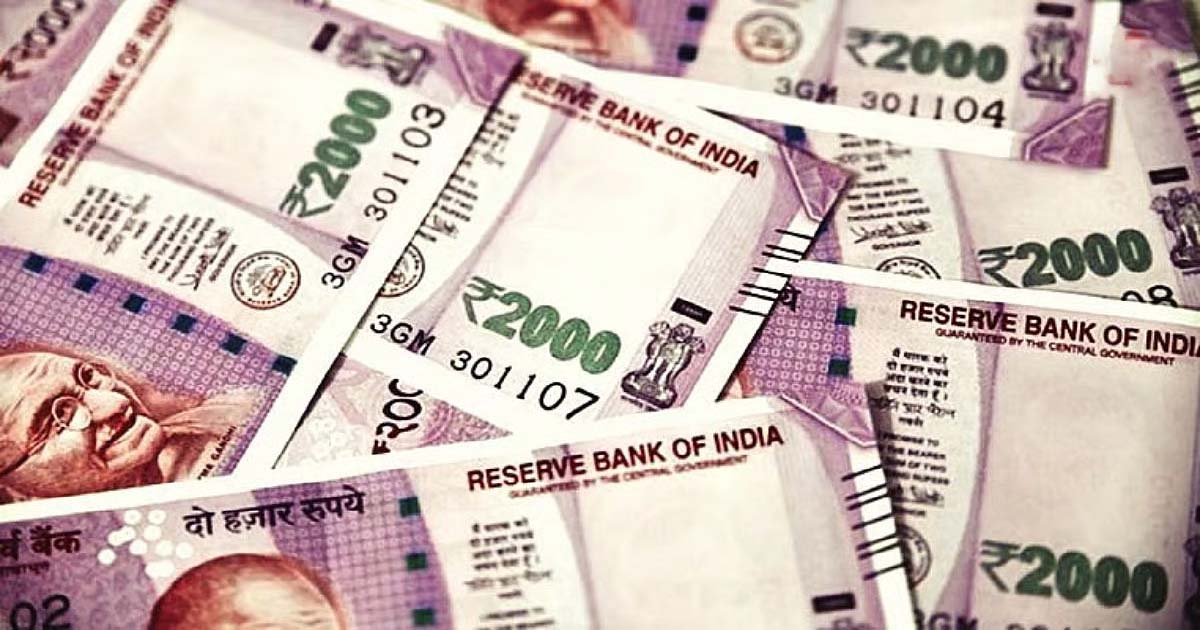
Mumbai: The probe into the alleged Rs 400-crore demonetised currency heist at Chorla Ghat near the Maharashtra–Karnataka border has entered a volatile phase after complainant Sandeep Patil alleged that the investigation was being ‘manipulated under political pressure.’ Patil told media on Tuesday that certain officers are attempting to alter the course of the probe to facilitate a high-level cover-up.
He further alleged that the focus of the agency has shifted from recovering the massive cache of stolen currency to an all-out attempt to silence him, claiming he has been threatened by senior officers and warned not to disclose sensitive details discussed prior to the registration of the formal complaint.
Patil alleged that the officers concerned were fully aware of the Rs 400-crore cash movement and had conducted detailed inquiries, including recording statements of the accused, nearly 20 days before a formal FIR was registered in Nashik. He further claimed that vested interests were now attempting to suggest that the alleged heist never occurred; a move, he alleged, was aimed at protecting certain influential beneficiaries.
Revealing what he described as an unofficial probe into the alleged heist by Nashik police prior to his formal complaint, Patil accused Local Crime Branch (LCB) inspector Ravindra Magar, a member of the SIT, of pressuring and warning him not to disclose details of a crucial meeting held on December 19 last year.
This meeting, which took place almost three weeks before the formal case was filed, was reportedly attended by Patil, Inspector Magar, and an accused named Jayesh Kadam. During this session, Kadam allegedly disclosed details regarding the cash movement, including specific container numbers, the mechanics of the heist, the role of a prominent hawala operator, and a suspected political funding angle. Patil alleged that electronic evidence related to these discussions had been shared by Kadam with Magar well before the case was officially on the record, making the current denials a matter of deep suspicion.
According to Patil, he is now being pressured not to reveal details of the meeting, while the SIT is accepting revised statements from the accused that contradict earlier versions on which the FIR was based, and is attempting to project that the alleged Rs 400-crore heist never occurred. Magar however denied the allegation and said the matter is under Additional SP supervision.
To support his allegations, Patil claimed that the same set of officers who had unofficially probed the matter on the instructions of senior officials for nearly two months prior to the filing of his complaint are now officially investigating the case as part of the SIT, which was constituted by Nashik Rural Superintendent of Police Balasaheb Patil.
Senior officials familiar with the probe said that Patil’s allegations align with statements made by arrested accused Jayesh Kadam during police custody. Kadam has categorically denied having given the statement attributed to him prior to the registration of the FIR and has alleged that the signatures on that statement were forged. The disputed statement formed the basis of the FIR registered at Ghoti police station in Nashik Gramin.
Sources said during custodial interrogation by the same SIT officers who had earlier recorded his statement, Kadam has now claimed that no Rs 400-crore heist occurred and that the matter involved cheating and forgery amounting to Rs 35 crore. The alleged transaction has been linked to absconding accused Thane-based builder Kishor Sawala and Virat Gandhi, a hawala operator based in Ahmedabad.
However, audio and video evidence, shared by the complaint with the SIT via a pendrive and recovered from Jayesh Kadam, clearly shows that Kadam’s statement does not match the evidence.
Responding to the allegations, SIT chief and Additional Superintendent of Police (Nashik Rural) Aditya Mirkhelkar told media that the investigation is currently based solely on the statements of the four accused in custody. “They claim they acted on behalf of a Thane-based builder but have not seen any cash. Whatever they are stating is based only on what they were told,” he said, adding that discrepancies, concealment and possibly misleading statements were part of the ongoing probe.
Mirkhelkar added that the alleged heist could only be conclusively verified after the arrest and examination of the two absconding accused, Sawala and Gandhi, whose versions would determine whether the Rs 400-crore cash movement actually occurred. He did not respond specifically to queries regarding Kadam’s change in statement.
Patil further revealed that the disputed statements of accused Jayesh Kadam were linked to a December 19 meeting last year, when LCB PI Ravindra Magar and Dattaji Shinde, both now part of the SIT, allegedly called Patil and Kadam to the LCB office. This was reportedly the first meeting after Kadam’s original statement had been recorded. According to Patil, during the meeting, Kadam told Magar in his presence that that the case involved a sum much larger than Rs 400 crore in demonetised currency, allegedly linked to a political party and a Gujarat-based ashram.
Kadam claimed that builder Kishor Sawala executed the transaction on behalf of a politician, while hawala operator Virat Gandhi handled consignments for the ashram. Gandhi reportedly demanded a Rs 150-crore security deposit for the ashram, to be returned after the transaction. Two consignments, worth Rs 150 crore and Rs 250 crore, were allegedly transported from an undisclosed Karnataka location to the Ahmedabad-based ashram but were stolen at Chorla Ghat, at the tri-junction of Maharashtra, Karnataka, and Goa. Kadam is said to have shared photographs of the consignments with Magar and identified Gandhi as a key participant.
According to Patil, two officers employed various tactics to pressure him into not filing the FIR. Even after the matter came under SIT jurisdiction, he alleged that the same officers continued threatening him and attempting to mislead the investigation.


New Delhi, June 2: The Special Cell of the Delhi Police busted a major terror module being run by the Dawood Ibrahim syndicate. The terror module was planning on carrying out attacks in Delhi and Mumbai, said the police following the arrests of the eight people. During the questioning of the accused, one interesting point that came up is that Clifton Road in Karachi continues to remain a safe house of notorious underworld don, Dawood Ibrahim.
The accused told the police that they mainly interacted with a key aide of Dawood Ibrahim Muddasar Hussain Sayyed, alias Munna Jhingada.
An official said that the very fact that the operation was being handled from Clifton Road area makes it clear that Dawood Ibrahim is residing out there.
This is his most well-known address and the ISI keeps him there are it is his safest bet.
Dawood has many other addresses in Pakistan, but for major operations, he operates from Karachi as this is the safest place for him to be in Pakistan.
The official said that Dawood has five addresses, all in Karachi. While the main one is at Clifton, near the Saudi Mosque in Karachi, the others are the Defence Housing Authority, the Noorbad area and the 617 CP Berar Society. In fact he has two addresses in Clifton itself, the official explained.
Another official said the probe into the busting of the recent module reveals that all Dawood’s close aides reside around him. The drug operations or terror modules being set up are all monitored from the Clifton area, near the Saudi Mosque in Karachi, the official further explained.
Post ‘Operation Sindoor’, there were reports about Dawood Ibrahim being shifted out. An Intelligence Bureau official said that he was moved around the five addresses briefly to avoid being hit by the Indian armed forces.
However, once the heat was down, he was back at his Clifton address, the official added.
Officials also say that the location is strategic and also safe. It is the ISI’s regional directorate in Karachi which oversees his protection.
Although the ISI’s national headquarter is based in Islamabad, Karachi houses a massive ISI Regional Directorate (Field Office).
The probe by the Delhi Police also revealed that several ISI officials were part of the planning. They would regularly meet with Jhingada and give him instructions on how to go about the attacks in India.
Investigators have found that the primary targets of the module were Delhi and Mumbai. They were planning on carrying out attacks in other cities depending on the success of the first wave of attacks, investigations have found.
Jhingada established the command centre near Dawood’s residence. This centre was being fully monitored by the ISI officials. They not only ensured that operations ran smoothly, but also heavily guarded the premises, an official said.
The accused persons said that Jhingada along with his associates monitored every aspect, right from recruitment to procurement of arms.
The Dawood Syndicate had earmarked Rs 20 lakh for the module after the successful completion of the project.
Officials say that they were not being treated as run of the mill terror operatives. This was more of a hit job that the ISI wanted to undertake and this explains why the agency wanted the underworld to be involved.
The probe further revealed that the ISI even ensured that the weapons reach India safely.
Jhingada, with the help of the ISI operatives, managed to drop off hand grenades in Gurdaspur Punjab.
The Delhi Police had seized a large cache of weapons and hand grenades during their operation. The idea was to hurl grenades at important locations, the probe found.
Such an operation is not only easy to execute, but it is also cost effective, an official said.
The accused persons had even asked about their exit plan once the attacks were executed. Jhingada assured them a safe passage into Nepal, following which they would be flown to Dubai.
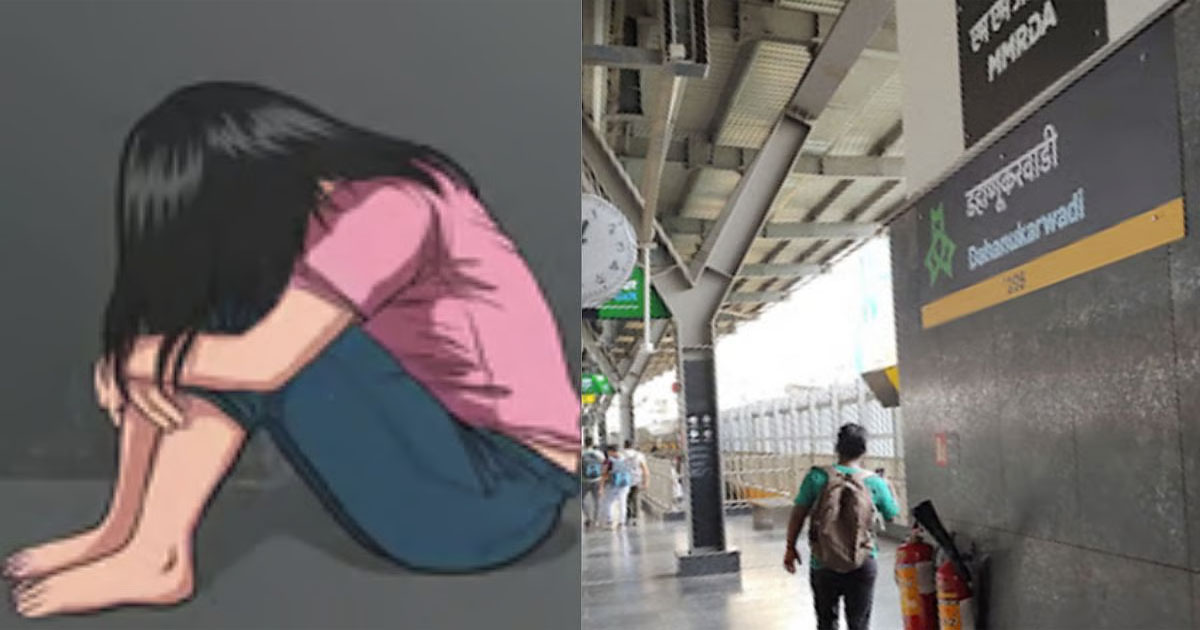
Mumbai: A shocking incident has come to light from Mumbai’s Kandivali area, where a 17-year-old girl was allegedly molested by an unidentified man inside a lift at the Dahanukarwadi Metro station on the Yellow Line. A case has been registered against an unidentified man.
the incident occurred on Friday, May 29, at around 11.50 am. The report stated that the accused was already present inside the lift, and after seeing the girl entering the lift alone, he allegedly molested her as the doors shut by touching her inappropriately.
Terrified by the incident, the girl first approached the metro staff for help and then later approached the police station. A case was registered, and currently, efforts are underway to identify and trace him.
Maha Mumbai Metro Operation Corporation Limited (MMMOCL) officials also confirmed the incident and told media that they are providing all possible help to the police in the case. Additionally, the officials also informed that there are about 64 CCTV cameras at the Dhanukarwadi metro station, and the footage from the day of the incident is also being provided.
Meanwhile, in another recent case, a case under POSCO has been registered against a 40-year-old man who has been allegedly accused of showing pornographic films and molesting a 13-year-old boy in Mumbai’s Agripada area. The shocking incident took place at the Classic Tower residential society located in the Agripada locality. The matter came to light after the traumatised minor confided in his family members about the ordeal, and a case was registered.
Earlier in May, a case of alleged molestation was registered against a BMC officer after a woman employee accused him of misbehaving with her inside the civic body headquarters.
Crime
Mumbai Airport Police Arrest 25-Year-Old BBA Graduate For Posing As Fake Student In Nationwide QR Code Scam Targeting Travellers

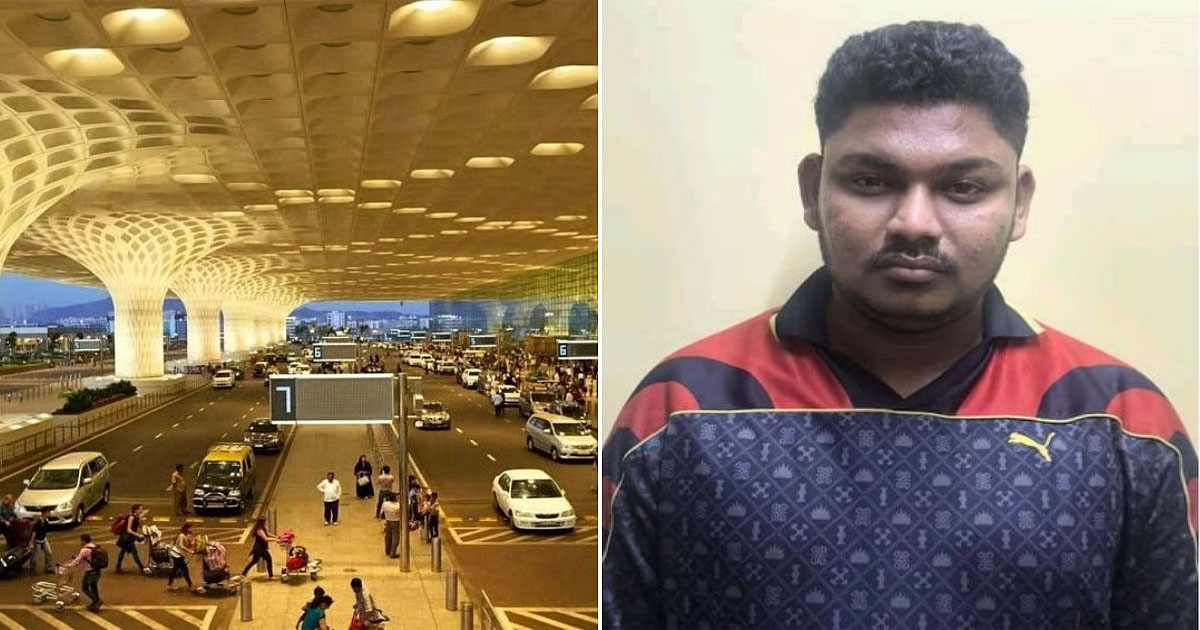
Mumbai: In a chilling tale of deception that preyed on the kindness of hurried travellers, Mumbai Airport Police have cracked a sophisticated nationwide scam. The mastermind? A 25- year-old BBA graduate who transformed airport terminals into his personal hunting ground.
Modela Vyankta, a resident of Guntur, Andhra Pradesh, was arrested on May 28 after allegedly posing as a distressed engineering student from VNIT Nagpur. His modus operandi was deceptively simple yet emotionally manipulative: approaching passengers at arrival gates, spinning a heartbreaking story of a lost flight ticket and empty pockets, then requesting urgent financial help.
In one documented case from March, a passenger at Terminal 1’s arrival gate was moved by Vyankta’s emotional plea and transferred ₹16,000 via QR code. When the victim later tried to recover the money, he was promptly blocked. Realizing he had been scammed, the complainant approached the Airport Police.
What followed was a meticulous investigation led by Senior Police Inspector Suhas Chavan, with Assistant Police Inspectors Vaibhav Patil and Sunil Khaire. Police analyzed CCTV footage, traced the linked mobile number (registered in someone else’s name), and used technical surveillance to track the accused across states. Despite his evasive tactics—frequently changing locations and switching off his phones—investigators discovered he had recently visited Nagpur, Bhopal, Lucknow, Varanasi, and Hyderabad.
Acting on precise intelligence that he would return to Mumbai, officers laid a trap at Terminals 1 and 2. Vyankta was finally detained at Terminal 2.
A search of the accused yielded damning evidence: three mobile phones, six SIM cards, three fake Aadhaar cards, a counterfeit college ID, and ₹19,600 in cash. Further probes revealed at least nine similar cases registered against him since 2020 across cities including Bengaluru, Delhi, Jaipur, Coonoor, and Mumbai. Authorities suspect many more victims never reported the fraud, often too rushed to pursue complaints.

Mumbai: BMC takes action after Aarey Colony Dargah Shaheed, Kirit Somaiya continuous land jihad campaign, situation tense but peace maintained

Mumbai Namaz Row: BJP Leader Kirit Somaiya Seeks Ban On Prayers On Public Roads, Sparks Political Row

Mumbai Andheri Ola driver turned drug smuggler, two drug peddlers arrested

Minister Nitesh Rane vision: Mobile food van scheme will be implemented to create employment opportunities. Shrimp pav will also be sold

Maharashtra CM Devendra Fadnavis’ Wife Amruta Drives Pink E-Rickshaw To Back Women-Led Green Mobility Program

The Municipal Corporation and the Railway Administration should work together to make Mumbai flood-free, directs Standing Committee Chairman Prabhakar Shinde

Mumbai: Strict action directed against prominent Marathi placards in shops and institutions, warning of action in Shiv Sena style: Deputy Mayor Sanjay Ghadi

Virar Citizens Protest Demolition Drive In Arnala; Police Block Lal Bawta March, Sit-in Held On Road

Apple to invest Rs 100 crore in India’s renewable energy infrastructure

Dangerous Love Triangle In Mira-Bhayandar: Youth Kidnapped, Brutally Beaten, & Burned With Cigarettes Over Affair With Same Girl
-

 Crime4 years ago
Class 10 student jumps to death in Jaipur
-

 Maharashtra2 years ago
Mumbai Local Train Update: Central Railway’s New Timetable Comes Into Effect; Check Full List Of Revised Timings & Stations
-

 Maharashtra2 years ago
Mumbai To Go Toll-Free Tonight! Maharashtra Govt Announces Complete Toll Waiver For Light Motor Vehicles At All 5 Entry Points Of City
-

 Maharashtra2 years ago
False photo of Imtiaz Jaleel’s rally, exposing the fooling conspiracy
-

 National News2 years ago
Ministry of Railways rolls out Special Drive 4.0 with focus on digitisation, cleanliness, inclusiveness and grievance redressal
-

 Maharashtra2 years ago
Maharashtra Elections 2024: Mumbai Metro & BEST Services Extended Till Midnight On Voting Day
-

 National News2 years ago
J&K: 4 Jawans Killed, 28 Injured After Bus Carrying BSF Personnel For Poll Duty Falls Into Gorge In Budgam; Terrifying Visuals Surface
-

 Crime2 years ago
Baba Siddique Murder: Mumbai Police Unable To Get Lawrence Bishnoi Custody Due To Home Ministry Order, Says Report