
Business
₹122-Crore New India Co-op Bank Scam: EOW Searches Ex-Chairman’s Home; Hitesh Mehta’s Lie Detector Test Set For March 11

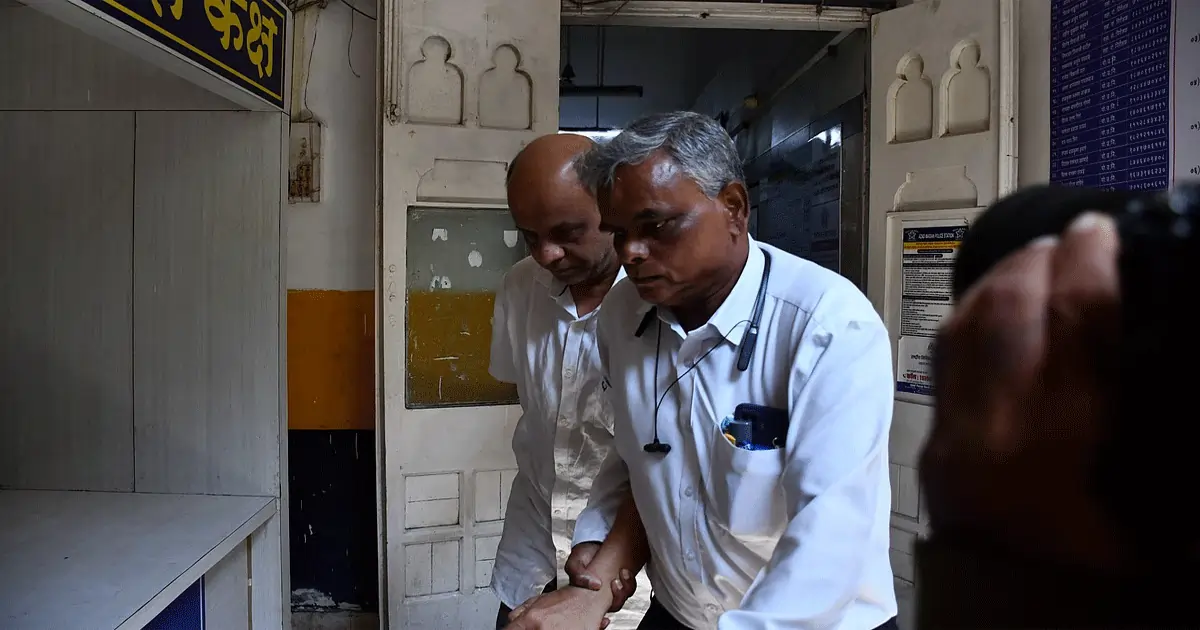
Mumbai: The Mumbai police’s economic offences wing (EOW) has searched the residence of New India Cooperative Bank’s former chairman Hiren Bhanu in connection with the embezzlement of Rs 122 crore at the lender, officials said on Wednesday.
EOW Recovers Several Documents
During the search, EOW recovered several documents, which police are examining, an official said.
The house search was conducted in the Malabar Hill area of south Mumbai, where Hiren Bhanu and his wife Gauri Bhanu stayed in a rented flat, an official said. Gauri previously held the position of vice chairman at the bank.
The couple also own a flat at Nepean Sea Road which they have rented out, an official said. Both are wanted accused in the Rs 122-crore embezzlement case.
The EOW team is identifying the couple’s properties and also ascertaining whether they were acquired with the proceeds of the crime, he said.
About The Lie Detector Test
Meanwhile, the agency will conduct a lie detector test on Hitesh Mehta, former general manager and head of the accounts of the bank, on March 11, the official said.
Mehta is not cooperating and is hiding some important facts concerning the case, due to which he has not given his consent for the test, he said. But the court has permitted the police to conduct the forensic psychological test on Mehta, the official said.
The EOW is probing what prompted the Reserve Bank of India’s inspection team to visit the bank in February 2025.
As per the balance sheets of the bank, as of March 31, 2019, it had Rs 33.71 crore in cash which rose to Rs 99 crore on March 31, 2020. It’s almost a three-fold jump, he said.
On March 31, 2021, the figure further increased to 194 crore and it was Rs 105 crore in 2022. At some point in the current financial year, the amount rose to even Rs 152 crore. Police are examining why the RBI team conducted an inspection last month and not in some of the previous years, the official said.
So far, police have arrested four persons in connection with the embezzlement, and four accused are still at large, he added.


New Delhi, Jan 31: From February 1, the government is bringing a new tax structure for cigarettes, tobacco products and pan masala, aiming to tighten regulation and keep tax levels high on these so-called ‘sin goods’.
An additional excise duty will now be charged on cigarettes and tobacco products, along with a new health and national security cess on pan masala.
These new levies will replace the earlier system under which these products were taxed at 28 per cent GST along with a compensation cess that has been in place since the launch of GST in July 2017.
The government is also introducing a new MRP-based valuation system for several tobacco products such as chewing tobacco, filter khaini, jarda scented tobacco and gutkha.
Under this system, GST will be calculated based on the retail price printed on the packet, instead of factory value.
This move is expected to reduce tax evasion and improve revenue collection. Pan masala manufacturers will now have to take fresh registration under the new health and national security cess law starting February 1.
They will also be required to install CCTV cameras that cover all packing machines and store the video recordings for at least two years.
In addition, companies must inform excise authorities about the number of machines in their factories and their production capacity.
If any machine remains non-functional for 15 days in a row, manufacturers will be allowed to claim a reduction in excise duty for that period.
Even after the new changes, the government has ensured that the overall tax burden on pan masala, including 40 per cent GST, will remain around the current level of 88 per cent.

Mumbai, Jan 31: The Indian equity benchmarks gained around 1 per cent during the week, though the trading sessions were volatile but with a cautiously constructive tone amid mixed global cues and rising geopolitical tensions.
Risk appetite weakened toward the end of the week ahead of the Union Budget 2026-27, with volatility resurfacing amid sustained FII outflows and rupee depreciation leading to losses in the last trading session.
Nifty added 1.09 per cent during the week and dipped 0.39 per cent on the last trading day to 25,320. At close, Sensex was down 296 points or 0.36 percent at 81,537. It added 0.90 per cent during the week.
Sectoral indices traded mixed this week with diversified consumer services stocks and hardware tech stocks logging the worst-performance, dipping 2.5 to 3.7 per cent. FMCG, media and software stocks slide over 1 per cent.
Metal stocks as well as oil and gas were the top weekly gainers up over 2 per cent, however Nifty metal index plummeted over 5 per cent on the last trading session. Profit booking also intensified in IT amid a firmer dollar and global liquidity concerns, and caution over incoming Fed Chair, analysts said.
Select pockets of weakness were observed in autos and beverages amid intensifying competitive pressures.
Broader indices posted stronger gains during the week, with the Nifty Midcap100 up 2.25 per cent, while Nifty Smallcap100 gained 3.2 per cent.
The markets opened the week with a subdued sentiment due to renewed tariff-related concerns and mixed corporate earnings, although optimism surrounding the India–EU trade agreement lent support, particularly to trade-oriented sectors.
Market sentiment improved mid-week following a favourable economic survey that reinforced expectations of robust FY27 growth and a benign inflation outlook.
Analysts said that markets remain wary that a potentially stronger inflation focus could prolong tight financial conditions and weigh on emerging markets.
Looking ahead, markets are expected to remain largely event-driven, with the Union Budget acting as the key domestic trigger, they said.
Cyclical sectors may continue to show relative resilience if supported by policy measures, while IT and export-oriented stocks are likely to remain sensitive to global macro cues, analysts added.
Business
Centre’s fertiliser supplies to states scale record high of 530 lakh metric tons in April-December

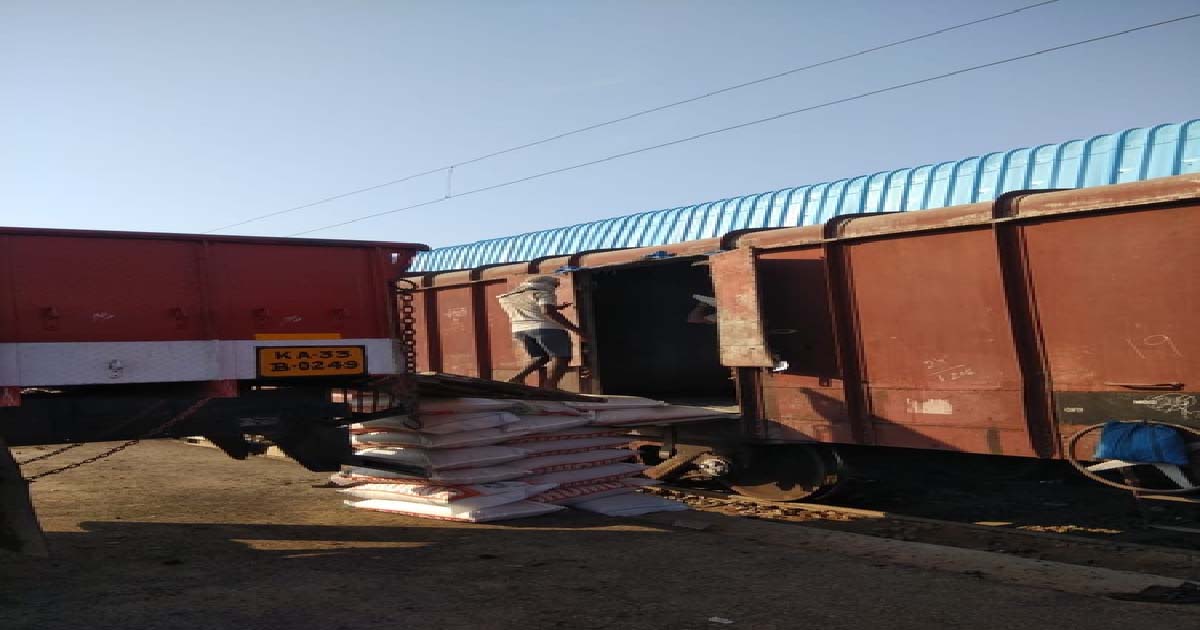
New Delhi, Jan 30: Fertiliser movement from the Centre to the states on Indian Railways, during the first nine months (April-December) of the financial year 2025-26, reached an all-time high with total supplies crossing 530.16 lakh metric tons to surpass the 500 lakh metric ton mark for the first time during this period, an official statement said on Friday.
This represents a 12.2 per cent increase over the corresponding period of FY 2024–25 and is 8.5 per cent higher than the previous record of FY 2023–24, it said.
The Centre has ensured sufficient availability of all major fertilisers across states, including the supply of 350.45 lakh metric tons of urea, against a requirement of 312.40 lakh metric tons in the first nine months (April-December) of the financial year 2025-26. Similarly, in the case of major P&K (phosphorous and potassium) fertilizers including DAP, MOP & NPKS, the total supply reached 287.69 lakh metric tonnes against the requirement of 252.81 lakh metric tonnes, consistently exceeding the assessed requirement and ensuring uninterrupted availability, the statement said.
Faster and smoother movement of fertiliser rakes enabled timely supplies to states, ensuring that farmers did not face any shortages during the critical stages of cultivation. Department of Fertilisers worked in close cooperation with the Ministry of Railways and stated that such coordinated efforts have helped ensure adequate availability of fertilisers across the country, the statement added.
During this period, average rake loading on Indian Railways increased to 72 rakes per day in July 2025, rose to 78 rakes per day in August 2025 and reached 80 rakes per day in September 2025, according to the official figures.
Urea rake movement rose to 10,841 rakes, registering an 8 per cent increase over last year, while P&K fertilisers recorded 8,806 rakes, marking an 18 per cent growth. Enhanced coordination with the Ministry of Railways, ports, state governments, and fertiliser companies ensured seamless and timely supply to states during peak agricultural seasons, the statement said.
Ensuring the timely availability of fertilisers to farmers has remained one of the government’s highest priorities. In this direction, the improved coordination between the Ministry of Railways and the Department of Fertilisers during Kharif 2025 and the ongoing Rabi season was clearly visible at the ground level. The states also took concerted measures to ensure last-mile availability to farmers, the statement added.

Mumbai: Cleanliness of Narelwadi graveyard since Shab-e-Barat, restoration of closed pillars in the graveyard, cleaning of the graveyard by Corporator Waqar Khan’s team

Ajit Pawar’s Widow Sunetra Swears In As Maharashtra’s Deputy CM, Becomes 1st Woman To Hold The Post

New excise duty, health cess on cigarettes, pan masala to begin from Feb 1

‘Must Have Been BJP Pressure’: Sena UBT Leaders Question Sunetra Pawar’s Swearing-In As Maharashtra Deputy CM 4 Days After Ajit Dada’s Death

Mumbai Police Arrest Navi Mumbai-Based Bar Owner In ATC Personnel Theft–Extortion Case

Mumbai Traffic Update: Heavy Vehicles Banned In City From February 1 During Peak Hours; What’s Allowed & What’s Not?

BMC Election Results 2026 Winners List: Check Ward-Wise Names Of Candidates Who Secured Victory

Sensex, Nifty open lower amid tariff-related concerns

Mumbai BMC Results Samajwadi Party Wiped Out From Govindi

Sensex, Nifty close week with gains over positive cues
-

 Crime3 years ago
Class 10 student jumps to death in Jaipur
-

 Maharashtra1 year ago
Mumbai Local Train Update: Central Railway’s New Timetable Comes Into Effect; Check Full List Of Revised Timings & Stations
-

 Maharashtra1 year ago
Mumbai To Go Toll-Free Tonight! Maharashtra Govt Announces Complete Toll Waiver For Light Motor Vehicles At All 5 Entry Points Of City
-

 Maharashtra1 year ago
False photo of Imtiaz Jaleel’s rally, exposing the fooling conspiracy
-

 National News1 year ago
Ministry of Railways rolls out Special Drive 4.0 with focus on digitisation, cleanliness, inclusiveness and grievance redressal
-

 Maharashtra1 year ago
Maharashtra Elections 2024: Mumbai Metro & BEST Services Extended Till Midnight On Voting Day
-

 National News1 year ago
J&K: 4 Jawans Killed, 28 Injured After Bus Carrying BSF Personnel For Poll Duty Falls Into Gorge In Budgam; Terrifying Visuals Surface
-

 Crime1 year ago
Baba Siddique Murder: Mumbai Police Unable To Get Lawrence Bishnoi Custody Due To Home Ministry Order, Says Report