
International News
Yemen Houthis report 300 Saudi airstrikes this week

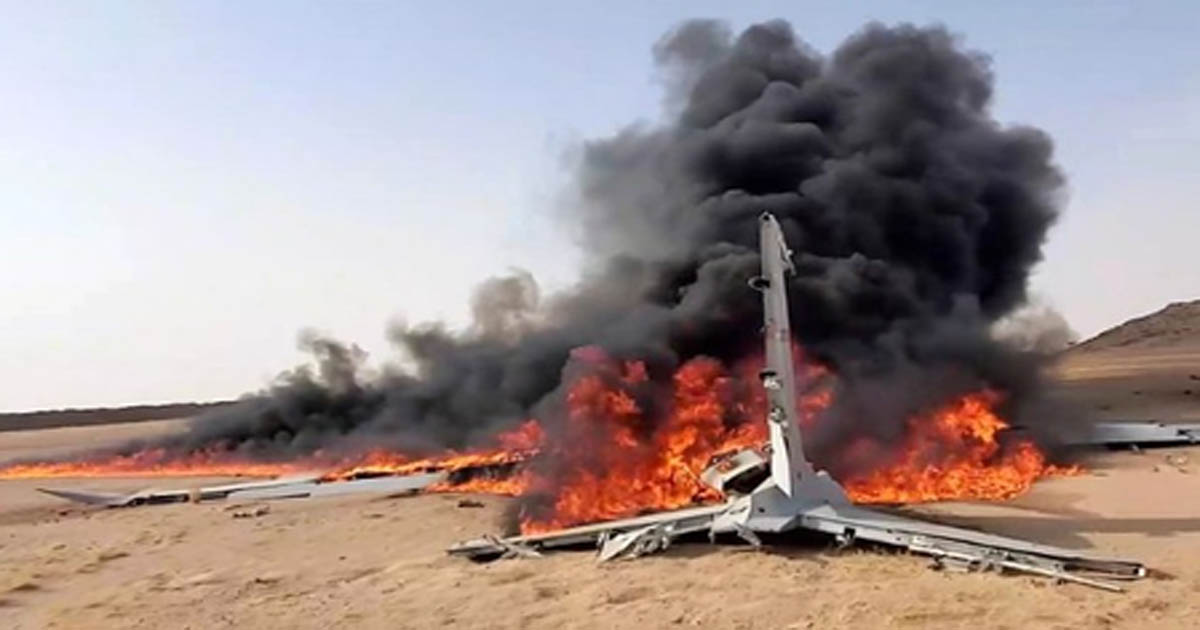
Sanaa, Sep 19: Yemen’s Houthi group has said that Saudi warplanes launched 26 airstrikes on the southwestern province of Taiz over the past 24 hours, bringing the total number of strikes across Yemen this week to 300 as air operations intensified alongside ongoing ground battles on several fronts.
Houthi military spokesperson Yahya Sarea said in a statement on social media platform X on Friday (local time) that Saudi F-15 fighter jets carried out the 26 strikes on Taiz after taking off from Khamis Mushait Air Base in southwestern Saudi Arabia.
Sarea added that this week’s 300 airstrikes across nine Yemeni provinces involved F-15 and Typhoon fighter jets operating from Saudi air bases of Khamis Mushait and King Fahd, reports Xinhua news agency.
Saudi authorities had no immediate comment.
The reported strikes came as heavy fighting continued Friday around the Kahbub mountain range in the southern province of Lahj, near the strategic Bab al-Mandab Strait, while clashes persisted across southwestern Taiz and in oil-rich Marib farther northeast.
The latest escalation follows significant Houthi advances along Yemen’s southwestern Red Sea coast earlier this month. Yemen’s conflict erupted in late 2014 when the Houthis seized the capital Sanaa and much of northern Yemen, prompting a Saudi-led coalition to intervene in March 2015 in support of the internationally recognised Yemeni government.
Meanwhile, explosions were heard in the Saudi capital Riyadh early Saturday. Local residents received air defence alerts via mobile apps.
The Saudi Directorate of Civil Defence later issued a statement on X saying the danger has passed in Riyadh and Al-Kharj and urged residents to continue following its instructions and avoid gathering or filming.
Earlier, it had warned: “An alert has been issued by the National Early Warning Platform for Emergency Cases in Al-Kharj Governorate to warn of a danger.”

International News
700 arrested, Shahzad Bhatti’s terror network seeks comeback with religious pitch


New Delhi : Indian security agencies arrested 700 individuals linked to proscribed terrorist Shahzad Bhatti, stalling major subversion plans including surveillance installations at crowded locations, targeted attacks, and cross-border drug smuggling, officials have said.
Dismantling the Bhatti network was among the most challenging operations undertaken by Indian investigative agencies in recent times.
Despite breaking the primary operational grid, intelligence authorities warned that the terror module is actively attempting a comeback by changing its recruitment strategy.
So far, around 700 people have been arrested on suspicion of working for Bhatti.
The operation carried out by security agencies thwarted several plans hatched by the Bhatti module. These included installing CCTV cameras at sensitive and crowded locations, carrying out targeted killings, and trafficking in drugs and counterfeit currency.
An official said that security agencies had largely dismantled the network, but the cat-and-mouse game with its remaining operatives was continuing.
“To date, over 100 takedown requests of Instagram profiles linked to this network have been sent to Meta. As the profiles are being taken down, over 50 new ones appear. This is, in fact, a big challenge for the agencies,” the official said.
An Intelligence Bureau official said that in this second push that is being made by the Bhatti network, a lot of emphasis is being given on defending religious honour. When the network was first set up, the recruitment was not religious-centric. Youth were recruited from across religions, and money played a very big role.
A youth could be picked up and asked to undertake a task for as little as Rs 5,000. These youth were also shown pictures of Bhatti and his associates posing in front of expensive cars and luxury homes. The handlers sold a dream to the youth, and this worked massively.
In reality, it was just bait, and the Bhatti network never had any plans to fulfil its promises regarding a fancy lifestyle that it made to the youth at the time of recruitment, the official said.
Intelligence agencies tracking Bhatti said that after the first crackdown that led to hundreds of arrests, Bhatti had been shifted to Pakistan. This decision was taken after the Indian government declared him a proscribed terrorist under the provisions of the Unlawful Activities Prevention Act (UAPA).
However, he has travelled to Dubai and Portugal in recent months and remains actively involved in overseeing the module and devising fresh strategies for operations in India.
Another official said Bhatti was now seeking to combine religion, money and lifestyle incentives in his next recruitment drive, with a greater emphasis on religious identity.
“This is a deliberate ploy. By invoking religious sentiments, the amount of money offered to recruits would be relatively small. The idea is to exploit the religious sentiments of young people during the recruitment process,” the official said.
Those youth who would be recruited for paltry amounts, which would be as low as Rs 3,000 to Rs 5,000, are being promised better lives in Dubai, Pakistan or Nepal.
Investigations show that the Bhatti network has prepared fake passports for several youths so that they could escape from India after a big hit-job is carried out, the official added.
“While the religious push would be much higher this time, the overall strategy remains the same — pay less and recruit more. Bhatti does not want to build just a network in India, but wants to create an army of youths who would fight for a religious cause,” officials say.
The module’s operational brief is no longer limited to installing CCTV cameras, trafficking in drugs and circulating counterfeit currency. The network is seeking to expand its reach and intensify its activities. Police have linked the Bhatti network to attacks targeting police personnel in Punjab, the blast outside the Border Security Force (BSF) headquarters in Jalandhar, and a petrol bomb attack on the Rashtriya Swayamsevak Sangh (RSS) headquarters in Jharkhand.
The operations that the network is planning are on similar lines, but the scale would be much larger. Platforms such as Instagram would continue to be used for radicalisation and putting out hate messages against India. Planning and execution of high-intensity attacks would be done extensively on encrypted messaging platforms such as Telegram, an official said.
International News
Bomb threats disrupt flights across Europe, forcing diversions and security checks

More than a dozen passenger flights across Europe received bomb threats on Thursday, forcing several aircraft to divert and prompting security checks at airports in multiple countries, according to local media reports and airline statements.
An Aer Lingus Airbus A320 travelling from Dublin to Rome was diverted to a military airbase in Evreux, France, following a bomb alert. The aircraft landed safely, and all 151 passengers and six crew members were moved to safety while military bomb disposal teams inspected the plane, according to the office of French Prime Minister Sebastien Lecornu.
In Bulgaria, three Ryanair flights bound for the capital Sofia received bomb threats on Thursday morning, local broadcaster bTV reported. Flights from Copenhagen and Madrid landed safely in Sofia, while a flight from London Stansted Airport was diverted to Plovdiv Airport. Security checks found no dangerous objects on board the aircraft, according to the broadcaster.
In Poland, a Paris-bound LOT Polish Airlines plane was stopped while taxiing at Warsaw Chopin Airport following a report of a potentially dangerous object onboard. Flight LO331 was moved to a designated parking stand for inspection, and one runway was temporarily closed. No dangerous items were found, and airport operations subsequently returned to normal, Xinhua News Agency reported.
Another LOT flight, traveling from Warsaw to Brussels, also received a security threat. The aircraft landed at Brussels Airport, where additional inspections found no suspicious items, the airline said.
A Wizz Air flight from Milan to Warsaw was diverted to Vienna following a bomb threat. Two Finnair flights departing from Helsinki, bound for Rome and Vienna respectively, were also targeted. Both landed safely, with the Rome-bound aircraft escorted by Italian military jets.
In Romania, a Wizz Air flight from Milan landed safely at Bucharest’s Henri Coanda International Airport following a bomb threat. The 182 passengers and seven crew members were evacuated while security personnel inspected the aircraft, Romanian public radio reported.
Czech police also reported bomb threats against four aircraft heading to Prague. Police assessed the threats as having low credibility but activated security measures and arranged inspections of the aircraft upon landing.
The European Union Aviation Safety Agency (EASA) said Thursday it would continue to monitor developments and assess potential aviation safety implications following the bomb threats against multiple passenger aircraft in Europe.
In an emailed response to Xinhua, EASA said it would “continue to monitor these developments to identify and assess any potential aviation safety implications arising from such security threats.”
Europol Deputy Spokesperson Claire Georges told Xinhua in an email on the same day that the agency stood ready to support national authorities, at their request, where threats were linked to serious organised crime or terrorism, including by facilitating information exchange and identifying possible links across countries.
The incidents followed a series of similar alerts across Europe on Tuesday when at least seven passenger flights and a cruise ship received bomb threats. The affected flights included two bound for Warsaw, two for Rome, two for Sofia and one for Murcia in Spain, while a cruise ship bound for Israel was searched after a bomb threat at the Greek island of Syros.

India, as Chair of the Kimberley Process (KP) for 2026, has flagged key priorities concerning the global diamond industry, including responsible rough diamond sourcing as part of its outreach ahead of the KP Plenary to be held in Delhi from November 30 to December 4, according to a statement issued by the Commerce Ministry on Thursday.
The issue was discussed at a stakeholder consultation in Angola’s Luanda on Tuesday, chaired by Additional Secretary Yashvir Singh on India’s behalf, which brought together the Chairs and Vice-Chairs of KP Working Groups and Committees (KP Working Bodies), the KP Vice-Chair (of Ghana), and the former KP Chair (of the United Arab Emirates). Representatives of observers and partner organisations, including the World Diamond Council and the African Diamond Producers’ Association (ADPA), also participated in the discussion, the statement said.
India has observer status in the ADPA, providing an institutional platform for engagement with African diamond-producing countries. This offers opportunities for cooperation in securing rough diamond supply chains, technical knowledge exchange, value addition, market access and the promotion of ethical and sustainable practices.
The 13th Extraordinary Meeting of the ADPA Council of Ministers, held alongside the 20th anniversary celebrations, approved a Memorandum of Understanding (MoU) between the Gem & Jewellery Export Promotion Council (GJEPC), India, and the ADPA. The MoU seeks to strengthen cooperation between the Indian gem and jewellery industry and African diamond-producing countries, including through capacity building and skills development in diamond sorting, valuation and manufacturing, exchange of technical expertise, and the promotion of trade and investment linkages across the diamond value chain, the statement said.
Yashvir Singh said: “India’s chairship places emphasis on confidence, compliance and credibility. The consultation in Luanda provided an opportunity to engage directly with the leadership of the KP working bodies, the KP Vice-Chair and observers on issues that are important to the future of the Process and the diamond industry. Our endeavour is to build a shared understanding of the issues before the New Delhi Plenary and to advance practical outcomes through constructive dialogue and consensus-based decision-making.”
Discussions covered the sustainability of diamond-producing countries and communities, sustainable funding and continuity of the KP Secretariat, digitalisation of certification and statistical processes, and strengthening compliance with the Kimberley Process Certification Scheme.
Participants also exchanged views on the reform of the conflict diamond definition, responsible sourcing, artisanal and alluvial diamond production, consumer confidence and the importance of effective reporting and peer-review mechanisms.
The ADPA, established in 2006 in Luanda, seeks to enhance cooperation among African diamond-producing nations. It effectively comprises 15 member countries and 8 observers, including two non-African observers, namely Russia and India. Its member countries collectively account for over 60 per cent of global diamond production.

Salman Khan has dismissed reports of government pressure to make changes to the script of ‘Matrubhumi’.

Fire breaks out at car showroom in Delhi, several vehicles gutted

Haryana CM invites Rahul Gandhi for debate on ‘vote chori’

Objection Even to the Birth of Muslim Children? Political Controversy Over Somaiya’s Remarks, Demand for a Population Control Committee.

IT Q2 results beat low expectations, but demand recovery pushed to FY28: Report

Rahul, Cong ecosystem want to force regime change: BJP after Neha Bora praises B’desh Gen-Z protest

BJP pays tribute to ex-President Abdul Kalam, recalls his enduring influence on generations of India’s youth

Attack on democratic rights: INDIA Bloc leaders on detentions of anti-ECI protestors

Congress trying to protect 3 crore Bangladeshi infiltrators in voter list: HM Shah

Online betting: ED conducts searches at 20 premises in Mumbai, Pune, Hyderabad
-

 Crime4 years ago
Class 10 student jumps to death in Jaipur
-

 Maharashtra2 years ago
Mumbai Local Train Update: Central Railway’s New Timetable Comes Into Effect; Check Full List Of Revised Timings & Stations
-

 Maharashtra2 years ago
Mumbai To Go Toll-Free Tonight! Maharashtra Govt Announces Complete Toll Waiver For Light Motor Vehicles At All 5 Entry Points Of City
-

 Maharashtra2 years ago
False photo of Imtiaz Jaleel’s rally, exposing the fooling conspiracy
-

 National News2 years ago
Ministry of Railways rolls out Special Drive 4.0 with focus on digitisation, cleanliness, inclusiveness and grievance redressal
-

 Maharashtra2 years ago
Maharashtra Elections 2024: Mumbai Metro & BEST Services Extended Till Midnight On Voting Day
-

 National News2 years ago
J&K: 4 Jawans Killed, 28 Injured After Bus Carrying BSF Personnel For Poll Duty Falls Into Gorge In Budgam; Terrifying Visuals Surface
-

 Crime2 years ago
Baba Siddique Murder: Mumbai Police Unable To Get Lawrence Bishnoi Custody Due To Home Ministry Order, Says Report