
International News
Ukraine receives 3.3 billion euros from EU for defence needs

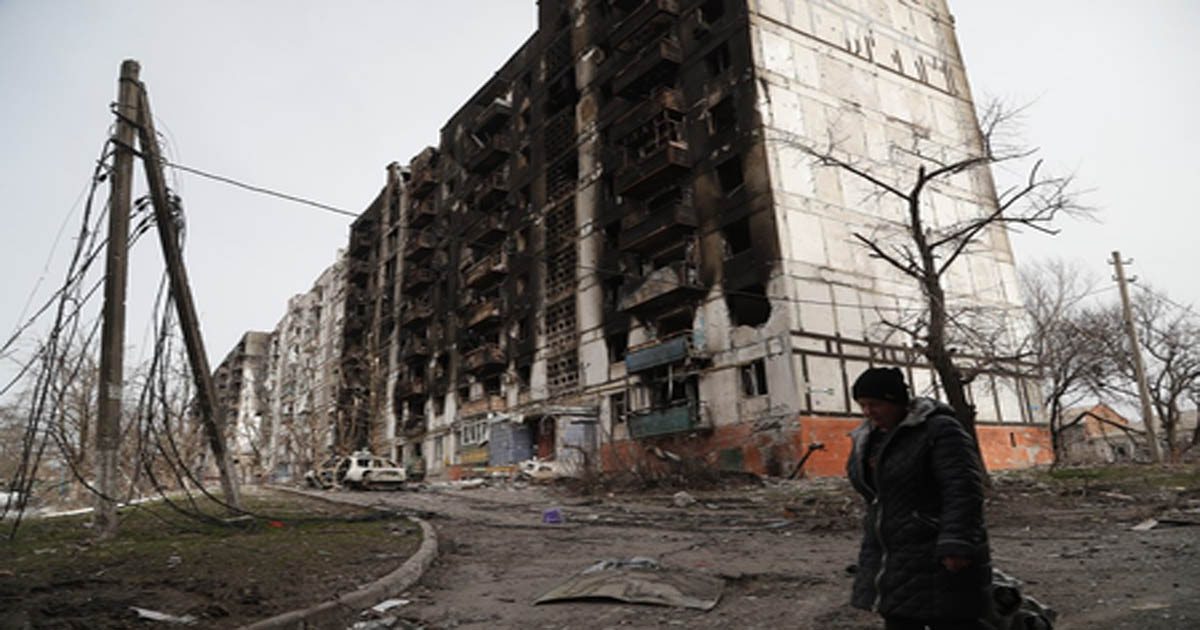
Kyiv, Sep 19: Ukraine has received a new 3.3-billion-euro (about 3.78 billion US dollars) tranche from the European Union to finance priority defence needs, Ukrainian Prime Minister Sergii Koretskyi said Friday.
The funds will be used, in particular, to purchase missiles and drones, Koretskyi said on Telegram.
The tranche was disbursed under the Ukraine Support Loan mechanism, which envisages up to 45 billion euros in assistance to Ukraine in 2026, including funding for defence and budgetary support.
The EU finalised the 90-billion-euro support loan for Ukraine in April, aiming to provide budgetary and defence support to the country in 2026 and 2027, reports Xinhua news agency.
Meanwhile, the Russian Foreign Ministry stated on Friday it had summoned Britain’s charge d’affaires in Russia, Danae Dholakia, over London’s increased arms supplies to Ukraine.
On August 24, British Prime Minister Andy Burnham’s office announced that the country had authorised defence company MBDA to release classified information on British components of the long-range SCALP missile. The information will help Kyiv assemble these weapons.
Britain’s “sharply confrontational line on the Ukrainian track is clearly subordinated to the task of dragging out and escalating the armed conflict by all means, and only pushes further away the prospect of its political settlement,” said the ministry in a statement.
According to the foreign ministry, Dholakia was informed that Russia reserved the right to take necessary retaliatory measures in accordance with its right to self-defence.
The foreign ministry also warned that any British military facilities on Ukrainian territory used to launch strikes against Russia would be regarded as legitimate targets.
Additionally, the Russian Defence Ministry said on Friday that Russian forces conducted two massive and five group strikes against Ukrainian defence plants, logistics hubs, energy and transport infrastructure and seized ten settlements in a week.
Among the hit targets were defence, metallurgical, motor and electronic enterprises, military logistics and distribution centres, fuel-power, railway and road infrastructure facilities, drone manufacturing workshops and storage facilities, ammunition and fuel depots, ports, as well as temporary deployment areas for Ukrainian armed forces and foreign mercenaries.
Regarding sea targets, the ministry added that 12 Ukrainian dry cargo ships, two sea ferries, one tanker and one tugboat were hit.
Over the week, Russian air defence systems shot down 44 guided aerial bombs, eight HIMARS rockets, two Neptune long-range guided missiles and 5,706 Ukrainian drones.

International News
India says attacks on maritime shipping and seafarers unacceptable, calls for global response

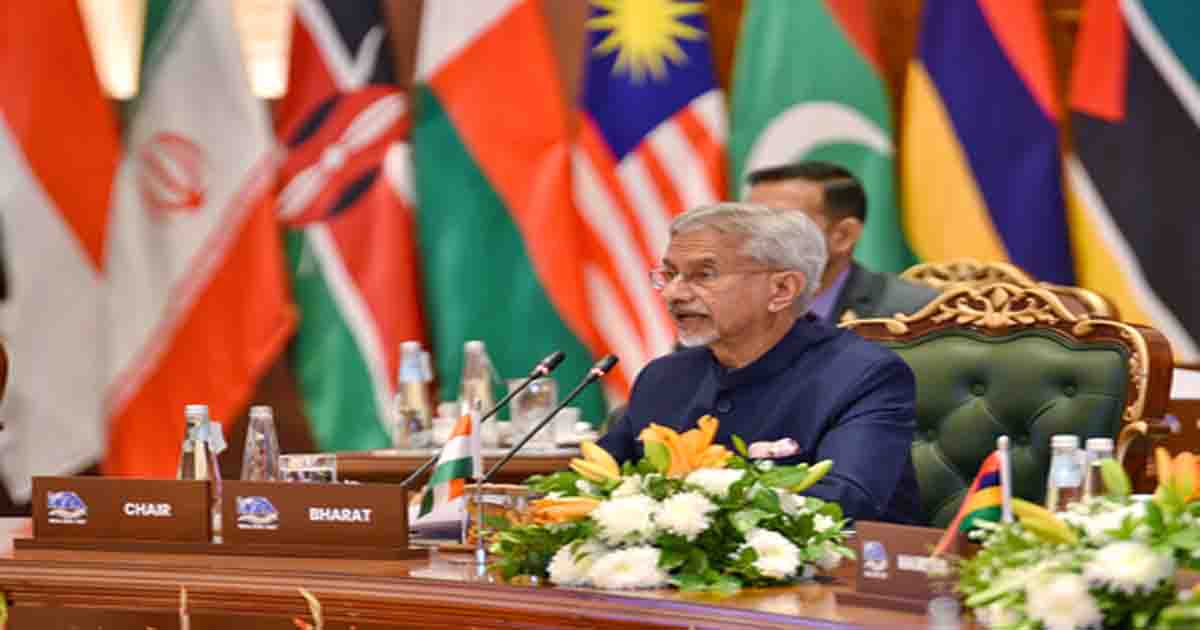
Calling for a global response, External Affairs Minister (EAM) S Jaishankar on Friday termed attacks on maritime shipping and seafarers as “unacceptable”.
In his remarks at the Indian Ocean Rim Association’s (IORA) General Debate on ‘A Stronger Regional Voice: Positioning IORA in a Changing Global Order’ in New Delhi on Friday, EAM Jaishankar highlighted the volatile aspects of a transforming global order, particularly conflicts, frictions and disruptions.
“We are understandably focused on the volatile aspects of a transforming global order, especially conflicts, frictions and disruptions. It is equally imperative to appreciate the promising aspects: deep interdependence, strong globalisation and the benefits of international cooperation,” EAM Jaishankar said.
He emphasised that the Indian Ocean is particularly poised to address its challenges. Recognising the criticality of maritime trade to global growth, EAM Jaishankar called on nations to deliver on safety and security of the Indian Ocean and stated that international law, especially the United Nations Convention on the Law of the Sea (UNCLOS), must be respected.
“Whether it is to counter terrorism, narcotics trade or illegal, unreported, and unregulated fishing, or indeed response to climate events and disaster situations, we have to become more self-reliant as well as more enthusiastic about cooperating with partners,” EAM Jaishankar said.
The meeting is being held under India’s IORA 2025-2027 chairship with the theme of ‘Innovation, Openness, Resilience and Adaptability in the Indian Ocean Region’.
The 23-member states of IORA are India, Australia, Bangladesh, Indonesia, Iran, Kenya, Madagascar, Comoros, France, Malaysia, Maldives, Mauritius, Mozambique, Oman, Seychelles, Singapore, Somalia, South Africa, Sri Lanka, Tanzania, Thailand, the United Arab Emirates, and Yemen.
The 12 dialogue partners are China, Egypt, the European Union, Germany, Italy, Japan, South Korea, Russia, Saudi Arabia, Turkey, the United Kingdom, and the United States.
The Council of Ministers is the Association’s highest decision-making body and comprises the Ministers of Foreign Affairs of IORA Member States. It provides the overall policy and strategic direction of the organisation. Its key responsibilities include formulating policies, reviewing progress in cooperation among member states, and identifying and deciding on new areas of collaboration to further advance the objectives of the Association.
International News
Iran has no involvement in Kuwait drone attack, ready for joint investigation: Iranian FM
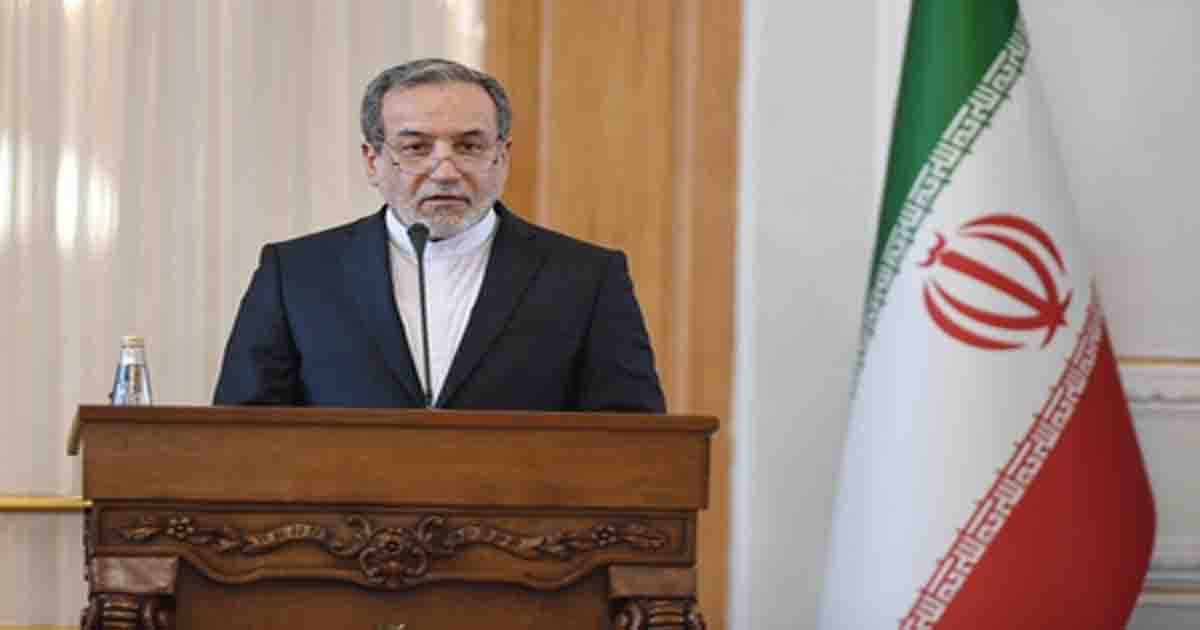
Iranian Foreign Minister Seyed Abbas Araghchi said the country has no involvement in a drone attack that killed two Italians in Kuwait earlier on Thursday, saying Tehran is ready to cooperate with Kuwait and Italy to investigate.
Araghchi made the remarks in separate phone calls with Kuwait’s Foreign Minister Sheikh Jarrah Jaber Al-Ahmad Al-Sabah and Italy’s Foreign Minister Antonio Tajani.
In the calls, the Iranian foreign minister emphasized that Iran “had no role or involvement whatsoever in the occurrence of this event,” saying Iran is prepared to conduct a joint investigation with Kuwait and Italy to examine the details of the incident and identify its origin and the parties involved, Xinhua news agency reported.
Araghchi expressed regret to his Kuwaiti counterpart over the casualties and damage caused by the attack.
In his phone call with Tajani, the Iranian minister expressed regret over the deaths of two Italians, extending condolences and sympathy to the Italian government and people.
Tajani said Araghchi told him the drone “was absolutely not launched by Iranian armed forces, nor did it originate from Iran,” according to Italian news agency ANSA.
Kuwaiti military spokesperson Saud Abdulaziz Al-Atwan said earlier in a statement on social media platform X that the Kuwaiti forces had detected and engaged several “hostile drones” within the country’s airspace and attributed them to Iran.
Al-Atwan said falling debris from the attacked facility killed two Italians, injured one Kuwaiti and one Pakistani, and caused material damage.
Earlier on Thursday, senior spokesman for Iran’s armed forces Abolfazl Shekarchi also rejected Kuwait’s claim about Iran’s involvement in the attack, according to the semi-official Fars news agency, saying the Iranian Armed Forces had conducted no military or offensive operations in the region.
International News
Putin lauds PM Modi’s ‘Make in India’ vision in interaction with 16-year-old ‘AI kid of India’
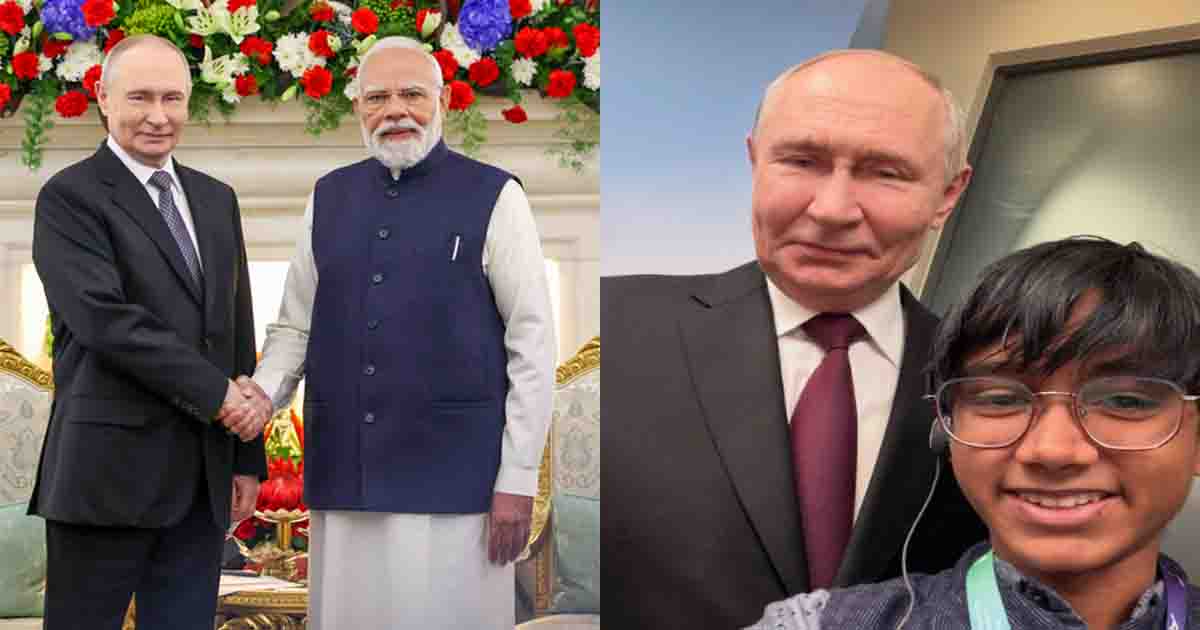
Russian President Vladimir Putin, during an interaction with 16-year-old Indian AI innovator Raul John Aju in Moscow, praised Prime Minister Narendra Modi’s ‘Make in India’ vision, saying it encourages young people to develop their own solutions and turn them into reality.
The interaction took place at the end of the plenary session of the conference ‘Journey to the world of Artificial Intelligence’, where Putin asked Aju whether the growing use of artificial intelligence (AI) poses a threat to the education process.
Responding to the question, Aju emphasised the need to work alongside AI rather than depend on it entirely, advocating a balanced approach to integrating the technology into education.
Drawing a comparison with calculators, he explained that students should first develop a sound understanding of basic concepts before using technological tools to enhance their learning.
“Thus, artificial intelligence at some stage can be connected to the education process when you are already quite educated, you understand the basics, you understand how you can learn, how to remember,” Aju said.
“Artificial intelligence can help you look for new ideas and find some new meanings. You can do different things like this study, use artificial intelligence, to collect data,” he added.
However, he cautioned that AI was not always a blessing and stressed the importance of using the technology responsibly.
Responding to Aju’s explanation, Putin linked the young innovator’s work to Prime Minister Modi’s vision of ‘ Make in India’, saying, “Ultimately, your work helps you realise the call by Prime Minister Modi, ‘Make in India’, because it helps young people go out to find their own solutions and implement these solutions.”
Aju also took to Instagram to share his meeting with the Russian President, posting a selfie and a video clip showing him shaking hands with Putin.
“From making my first video in a bathroom at 9 to taking a selfie with President Putin, never in my wildest dreams did I think life would take me here. More than anything I’ve achieved, I’m grateful for the person this journey has helped me become. Meeting some incredible people at AI Journey (way smarter than me) made me realise how much more I have to learn, ” he said, reflecting on his journey as a young content creator and AI innovator.
Thanking the people who have supported him, Aju said, “And to everyone who’s been part of this journey, thank you for making a little kid’s dreams come true. Still a curious kid, just with a few more stories to tell.”

Saif Ali Khan shares throwback pictures capturing his style, memories through eras

India says attacks on maritime shipping and seafarers unacceptable, calls for global response

Kerala woman stabbed to death by lover at Bengaluru lodge; accused arrested

NCP (SP) to back Delimitation Bill, confirms Jitendra Awhad

Delhi: 27-year-old man stabbed to death after road altercation, accused absconding

Congress trying to protect 3 crore Bangladeshi infiltrators in voter list: HM Shah

Red Fort car blast probe exposes blueprint for spread of terror modules across India

Trump flags Iran targets as talks continue

‘Conspiracy, not accident’: NCP on Ajit Pawar death

BJP, Shiv Sena slam Mallikarjun Kharge for terming Diwali ‘Khushiyon ka Eid’
-

 Crime4 years ago
Class 10 student jumps to death in Jaipur
-

 Maharashtra2 years ago
Mumbai Local Train Update: Central Railway’s New Timetable Comes Into Effect; Check Full List Of Revised Timings & Stations
-

 Maharashtra2 years ago
Mumbai To Go Toll-Free Tonight! Maharashtra Govt Announces Complete Toll Waiver For Light Motor Vehicles At All 5 Entry Points Of City
-

 Maharashtra2 years ago
False photo of Imtiaz Jaleel’s rally, exposing the fooling conspiracy
-

 National News2 years ago
Ministry of Railways rolls out Special Drive 4.0 with focus on digitisation, cleanliness, inclusiveness and grievance redressal
-

 Maharashtra2 years ago
Maharashtra Elections 2024: Mumbai Metro & BEST Services Extended Till Midnight On Voting Day
-

 National News2 years ago
J&K: 4 Jawans Killed, 28 Injured After Bus Carrying BSF Personnel For Poll Duty Falls Into Gorge In Budgam; Terrifying Visuals Surface
-

 Crime2 years ago
Baba Siddique Murder: Mumbai Police Unable To Get Lawrence Bishnoi Custody Due To Home Ministry Order, Says Report