
Business
World’s top ten saw wealth double to $ 1.5 trillion during pandemic

The 10 richest men in the world have seen their global wealth double to $1.5 trillion since the start of the global pandemic following a surge in share and property prices that has widened the gap between rich and poor, according to a report from Oxfam, The Guardian reported.
Urging governments to impose a one-off 99 per cent wealth tax on Covid-19 windfall gains, the charity said World Bank figures showed 163 million more people had been driven below the poverty line while the super rich were benefiting from the stimulus provided by governments around the world to mitigate the impact of the virus, the report said.
Oxfam projects that by 2030, 3.3 billion people will be living on less than $5.50 per day.
The charity said the incomes of 99 per cent of the world’s population had reduced from March 2020 to October 2021, when Elon Musk, the founder of the electric car company Tesla, and the other nine richest billionaires had been collectively growing wealthier by $1.3 billion a day.
Musk, according to figures taken from Forbes magazine’s billionaires list, saw his wealth increase 10-fold to $294 billion in the first 20 months of the pandemic, catapulting him above Jeff Bezos, the founder of Amazon, to be the world’s richest person, the report said.
During a period when technology stocks were soaring on Wall Street, Bezos’s net wealth rose 67 per cent to $203 billion, Facebook’s Mark Zuckerberg’s wealth doubled to $118 billion, while the wealth of the founder of Microsoft, Bill Gates, increased by 31 per cent to $137 billion.
While people on more modest incomes have also seen their assets rise in value during the pandemic, Oxfam said the 10 richest men own six times as much wealth as the bottom 40 per cent (3.1 billion people). It would take the 10 billionaires 414 years to spend their combined wealth at a rate of a million dollars each per day, the charity added, the report said.



Indian equity benchmarks traded higher in early trade on Wednesday with gains of nearly 1 per cent each tracking positive global cues and buying in IT stocks.
In morning trade, Sensex was trading 0.94 per cent or 695 points higher at 74,548.69, hitting an intraday high against previous close of 73,852.90.
Similarly, Nifty surged 0.86 per cent or almost 200 points to 23,086.95 from previous close of 22,888.95.
Earlier in the day the benchmarks opened higher, with the Sensex opening at 74,337.93, up 485.03 points or 0.66 per cent.
Nifty opened at 23,016.00, up 127.05 points or 0.56 per cent.
Sector-wise, Nifty IT, Nifty PSU Bank, Nifty Cement, Nifty MidSmall IT & Telecom and Nifty Oil & Gas increased up to 1.97 per cent.
However, Nifty Media and Nifty Chemicals were trading in the red.
According to market experts, as Brent crude prices and US bond yields remained elevated, the market is likely to remain under pressure and the sell-on-rally construct will continue in the near-term.
However, improving earnings growth, fair valuations of large-caps and strong domestic liquidity will support the market on declines, they said.
IT and banking which have performed well in Q2 and are attractively valued, will see strong DII-led accumulation on corrections, the experts said.
Notably, the Q2 results season has started on a positive note and market action going forward will be more stock-specific and results-sensitive, experts noted.
In the last trading session on October 19, FIIs remained net sellers, offloading equities worth approximately Rs 1,148 crore, while DIIs continued to support the market with net purchases of around Rs 3,200 crore.
In addition, Asian shares traded higher following gains in US stock futures after upbeat earnings from major AI-linked companies renewed investor interest in technology shares.
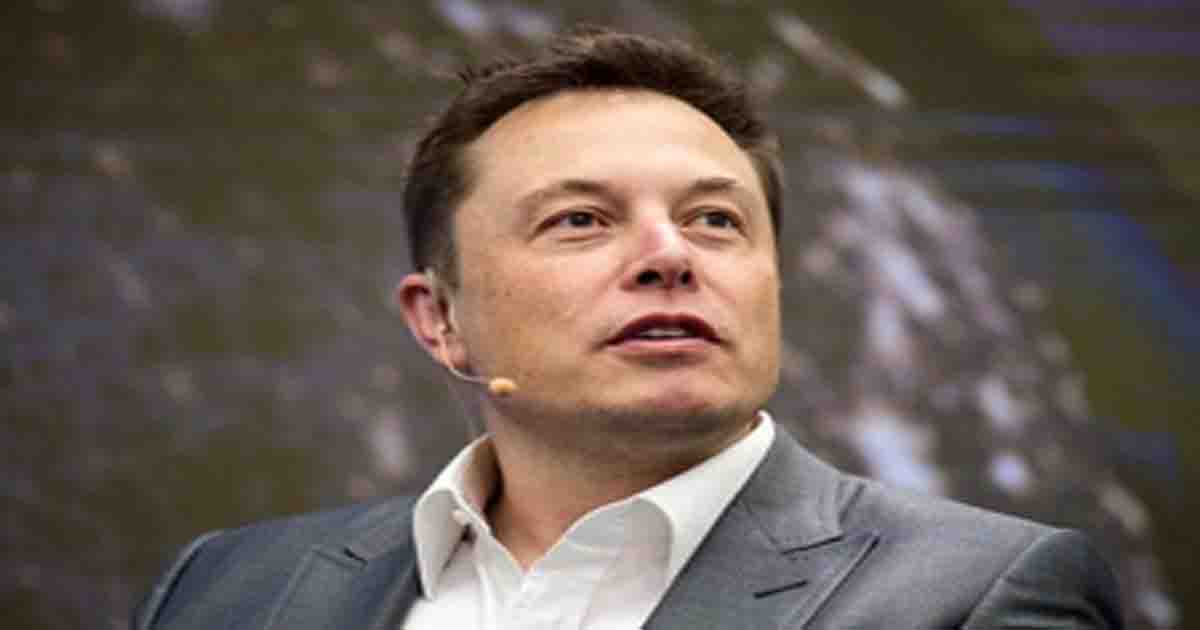
Tesla has scheduled its annual shareholder meeting for December 3, where investors will vote on the re-election of Chief Executive Elon Musk and other directors, along with an advisory resolution on executive compensation and the appointment of the company’s auditor.
According to a proxy filing with the US Securities and Exchange Commission, Tesla has nominated Musk, Chair Robyn Denholm and director JB Straubel for new three-year terms on the board.
Shareholders will also be asked to approve, on a non-binding basis, executive compensation for 2025 and ratify PricewaterhouseCoopers as Tesla’s independent auditor for the fiscal year ending December 31.
Moreover, the proxy statement disclosed executive compensation attributed to Musk for 2025 of about $158.36 billion, consisting entirely of stock-based awards.
The figure reflects the accounting value assigned to performance-linked equity grants and does not represent cash compensation received by the billionaire entrepreneur.
Tesla said the awards remain contingent on the achievement of specified market capitalisation and operational targets.
The company previously reported in May that Musk’s realised compensation for 2025 was zero with none of the 12 tranches tied to the incentive program having been earned.
The equity package comprises roughly 423.7 million restricted shares that vest only after predetermined milestones are met.
In addition, any earned shares are generally subject to a five-year holding requirement, with limited exceptions.
The annual meeting will be held at Tesla’s Gigafactory Texas facility in Austin at 3 pm. However, Central Time and will also be accessible online.
Additionally, the filing highlighted several board-level links between Tesla and SpaceX.
However, the proxy statement did not reference any potential merger involving Tesla and SpaceX.
Apart from that, Elon Musk-backed SpaceX is scheduled to announce its third-quarter results on Tuesday after its shares fell nearly 35 per cent from their post-listing high.
This will be the company’s second quarterly earnings report since going public in June, following a volatile stretch for the stock.
The stock has dropped around 35 per cent from the record high it hit soon after its debut.
The independent Oversight Board on Tuesday criticised Meta, saying the social media firm must improve the transparency and consistency of its election-related enforcement after a series of moderation failures involving political accounts in the United States and Brazil.
In a statement, the Board said it remained concerned by what it described as recurring shortcomings in Meta’s election integrity efforts and warned that mistakes in content moderation risk either suppressing legitimate political speech or undermining public confidence in electoral processes.
It pointed to the removal of political activist accounts linked to the ‘No Kings’ movement in the United States and restrictions placed on accounts associated with Brazilian President Luiz Inacio Lula da Silva during election periods as examples of enforcement actions that fuelled concerns about electoral interference.
According to the Board, the erroneous action against the No Kings Instagram account should have been detected by Meta’s safeguards designed to prevent moderation mistakes.
Meanwhile, it also questioned why the accounts were not included in Meta’s Cross-Check program which provides additional human review for high-profile civic and political entities before actions are taken that could affect participation in major public events.
The Board said Meta’s enforcement of fraud-related policies against ad accounts linked to Lula during Brazil’s presidential election campaign similarly represented a failure that should have been escalated to specialist reviewers.
The comments revisit concerns raised by the board following Brazil’s 2022 presidential election, when it called on Meta to establish measurable benchmarks for assessing the effectiveness of its election integrity programs and to publish relevant performance data.
While Meta regularly discloses broad statistics such as the number of advertisements archived or accounts removed, the Board said the company has yet to provide public metrics that adequately measure the effectiveness of its enforcement systems or identify significant shortcomings.
Moreover, the Board also warned that the wrongful removal of political content ahead of elections could have a chilling effect on political participation and potentially undermine electoral integrity.
“Automated enforcement tools must take language, nuance, and political context into account to better protect political speech that does not incite violence,” according to Oversight Board.
Meta had pledged in 2025 to reduce moderation errors while allowing greater freedom of expression around elections and political debate.
The Board said recent incidents suggest further improvements are needed for the company to meet that commitment.

CISF seizes foreign currency worth Rs 1.13 crore at Kolkata airport

First Russian tanker carrying 40,000 tonnes of diesel to depart in 2-3 days: Putin

Gujarat: Man held after 0.77 grams of mephedrone found in ‘porter’ delivery parcel

Bihar: 75-year-old man stabbed to death; woman and her son injured

Maha Minister instructs submission of village-wise water scarcity action plan by Oct 25

Rahul, Cong ecosystem want to force regime change: BJP after Neha Bora praises B’desh Gen-Z protest

Attack on democratic rights: INDIA Bloc leaders on detentions of anti-ECI protestors

BJP pays tribute to ex-President Abdul Kalam, recalls his enduring influence on generations of India’s youth

INDIA bloc begins protest march against ECI

Maha Congress stages agitation against Gyanesh Kumar
-

 Crime4 years ago
Class 10 student jumps to death in Jaipur
-

 Maharashtra2 years ago
Mumbai Local Train Update: Central Railway’s New Timetable Comes Into Effect; Check Full List Of Revised Timings & Stations
-

 Maharashtra2 years ago
Mumbai To Go Toll-Free Tonight! Maharashtra Govt Announces Complete Toll Waiver For Light Motor Vehicles At All 5 Entry Points Of City
-

 Maharashtra2 years ago
False photo of Imtiaz Jaleel’s rally, exposing the fooling conspiracy
-

 National News2 years ago
Ministry of Railways rolls out Special Drive 4.0 with focus on digitisation, cleanliness, inclusiveness and grievance redressal
-

 Maharashtra2 years ago
Maharashtra Elections 2024: Mumbai Metro & BEST Services Extended Till Midnight On Voting Day
-

 National News2 years ago
J&K: 4 Jawans Killed, 28 Injured After Bus Carrying BSF Personnel For Poll Duty Falls Into Gorge In Budgam; Terrifying Visuals Surface
-

 Crime2 years ago
Baba Siddique Murder: Mumbai Police Unable To Get Lawrence Bishnoi Custody Due To Home Ministry Order, Says Report