
National News
West Bengal: President Droupadi Murmu Launches Vindhyagiri Advanced Stealth Frigate


Kolkata: President of India Droupadi Murmu on Thursday launched ‘Vindhyagiri’ an advanced stealth frigate– the sixth ship of project 17A of Indian Navy at Garden Reach Shipbuilders Engineers Limited in Kolkata.
Speaking on the occasion, the President said that the launch of Vindhyagiri marks a move forward in enhancing India’s maritime capabilities.
Vindhyagiri a great step towards Atmanirbhar Bharat
“It is also a step towards achieving the goal of Atmanirbhar Bharat through indigenous shipbuilding. Project 17A of which Vindhyagiri is a part reflects our commitment to self-reliance and technological advancement. The security in the Indian Ocean Region and the larger Indo-Pacific has many aspects and the Navy has to always remain proactive in tackling security threats,” said Murmu.
‘Addiction Free Bengal’
Earlier this day after reaching Kolkata, President Murmu visited West Bengal Governor CV Ananda Bose at Raj Bhavan to launch the campaign ‘My Bengal, Addiction free Bengal’. According to a press statement issued by PIB, Speaking on the occasion, the President said that drug abuse is a matter of concern for society and the country.
“Due to these addictions, youth are not able to choose the right direction in their lives. This is very worrying and there is a need to work on all fronts in this matter. She stated that this situation can be improved through spiritual awakening, medication, social solidarity and political will. She appreciated organizations like Brahma Kumaris for discussing such issues and working to solve them,” read the statement.

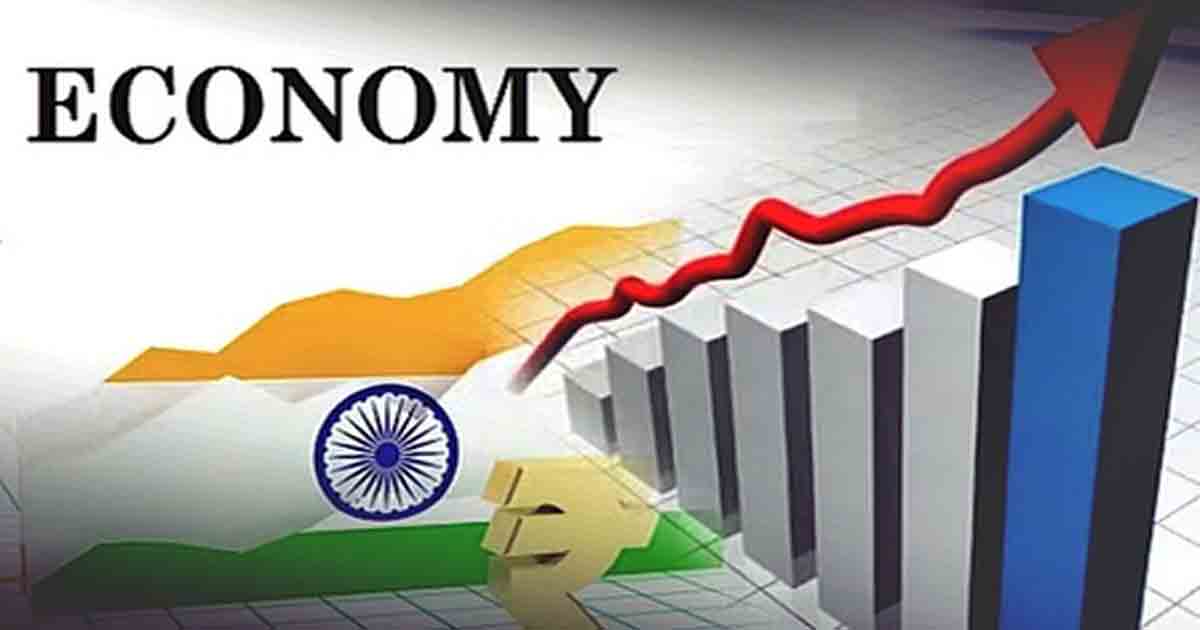
Leading industry chamber CII on Sunday called for 15 priority reforms across banking, non-banking finance, capital markets, insurance and financial technology, ahead of the Union Budget 2027-28 and help build a $26.5 trillion economy in 2047.
These include a standing, rule-based liquidity window for well-governed NBFCs, a recalibrated priority sector lending framework, a wider investor base for lower-rated corporate bonds, parity for NBFCs in loan recovery, and a national catastrophe and climate risk pool.
CII’s analysis estimates that a $26.5 trillion economy in 2047 will need close to $106 trillion of financial assets, against about $7 trillion today.
Banking assets will need to grow 3.0 to 3.5 percentage points faster than nominal GDP, taking the bank assets-to-GDP ratio from about 1.0 times towards 1.5 times.
Insurance and pension assets together are around 10 per cent of GDP, and the corporate bond market at about 15 per cent of GDP compares with 36 per cent in China and over 80 per cent in South Korea, according to the CII document.
“The financial sector enters this phase from a position of strength, with healthy bank and NBFC balance sheets and a series of important measures by the Government and regulators over the past year. The task now is to build a system that can finance an economy several times its present size by 2047,” said Chandrajit Banerjee, Director General, CII.
That requires deeper and longer-tenor pools of capital, credit that reaches the sectors that will drive growth, and regulation that keeps pace with how finance is delivered. Our recommendations are intended to take the current reform effort to its next stage,” Banerjee noted.
The CII recommends raising the priority sector limit for renewable energy from Rs 35 crore to Rs 80-100 crore per borrower, so that medium-sized projects qualify, and bringing circular economy activities such as recycling and battery reuse within the framework.
The 2 per cent of credit cap on incremental export credit should be replaced by a dedicated export sub-target, with eligibility extended to factoring, export receivables and supply-chain finance. Within the safeguards the RBI has put in place for the foreign exchange market, pooled hedging facilities and small-ticket forward cover would help MSME exporters manage currency volatility, according to the CII paper.
Building on the Budget’s TReDS and credit guarantee measures, insurance cover against fire, flood, machinery breakdown and business interruption should be a standard feature of government-guaranteed MSME loans, reducing both NPA risk and guarantee invocation.
Guarantee fees and claim settlement timelines should also be reviewed so that cover reaches first-time and small borrowers. CII estimates the MSME credit gap at Rs 25-30 lakh crore.
CII proposes a regulatory pathway for video-based customer identification in which identity and liveness checks are carried out by certified automated systems, with audit trails and fraud safeguards retained, in place of an official’s presence in every session. This would lower onboarding costs in underserved areas.
IRDAI’s July 2026 amendments allow insurers to invest in the debt of operational infrastructure SPVs for refinancing, up to 20 per cent of the issue. CII recommends the next step: linking investment limits to the investor’s assets under management or net worth rather than to the size of the investee, harmonising norms for bonds backed by partial credit enhancement across IRDAI, EPFO and PFRDA, and developing a framework for collateralised loan obligations on infrastructure loan pools to recycle bank capital.
To complement the market-making framework and the new credit derivatives directions, CII recommends that pension funds, insurers and provident funds be allowed calibrated exposure to bonds rated below AA and to longer tenors.
On climate finance taxonomy, the draft framework released in May 2025 should be finalised with sector-specific quantitative thresholds and clear definitions of transition activities, followed by an adaptation and resilience taxonomy, said the CII.
NBFCs account for about 23 per cent of credit, and about 45 per cent of their borrowings come from banks. The RBI has opened the term money market to NBFCs. The CII proposes, in addition, a permanent, rule-based liquidity and refinance window, with access linked to compliance status, collateral standards and eligibility filters, so that rollover pressure during market stress does not lead to a contraction in credit to MSMEs and retail borrowers.
As the Government considers amendments to the SARFAESI Act, the threshold for NBFCs should be reduced from Rs 20 lakh to the Rs 1 lakh that applies to banks and HFCs. Regulated NBFCs should have access to Debt Recovery Tribunals, to the Central Repository of Information on Large Credits with appropriate safeguards, and to central fraud registries with reciprocal data-sharing obligations.
The CII also recommends a formal mechanism for informal guidance at the RBI, modelled on SEBI’s 2003 scheme, offering time-bound and binding responses on novel structures; tiered licensing with a green channel for base-layer NBFCs, building on the recent exemptions for Type I NBFCs; and a single reporting portal in place of multiple platforms.
The exemption of individual health and life insurance from GST from September 2025 has improved affordability, and the GST Council has since allowed employers credit on group cover.
The CII recommends that individual policies be zero-rated rather than exempt so that insurers can claim input tax credit, and that tax computation for insurers be aligned with IRDAI-prescribed reserves as the sector moves to Ind AS (Indian Accounting Standards).
As the government examines a national parametric insurance scheme, CII proposes a pool with mandatory cession from primary insurers, catastrophe bonds issued through GIFT IFSC, a sovereign reinsurance backstop and a parametric programme for climate events, so that disaster losses are pre-funded rather than absorbed by public finances after the event.
Exposure limits for insurers, banks and financial institutions in AIFs should be raised in a calibrated manner, with prudential treatment differentiated between single-investor and diversified pooled funds, and mutual funds, pension funds and EPFO permitted to participate.
The CII also recommends a blended finance fund-of-funds within the AIF framework, early enactment of the proposed amendments that ease the use of limited liability partnerships for AIFs, and capital-call and NAV-based financing within prudent limits.
The CII recommends aligning voting rights in private banks with economic ownership by raising the 26 per cent cap to up to 49 per cent with governance safeguards, and early approval of the proposal to raise the foreign investment limit in public sector banks from 20 per cent to 49 per cent so that they can raise capital for growth.
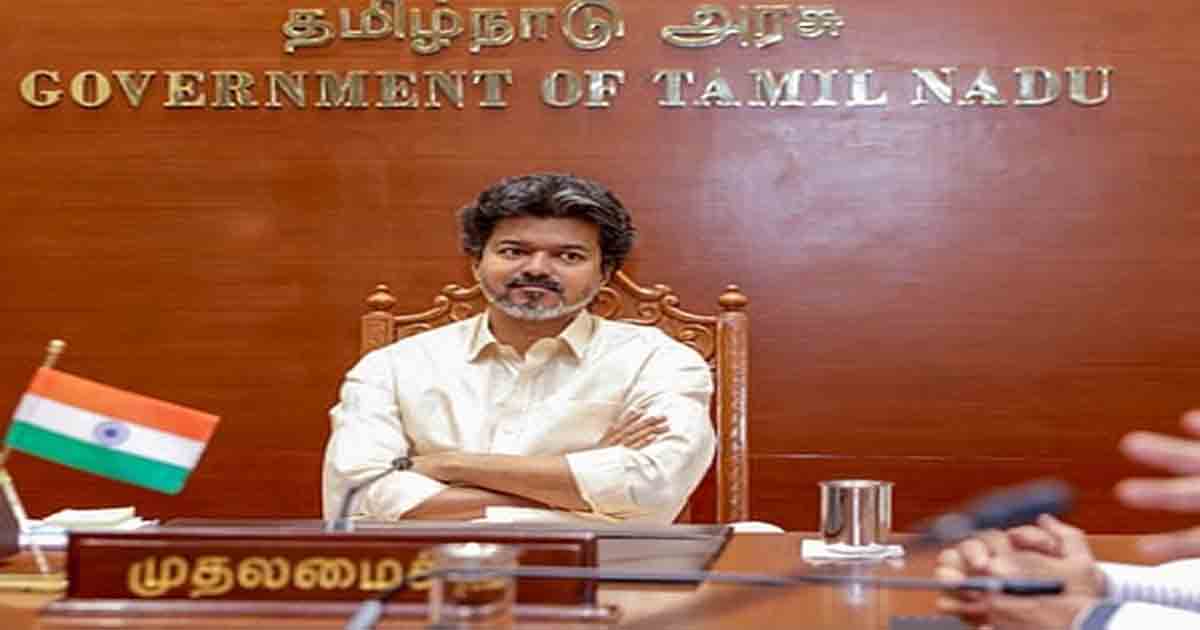
Tamil Nadu is likely to begin identifying households for a scheme that will provide three free cooking gas refills a year from Pongal.
Chief Minister C. Joseph Vijay told the Assembly that up to 1.30 crore families could benefit and that the government would credit the cost of the refills directly to their bank accounts.
The scheme, called ‘Annapurani Super 6’, stems from an Assembly election promise by CM Vijay’s Tamilaga Vettri Kazhagam to provide six free domestic LPG cylinders a year.
Announcing the first phase in the Assembly, CM Vijay said the government would initially cover the cost of three refills per household each year, beginning with the Pongal festival in January.
The government has begun preliminary work to estimate how many families the scheme could cover. It is drawing on records of households with LPG connections under the Pradhan Mantri Ujjwala Yojana, women who receive Rs 1,000 in government assistance and families with an annual income of up to Rs 2.50 lakh. These records will help the government draw up a list of potential beneficiaries.
The figure of 1.30 crore cited in the Assembly represents the expected reach of the scheme. The number of households that will receive the benefit will become clear once the selection process is complete.
Tamil Nadu has about 2.40 crore domestic LPG connections. Of these, around 1.10 crore are single-cylinder connections. The latter figure includes roughly 42 lakh connections issued under the Ujjwala scheme, which provides LPG connections to women from households living below the poverty line.
For families who already have a cooking gas connection, the proposed state benefit would meet a recurring household expense.
While the Centre’s Ujjwala programme provides the connection, the Tamil Nadu scheme would cover the cost of refilling the cylinder three times a year.
The bank transfer announced by CM Vijay would go to the household selected for the benefit.
A government announcement on beneficiary selection is expected soon. For households seeking the benefit, the main detail still awaited is how the government will use the income ceiling, Ujjwala records and the list of women receiving financial assistance to decide who qualifies. The government has yet to announce when it will make the first bank transfer or how it will schedule the three payments during the year.
National News
Ram Kadam defends Dhirendra Shastri’s devotion, says, ‘should choose words that don’t hurt sentiments’

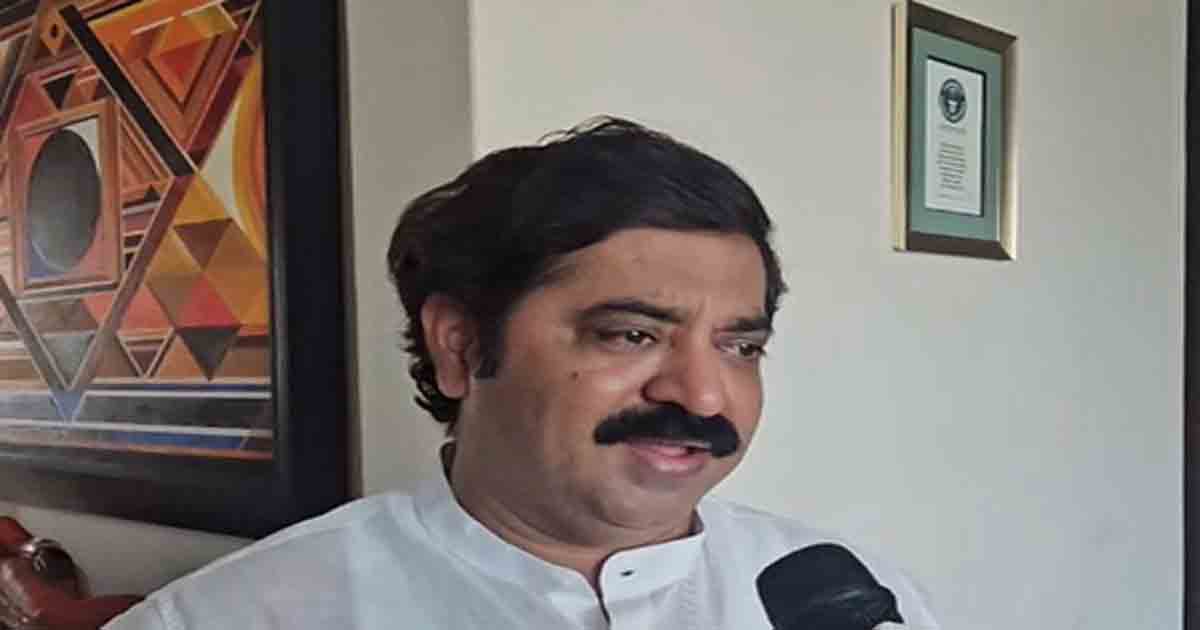
BJP leader Ram Kadam on Sunday defended Bageshwar Dham seer Dhirendra Shastri amid the controversy over his remarks, saying there could be no question about his devotion to Sanatan Dharma, but at the same time, he cautioned the religious leaders to remain mindful of the sentiments of others while choosing their words.
Speaking to media, Kadam said Shastri had visited Vrindavan and offered prayers at the Banke Bihari Temple, expressing his respect for the people of Braj through his words.
“In the Sanatan Hindu tradition, we consider Lord Ram and Lord Krishna to be one. Lord Krishna’s idol is depicted in the Tribhangi form, which is described in several scriptures. Everyone’s devotion and the words they choose in an emotional state of devotion can be discussed, but there can be no dispute over Dhirendra Shastri’s devotion,” he said.
Kadam added that every saint should ensure that their choice of words does not hurt the faith and sentiments of others.
He also highlighted Shastri’s appeal for followers of Sanatan Dharma to come together and familiarise themselves with the rich history of Hindu scriptures and ancient teachings.
Earlier, Shastri drew flak for comparing the physical postures of Lord Ram and Lord Krishna during a Ram Katha in Karera in Shivpuri, Madhya Pradesh.
Turning to Uttar Pradesh politics, the BJP leader criticised the Congress and Samajwadi Party (SP) alliance, saying the Congress had performed poorly in their previous electoral partnerships in 2017 and 2024.
Kadam said SP chief Akhilesh Yadav was now unwilling to accommodate the Congress’s demands because the alliance had not yielded significant political benefits for his party in the past.
He said seat-sharing would consequently be decided on the basis of the electoral prospects of candidates and parties.
Kadam asserted that the BJP would return to power in Uttar Pradesh on the strength of development, good governance and its campaign against hooliganism, under the leadership of Prime Minister Narendra Modi and Chief Minister Yogi Adityanath.
He also claimed that Congress was not getting the seat share it wanted because its leadership, particularly Leader of Opposition in the Lok Sabha, Rahul Gandhi, was not considered dependable. Targeting Akhilesh Yadav, he accused the SP leader of disrespecting Sanatan Hindu Dharma and its followers in the state.
The BJP leader also criticised Shiv Sena(UBT) leader Aditya Thackeray over his remarks on the Special Intensive Revision (SIR) of electoral rolls, accusing him of speaking without adequate information and acting on the direction of Rahul Gandhi.
Kadam claimed that the SIR exercise had been conducted eight times in the country and questioned the criticism of the current process.
He argued that electoral rolls needed to be updated to remove the names of people who had died or migrated elsewhere over the years.
“Shouldn’t the names of people who have lost their lives, people who have migrated to other places during this time, be removed?” he asked.

CII lists 15 priority reforms to finance $26.5 trillion economy in 2047

TN govt set to shortlist families for 3 free LPG refills a year from Pongal

Shah Rukh Khan asks 26/11 survivor Devika Rotawan how she gathered courage to testify against Kasab

Ram Kadam defends Dhirendra Shastri’s devotion, says, ‘should choose words that don’t hurt sentiments’

PM Modi saddened by loss of lives in Kota road accident, announces ex-gratia

Congress trying to protect 3 crore Bangladeshi infiltrators in voter list: HM Shah

Red Fort car blast probe exposes blueprint for spread of terror modules across India

Trump flags Iran targets as talks continue

‘Conspiracy, not accident’: NCP on Ajit Pawar death

BJP, Shiv Sena slam Mallikarjun Kharge for terming Diwali ‘Khushiyon ka Eid’
-

 Crime4 years ago
Class 10 student jumps to death in Jaipur
-

 Maharashtra2 years ago
Mumbai Local Train Update: Central Railway’s New Timetable Comes Into Effect; Check Full List Of Revised Timings & Stations
-

 Maharashtra2 years ago
Mumbai To Go Toll-Free Tonight! Maharashtra Govt Announces Complete Toll Waiver For Light Motor Vehicles At All 5 Entry Points Of City
-

 Maharashtra2 years ago
False photo of Imtiaz Jaleel’s rally, exposing the fooling conspiracy
-

 National News2 years ago
Ministry of Railways rolls out Special Drive 4.0 with focus on digitisation, cleanliness, inclusiveness and grievance redressal
-

 Maharashtra2 years ago
Maharashtra Elections 2024: Mumbai Metro & BEST Services Extended Till Midnight On Voting Day
-

 National News2 years ago
J&K: 4 Jawans Killed, 28 Injured After Bus Carrying BSF Personnel For Poll Duty Falls Into Gorge In Budgam; Terrifying Visuals Surface
-

 Crime2 years ago
Baba Siddique Murder: Mumbai Police Unable To Get Lawrence Bishnoi Custody Due To Home Ministry Order, Says Report