
Business
We are creating a simplified investing ecosystem: Crypto unicorn CoinSwitch

Crypto is an emerging yet attractive asset class. It is a $1.25 trillion market globally. The India adoption story is no different with nearly 20 million unique users, over $6.6 billion in investments and more than a billion dollars in venture capital funding.
India is already the second-largest in terms of crypto adoption globally.
Crypto in India has come a long way but this is just the beginning — Crypto is a billion people industry in the making.
Govind Soni, Co-Founder and Chief Technology Officer, CoinSwitch, India’s largest crypto investing app, told IANS that their priority is to make it transparent, trustworthy and secure, and enable Indians to participate in this technology shift in a meaningful way.
Excerpts from the interview:
Q: Why is Crypto important, and how can India benefit from it?
A: Crypto is the gateway to a decentralised internet. The computing power of the billions of devices around the world can be utilised and incentivised using Crypto to build a new internet, called Web3.
India has the opportunity to take the lead in this transformation. We have the talent, users and the startup ecosystem. And we are witnessing an upskilling and migration of India’s large pool of engineers and developers to the cutting-edge and advanced field of blockchain and crypto.
All this puts India in a sweet spot. With an enabling regulatory environment, India can get a headstart and steer the direction of Web3 while it is built.
Q: Crypto has come a long way. Every day we hear news that even Wall Street giants are adopting Crypto. Why is that?
A: Institutional adoption is a sign that Crypto has well and truly grown beyond white papers to be a smart investment class. The origin of Crypto may have been based on an idea of a digital currency, but now it has evolved to become an attractive, emerging asset class.
There are several interesting use-cases being built on this technology. That is the intrinsic value of Crypto: The confidence and uptake of the underlying blockchain technology. Institutional investors understand this and have done their due diligence.
While retail investors continue to be the early adopters and torchbearers of Cryptos, growing institutional adoption underlines the fact that this is an asset class that is here to stay.
Even traditional markets are adopting and gaining exposure to Cryptos. All of this bodes well for the growth of the asset class.
Q: What about India? There is regulatory uncertainty on Crypto here. Do you see this changing and Crypto becoming a mainstream asset class here?
A: Certainly. Cryptos are an emerging asset class that speak to India’s digital-savvy population.
With regulatory clarity, institutional investors too will find the confidence to invest in and benefit from Cryptos.
As we have seen globally, Cryptos can attract significant institutional and foreign investments if regulations can enable innovations and provide the necessary guardrails. India can benefit similarly.
Innovations such as decentralised finance, or DeFi, can be an effective and fast enabler of capital for small and medium-scale businesses in India. Crypto is also paving the way for interesting applications such as decentralized social media that Indians can greatly benefit from.
Q: How is CoinSwitch protecting investors on its platform?
A: At CoinSwitch, investor protection is of utmost importance to us. While we have been using various digital platforms to inform, educate and engage with new crypto enthusiasts, we are continuously updating our app to help users make informed investing decisions.
And, numbers tell the story. The average time a user spends on our app reading, buying, selling, or trading has gone up to 27 minutes from 13 minutes in January 2021.
In line with our ongoing product feature upgrades to tighten platform security, we have launched Riskometer — our attempt to help users think twice before investing in a coin. The Riskometer provides a risk warning on coins that are highly volatile, or when the risk assessment suggests that users need to proceed with caution while investing.
We understand that ensuring compliance with relevant regulations is key to ensuring a safe, secure, and trustworthy user experience. Users on our platform can utilise their account balances (of Indian Rupees and crypto assets) to only transact on our platform or withdraw Indian Rupees. They can only deposit Indian Rupees from their verified bank account. Similarly, after selling crypto assets, users can withdraw Indian Rupees only to their verified bank account.
Q: What does cloud technology enable you to do better?
A: Amazon Web Services (AWS) allows to scale up on infrastructure and services without having any dependencies, or minimum usage commitments. AWS continues to make incremental improvements to its solutions and services, allowing us to easily deliver value to our customers. If we had to build these capabilities on our own it would have taken us significantly longer. With the shared responsibility model, security of the cloud is addressed by AWS and this helps us considerably reduce our efforts towards security and compliance. AWS account team and Enterprise Support provides proactive guidance and support as we scale our platforms. AWS is the easy answer for any internet-based ecosystem that wants to scale faster.
CoinSwitch is trusted by over 18 million registered users, making it the largest crypto investing app in India. Ours is a built-to-scale platform developed on top of AWS. Among a host of things, AWS has improved our time to market, handle spikes in traffic, and manage risks more efficiently. All of these put together help us provide a simplified and secure user experience on the app.

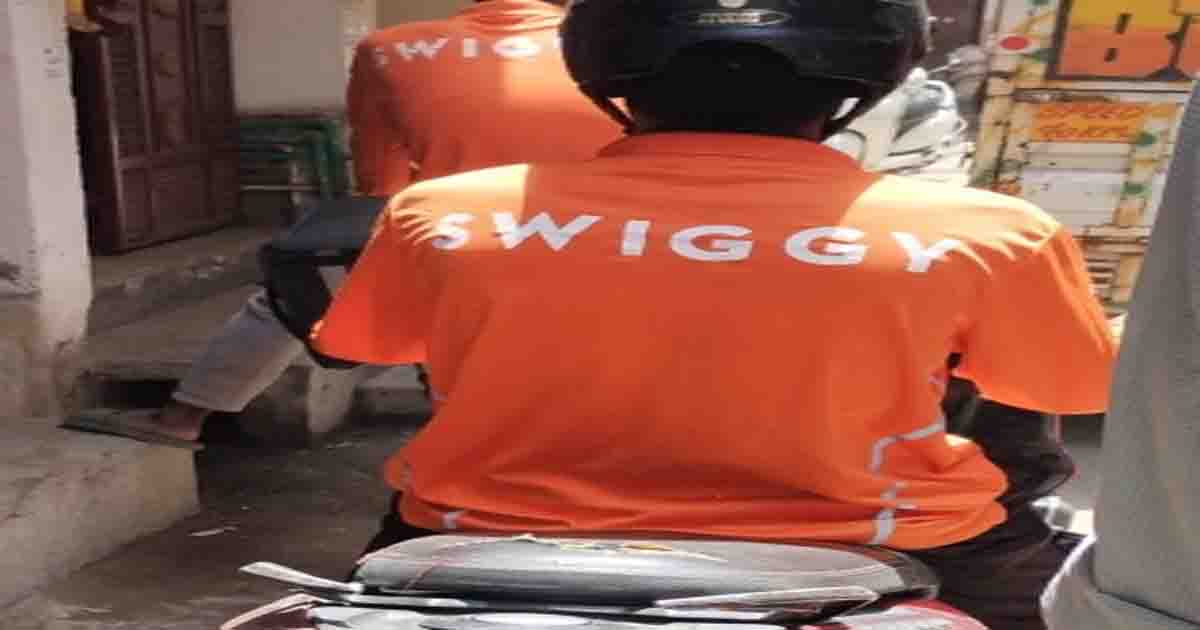
Food delivery and quick-commerce platform Swiggy on Thursday reported a consolidated net loss of Rs 922 crore for the quarter ended September 2026 (Q2 FY27), compared with a loss of Rs 791 crore in the preceding quarter (Q1 FY27).
However, the company’s losses narrowed from Rs 1,092 crore recorded in the corresponding period last financial year (Q2 FY26), according to its stock exchange filing.
Revenue from operations increased 36.1 per cent year-on-year to Rs 7,571 crore from Rs 5,620 crore, driven by growth across food delivery, quick commerce and out-of-home consumption segments.
Despite the robust revenue growth, total expenses climbed to Rs 8,703 crore from Rs 6,711 crore a year ago, as per its regulatory filing.
Swiggy’s core food delivery business continued to strengthen profitability during the quarter. Gross order value (GOV) for the segment rose 17.7 per cent year-on-year to Rs 10,054 crore, while adjusted EBITDA improved by Rs 101 crore to Rs 341 crore.
The adjusted EBITDA margin stood at 3.4 per cent of GOV, marking the business’s highest-ever profitability and margin performance.
The company’s out-of-home consumption business also maintained momentum, with GOV growing 34.9 per cent year-on-year to Rs 1,508 crore.
The segment reported its seventh consecutive quarter of profitability, delivering an adjusted EBITDA margin of 0.5 per cent of GOV.
Meanwhile, quick-commerce arm Instamart continued its expansion push. Net order value (NOV) rose 31.4 per cent year-on-year and 13.4 per cent sequentially to Rs 6,954 crore.
During the quarter, Instamart added 69 dark stores, taking its total network to 1,240 stores nationwide. However, the aggressive expansion continued to weigh on profitability. Instamart reported a loss of Rs 895 crore for the quarter.
Its contribution margin improved by 157 basis points year-on-year to minus 1 per cent of GOV, though it declined by 82 basis points on a sequential basis.
The segment’s adjusted EBITDA margin improved marginally to minus 9.7 per cent from minus 9.8 per cent in the previous quarter.
Business
Adani Energy Solutions profit more than doubles to Rs 1,364 crore in Q2, revenue rises 51 pc

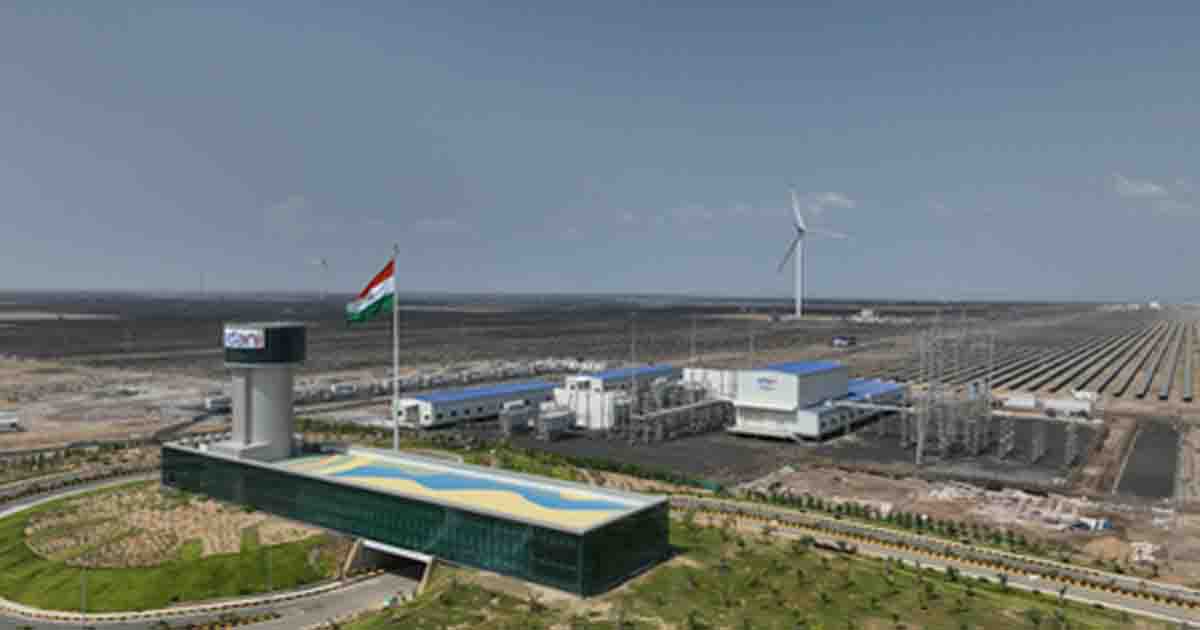
Adani Energy Solutions Ltd (AESL) on Thursday reported a 145 per cent year-on-year rise in consolidated net profit to Rs 1,364 crore for the quarter ended September 30, 2026, delivering record performance.
According to the company’s exchange filing, total income rose 51 per cent to Rs 10,239 crore in Q2 FY27 from Rs 6,767 crore in Q2 FY26.
Meanwhile, operational revenue grew 51 per cent to Rs 7,167 crore driven by healthy contribution from the transmission and energy solutions platform.
In Q2FY27, EBITDA stood at Rs 3,548 crore, an increase of 67 per cent year-on-year, while operating EBITDA rose 68 per cent to Rs 3,070 crore. This is an all-time high quarterly EBITDA for the company.
In addition, consolidated PAT jumped 137 per cent to Rs 2,600 crore for H1 FY27, while total income rose 46 per cent to Rs 20,092 crore.
Commenting on the earnings, Adani Energy Solutions CEO Kandarp Patel said, “AESL closed the first half of the fiscal year with strong financial and operational momentum, laying a robust foundation for future growth. We significantly expanded our growth pipeline by winning the strategic Vizag and Satara transmission assets, elevating our active order book to around Rs 87,000 crore.”
He said operationally, the Mumbai distribution business grew by about 11 per cent in units sold, while the smart metering platform scaled its installation base to approximately 15 million meters.
“A significant 2.5 GW RTC power supply contract with MSEDCL reinforced AESL’s core competencies in multi-source energy aggregation and power supply optimisation for customers,” Patel said.
“Backed by robust quarter-on-quarter performance across all business segments and strict financial prudence, we are well-positioned to convert this massive project pipeline into long-term stakeholder value,” he added.
Segment-wise, the company’s transmission operating revenue rose 17 per cent year-on-year to Rs 1,521 crore in Q2, while distribution (AEML and MUL) revenue grew 2 per cent to Rs 3,181 crore.
Smart metering operating revenue (Ind AS) surged 129 per cent to Rs 267 crore and energy solutions revenue stood at Rs 2,197 crore.
Shares of Adani Energy Solutions ended at Rs 1,293 on the BSE. The Adani Group stock has recorded a 52-week high of Rs 1,789 and a 52-week low of Rs 804.70, according to the exchange data.

Indian equity benchmarks opened lower on Thursday tracking weak Asian markets and concerns over elevated crude oil prices and high US bond yields.
Sensex opened 366.36 points or 0.50 per cent lower at 73,343.33, while Nifty began the trading session at 22,687.75, declining 123.60 points or 0.54 per cent.
Sector-wise, most indices traded in the red with auto, metal and healthcare shares leading losses in early trade.
Nifty Auto, Nifty Metal and Nifty Healthcare declined up to 0.98 per cent. Meanwhile, Nifty Pharma also slipped 0.78 per cent.
Broader weakness was also visible across FMCG, realty, cement and financial stocks.
Analysts said the recent trend of large-cap stocks outperforming mid and small caps appears to be gathering momentum as valuation concerns emerge in the broader market.
“The broader market resilience in recent months has been more a function of liquidity than earnings. This has created a paradox of overvalued mid and small caps coexisting with attractively valued large-caps. This trend is now getting corrected and is likely to sustain,” they said.
The eperts also pointed to external headwinds, including rising crude prices and elevated US Treasury yields which are encouraging traders to build short positions despite continued institutional buying.
“Sectoral churn towards fairly valued large caps is the ideal investment strategy now. It may take time, but this strategy will certainly be rewarded,” they added.
Technical analysts said the recent sharp decline and the breach of the 22,700 level on the Nifty raised the risk of a deeper correction.
“Recovery hopes rest on the ability of 22,590 to hold, but a move back above 22,840 will be needed to confirm renewed upside strength,” according to them.
On Wednesday, foreign institutional investors (FIIs) turned net buyers and purchased equities worth about Rs 1,022 crore. Domestic institutional investors (DIIs) also remained buyers with net purchases of around Rs 1,614 crore.
In Asian markets, major indices remained under pressure. Japan’s Nikkei, Hong Kong’s Hang Seng and South Korea’s Kospi dropped up to 2 per cent in early trading.
Overnight, Wall Street ended higher led by technology shares. The Nasdaq advanced around 1 per cent after strong corporate earnings boosted sentiment around artificial intelligence-related stocks, while the S&P 500 gained 0.58 per cent.
Meanwhile, Brent crude futures rose more than 1 per cent to trade around $110 per barrel, adding to inflation concerns and weighing on investor sentiment.

Netanyahu speaks with PM Modi, invites him for Israel’s Independence Day along with heroic Indian pilot

Aasif Khan’s wife reveals actor suffered major heart attack, calls out Qazi Touqeer for mocking him

Four more arrested in Tiger Shroff firing case; two women accused of supplying weapons, accused remanded to police custody till October 26.

Swiggy’s Q2 net loss widens sequentially to Rs 922 crore

12 injured in attack on Dalit family in Patna, two critical

Rahul, Cong ecosystem want to force regime change: BJP after Neha Bora praises B’desh Gen-Z protest

BJP pays tribute to ex-President Abdul Kalam, recalls his enduring influence on generations of India’s youth

Attack on democratic rights: INDIA Bloc leaders on detentions of anti-ECI protestors

INDIA bloc begins protest march against ECI

Maha Congress stages agitation against Gyanesh Kumar
-

 Crime4 years ago
Class 10 student jumps to death in Jaipur
-

 Maharashtra2 years ago
Mumbai Local Train Update: Central Railway’s New Timetable Comes Into Effect; Check Full List Of Revised Timings & Stations
-

 Maharashtra2 years ago
Mumbai To Go Toll-Free Tonight! Maharashtra Govt Announces Complete Toll Waiver For Light Motor Vehicles At All 5 Entry Points Of City
-

 Maharashtra2 years ago
False photo of Imtiaz Jaleel’s rally, exposing the fooling conspiracy
-

 National News2 years ago
Ministry of Railways rolls out Special Drive 4.0 with focus on digitisation, cleanliness, inclusiveness and grievance redressal
-

 Maharashtra2 years ago
Maharashtra Elections 2024: Mumbai Metro & BEST Services Extended Till Midnight On Voting Day
-

 National News2 years ago
J&K: 4 Jawans Killed, 28 Injured After Bus Carrying BSF Personnel For Poll Duty Falls Into Gorge In Budgam; Terrifying Visuals Surface
-

 Crime2 years ago
Baba Siddique Murder: Mumbai Police Unable To Get Lawrence Bishnoi Custody Due To Home Ministry Order, Says Report