
Business
US to send out tariff rate letters to countries starting next week

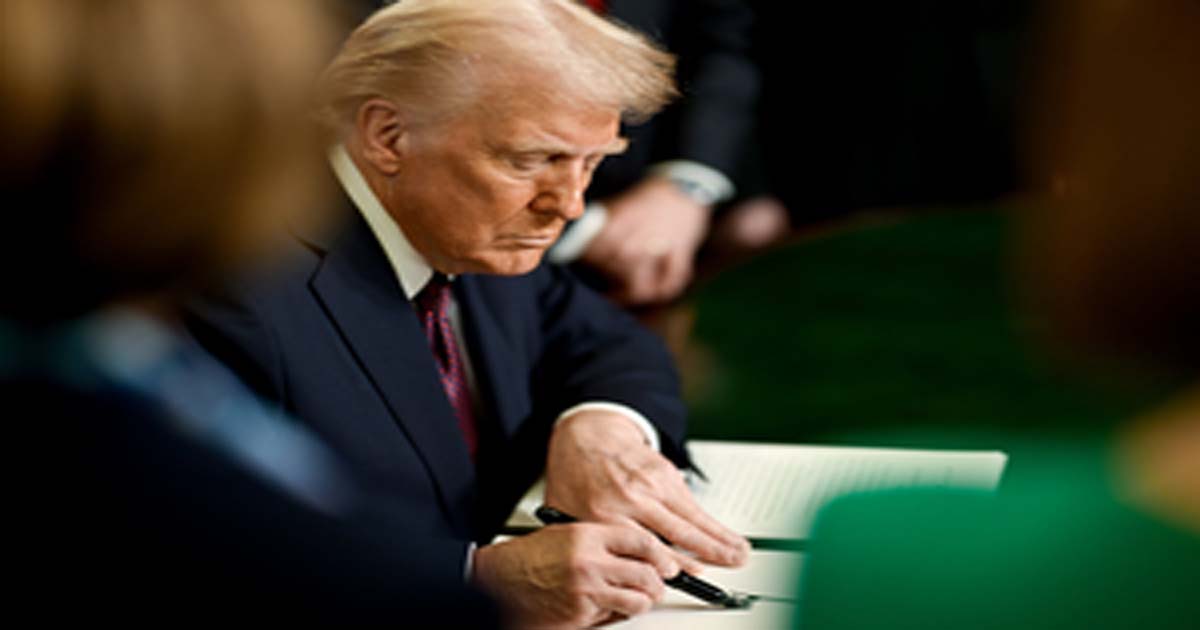
Washington, June 28: US President Donald Trump has said his administration will send letters to countries “over the next week and a half or so” to tell them about their tariff rates, while noting that his pause on “reciprocal” tariffs could be extended or shortened.
Trump made the remarks as South Korea and other countries have been seeking to strike a trade deal with the United States to avoid or minimise the impact of the reciprocal tariffs, with his pause on the new tariffs scheduled to end on July 8, media reports.
“So at a certain point over the next week and a half or so, or maybe before, we’re going to send out a letter. We talked to many of the countries,” Trump told a press briefing. “So we’re just going to tell them what they have to pay to do business in the United States.
Asked whether the pause on the tariffs can be extended, the president said, “We can do whatever we want.”
“We could extend it. We could make it shorter,” he said. “I would like to make it shorter. I’d like to just send letters out to everybody, (saying) ‘Congratulations. You are paying 25 percent.'”
Earlier in the day, Treasury Secretary Scott Bessent told Fox Business that the Trump administration could wrap up its trade talks with countries by Labor Day on Sept.1, as he reiterated that trading partners are approaching it with “very good” deals.
Noting that there are 18 “important” trading partners, Bessent pointed out that Washington has struck a deal with Britain and reached an accommodation with China.
“So if we can ink 10 or 12 of the important 18 — there are another important 20 relationships — then I think we could have trade wrapped up by Labor Day,” the secretary said.
On April 2, Trump announced reciprocal tariffs, including 25 percent duties on South Korea. Intended to match what other countries impose on U.S. goods, the new tariffs took effect on April 9, but the president paused them for 90 days that same day to allow for negotiations.
South Korea and other countries have been hoping to reach a trade deal with the U.S. before the temporary suspension of the reciprocal tariffs ends on July 8.


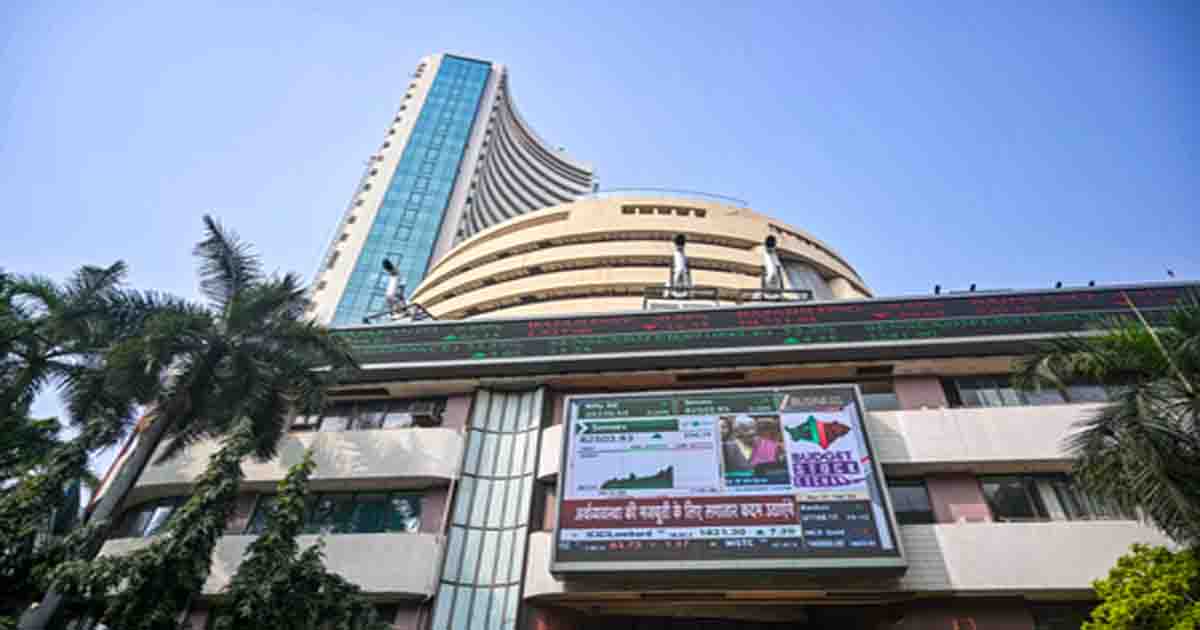
Mumbai, Oct 13: India equity benchmark indices opened flat on Tuesday amid buying in IT and realty sector shares.
At the opening bell, Sensex was at 71,951.73, up 27.05 points or 0.04 per cent. Meanwhile, Nifty began trading session at 22,364.15, up 0.80 points or flat.
Sector-wise, Nifty IT, Nifty Midsmall IT & Telecom and Nifty Realty jumped up to up 2 per cent. Nifty PSU Bank was up 0.31 per cent, Nifty FMCG up 0.22 per cent and Nifty Oil & Gas up 0.20 per cent.
On the downside, healthcare and pharmaceuticals shares witnessed selling pressure as Nifty Midsmall Healthcare fell, Nifty 500 Healthcare, Nifty Pharma and Nifty Healthcare declined up to 0.75 per cent.
Market experts said there are no triggers to change ongoing trend of sustained FII selling and DII buying in the cash market.
But with the US 10-year bond yield above 5.2 per cent, FIIs are likely to continue selling in cash market. With net inflows into mutual funds touching a record high of Rs 38,307 crore in September, DIIs will continue to absorb selling from FIIs, experts said.
Moreover, CPI inflation at 5.54 per cent came on expected lines with food inflation at 7.74 per cent and Brent above $100. A rate hike by the RBI in December is a foregone conclusion and will be margin accretive for banks, they added.
Technical analysts said recovery construct has weakened significantly, but day will start with hopes of bounce back as yesterday’s slippage paused without breaking the recent low.
Such an upmove would need to push beyond 22,435 to signal strength, inability to do so could pave way for drop to 22,070-21,900, they said.
Additionally, Asian equities traded lower as AI rally came under fresh pressure ahead of key earnings season.
Nasdaq ended lower on Monday as oil prices surged following attacks on Saudi airport, while investors awaited start of third-quarter bank earnings and key economic data this week.

Mumbai, Oct 12: Domestic equity benchmark indices opened higher on Monday amid positive factors like gains in Asian markets and a decline in crude oil prices.
Nifty began trading session at 22,593.20, up 72.75 points or 0.32 per cent.
Meanwhile, Sensex opened at 72,771.32, up 298.99 points or 0.41 per cent.
In early deals, mostly sectoral indices were trading in positive territory. Nifty Media, Nifty Auto and Nifty Chemicals jumped up to 1 per cent.
Similarly, Nifty Realty, Nifty Oil & Gas, Nifty Cement, Nifty Metal and Nifty IT surged between 0.81 per cent to 0.64 per cent. However, other sectoral indices were also trading marginally higher.
On the downside, Nifty PSU Bank just slipped 0.01 per cent.
Market experts said external headwinds are dominating domestic tailwinds, adding that the market is going through a stage wherein external headwinds are dominating domestic tailwinds.
Elevated crude prices and high US bond yields will continue to impact market. FIIs will continue to sell in the near term, and DIIs will continue to absorb FII selling, according to them.
Moreover, an impressive GDP growth estimate of 7.1 per cent for FY27 and improving corporate profitability provide strong fundamental support to the market, the experts said.
“Therefore, investors can accumulate fairly valued growth stocks ignoring uncertainty and volatility in market. For investors with medium-to-long-term horizon, this market provides value buying opportunities. Patience is key,” they added.
They further noted that if crude declines sharply following favourable developments in the Middle East, the market can rally significantly from current levels.
Technically, Friday’s bounce and inside bar formation set up an environment for a rise to 22,800-23,200. However, inability to close above 22,575 will keep trend within bear grip. Downside marker for day may be kept at 22,295, Friday’s reaction low, another analyst said.
In addition, asian markets opened cautiously today in early hours as investors braced for earnings season which could test elevated technology valuations.
Oil prices eased on prospects of higher Russian supplies following agreement to halt attacks on energy facilities.
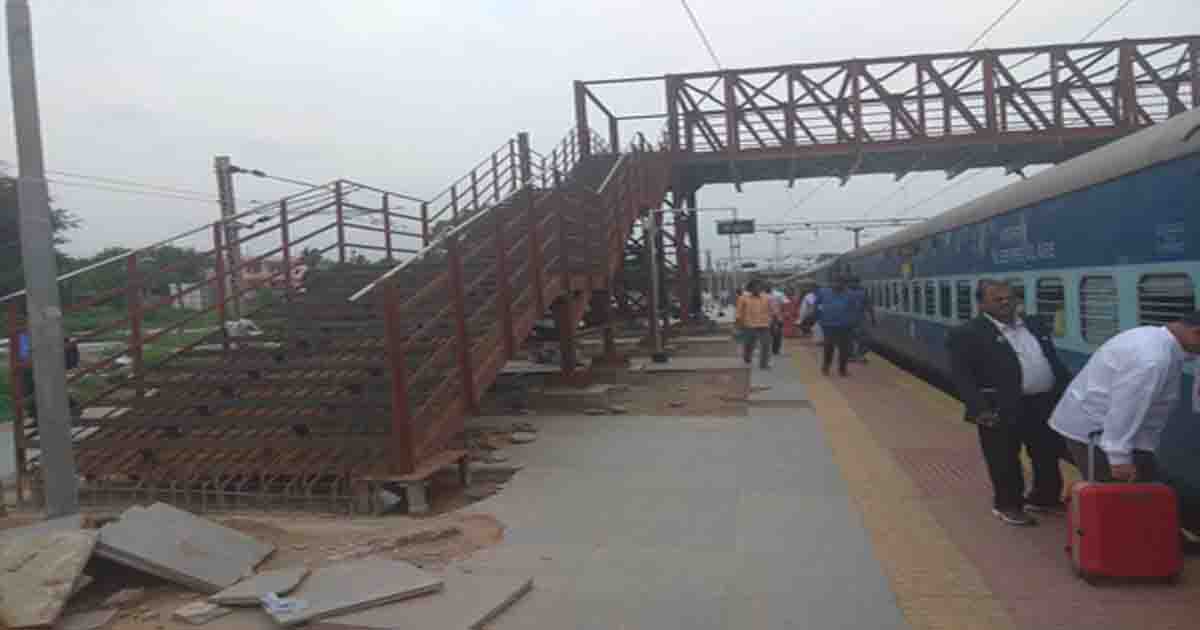
New Delhi, Oct 11: Indian Railways has announced 3,548 graduate-level vacancies for jobs under the Non-Technical Popular Categories (NTPC–Graduate), which provide opportunities for graduates to work across different functional areas of railway operations and administration, according to an official statement issued on Sunday.
The recruitment through Centralised Employment Notification issued by the Railway Recruitment Boards (RRBs) covers four categories of posts, including Chief Commercial Cum Ticket Supervisor, Goods Train Manager, Junior Accounts Assistant Cum Typist, and Senior Clerk Cum Typist. These positions offer career opportunities across commercial services, train operations, accounts and administration, supporting the efficient functioning of railway services across the country, the statement said.
Of the total 3,548 vacancies, as many as 2,750 are for Goods Train Manager, followed by 371 for Senior Clerk Cum Typist, 300 for Junior Accounts Assistant Cum Typist, and 127 for Chief Commercial Cum Ticket Supervisor.
The posts offer initial basic pay under the Seventh Central Pay Commission. Chief Commercial Cum Ticket Supervisor carries an initial basic pay of Rs 35,400 per month at Pay Level 6, while the other three categories carry an initial basic pay of Rs 29,200 per month at Pay Level 5. Applicable allowances and service conditions will be governed by the relevant rules.
The online application process commenced on October 8, and eligible candidates can submit their applications until 11:59 p.m. on November 6. The last date for payment of the examination fee is November 8, while the application modification window is scheduled from November 9 to 18 November.
Candidates must possess a degree from a recognised university or its equivalent and fulfil the prescribed post-specific eligibility conditions. The notified age limit is 18-33 years as on January 1, 2027, with applicable age relaxations for eligible categories under the prescribed rules.
The selection process comprises a first-stage Computer-Based Test (CBT), a second-stage CBT, followed by document verification and medical examination, as applicable. The recruitment framework also provides applicable reservation and age-relaxation benefits, along with scribe assistance and compensatory time for eligible candidates with disabilities, in accordance with the prescribed provisions.
Another provision under CEN No. 06/2026 is the dispensation of the Computer-Based Typing Skill Test (CBTST) for the posts of Junior Accounts Assistant Cum Typist and Senior Clerk Cum Typist. Candidates are nevertheless expected to possess basic computer and typing proficiency, which will be assessed after joining, as specified in the notification, the statement said.
Candidates can access the detailed notification, vacancy distribution, eligibility criteria and recruitment updates through the official Railway Recruitment Boards website:https://rrb.indianrailways.gov.in

Four injured as vehicle overturns in J&K Doda

Explosives, weapons recovered near Sri Ganganagar Border in Rajasthan; two arrested

Delhi Police file 4 FIRs over INDIA bloc march to SC; detain Ashutosh Ranka, Saurav Das from Jantar Mantar

Shiv Sena(UBT) accuses Centre of dictatorial tactics amid Oppn protests in ‘Saamana’

‘Rahul Gandhi has lost his mental balance’: BJP MP Ravi Kishan

INDIA bloc begins protest march against ECI

Maha Congress stages agitation against Gyanesh Kumar

Complaint against Netflix & Mukesh Chhabra for inappropriate language on ‘India’s Got Latent 2’

Delhi court grants three-week interim bail to influencer Swatantra Bhardwaj

Bombay HC warns Vijay Mallya against posting court documents on social media
-

 Crime4 years ago
Class 10 student jumps to death in Jaipur
-

 Maharashtra2 years ago
Mumbai Local Train Update: Central Railway’s New Timetable Comes Into Effect; Check Full List Of Revised Timings & Stations
-

 Maharashtra2 years ago
Mumbai To Go Toll-Free Tonight! Maharashtra Govt Announces Complete Toll Waiver For Light Motor Vehicles At All 5 Entry Points Of City
-

 Maharashtra2 years ago
False photo of Imtiaz Jaleel’s rally, exposing the fooling conspiracy
-

 National News2 years ago
Ministry of Railways rolls out Special Drive 4.0 with focus on digitisation, cleanliness, inclusiveness and grievance redressal
-

 Maharashtra2 years ago
Maharashtra Elections 2024: Mumbai Metro & BEST Services Extended Till Midnight On Voting Day
-

 National News2 years ago
J&K: 4 Jawans Killed, 28 Injured After Bus Carrying BSF Personnel For Poll Duty Falls Into Gorge In Budgam; Terrifying Visuals Surface
-

 Crime2 years ago
Baba Siddique Murder: Mumbai Police Unable To Get Lawrence Bishnoi Custody Due To Home Ministry Order, Says Report