
Business
Union Budget falls on Saturday this year, stock exchanges to remain open

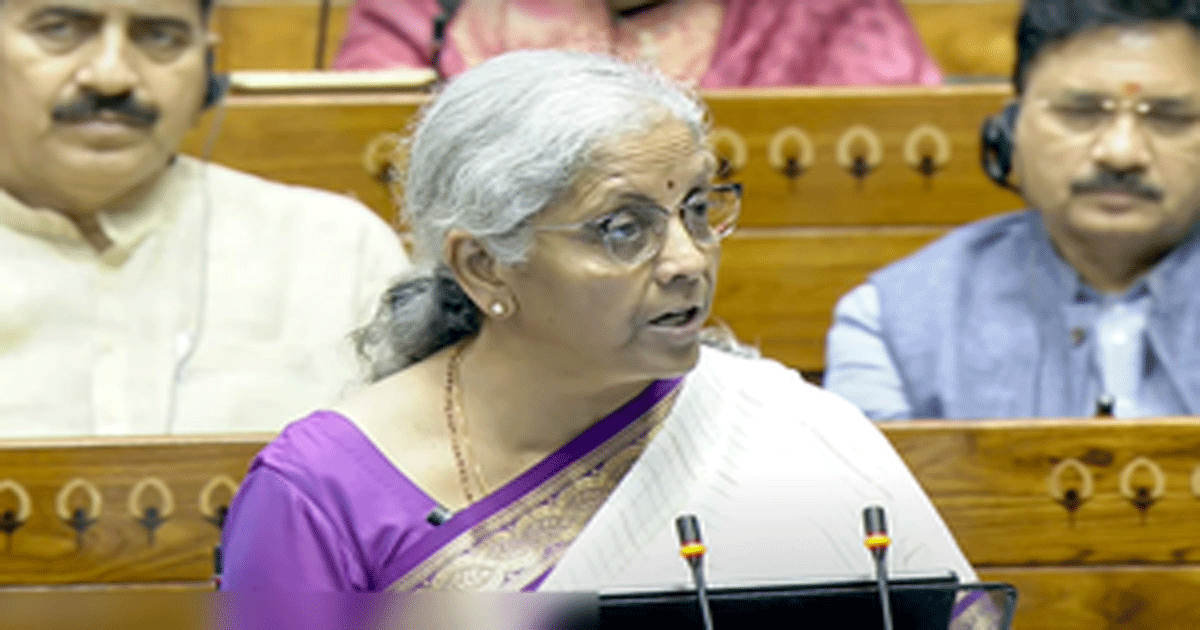
New Delhi, Jan 10: As the preparations for the Union Budget 2025-26, which generally comes on February 1, are in full swing, all eyes are now on the official confirmation from the government about presenting the budget over the weekend this year.
There have been occasions in the past when the Union Budget was presented on Saturdays and the domestic stock markets were open.
On February 1, 2020, and February 28, 2015, the markets were open on Saturday due to the presentation of the Union Budget.
In a circular dated December 23, the National Stock Exchange (NSE), has already said that due to the presentation of the Union Budget, a special trading session has been kept for Saturday, February 1, 2025.
“On account of the presentation of the Union Budget, Exchange shall be conducting a live trading session on February 01, 2025, as per the standard market timings,” according to the circular.
The pre-open session will be from 9 a.m. to 9.08 a.m. After this, there will be a normal trading session from 9.15 a.m. to 3.30 p.m.
On February 1, 2024, the Nifty closed with a decline of 0.13 per cent during the presentation of the interim budget.
On the day of the full budget presented on July 23, 2024, after the Lok Sabha elections, the Nifty closed with a decline of 0.12 per cent.
Meanwhile, the government will continue its focus on improving quality spending, strengthening the social security net, and reducing the fiscal deficit to 4.5 per cent of the GDP in the financial year 2025-2026, according to a Finance Ministry statement.
FM Sitharaman is expected to continue with the government’s position of increasing expenditure on big-ticket infrastructure projects and social welfare schemes for the poor while keeping the fiscal deficit in check when she presents the Union Budget for 2025-26 in Parliament on February 1.


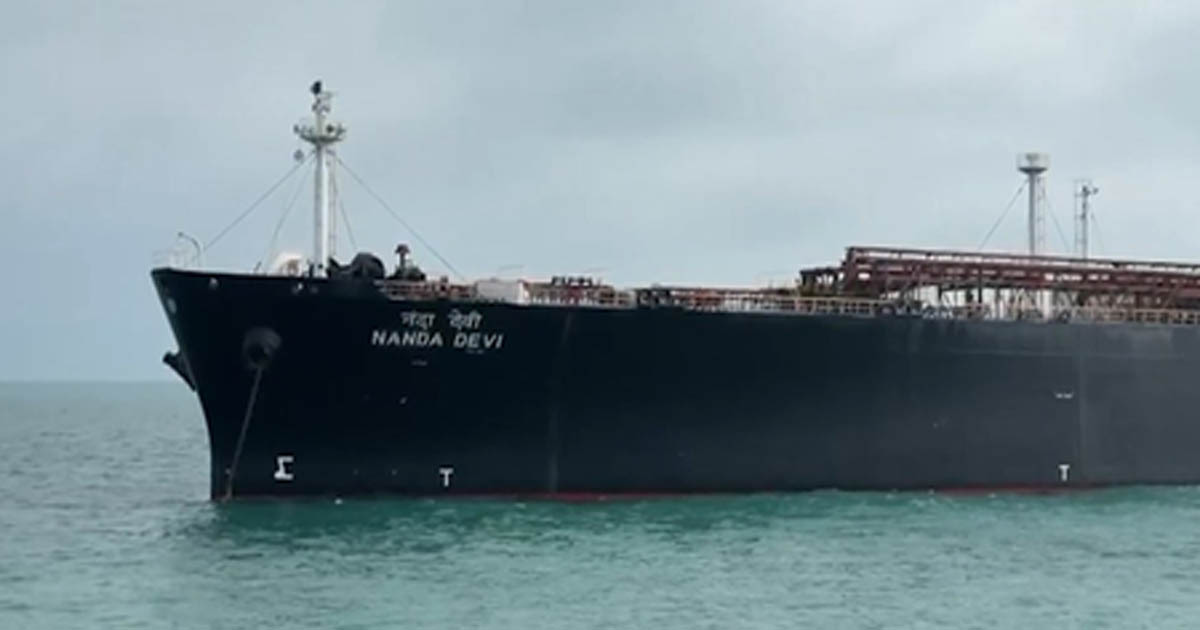
Bhuj, March 17: The Indian‑flagged liquefied petroleum gas (LPG) tanker ‘Nanda Devi’ arrived at Vadinar Port in Gujarat at about 11.25 a.m. on Tuesday, becoming the second LPG carrier to reach the west coast this week after ‘Shivalik’ docked at Mundra Port a day earlier, officials confirmed.
Both vessels were transporting critical LPG supplies to India following an unusually hazardous passage through the Strait of Hormuz, where maritime traffic has been disrupted by the ongoing conflict involving Iran, the US and Israel.
The strait, a strategic chokepoint for global energy shipments, has seen a sharp reduction in commercial vessel movements since late February amid heightened military actions and warnings from Iran.
Authorities at Kandla Port issued directives on Monday that all ships carrying LPG should be given priority berthing to expedite unloading of cargo and reduce delays amid concerns over domestic supply.
In a circular to vessel agents, the Deendayal Port Authority said the Ministry of Ports, Shipping and Waterways instructed ports to accord priority berthing for LPG-laden ships to help maintain uninterrupted distribution of cooking gas across the country.
The Shivalik, laden with around 46,000 tonnes of LPG from Qatar, completed its nine‑day voyage and berthed at Mundra on Monday evening after port authorities made advance arrangements, including documentation and priority docking, to begin discharge operations without delay.
Officials said both vessels are part of efforts to shore up LPG supplies for household and industrial use as India continues to rely on imports for a significant share of its energy needs.
Before the transit of the two tankers, dozens of Indian‑flagged ships and hundreds of seafarers remained anchored in the Persian Gulf as maritime insurers and shipping firms reassessed routes through the volatile region.
The Nanda Devi’s arrival at Kandla comes amid broader diplomatic and logistical efforts, including negotiations with regional authorities and coordination with naval assets, to safeguard merchant shipping.
Indian maritime authorities have maintained that all Indian seafarers operating in the Gulf area remain safe and that no untoward incidents involving Indian-flagged vessels have been reported in recent days.
While Nanda Devi has arrived, another ship, ‘Jag Laadki’, carrying nearly 81,000 tonnes of crude oil from the UAE, is en route to India.
As per government data, there were 22 Indian-flagged vessels located to the west of the Strait of Hormuz in the Persian Gulf region, carrying a total of 611 seafarers.
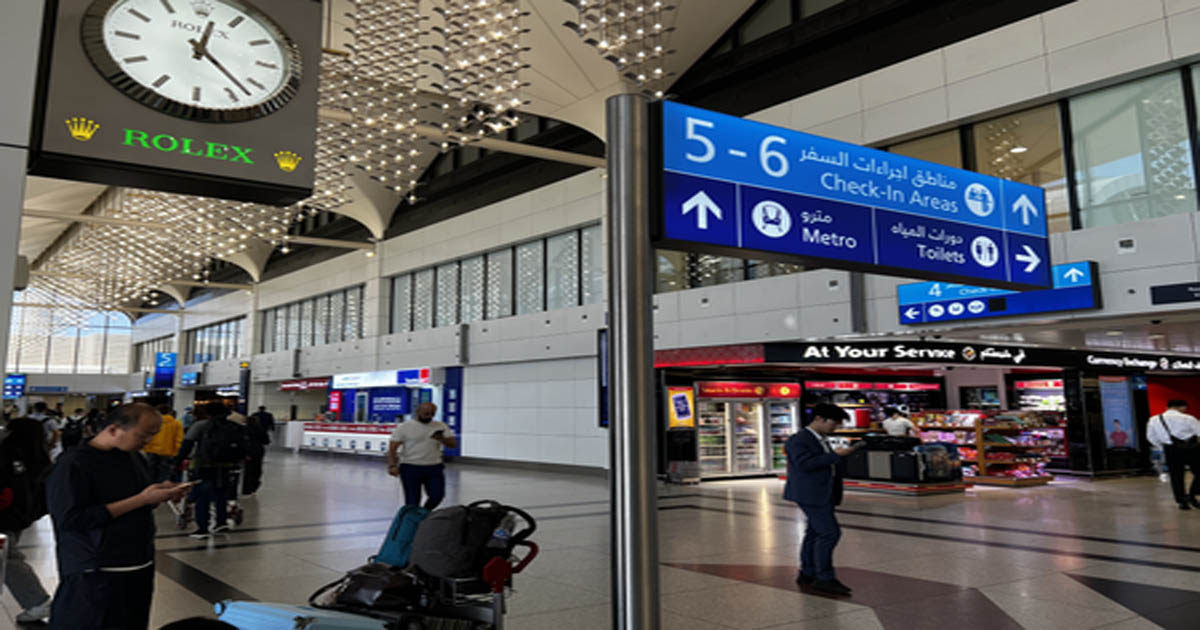
New Delhi, March 16: Dubai Airport on Monday announced to temporarily suspend all flights as a precautionary safety measure, after a drone struck a fuel tank in the area.
“Flights at DXB (Dubai International Airport) are temporarily suspended as a precautionary measure to ensure the safety of all passengers and staff. Please contact your airlines for the latest flight updates. Further updates will be shared as they become available,” Dubai Airport said in a post on X.
The Dubai Civil Aviation Authority said travellers are advised to contact their respective airlines for the latest updates regarding their flights.
“Further updates will be announced through official channels as soon as they become available,” the Dubai Media Office wrote on X.
A fire broke out near Dubai International Airport on Monday after a drone struck a fuel tank, prompting a rapid response from emergency teams and the temporary suspension of flights. Authorities said Dubai Civil Defence crews were immediately deployed to tackle the blaze and that no injuries were reported as safety measures were activated across the vicinity.
Dubai Civil Defence crews were immediately deployed to tackle the blaze and that no injuries were reported as safety measures were activated across the vicinity.
Meanwhile, an Emirates flight bound for Dubai from Kochi returned to the airport here on Monday following a security incident reported from the destination airport.
“Flight EK533 departed Cochin International Airport (CIAL) at 04.30 am with 325 people on board. En route, the aircraft was directed to turn back due to the sudden closure of Dubai International Airport,” a CIAL spokesperson said.
Meanwhile, the UAE’s defence ministry has reported six deaths since the conflict began – four civilians and two military personnel. The soldiers died in a helicopter crash that was linked to a technical issue.
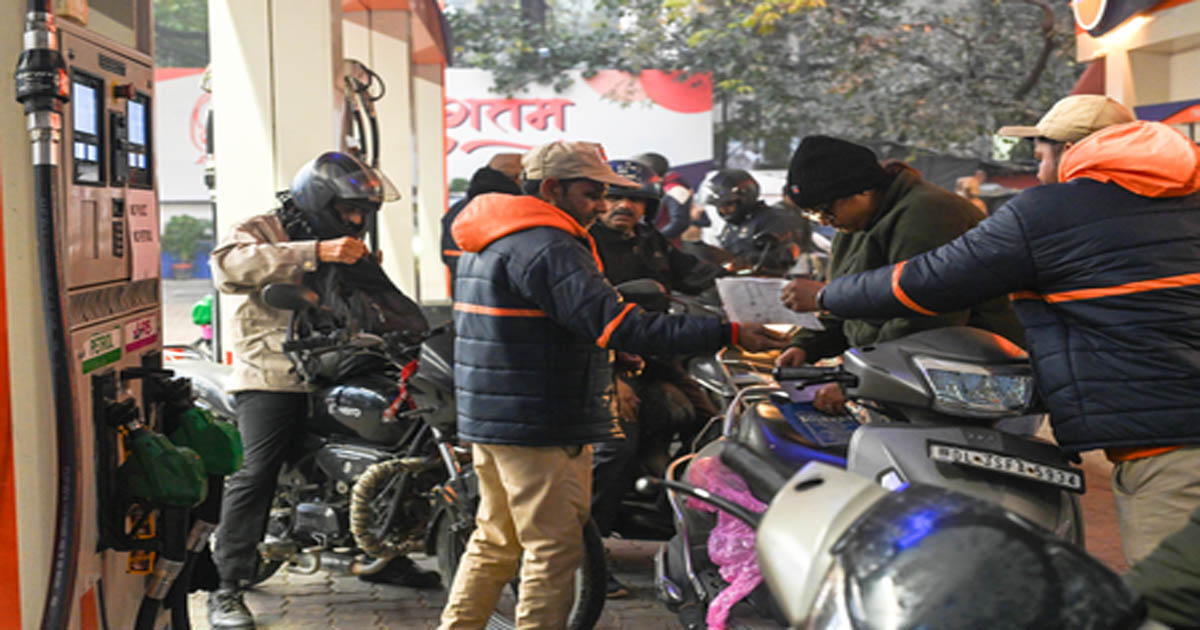
New Delhi, March 15: India still has a meaningful tax buffer to absorb crude shocks, as excise duties of Rs 19.9 per litre on gasoline and Rs 15.8 per litre on diesel can be cut to protect retail prices until about $110 per barrel crude, a report said on Monday.
The report from Elara Capital said retail gasoline and diesel prices “could be fully protected through excise cuts until roughly $110/bbl, beyond which price hikes on diesel and gasoline would become inevitable”.
It estimated India can absorb a $40–45 crude shock via tax, adding that beyond $110/bbl, the burden would shift from the government to consumers, the report added.
For every $10 per barrel rise in crude, oil marketing companies’ diesel and gasoline margins would fall by Rs 6.3 per litre and LPG losses would rise by Rs 10.2 per kg.
The dynamics implies about Rs 328 billion in annual LPG under‑recovery, the report further said.
Gross refining margins of OMCs could rise by about $5/bbl for every $10/bbl crude move, but that would not fully offset their marketing and LPG losses, the report added.
At current Brent of $100/bbl, earnings could drop sharply around 90-190 per cent absent retail price hike, tax cut, or higher LPG subsidy, it said.
IOCL is better placed among OMCs due to higher refining share, but still vulnerable if crude stays high and retail price unchanged.
“The US-Iran war has changed the way the Indian Oil & Gas sector reacts to crude prices. Our sensitivity analysis at Brent crude oil price of $100, $125 and $150 shows ‘EBITDA swing range’ from a collapse of >400 per cent for OMCs to 10-15x expansion for standalone refiners,” the report explained.
Two-thirds of India’s LNG imports pass via Hormuz, adding a supply risk on the gas side, it noted.
The firm suggested that GAIL is better positioned among gas stocks, adding that is a relatively defensive play in the current environment, as only around 16 per cent of its marketing volumes is dependent on Hormuz-linked LNG, significantly lower than for most peers, limiting direct supply disruption risk.

FIFA World Cup 2026 uncertainty grows as Iran eyes venue change

204 retired bureaucrats, army officers, lawyers raise concerns about Rahul Gandhi’s conduct in Parliament

Mumbai: St Xavier’s College Receives Bomb Threat; No Explosives Found

Indian‑flagged LPG tanker ‘Nanda Devi’ arrives at Gujarat’s Vadinar Port

Maharashtra: After Four-Year Delay, Central Govt Releases ₹606 Crore To State’s Local & Civic Bodies

Salim Khan hospitalised following complaints of swelling

Mumbai: JBCN International School In Borivali Gets Bomb Threat, Search Reveals Hoax, Students Safe

Former Arsenal Star Mesut Ozil’s Convoy Gets Involved In Road Accident During Bangladesh Visit

Married Mumbai Woman Mocked In Andheri Society Over ‘Lift Kissing’ CCTV Video, Files Police Complaint

Gold and silver surge on safe haven demand, margin cut
-

 Crime4 years ago
Class 10 student jumps to death in Jaipur
-

 Maharashtra1 year ago
Mumbai Local Train Update: Central Railway’s New Timetable Comes Into Effect; Check Full List Of Revised Timings & Stations
-

 Maharashtra1 year ago
Mumbai To Go Toll-Free Tonight! Maharashtra Govt Announces Complete Toll Waiver For Light Motor Vehicles At All 5 Entry Points Of City
-

 Maharashtra1 year ago
False photo of Imtiaz Jaleel’s rally, exposing the fooling conspiracy
-

 National News1 year ago
Ministry of Railways rolls out Special Drive 4.0 with focus on digitisation, cleanliness, inclusiveness and grievance redressal
-

 Maharashtra1 year ago
Maharashtra Elections 2024: Mumbai Metro & BEST Services Extended Till Midnight On Voting Day
-

 National News1 year ago
J&K: 4 Jawans Killed, 28 Injured After Bus Carrying BSF Personnel For Poll Duty Falls Into Gorge In Budgam; Terrifying Visuals Surface
-

 Crime1 year ago
Baba Siddique Murder: Mumbai Police Unable To Get Lawrence Bishnoi Custody Due To Home Ministry Order, Says Report