
Business
Union Budget 2025-26: 10,000 additional seats in medical colleges, daycare cancer centres


New Delhi, Feb 1: Union Finance Minister Nirmala Sitharaman on Saturday announced 10,000 additional seats in medical colleges as well as daycare cancer centres in all district hospitals.
Presenting her eighth consecutive budget and the NDA government’s second full Union Budget of its third term, the Finance Minister said that India has seen remarkable growth in medical education in the last 10 years.
“10,000 additional seats to be added in medical colleges next year and 75,000 seats to be added in next five years,” she said.
“All district hospitals to have daycare cancer centres. About 200 daycare cancer centres will be established in 2025-26,” the FM said.
Further, “broadband connectivity to primary health centres will help in expanding telemedicine consultation for rural patients at village level”, she added.
In the last 10 years, medical colleges in the country have doubled to 780 in 2024-25 from just 387 in 2013-14 — a 102 per cent growth.
During the same period, the seats for MBBS also rose from 51,348 to 1,18,137 — a 130 per cent surge.
In the last budget, the government made custom duty exemptions and a reduction in GST rates on three anti-cancer medications.
The three anti-cancer drugs were Trastuzumab, Osimertinib and Durvalumab.
The government also slashed the GST rate from 12 per cent to 5 per cent on these three cancer medicines.
Cancer cases are rising significantly in India. According to a Lancet study, India registered about 12 lakh new cancer cases and 9.3 lakh deaths in 2019 — the second-highest contributor to the disease burden in Asia.
The number climbed to 13.9 lakh in 2020, which further soared to 14.2 lakh and 14.6 lakh in the years 2021 and 2022, respectively, the study showed.


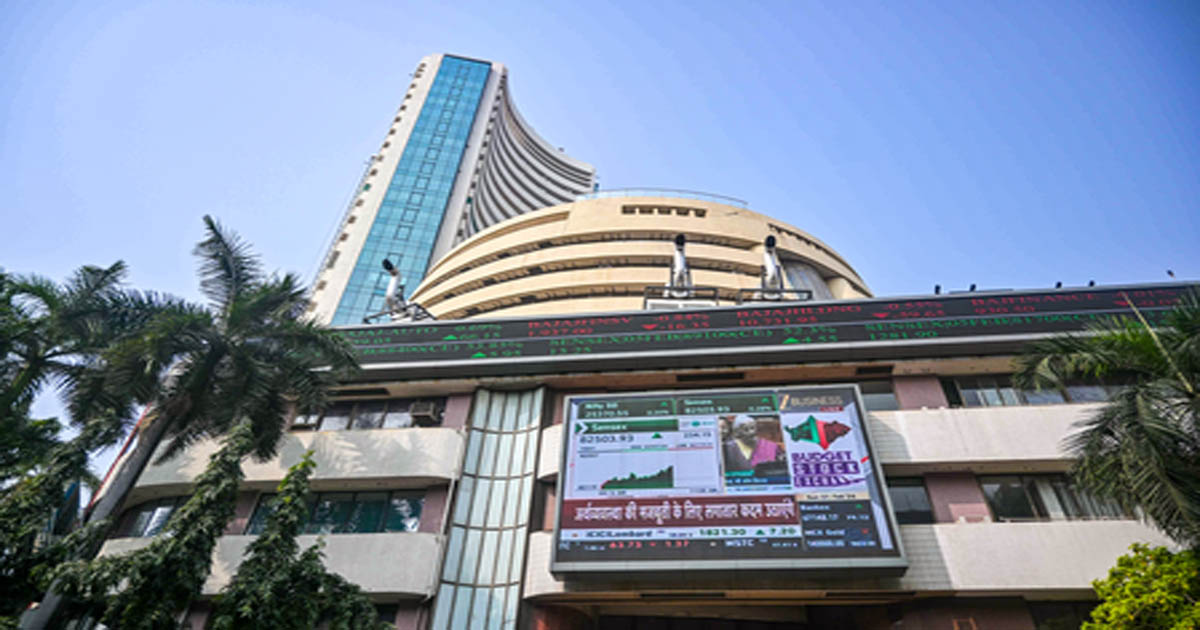
Mumbai, Sep 19: The Indian equity benchmarks posted notable losses for the sixth consecutive week as foreign institutional investor (FII) selling continued and concerns about a prolonged high‑rate environment kept investors cautious.
Nifty declined 0.22 per cent during the week and added 0.33 per cent on the last trading day to reach 23,346. At close, Sensex was down 19 points, or 0.03 per cent, at 74,294. It lost 0.65 per cent during the week.
After a weak start, Indian equities staged a partial recovery later, supported by a retreat in crude oil prices from recent highs.
“With the US and Japanese policy decisions broadly in line with expectations, easing energy inflation concerns helped temper the inflation premium embedded in sovereign yields, leading to a moderation in yields in the latter part of the week and some relief for equity valuations,” an analyst said.
However, the accompanying policy guidance continued to signal a broader tightening bias across major economies, making a prolonged high-rate environment likely.
Against this backdrop, persistent FII selling sustained pressure on the rupee and capped the market rebound, leaving domestic equities lower for the week, he added.
Mid and small-cap stocks outperformed large caps as investors rotated toward domestically oriented businesses with stronger earnings visibility, healthier order books and sound balance sheets.
Sectorally, healthcare and FMCG attracted buying on their defensive earnings profiles and domestic demand linkage.
Realty and metals remained among the stronger sectors on Friday, while IT continued to face pressure, with the Nifty IT index declining around 1 per cent.
Mid and small-cap IT stocks and consumer durables declined this week on concerns over global technology spending and discretionary demand in a higher-for-longer interest rate environment and persistent pricing pressure, respectively.
Meanwhile, the 23,000–23,100 zone remains the immediate support area for Nifty, while 23,400–23,600 region remains the immediate resistance zone.
Market participants forecast that domestic credit growth and PMI readings will provide a gauge of underlying activity in the week ahead.
US initial jobless claims and commentary from Federal Reserve officials will shape expectations on the rate trajectory and global liquidity conditions.

New Delhi, Sep 18: Apple’s iPhone 18 Pro and iPhone 18 Pro Max are seeing stronger initial demand in India than their predecessors despite higher prices, with analysts and retailers reporting a 15‑28 per cent year‑on‑year uptick at launch.
“While it’s too early to share definitive sales figures, initial demand for the 18 Pro is outperforming the 17 Pro YoY,” said Tarun Pathak, Research Director, Counterpoint Research after the firm checked data from 12 stores.
“Burgundy color is in demand and along with interest for higher storage variants. Early feedback is positive, though we’ll need to monitor performance over a longer window once the initial launch hype stabilises,” Pathak added.
Apple resellers are driving sales in terms of numbers and catering to buyers across different locations, he said, adding that Apple Stores see massive surges for launch-day enthusiast buying due to strong pre-orders.
Retailers said launch‑day stock supplied to stores had largely sold out and fresh allocations were being assigned, while industry experts said the absence of a standard iPhone 18 this year had concentrated demand on the two Pro models.
Apple began selling the iPhone 18 Pro and iPhone 18 Pro Max in India on Friday, through its online store and six retail outlets across the country. The models can also be bought through Apple’s authorised reseller network, online marketplaces and large-format retailers.
The iPhone 18 Pro starts at Rs 1,64,900 and the iPhone 18 Pro Max at Rs 1,74,900 for the base 256GB models. Apple is offering Rs 7,000 instant cashback on eligible card EMI transactions and Rs 6,000 on eligible card full‑swipe purchases for both Pro models.
Customers exchanging an existing device can also enjoy a trade-in top-up of up to Rs 10,000, depending on the residual value of the device.
Apple’s first foldable smartphone, the iPhone Duo, is expected to hit markets in India from October 23.
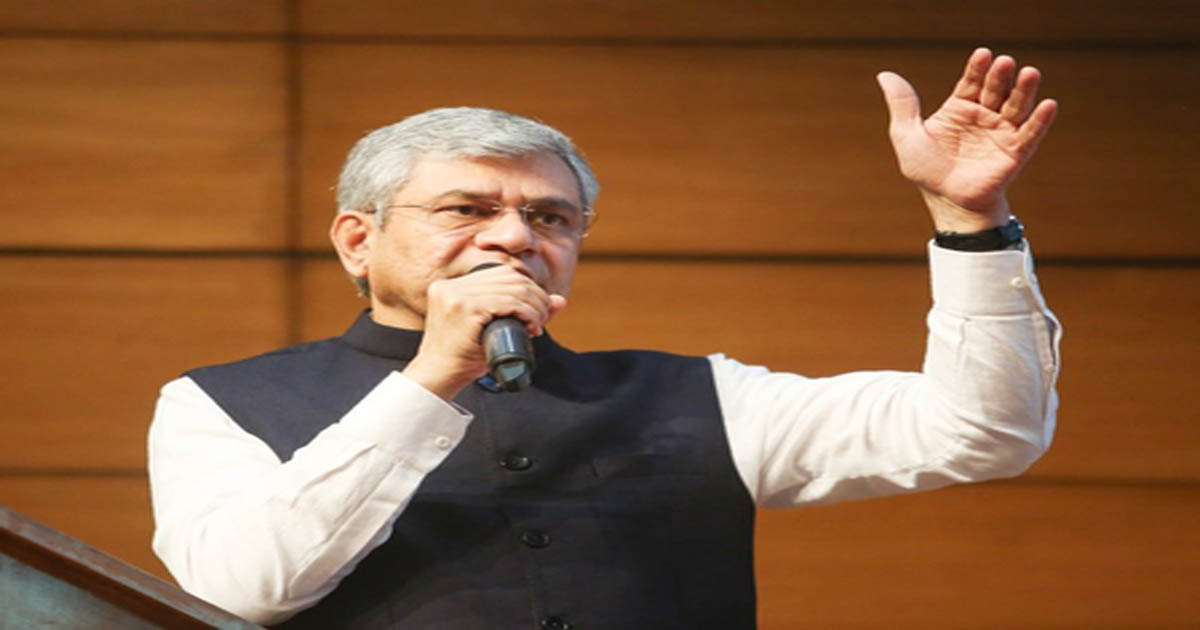
Mumbai, Sep 18: Union Electronics and Information Technology Minister Ashwini Vaishnaw on Friday said 68 Japanese companies participating in Semicon India 2026 are in the process of finalising their manufacturing, research and partnership plans in India.
Speaking to media during his visit to the Japanese pavilion at the event, Vaishnaw said more than 30 countries are participating in Semicon India 2026, reflecting growing international interest in India’s semiconductor ecosystem.
“Here at the Japanese pavilion, there are 68 Japanese companies. They are finalising their plans for manufacturing, research and partnerships in India,” the Minister said.
Vaishnaw also highlighted the enthusiasm among young people at the semiconductor event, saying India’s semiconductor push is creating opportunities for high-skilled employment and helping develop a talent pool for the sector.
The Minister also showcased a semiconductor chip developed by students of the National Institute of Technology (NIT) Rourkela in Odisha. He said the chip was developed under the talent development programme of India’s Semiconductor Mission and that the students had made a presentation on their work before Prime Minister Narendra Modi.
The student-developed chip was displayed to the media during Vaishnaw’s interaction.
Odisha Chief Minister Mohan Charan Majhi had earlier expressed pride at seeing indigenous chip designs developed by NIT Rourkela being showcased alongside Made-in-India semiconductor chips at Semicon India.
Majhi said the achievement was a matter of pride for Odisha and demonstrated the talent, innovation and research capabilities of institutions in the state.
He also credited Prime Minister Narendra Modi’s leadership and Vaishnaw’s efforts for India’s continued progress towards building a strong and self-reliant semiconductor ecosystem.
The Chief Minister congratulated the scientists, researchers and the entire NIT Rourkela team, noting that talent from Odisha is contributing to India’s semiconductor journey and its broader efforts towards technological self-reliance.

Maha govt indifferent amid severe drought: Congress

Satish Salian issues Rs 500 crore defamation notice to Aaditya Thackeray outside ‘Matoshree’

Cashew-almond row erupts at Maha drought meet, Fadnavis calls for sensitivity

‘Not afraid of any Shiv Sainik’: Disha Salian father ahead of his planned visit to serve notice to Aaditya Thackeray

16-year-old girl found dead in West Bengal Purulia, family suspects murder

Four more Indian nationals rescued in Nepal, 120 cross safely from China: MEA

Gift to President Putin part of PM Modi bid to globally display India’s heritage

Nepal floods: First batch of 106 stranded Maharashtra tourists reaches India; 84 more expected today (Ld)

India, Brazil sign ICT MoU to deepen digital, telecom cooperation

Maharashtra: 17-year-old boy dies by suicide on Raksha Bandhan after emotional social media posts
-

 Crime4 years ago
Class 10 student jumps to death in Jaipur
-

 Maharashtra2 years ago
Mumbai Local Train Update: Central Railway’s New Timetable Comes Into Effect; Check Full List Of Revised Timings & Stations
-

 Maharashtra2 years ago
Mumbai To Go Toll-Free Tonight! Maharashtra Govt Announces Complete Toll Waiver For Light Motor Vehicles At All 5 Entry Points Of City
-

 Maharashtra2 years ago
False photo of Imtiaz Jaleel’s rally, exposing the fooling conspiracy
-

 National News2 years ago
Ministry of Railways rolls out Special Drive 4.0 with focus on digitisation, cleanliness, inclusiveness and grievance redressal
-

 Maharashtra2 years ago
Maharashtra Elections 2024: Mumbai Metro & BEST Services Extended Till Midnight On Voting Day
-

 National News2 years ago
J&K: 4 Jawans Killed, 28 Injured After Bus Carrying BSF Personnel For Poll Duty Falls Into Gorge In Budgam; Terrifying Visuals Surface
-

 Crime2 years ago
Baba Siddique Murder: Mumbai Police Unable To Get Lawrence Bishnoi Custody Due To Home Ministry Order, Says Report