
National News
PM Modi says India’s metro network expanded from 248 km in 5 cities to 1200 km in 26 cities

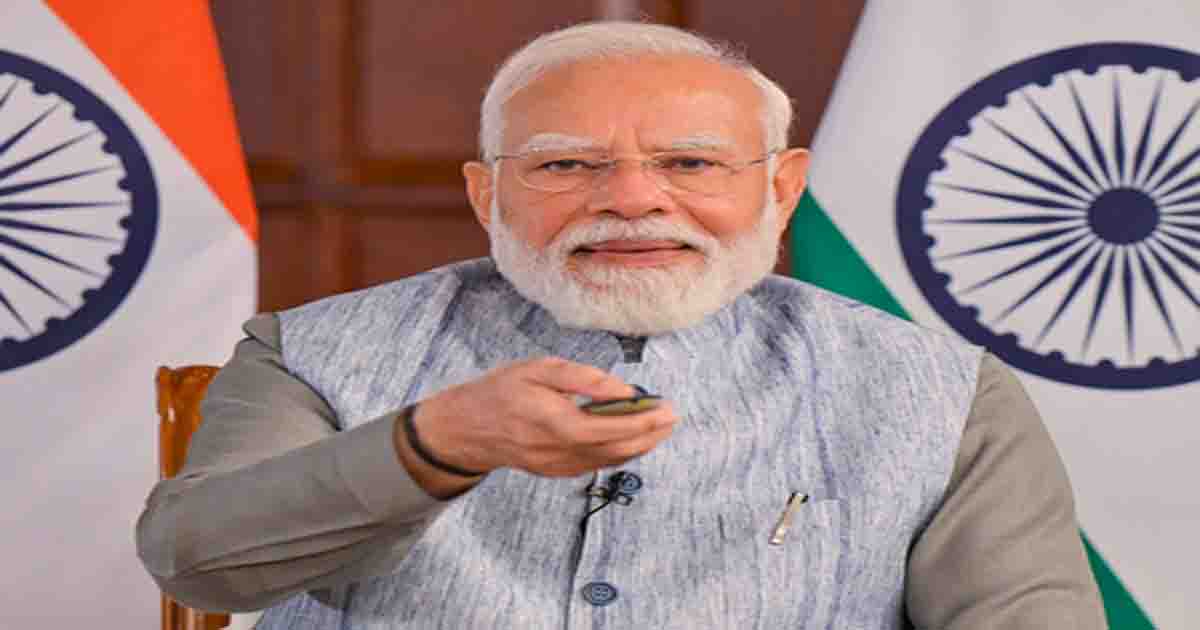
Prime Minister Narendra Modi on Thursday highlighted the rapid expansion of India’s Metro rail network, stating that its total length has grown from just 248 km across five cities in 2014 to nearly 1,200 km spanning 26 cities today.
He asserted that the accelerated expansion has transformed urban mobility and improved the quality of life for millions of commuters.
In a post on X, PM Modi said, “Let me ask you… If India’s Metro network had continued expanding at the pace it did before 2014, how long would the wait be for cities like Pune to have a Metro? YEARS….no…DECADES perhaps. And that was UNACCEPTABLE.”
“In 2014, India had just 248 km of Metro lines across 5 cities. Today, we have nearly 1,200 km across 26 cities. Over 1 crore people travel by Metro every day,” he stated.
The impact, according to the Prime Minister, goes “beyond statistics or numbers”.
“It means less time in traffic, more family time, greater productivity and better opportunities. This is the transformation we are working towards for urban India!” he added.
Earlier on Tuesday (November 3), PM Modi virtually inaugurated the 23.2 km Pune Metro Line 3 (Pink Line) elevated corridor connecting Maan/Hinjewadi (the IT Hub) to Shivajinagar (District Court Metro station). Built under a Public-Private Partnership (PPP) model at a cost of over Rs 8,300 crore, it significantly reduces travel time and traffic congestion for tech workers and commuters.
Highlighting key operational milestones of the Pink Line, the Prime Minister emphasised that the line is operated entirely by women train operators. Approximately 30 per cent of its total power requirements are sourced from solar energy.
He also laid the foundation stone for the Pune Metro Phase-II expansion, valued at around Rs 13,500 crore. This phase covers key corridors connecting residential and business hubs, including Kharadi, Wagholi, Hadapsar, Swargate, and Khadakwasla.
The Prime Minister expressed delight at inaugurating another Pune Metro line, recalling that he had laid the foundation for the first phase about 10 years earlier. The Hinjewadi–Shivajinagar service will improve connectivity for a major IT hub; the new Phase-II lines will strengthen links between older and newer parts of Pune.
PM Modi highlighted how rapid urban expansion requires eco-friendly mass transit solutions. Expanding metro lines across tier-1 and tier-2 cities aims to boost ease of living, cut carbon footprints, and provide integrated multi-modal travel hubs, connecting metro stations, bus terminals, and railways.
He reiterated the Union government’s commitment to building sustainable, modern mass transit systems across India. He emphasised that expanding metro networks cuts down road congestion, reduces vehicular emissions, and enables seamless multi-modal connectivity with intercity bus terminals and railway stations.

National News
HM Shah: 40 villages along India-China border see reverse migration after development under VVP

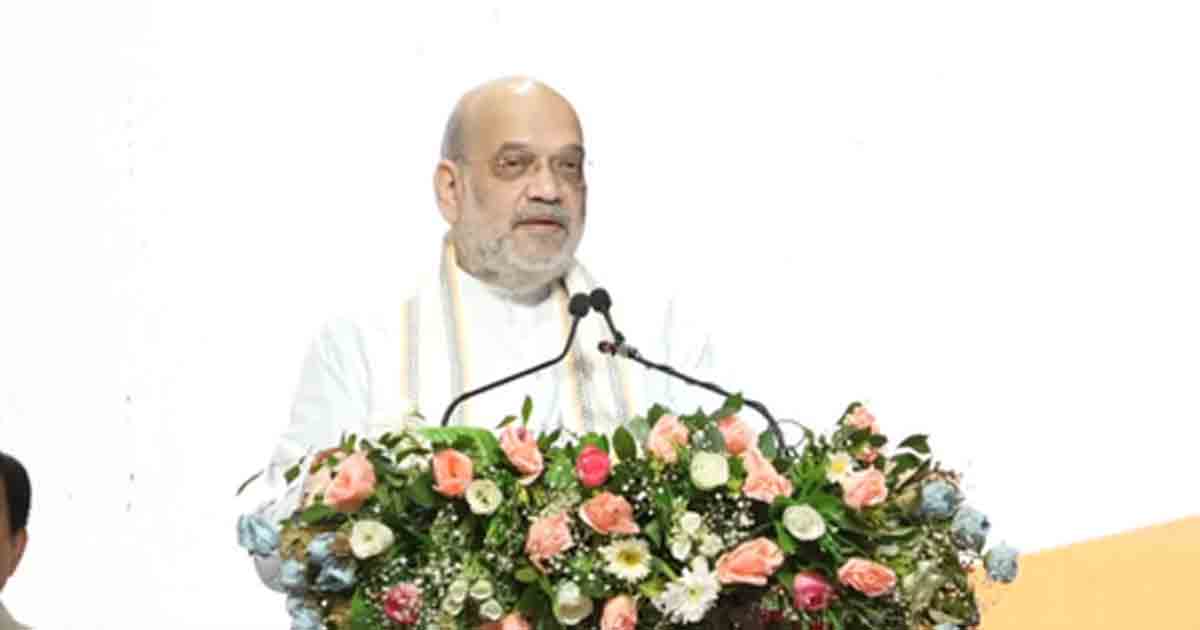
Union Home Minister Amit Shah on Sunday said that people from 40 villages in Arunachal Pradesh along the China border are returning to their native villages following the development of border areas with modern facilities under the Centre’s flagship Vibrant Villages Programme (VVP).
Launching four major development initiatives worth over Rs 5,610 crore in Arunachal Pradesh, HM Shah said the Narendra Modi government has declared border villages as the country’s first villages and is undertaking their all-round development by providing essential facilities, including healthcare, electricity, education and drinking water supply.
The initiatives launched by HM Shah include ‘Mission Shikshit Arunachal — Phase II’, power development projects, rural road development works and 199 projects under the Vibrant Villages Programme across 11 border districts.
The Home Minister said that through the VVP, the government aims to develop all border villages in the country and prevent people from migrating to urban areas in search of better livelihood opportunities and facilities.
“Development of border villages is the priority of the government. If villagers are economically and otherwise empowered, their lifestyle will change, and their happiness will increase,” he said.
HM Shah said that personnel of the Indian Army and the Indo-Tibetan Border Police (ITBP) are extending considerable assistance to people living in border villages by helping them increase agricultural production and facilitating the marketing of their locally grown produce.
“As the Army and ITBP personnel are consuming locally produced crops and food items, their emotional bonds with the border villages are becoming stronger,” he noted.
HM Shah, who also holds the Cooperation portfolio, said that the cooperative movement would play a crucial role in making Arunachal Pradesh self-sufficient in the production of milk, eggs, fish and meat, thereby economically empowering people in rural and border areas.
He assured the people that if they produced sufficient quantities of milk, the National Dairy Development Board (NDDB) and Amul would purchase their produce.
The Home Minister announced that a team from the NDDB would soon be sent to Arunachal Pradesh to explore all possibilities for increasing milk production and strengthening the dairy sector in the state.
Comparing the investments made by the previous Congress-led government with those under the Modi government, HM Shah claimed that the Centre had provided more than four times the funding for the all-round development of Arunachal Pradesh.
He also stressed the importance of women’s participation in the cooperative movement, saying that women self-help groups (SHGs) would play a significant role in expanding and strengthening the cooperative sector.
“Through women’s SHGs, the cooperative movement will not only be expanded and strengthened, but women will also become economically empowered,” HM Shah said.
Earlier, after inaugurating and addressing a Cooperative Conference at the Dorjee Khandu State Convention Centre in Itanagar, HM Shah unveiled the Arunachal Pradesh Cooperation Vision Document 2047 and presented Cooperation Awards to recognise contributions to the cooperative sector.
He also inaugurated the ‘Saras Mela’ and flagged off a Mobile Medical Van as part of the initiatives aimed at strengthening rural development and improving access to essential services.
The four major development initiatives launched by the Home Minister include ‘Mission Shikshit Arunachal — Phase II’, with an outlay of Rs 1,500 crore; the ‘Chief Minister’s Comprehensive State Power Development Programme’, with an allocation of Rs 2,000 crore; and the ‘Chief Minister’s Comprehensive State Rural Road Development Programme’, with an outlay of Rs 2,000 crore.
In addition, 199 projects worth Rs 110.95 crore under the Vibrant Villages Programme are being taken up across 11 border districts of the state. HM Shah also launched ‘Mission SURAKSHA’.
The initiatives are aimed at improving educational infrastructure, strengthening the power sector, expanding rural road connectivity and accelerating development in strategically important border areas.
The Cooperative Conference and the launch of these development initiatives are in line with PM Modi’s vision of ‘Sahkar Se Samriddhi’ (Prosperity through Cooperation).
The event at the Dorjee Khandu State Convention Centre marked an important step towards strengthening the cooperative sector in Arunachal Pradesh and making it more empowered, self-reliant and inclusive.
Through the various initiatives, the Centre aims to promote economic opportunities, improve infrastructure and strengthen livelihood prospects, particularly in rural and border areas, while ensuring that local communities become active partners in the state’s development journey.
Chief Minister Pema Khandu, Union Minister of Parliamentary Affairs Kiren Rijiju, Deputy Chief Minister Chowna Mein, state Home Minister Mama Natung, Agriculture Minister Gabriel Denwang Wangsu, Lok Sabha member Tapir Gao, and Rajya Sabha member Tai Tagak, and senior officials from the Home and Cooperation Ministries also attend the event.
National News
Akhilesh Yadav lacks ‘Sanatan’ knowledge: UP Deputy CMs hit out at SP chief’s ‘Radhe Radhe’ remark
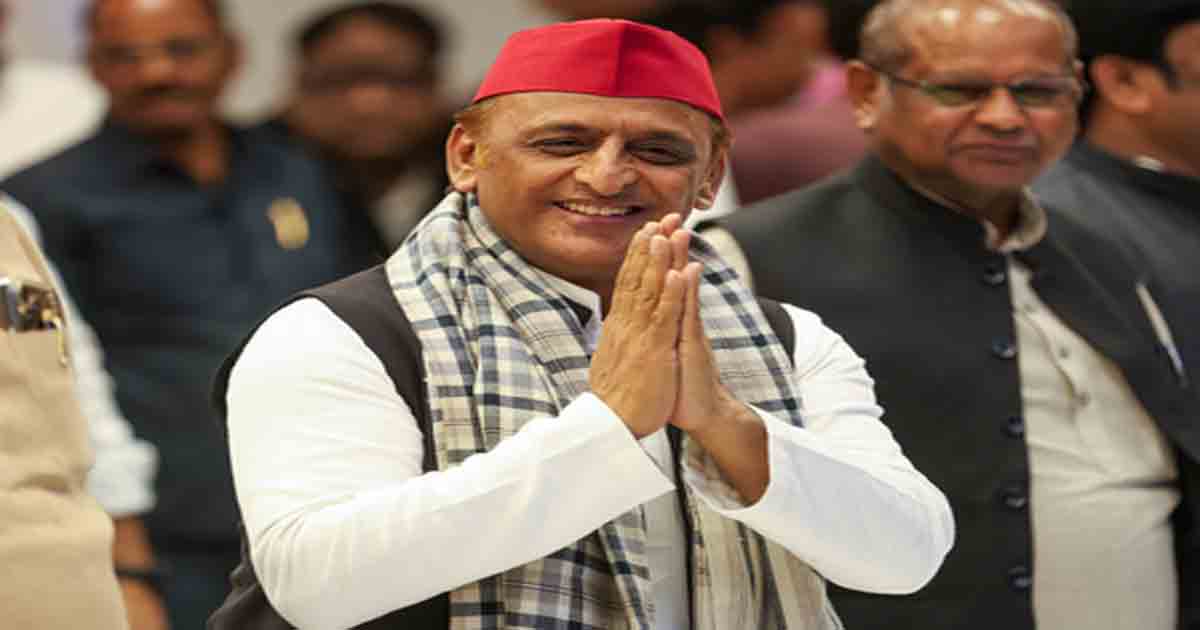
Uttar Pradesh Deputy Chief Ministers Brajesh Pathak and Keshav Prasad Maurya, on Sunday, hit out at Samajwadi Party (SP) President Akhilesh Yadav, a day after he mocked the Bharatiya Janata Party’s (BJP) slogan ‘Radhe Radhe, Kamal Khila De’, saying that the SP chief does not have knowledge of Sanatan culture.
Addressing a press conference on Saturday, Akhilesh Yadav took a swipe at the BJP’s slogan, pointing out that ‘Radhe Radhe’ is uttered while bidding farewell to someone and remarked that the ruling coalition’s departure in the 2027 UP Assembly polls is inevitable as the BJP’s electoral symbol, lotus, has started “withering”.
Reacting to the same, Deputy Chief Minister Brajesh Pathak told reporters, “If Akhilesh Yadav had even basic knowledge of Sanatan culture, police firing on unarmed ‘karsevaks’ would not have taken place during (the Samajwadi party’s) their regime, he would have gone to Ayodhya to seek the blessings of Lord Ram and would have also offered prayers at Krishna Janmabhoomi.”
He was referring to the 1990 police firing on ‘karsevaks’ in Ayodhya.
Further, Pathak accused the SP chief of practising “appeasement politics”.
“What does he have to do with saying ‘Ram Ram’ or ‘Radhe Radhe’?” he remarked.
Echoing a similar view, Deputy CM Keshav Prasad Maurya opined that the SP chief is “scared” of the BJP’s slogan.
“When the slogan ‘Jai Shri Ram’ is raised, who gets nervous? Now that the slogan ‘Radhe Radhe’ is being raised, who is getting worried? ‘Radhe Radhe’ is not just a slogan; it is a way of expressing devotion,” he stated.
“When we said, ‘Radhe Radhe, Kamal Khila de’ (let the lotus bloom)…they failed to notice that their own bicycle had a puncture and, instead, he is talking about the lotus withering. So it is they who have a problem in their eyes and should get treated,” he told reporters.
Expressing confidence about the BJP’s victory in the 2027 UP Assembly polls, Maurya said, “The lotus has already bloomed and will bloom even further. We will form a government for the third time with a landslide victory.”
“The SP is not going to come to power till 2047, and the BJP will not step down from power,” the Deputy CM asserted.
However, the SP chief has dismissed prospects of the BJP-led NDA returning to power in the state, saying: “Even at the time of farewell, they say ‘Radhe-Radhe’. This time, the public will give the BJP a grand farewell.”
National News
‘BJP could barely breathe until Owaisi, Chandra Shekhar Aazad forged alliance’: Priyanka Chaturvedi
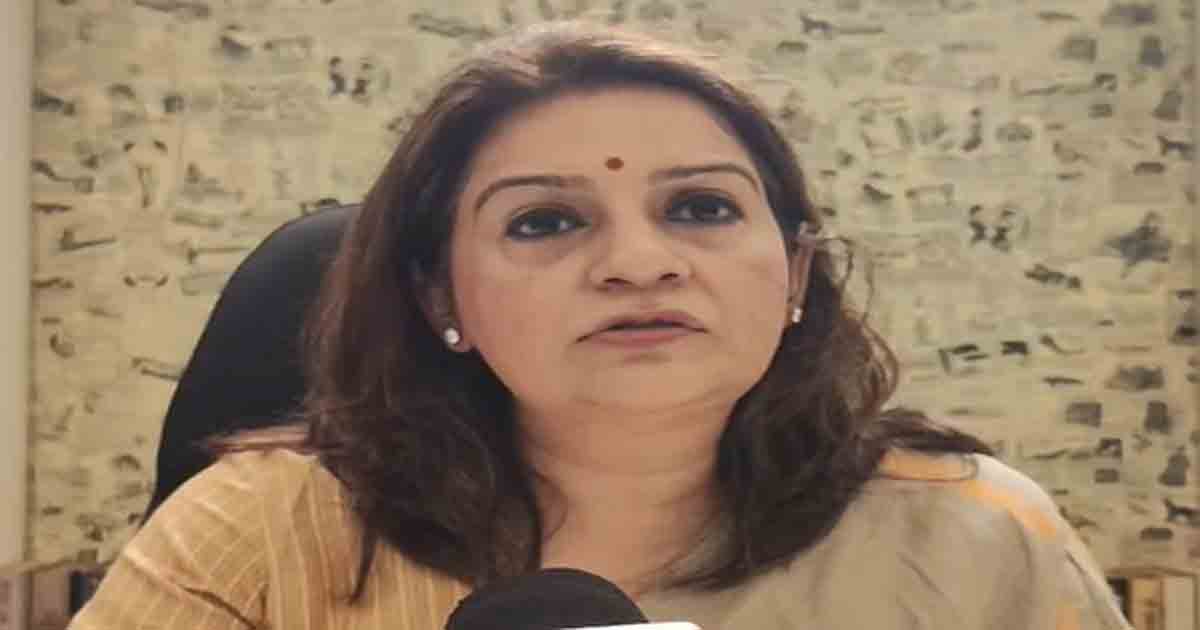
Shiv Sena-UBT MP Priyanka Chaturvedi on Sunday remarked that the Bharatiya Janata Party (BJP) could “barely breathe” until an alliance was formed between AIMIM Chief Asaduddin Owaisi and Azad Samaj Party-Kanshi Ram President Chandra Shekhar Aazad.
This comes after police personnel in Uttar Pradesh’s Saharanpur on Saturday mistakenly gave a guard of honour to Owaisi at the Circuit House, apparently mistaking him for a Supreme Court judge who was scheduled to visit the premises.
The action prompted an inquiry into the incident.
Taking a swipe at the incident, Priyanka Chaturvedi said: “That guard of honour was meant just for him (Owaisi). This is because until an alliance between Owaisi and Chandra Shekhar Aazad was not taking shape, the Bharatiya Janata Party could barely breathe.”
She was referring to the ‘Samajik Parivartan Morcha’ alliance, formed by Owaisi and Aazad for the 2027 Uttar Pradesh Assembly polls.
Chaturvedi alleged that Owaisi benefits the BJP in elections being held across various states.
“Everyone knows how he (Owaisi) has functioned as the “BJP’s B-team” to benefit the party, whether in Bihar, Maharashtra, West Bengal, and now in Uttar Pradesh,” she said.
“So, they welcomed him (Owaisi) wholeheartedly with full dignity and a guard of honour,” the Shiv Sena-UBT MP remarked.
Meanwhile, Priyanka Chaturvedi also backed Leader of Opposition (LoP) in Lok Sabha Rahul Gandhi over his remarks advocating strong ties and defence purchases with Israel.
Her defence came after former Kerala Chief Minister Pinarayi Vijayan criticised the LoP’s remarks on the issue.
According to Chaturvedi, whatever Rahul Gandhi said was from the perspective of national interest.
“Putting the country first, he (Rahul Gandhi) stated that we have ties with Israel and our bilateral relationship will continue, while also maintaining that our government should speak about what is happening in Palestine,” she said.
The Shiv Sena-UBT leader also added: “I see neither hypocrisy nor anything wrong in that, whether on issues concerning Pakistan or Israel, he (Rahul Gandhi) has spoken in national interest. Governments come and go, but the country’s interest is paramount, which he has reflected in his comments.”

Sanjay Raut levels ‘horse-trading’ charges to pass Delimitation Bill, BJP says ‘stop spreading fake news’

Sachin Tendulkar believes Ranveer Singh would make a good cricketer

HM Shah: 40 villages along India-China border see reverse migration after development under VVP

Akhilesh Yadav lacks ‘Sanatan’ knowledge: UP Deputy CMs hit out at SP chief’s ‘Radhe Radhe’ remark

Hema Malini calls Esha Deol’s ‘Pratap’ co-star Amit Sadh ‘sincere’

Congress trying to protect 3 crore Bangladeshi infiltrators in voter list: HM Shah

Red Fort car blast probe exposes blueprint for spread of terror modules across India

Trump flags Iran targets as talks continue

‘Conspiracy, not accident’: NCP on Ajit Pawar death

BJP, Shiv Sena slam Mallikarjun Kharge for terming Diwali ‘Khushiyon ka Eid’
-

 Crime4 years ago
Class 10 student jumps to death in Jaipur
-

 Maharashtra2 years ago
Mumbai Local Train Update: Central Railway’s New Timetable Comes Into Effect; Check Full List Of Revised Timings & Stations
-

 Maharashtra2 years ago
Mumbai To Go Toll-Free Tonight! Maharashtra Govt Announces Complete Toll Waiver For Light Motor Vehicles At All 5 Entry Points Of City
-

 Maharashtra2 years ago
False photo of Imtiaz Jaleel’s rally, exposing the fooling conspiracy
-

 National News2 years ago
Ministry of Railways rolls out Special Drive 4.0 with focus on digitisation, cleanliness, inclusiveness and grievance redressal
-

 Maharashtra2 years ago
Maharashtra Elections 2024: Mumbai Metro & BEST Services Extended Till Midnight On Voting Day
-

 National News2 years ago
J&K: 4 Jawans Killed, 28 Injured After Bus Carrying BSF Personnel For Poll Duty Falls Into Gorge In Budgam; Terrifying Visuals Surface
-

 Crime2 years ago
Baba Siddique Murder: Mumbai Police Unable To Get Lawrence Bishnoi Custody Due To Home Ministry Order, Says Report