
National
Uddhav Thackeray has betrayed Balasaheb’s ideals, says Bawankule on Waqf Bill

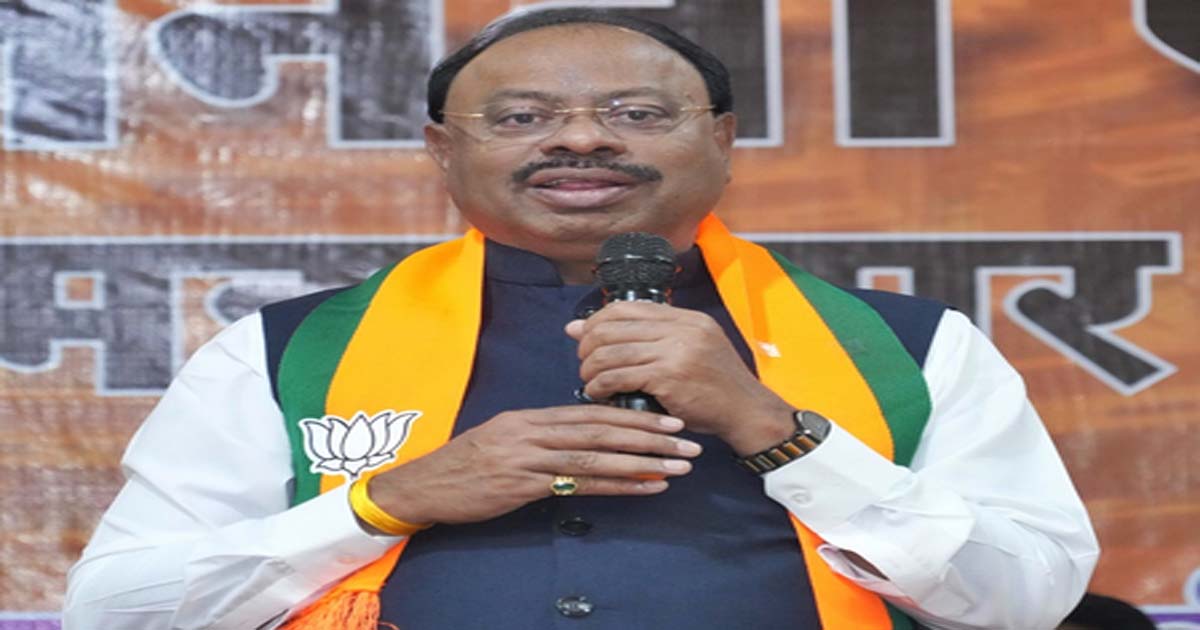
Pune, April 5: Maharashtra BJP president and Revenue Minister Chandrashekhar Bawankule here on Saturday launched a sharp attack on Shiv Sena (UBT) chief Uddhav Thackeray, accusing him of betraying the ideals and vision of his father, Balasaheb Thackeray, by opposing the Waqf Amendment Bill.
Bawankule claimed that Thackeray’s stance was driven by vote-bank politics ahead of the upcoming Brihanmumbai Municipal Corporation (BMC) elections.
“Uddhav Thackeray’s position on the Waqf Amendment Bill is not even acceptable to his own workers. I’ve received messages from across the state suggesting that many Shiv Sainiks are disillusioned and considering quitting the party. His Shiv Sena won’t survive another year,” Bawankule asserted.
He further alleged, “By opposing the Waqf Amendment Bill, Uddhav Thackeray has committed a serious offence.”
On Friday, Deputy Chief Minister Devendra Fadnavis defended the Bill, stating that it reflects the secular and democratic spirit enshrined in the Constitution.
“The Waqf Board that existed till now was a product of appeasement politics. It neither benefited the minority community nor contributed to any charitable cause. On the contrary, it was used to forcibly grab land. The biggest Waqf land scam in Maharashtra happened during the Congress regime. We had even initiated an inquiry into it,” Fadnavis said.
He added that the amended law would bring much-needed transparency and ensure that the benefits reach the common Muslim.
“The Bill does not infringe upon any religious beliefs. It merely corrects historical wrongs. It also ensures women’s representation on the Waqf Board and removes the earlier provision that barred judicial scrutiny of its actions,” he said.
Fadnavis also alleged that Waqf lands were often taken over by the Board and later by Congress leaders, adding, “The Bill is aimed at ending this loot. Those who truly follow Balasaheb Thackeray’s ideals should support it.”
Deputy Chief Minister Eknath Shinde, who also heads a faction of the Shiv Sena, accused Thackeray of abandoning Hindutva and compromising Balasaheb’s principles. “His opposition to the Bill exposes his real priorities — power over people’s welfare,” Shinde said.

Business
Ban on sale of open cooking oil, strict action on refilling used containers and reusing frying oil


Mumbai A complete ban has been imposed on the sale and purchase of open cooking oil. It is harmful to health and poses a risk of fatal diseases. Therefore, FDA Commissioner Takaram Munde has issued an order to ban it. This order has been issued earlier. In this effective manner, FDA will comply with it. A state-wide comprehensive compliance order has been issued by the Food Safety Commissioner, in which the entire supply from producer to retailer and online seller has been banned and it is prohibited. No concession will be made in the matter of safety of cooking oil, which is directly related to the daily diet of citizens. Under the Food Safety and Standards Act, 2006, Commissioner of Food Safety and Commissioner, Food and Drug Administration, Maharashtra, Takaram Munde has issued a comprehensive state-wide compliance and enforcement order for the edible oils and fats sector. The fourteen-point order is effective with immediate effect and is not limited to retailers but is mandatory for the entire supply chain, from oil expeller unit to online sellers.
The Food and Drug Administration’s inspection has found widespread and consistent lack of compliance in the edible oil supply chain. Operating a business without a valid license or in the wrong business category, mixing cheap and undeclared oil with declared oil, sale of substandard oil with acid value and industrial trans fat exceeding the limit, illegal adulteration of mustard oil, re-labeling to hide the source and date of origin of oil, re-packing of expired oil, use of packaging unfit for food, in view of these issues, this order has been issued to provide a uniform and clear compliance framework across the state. This order will be applicable to oil expeller units, solvent extraction units and oil refiners
Producers of banaspati, interesterified banaspati fat, bakery shortening, margarine and table spreads
Blenders of multi-source edible vegetable oil
Repacking and re-labeling importers, wholesalers, distributors, superstockists and transporters
Granny shops, supermarkets, departmental stores and e-commerce and online sellers
Groundnuts, This order is applicable to all edible oils and fats like mustard, soybean, sunflower, cardi, banola, rice bran, palm and palmolein, coconut, sesame, corn, multi-source edible vegetable oil and banaspati, irrespective of the size and business of the establishment. There are 497 edible oil producers in Maharashtra: Centrally licensed: 212, State licensed: 285, Total: 1247. A total of 1142 edible oil samples were taken in the year 2025-2026, out of which 1142 were found to be substandard, 77* substandard, 13 unsafe and 15 mislabelled.
Important instructions of the order
A valid FSSAI license or registration is mandatory under “License and Laboratory”. The license should be prominently displayed in the establishment.
- As per other provisions of Schedule 4, Part-2, it is a condition of eligibility for a license for the edible oil producer to have its own laboratory for sample testing. The agreement with an external laboratory is only additional and not a substitute.
Mode of sale
Edible oil shall be sold only in sealed, tamper-proof and fully labelled packs. Sale of open and unpackaged oil is prohibited. The producer or distributor supplying open oil shall be the principal violator. He shall be liable under sections 26 and 27. The retailer shall reject unsealed or tampered goods and give the information of the supplier to the Food Safety Officer.
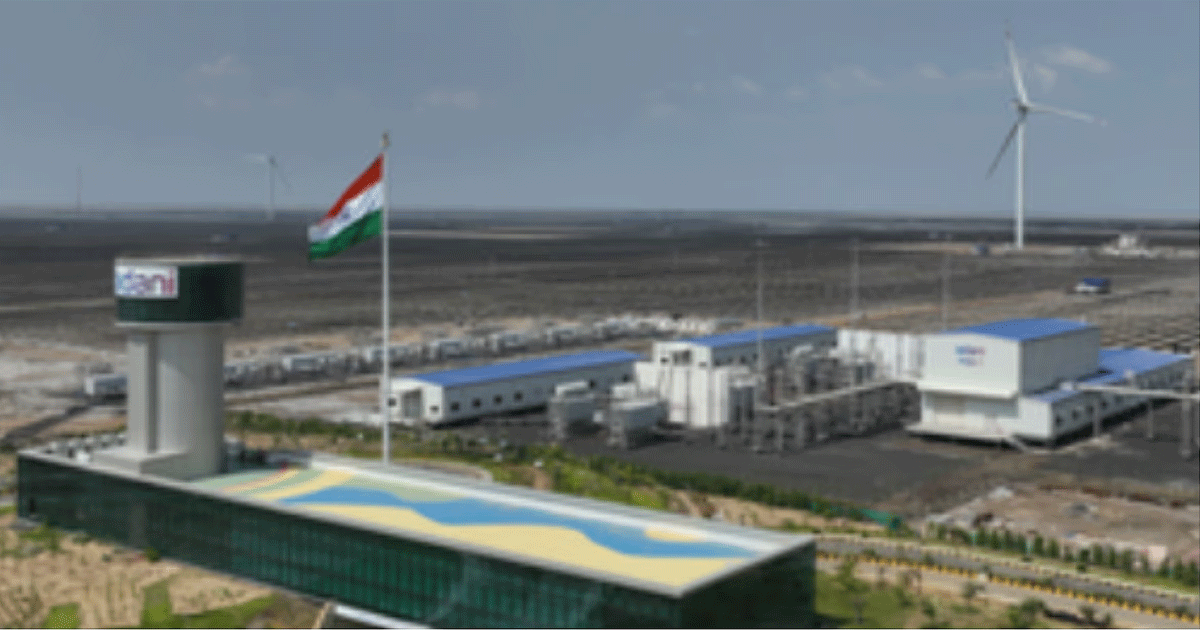
Key Highlights:
– Energy sales rose 42 percent YoY to 10,479 million units in Q1 FY26.
– Operational RE capacity reached 15.8 GW, the highest in India.
– EBITDA surged 31 percent to Rs 3,108 crore, backed by new greenfield projects.
Ahmedabad: Adani Green Energy Ltd’s (AGEL) energy sales surged 42 per cent (year-on-year) in the April-June quarter (Q1 FY26) to 10,479 million units, as operational renewable energy (RE) capacity grew 45 per cent to 15.8 GW which continues to be India’s largest, the company said on Monday.
While revenue growth increased by 31 per cent (on-year) to Rs 3,312 crore, EBITDA also went up by 31 per cent to Rs 3,108 crore.
According to the Adani Group company, cash profit surged by 25 per cent (on-year) to Rs 1,744 crore in the quarter.
“During Q1 FY26, we added 1.6 GW of greenfield renewable energy capacity, bringing our total increase to 4.9 GW over the past year — an achievement unmatched in India’s transition toward clean energy,” said Ashish Khanna, CEO of Adani Green Energy.
“Our investments in the massive RE development at Khavda in Gujarat as well as other resource-rich sites are delivering results both in terms of superior operational performance and industry-best EBITDA margins,” he said, adding that the company is on track to achieve its 2030 target of 50 GW RE capacity — with at least 5 GW of hydro pumped storage along with battery storage.
Strong revenue, EBITDA, and cash profit growth are primarily backed by robust greenfield capacity addition, deployment of advanced RE technologies, superior plant performance and deployment of new capacities in resource-rich sites in Khavda (Gujarat) and Rajasthan.
“Further, battery storage is also a key part of our future strategy. We remain committed to supporting national energy transition and security ambitions as well as maintaining our ESG leadership, highlighted by our top rankings in the FTSE Russel ESG assessment and recognition at the Reuters Global Energy Transition Awards 2025,” Khanna noted.
AGEL has consistently generated electricity exceeding the overall annual commitment under the power purchase agreements (PPA). In Q1 FY26, AGEL’s PPA-based electricity generation was 31 per cent of the annual commitment.
The company is developing a massive 30 GW renewable energy plant at Khavda in Gujarat. This is spread over an area of 538 sq km, almost 5 times the city of Paris.
Hyderabad, July 10: The Enforcement Directorate has booked 29 celebrities in Telugu states for endorsing betting apps.
The central agency has filed an ECIR against 29 actors, influencers, and YouTubers for allegedly promoting illegal betting platforms, in violation of the Public Gambling Act, 1867.
The probe, under the Prevention of Money Laundering Act, has been taken up based on five FIRs filed in Telangana and Andhra Pradesh.
Film actors Vijay Deverakonda, Rana Daggubati, Prakash Raj, Nidhi Agarwal, Pranitha Subhash and Manchu Lakshmi, and Ananya Nagella are among those who have been booked by the ED.
The names of TV actors, TV hosts and social media influencers like Sreemukhi, Shyamala, and Varshini Sounderajan, Vasanthi Krishnan, Shoba Shetty, Amrutha Chowdary, Nayani Pavani, Neha Pathan, Pandu, Padhmavathi, Harsha Sai and Bayya Sunny Yadav also figure in the list.
Most of these celebrities were earlier booked by the Hyderabad and Cyberabad Police. FIRs were registered against them at Panjagutta, Miyapur, Cyberabad, Suryapet, and Visakhapatnam police stations.
The ED suspects endorsements of platforms like Junglee Rummy, A23, JeetWin, Parimatch, Lotus365, and others involved laundering of large sums through paid promotions.
The ECIR has been booked under BNS sections 318 (4), 112 r/w 49, Telangana Gaming Act sections 3, 3 (A), 4, IT Act 2000 and 2008 section 66D.
In March, Vijay Deverakonda, Rana Daggubati, Prakash Raj and others were booked by Cyberabad police for allegedly promoting betting apps. They, however, clarified that they are not promoting any illegal app.
While Rana Daggubati and Vijay Devarakonda stated that they endorsed only legally permitted online skill-based games, Prakash Raj said he did not renew a contract to promote an app in 2017 after realising that he should not have done it.
A case against six actors and 19 social media influencers was registered at the Miyapur Police Station of Cyberabad Commissionerate in March.
The police registered the case on a complaint by one Phanidra Sharma, a resident of Miyapur, who stated that he found several celebrities and social media influencers actively promoting illegal betting apps, websites and other platforms. The complainant said promotion of betting apps was causing harm to individuals and society by encouraging this addictive, short-term, risky money-making behaviour, leading to financial distress.

CISF seizes foreign currency worth Rs 1.13 crore at Kolkata airport

First Russian tanker carrying 40,000 tonnes of diesel to depart in 2-3 days: Putin

Gujarat: Man held after 0.77 grams of mephedrone found in ‘porter’ delivery parcel

Bihar: 75-year-old man stabbed to death; woman and her son injured

Maha Minister instructs submission of village-wise water scarcity action plan by Oct 25

Rahul, Cong ecosystem want to force regime change: BJP after Neha Bora praises B’desh Gen-Z protest

BJP pays tribute to ex-President Abdul Kalam, recalls his enduring influence on generations of India’s youth

Attack on democratic rights: INDIA Bloc leaders on detentions of anti-ECI protestors

INDIA bloc begins protest march against ECI

Maha Congress stages agitation against Gyanesh Kumar
-

 Crime4 years ago
Class 10 student jumps to death in Jaipur
-

 Maharashtra2 years ago
Mumbai Local Train Update: Central Railway’s New Timetable Comes Into Effect; Check Full List Of Revised Timings & Stations
-

 Maharashtra2 years ago
Mumbai To Go Toll-Free Tonight! Maharashtra Govt Announces Complete Toll Waiver For Light Motor Vehicles At All 5 Entry Points Of City
-

 Maharashtra2 years ago
False photo of Imtiaz Jaleel’s rally, exposing the fooling conspiracy
-

 National News2 years ago
Ministry of Railways rolls out Special Drive 4.0 with focus on digitisation, cleanliness, inclusiveness and grievance redressal
-

 Maharashtra2 years ago
Maharashtra Elections 2024: Mumbai Metro & BEST Services Extended Till Midnight On Voting Day
-

 National News2 years ago
J&K: 4 Jawans Killed, 28 Injured After Bus Carrying BSF Personnel For Poll Duty Falls Into Gorge In Budgam; Terrifying Visuals Surface
-

 Crime2 years ago
Baba Siddique Murder: Mumbai Police Unable To Get Lawrence Bishnoi Custody Due To Home Ministry Order, Says Report