
International News
Turkey President Recep Tayyip Erdogan Warns Israel Against Expanding Gaza Operation

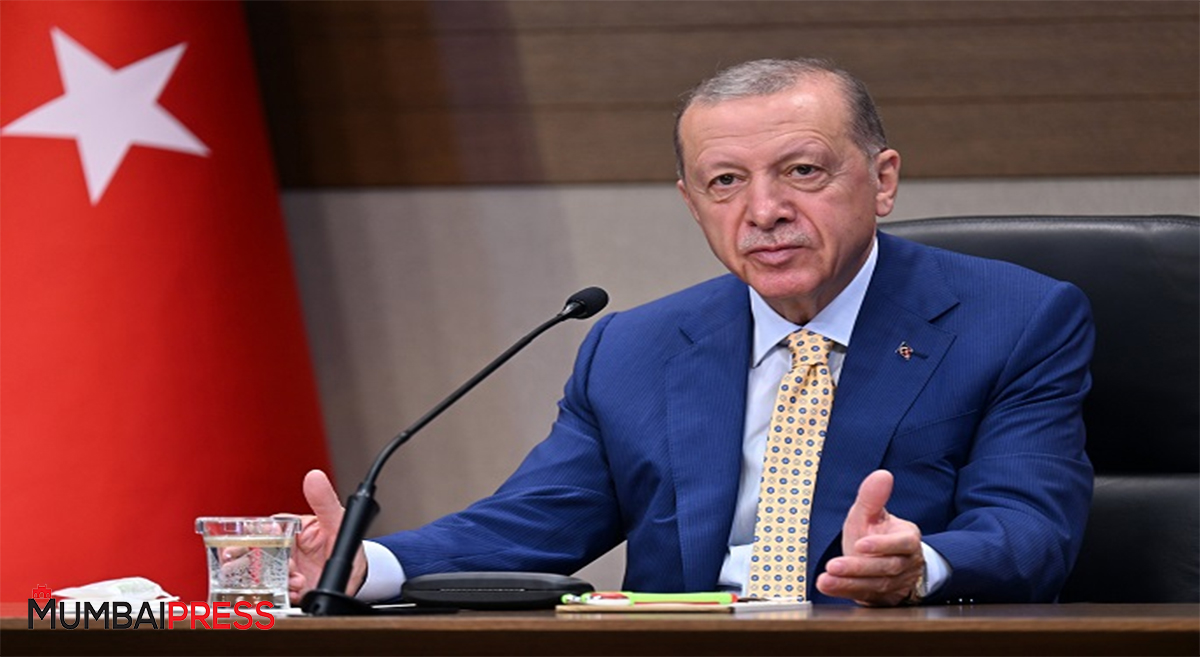
Istanbul, October 21: Turkish President Recep Tayyip Erdogan has urged Israel to halt its military offensive in Gaza, warning that further escalation would only bring “more pain, death and tears”. “Expanding attacks on Gaza will bring nothing but more pain, death and tears,” Erdogan wrote on microblogging website X.
Erdogan repeated his call for Israel to stop “its attacks against civilians” and end the operation that began on October 7, when Hamas militants fired thousands of rockets at Israel and seized hundreds of hostages.
‘Security cannot be ensured by bombing hospitals’
“It is clear that security cannot be ensured by bombing hospitals, schools, mosques, and churches,” he added. Erdogan also appealed to all countries and international organizations to “sincerely support the efforts to establish an immediate humanitarian ceasefire in Gaza”, pledging Turkey’s continuous efforts to de-escalate the situation.

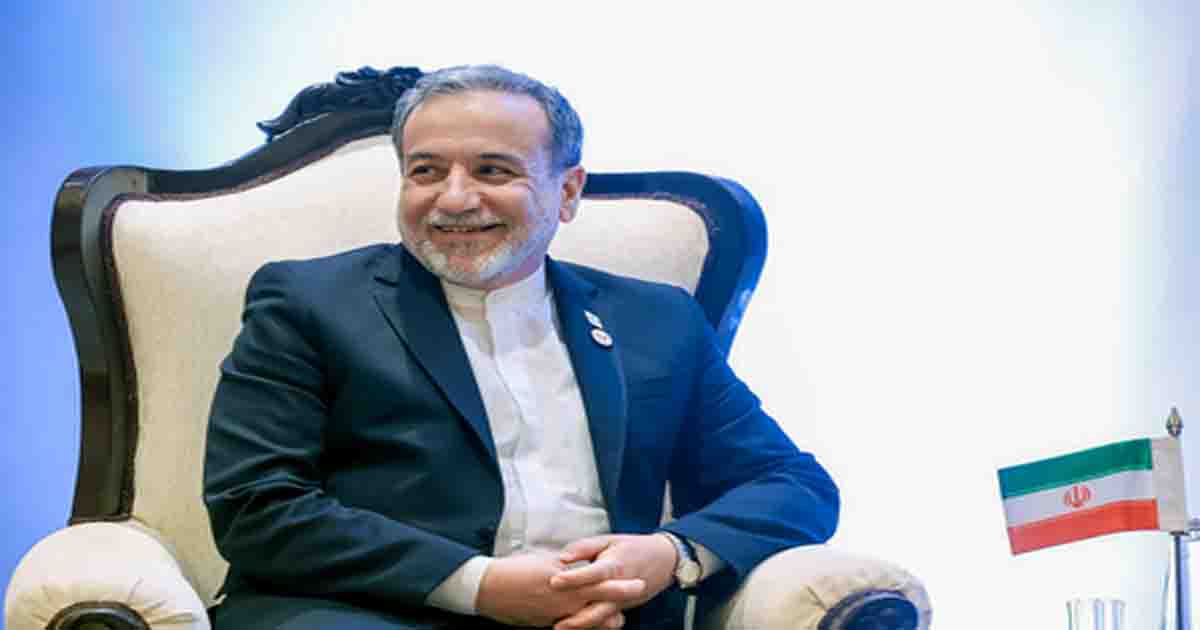
Tehran, Oct 1: Iranian Foreign Minister Seyed Abbas Araghchi rejected on Thursday the British government’s claim that Iran has “played a part” in a recent incident near the Royal Air Force (RAF) Fairford, a base hosting the US Air Force in southwest England.
British police on Sunday detained five men, all in their 20s, on suspicion of “explosives and terrorism offences” in the Gloucestershire countryside near the air base after they were informed that three vans had been seen heading to the base, Xinhua News Agency reported.
Araghchi issued the denial in a post on social media platform X Thursday, a day after British Prime Minister Andy Burnham said in an interview with BBC News, “There are strong indications that Iran played a part in what happened over the weekend at RAF Fairford, but of course it remains an ongoing, complex, and serious police investigation.”
On Monday, the five individuals were all released on police bail after an examination of what was found in the vans and an investigation into the addresses linked to them across London.
“PM Burnham says the UK Government ‘can confirm our belief that we believe Iran to have played a part’ in the RAF Fairford incident,” said Araghchi, adding, “I can confirm Iran’s belief that releasing supposed terrorists working for foreign states really says it all. You’re barking up the wrong tree.”
Britain’s decision to grant the suspects bail was criticised by US officials, including President Donald Trump. US Secretary of State Marco Rubio said he had been “disturbed” by the move.
Trump also said that the United States would win its war with Iran “very quickly”, claiming Tehran’s military capabilities had been severely degraded and Washington had established “virtually total control” of the strategically vital Strait of Hormuz.
Trump made the remarks on Wednesday (local time) during a White House event marking National Hispanic Heritage Month, where he ranged across foreign policy issues including Iraq, Iran and Venezuela before turning to the theme of the celebration.
International News
‘True superhero, showed extraordinary courage’: Israeli diplomat hails Captain Smit Machchhar

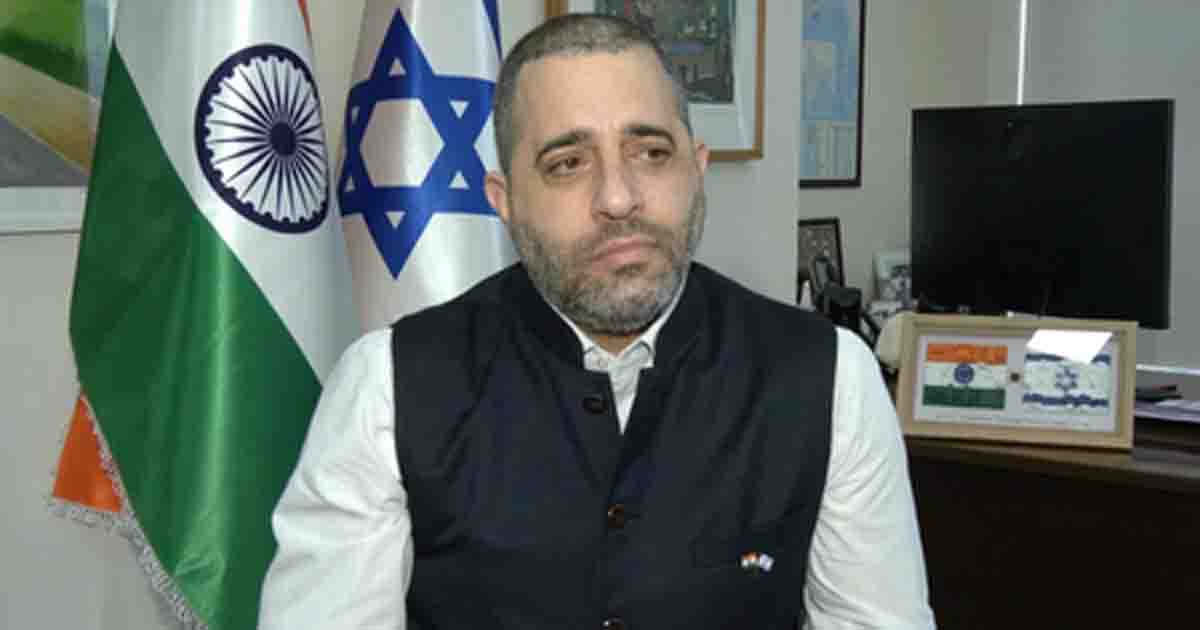
Mumbai, Oct 1: Israel’s Consul General to Midwest India, Yaniv Revach, on Thursday hailed Captain Smit Machchhar, the Indian pilot of FlyDubai flight FZ1073, who was seriously injured while averting a major in-flight crisis on Wednesday. Revach described Machchhar as a “true superhero” who “showed extraordinary courage and fought” to protect his passengers.
In an interview with media, Revach said that Israel and India are proud of Captain Smit Machchhar and that both nations stand together against terrorism.
“What happened yesterday was shocking. Innocent people boarded the plane expecting to reach their families safely, and instead their lives were put in danger. My message to the Israelis is very, very simple: we will never allow terror and fear to control our lives. We will continue to travel and live and stand strong together,” he said.
The co-pilot of a FlyDubai flight, which was carrying over 170 passengers, on Wednesday, tried to sabotage the aircraft and stabbed Captain Smit Machchhar, who was trying to prevent him from doing so.
At the time, the Boeing 737, cruising at about 34,000 feet, began dropping at roughly 23,000 feet per minute before reaching about 15,600 feet. However, Machchhar fought back the co-pilot, resisted him, and opened the cockpit door so that passengers and crew members could overpower him.
Revach said that the Indian pilot and Israeli passengers fought together to save the lives of people, terming it the “true spirit” of India-Israel friendship.
“Captain Smit is a true superhero. He risked his own life. He showed extraordinary courage and fought to protect his passengers. He was not just saving passengers, he was saving entire families, fathers, mothers, children from a huge tragedy. Captain Smit stood up for Israel. This is what friendship is all about. India and Israel are very proud of him. From the bottom of my heart, we salute you, Captain Smit. This is the true spirit of India-Israel friendship. We stand together against terror.”
Revach said that he is disappointed that international media reported the incident as if it was a fight between the pilots and described it as a “false narrative.” He stated that Israel and India have been working together in the fight against terrorism and both nations face the same challenges when it comes to the radical Islamic groups.
“I am deeply disappointed by the way the international media is reporting this incident. It was not a fight between two pilots. This is a false narrative. The media has responsibility, but unfortunately they have double standards. Another clear message I want to emphasise on, first of all, I am deeply concerned about the role of Qatar of spreading the anti-Israel narrative and promote radical Islam agenda.
“Qatar and Oman, they have ties with Iran, and it raises serious concerns, and this has to be stopped. Now I want to emphasise that Israel and India are working closely together for decades already on the fight against terrorism. Both countries face the same challenges when it comes to the radical Islamic groups and of course, their activities. And, I hope that we will continue to work together in order to confront these terror activities,” he added.
Revach emphasised that the story of Captain Smit is the “true story” of friendship between India and Israel and mentioned that he spoke to the Indian pilot’s family.
“I’m sure that his family is so proud of the way that they raised him that he actually fought against terror and he actually risked his own life to protect other people, the Israelis, on board the plane. I spoke to his family, and I will be honoured to meet them. The fact that he came from Mumbai makes it even more personal. Mumbai has given Israel a hero, and we will never forget it. His parents and his family should be extremely proud of the man they raised.”
He said that Israel trusts the UAE government and their security and expects Saudi Arabia to carry out a full and transparent investigation into the FlyDubai flight incident.
“First of all, I want to say that we fully trust the Emirati government and their security procedures. We also expect that the Saudis will conduct a full, transparent investigation. The attacker, we should not forget, was an Omani co-pilot. This raises serious concerns about radicalisation and hatred against Israelis. Again, I emphasise that we must fight terrorism, but we also must fight hatred and incitement that can lead to terrorism on social media and on media platforms. We will not allow terror to stop us from living our lives on a daily basis.”
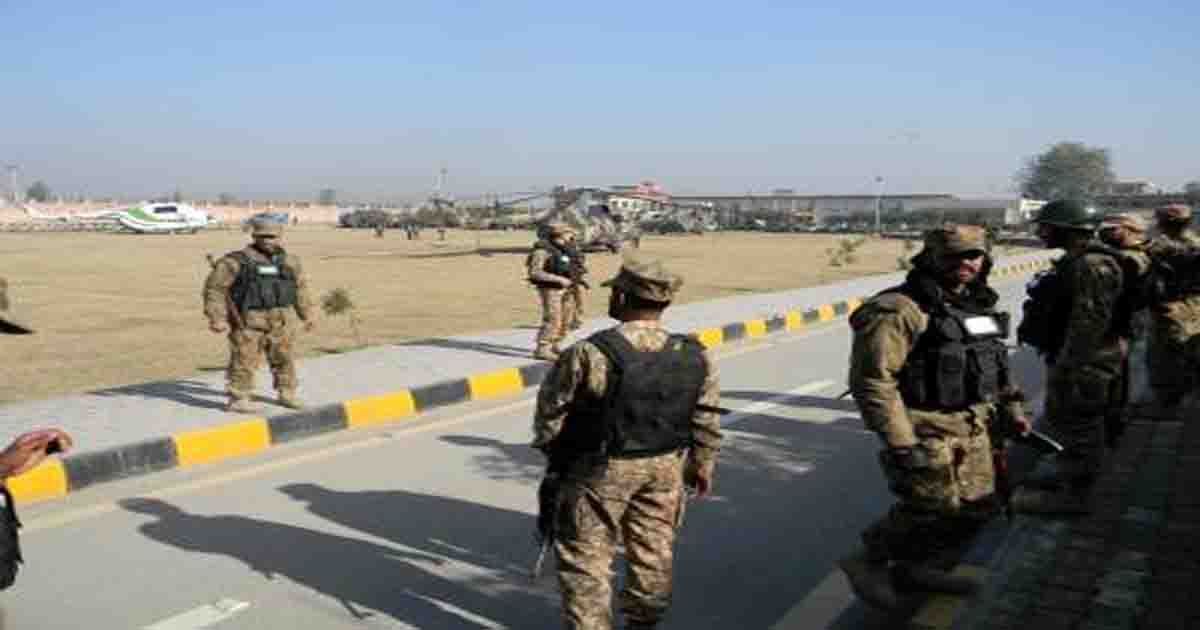
New Delhi, Oct 1: Pakistan Inter-Services Intelligence (ISI) has reportedly launched a massive drive to recruit retired army and navy personnel into terror outfits to bypass training delays and lead operations in Jammu and Kashmir, according to intelligence officials.
The tactical shift follows acute recruitment shortages faced by terror groups, including the Lashkar-e-Taiba (LeT), Jaish-e-Mohammed (JeM), and Hizbul Mujahideen after Operation Sindoor.
It is well known that following Operation Sindoor in May last year, terror outfits such as the Lashkar, Jaish and Hizbul Mujahideen have faced difficulties in recruiting new cadres.
Although recruitment has picked up pace, the challenge remains that these recruits require extensive training before they can be considered ready to carry out terror operations against India.
An official said that in order to overcome this gap and to make these groups operation-ready faster, the ISI has been looking for retired Pakistani army personnel.
While Pakistan has extensively used its former army personnel in the past, this time it is looking to recruit a much bigger number into the terror groups.
“Former soldiers and commandos are the preferred choice. They are operation-ready and would require a bare minimum amount of training before they can be sent out to carry out terror operations in Jammu and Kashmir,” the official said.
Another official said that the ISI used former army and navy personnel to be part of terror operations. The focus had, however, been on them imparting training when it comes to terror operations, fidayeen attacks, and also logistics.
The 26/11 Mumbai attacks also highlighted the extensive role allegedly played by Pakistan’s military establishment. Individuals such as Major Iqbal were reported to have been involved in the training of the attackers. They were also said to have been present alongside the handlers in Karachi, providing instructions to the 10 terrorists who entered Mumbai on the night of November 26, 2008.
The official added that the ISI, with the assistance of Pakistan’s army, has been preparing a list of personnel who have retired or have resigned from the Pakistan army.
“They are being offered huge incentives to be part of the terror groups that have focused their operations largely on Jammu and Kashmir,” the official said.
An Intelligence Bureau official said Pakistan was not planning a major attack in the immediate future. However, the country wants its terror groups to remain fully operational and prepared to carry out attacks when required.
Once these retired personnel are picked, they would be sent to the launchpads in Pakistan-occupied Kashmir (PoK).
“Currently at the launchpads, the terrorists are divided into batches of three. There is one terrorist each from the Jaish-e-Mohammed, Lashkar-e-Taiba and Hizbul Mujahideen in each batch,” the official said.
The ISI, according to the official, intends to include a retired and fully operationally ready soldier in each of these groups. Such personnel could lead the attacks more effectively because of their experience. Having served in the field for several years, they are also familiar with the terrain and other logistical aspects involved in such operations.
“Further, a retired soldier will command more respect in the respective batch he is posted in. Those operatives under him will derive a lot from his experience on the battlefield,” the official said.
The focus is more on the Lashkar at the moment, and such personnel are being recruited into this group.
“Compared with the Jaish and Hizbul Mujahideen, the Lashkar appears to be better prepared to carry out an operation in Jammu and Kashmir. The outfit has, for now, resolved its leadership issues, with Hafiz Saeed’s son, Talha Saeed, taking complete control,” officials said.
By recruiting former army personnel, the ISI can bypass one crucial stage, namely radicalisation, officials said.
Such individuals, they added, may already have undergone extensive ideological conditioning during their training and service, making them more readily deployable for violent operations. The strategy is also seen as part of Pakistan’s long-standing reliance on the “bleeding by a thousand cuts” doctrine against India.
With very basic training required and radicalisation not needed, it makes perfect sense for the ISI to rope in retired army personnel to be part of these terror groups, another official said.

Iran rejects Britain’s claim of involvement in military base incident

CJP’s Dipke dares Fadnavis govt to arrest him ahead of Mumbai agitation

Maha Dy CM urges simple Navratri celebrations, appeals for aid to drought-hit farmers

Malegaon 2006 Blast Case: Supreme Court Stays Bombay High Court’s Remarks Against Muslim Accused Discharged from the Case

Maha govt announces major loan relief, expanded drought coverage for farmers

Gift to President Putin part of PM Modi bid to globally display India’s heritage

PM Modi’s warm camaraderie with Putin, Xi on full display at BRICS Summit

BMC takes action against Mumbai Central Orchid City Mall; mall shut down.

Nepal PM calls for global response to rising Himalayan climate risks

Corporators of all parties in trouble! Corporators of all major parties including Shiv Sena (UBT), BJP and Congress are facing legal challenges.
-

 Crime4 years ago
Class 10 student jumps to death in Jaipur
-

 Maharashtra2 years ago
Mumbai Local Train Update: Central Railway’s New Timetable Comes Into Effect; Check Full List Of Revised Timings & Stations
-

 Maharashtra2 years ago
Mumbai To Go Toll-Free Tonight! Maharashtra Govt Announces Complete Toll Waiver For Light Motor Vehicles At All 5 Entry Points Of City
-

 Maharashtra2 years ago
False photo of Imtiaz Jaleel’s rally, exposing the fooling conspiracy
-

 National News2 years ago
Ministry of Railways rolls out Special Drive 4.0 with focus on digitisation, cleanliness, inclusiveness and grievance redressal
-

 Maharashtra2 years ago
Maharashtra Elections 2024: Mumbai Metro & BEST Services Extended Till Midnight On Voting Day
-

 National News2 years ago
J&K: 4 Jawans Killed, 28 Injured After Bus Carrying BSF Personnel For Poll Duty Falls Into Gorge In Budgam; Terrifying Visuals Surface
-

 Crime2 years ago
Baba Siddique Murder: Mumbai Police Unable To Get Lawrence Bishnoi Custody Due To Home Ministry Order, Says Report