
International News
Trump says US could take Iran’s Kharg Island

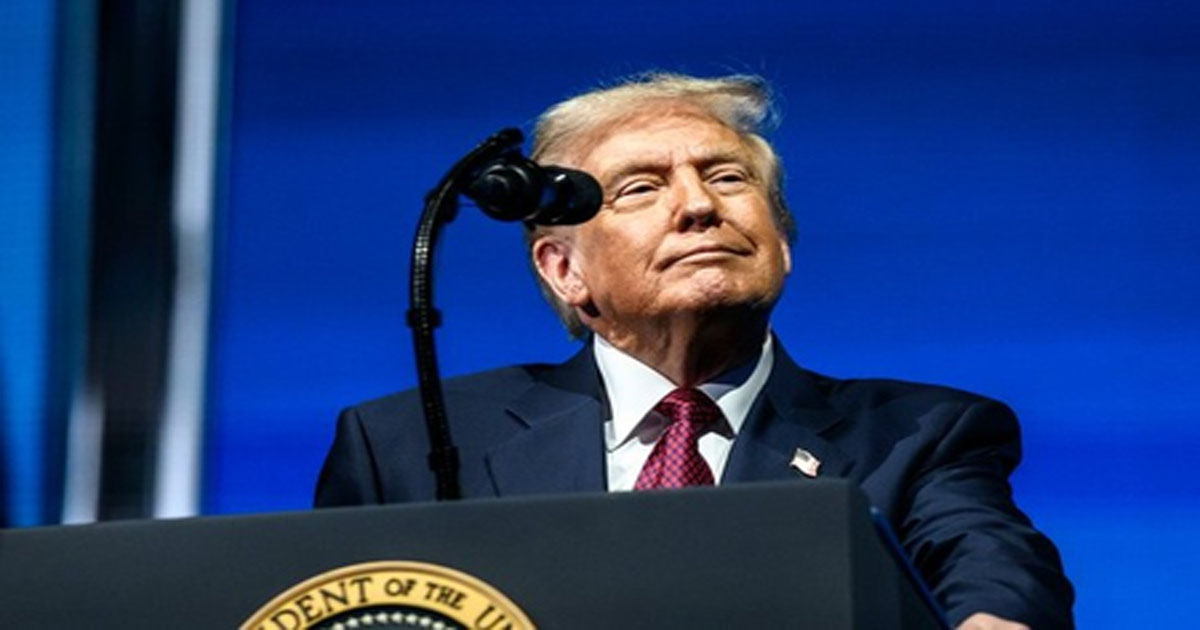
Washington, March 30: US President Donald Trump said that he wants to “take the oil in Iran” and could seize Kharg Island, the country’s oil export hub.
In an interview with the Financial Times, Trump said, “To be honest with you, my favourite thing is to take the oil in Iran,” comparing the US move to Venezuela, where Washington intends to control the oil industry “indefinitely” after it forcibly seized President Nicolas Maduro in January, Xinhua news agency reported.
Taking Iranian oil would involve seizing Kharg Island, through which over 90 per cent of Iran’s oil is exported, the Financial Times reported, warning that such “an assault” risks raising casualties and prolonging the war.
“Maybe we take Kharg Island, maybe we don’t. We have a lot of options,” it quoted Trump as saying. “It would also mean we had to be there for a while.”
He added that he believed Iran had little or no defence on the island. “We could take it very easily,” he said.
Trump’s remarks came as he steps up the US military buildup in the Middle East while weighing a military operation to extract nearly 1,000 pounds of uranium from Iran, according to US officials.
He has also encouraged his advisers to press Iran to agree to surrender the material as a condition for ending the war, The Wall Street Journal reported, citing an anonymous source familiar with Trump’s thinking.
The Pentagon is reportedly deploying up to 10,000 additional ground troops to the region, with the US Central Command announcing Saturday that over 3,500 troops, including 2,500 Marines, had arrived in the Middle East.
Despite the threat, Trump noted that indirect talks between the United States and Iran via Pakistani “emissaries” were making progress. “A deal could be made fairly quickly,” he said.
Oil prices have surged since the United States and Israel launched massive attacks on Iran on February 28, with Brent crude rising as high as $119.5 a barrel in March, the highest since June 2022.

International News
Indian killed in Iran strike on Kuwait plant; toll rises to 8 in West Asia conflict

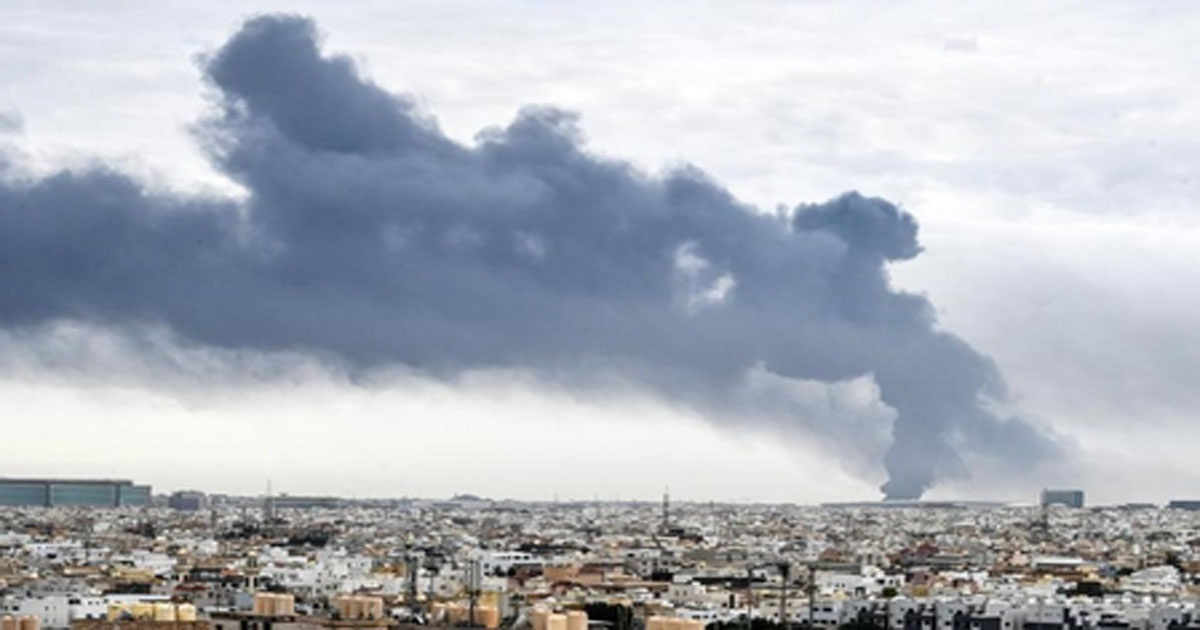
Kuwait City, March 30: An Indian worker was killed in a strike carried out by Iran on a power and water desalination facility in Kuwait early on Monday, the Kuwaiti government announced. This has now pushed the number of Indian nationals killed in the ongoing West Asia conflict to at least eight.
In a post on X, Kuwait’s Ministry of Electricity and Water confirmed that the attack also caused damage to a service building at the facility and strongly condemned it as a “sinful Iranian aggression” against the Gulf nation.
“This attack resulted in the death of an employee (of Indian nationality) and caused severe material damage to the building,” the Ministry said in Arabic (roughly translated to English).
Officials added that emergency and technical response teams were immediately deployed to the site to manage the situation, contain the damage, and ensure that operations at the facility continued without major disruption.
The Ministry further emphasised that the “safety and stability of the electricity and water infrastructure constitute a top priority,” noting that technical teams are actively working to anticipate any further risks and ensure uninterrupted delivery of essential services.
The latest fatality comes days after another tragic incident in the United Arab Emirates, where an Indian national lost his life last Thursday after being struck by falling debris when a ballistic missile was intercepted over Abu Dhabi.
At the time, the Indian Embassy had said it was “closely working with the UAE authorities to provide all possible support and assistance” to those affected.
Following an inter-ministerial review meeting held on Friday, the government had stated that seven Indian nationals had been killed in the Middle East conflict so far, with one person reported missing. Monday’s incident has now taken the death toll higher.
The conflict, which has now entered its fifth week, erupted after the United States and Israel launched coordinated strikes on Iran, triggering a broader regional escalation.
Since then, Iranian forces have carried out retaliatory drone and missile attacks targeting Israel as well as Gulf countries hosting American military installations, leading to casualties and significant damage to critical infrastructure across the region.
International News
Pakistan’s US-Iran mediation bid hits trust deficit, tests ties with Tehran and Riyadh
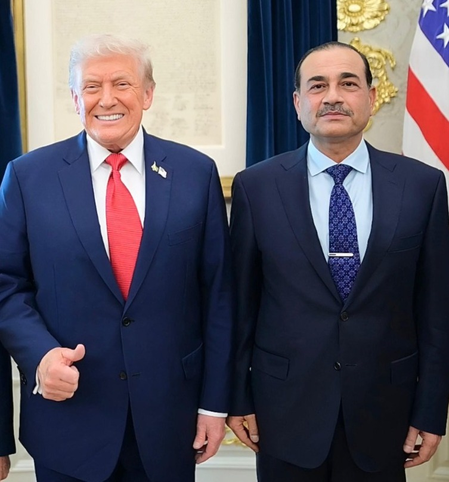
Pakistan has indicated that it is willing to mediate between the United States and Iran to ease the ongoing West Asia conflict, with Islamabad proposing a back-channel approach to convey messages between the two sides.
However, officials in India say that the effort may face serious challenges. They note that Pakistan is attempting to project itself as a peacemaker even as it remains engaged in tensions along its western front.
A key difficulty lies in balancing its ties with both Iran and Saudi Arabia. Iran regards both the US and Saudi Arabia as adversaries, while Pakistan maintains close strategic and military links with Riyadh. A bilateral security understanding between Pakistan and Saudi Arabia treats aggression against one as a concern for both.
Officials point to the growing mistrust in Iran towards Pakistan. Tehran is said to believe that Islamabad has used its goodwill in ways that indirectly benefit the United States. This perception appears to have been reinforced by a recent development at the Strait of Hormuz.
Iran has allowed limited passage to vessels from select friendly nations, including Pakistan. As part of this move, around 10 Pakistani ships were permitted to transit the Strait of Hormuz. However, the coordinated movement of these vessels was seen as indirectly benefiting the United States.
Tehran, however, is understood to have viewed the episode differently, interpreting Pakistan’s role as an attempt to maintain favour with the US while leveraging Iranian concessions.
Another challenge for Pakistan lies in its ties with Saudi Arabia. Under their military understanding, Islamabad was expected to support Riyadh, which has faced attacks linked to Iran. Its decision to stay away has caused unease in Saudi circles, prompting the kingdom to explore defence cooperation with Ukraine. Kyiv is seen as a battle-tested partner, with years of conflict experience against Russia and operational expertise in countering Iranian-made Shahed drones.
Saudi Arabia had expected Pakistan to stand by it during this period of strain. However, Islamabad, a State that allegedly exports and breeds terror, chose to limit its role to diplomatic engagement. An official said Riyadh, which has long regarded Pakistan as a security partner, feels let down as it sees Islamabad focusing on mediation between the United States and Iran rather than supporting an ally.
Saudi Arabia has provided financial assistance to Pakistan on several occasions in the past, helping it through periods of economic strain. However, recent developments have led to growing disillusionment within the Saudi kingdom’s senior leadership.
Another official said Pakistan is currently not able to extend military assistance to Saudi Arabia. Its forces remain engaged in operations against the Afghan Taliban, the Tehreek-e-Taliban Pakistan (TTP) and the Balochistan Liberation Army (BLA). The sustained pressure on the military has limited its ability to offer deployments or air support to Saudi Arabia.
With developments affecting its ties with both Saudi Arabia and Iran, Indian diplomats believe it may be difficult for Pakistan to broker a peace agreement. They point out that such negotiations depend heavily on trust, and any reservations from one of the parties could complicate efforts towards a settlement.
On Saudi Arabia, Pakistan has avoided taking a clear position, a stance that has reportedly displeased Crown Prince Mohammed bin Salman. Iran, on the other hand, believes Islamabad has used its goodwill in ways that benefit the United States, which it regards as an adversary.
Observers say Pakistan’s approach appears driven less by mediation and more by an effort to project itself as a proponent of global peace while trying to extract maximum benefits out of both Iran and the US.
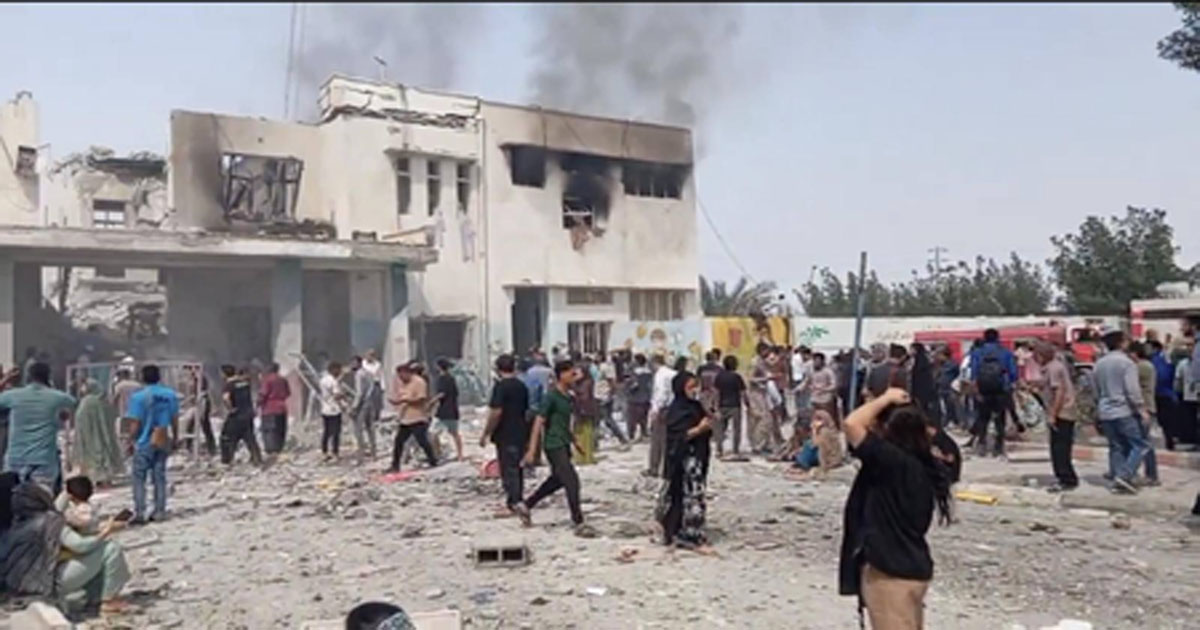
Tehran, March 27: The brutal attack on Shajareh Tayyebeh Girl’s School in Iran’s Minab cannot be justified, covered up, and must not be met with silence and indifference, Iran’s Foreign Minister Seyyed Abbas Araghchi told the United Nations Human Rights Council (UNHRC) during an urgent debate held on Friday afternoon.
In his speech at the emergency session, the Iranian Foreign Minister stated that his country is in the midst of an “illegal war” right now which has been imposed on it by “two bullying” nuclear-armed regimes, the United States and Israel.
“This war of aggression is clearly unjustified and extremely brutal. They launched this aggression on February 28 while Iran and the United States were engaged in a diplomatic process to resolve alleged US concerns about Iran’s nuclear programme. For the second time in nine months, they have betrayed diplomacy by disrupting and destroying the negotiating table,” said Araghchi.
Among the most horrific manifestations of this aggression, he said, was the “calculated and staged attack” on the Shajareh Tayyebeh elementary school in the city of Minab in southern Iran, where more than 175 students and teachers were “massacred in a completely deliberate and brutal manner”.
“This brutal attack is merely the visible tip of a much larger iceberg; one that hides beneath its surface far worse atrocities, including the normalisation of the most egregious violations of human rights and humanitarian law, and the audacity to commit heinous crimes in a climate of complete impunity. At a time when the American and Israeli aggressors, as they claim, have the most advanced technologies and the most precise military and data systems, no one can believe that the attack on this school was anything other than a deliberate and premeditated act,” he stated.
Addressing the session virtually, Araghchi mentioned that the targetting of the Iranian school is a “war crime” and a “crime against humanity” that requires unequivocal and unconditional condemnation by all.
“This tragedy cannot be justified, cannot be covered up, and must not be met with silence and indifference. The attack on the Shajareh Tayyebeh school in Minab was neither a mere accident nor a miscalculation. The contradictory statements made by the United States to justify this crime cannot absolve them of their responsibility. Condemning such a brutal attack on an inherently civilian place, where the most innocent people are present and seeking knowledge, is not simply a legal obligation within the framework of human rights systems; it is a moral and human imperative. Our conscience will judge us far more profoundly than any court of law,” the Iranian Foreign Minister added.
He went on to add that the elementary school has not been the “only victim of the heinous crimes committed by the US and Israel” during the past 27 days of the war.
“Human rights and international humanitarian law have been widely and systematically violated by the aggressors in an unprecedented and extremely brutal manner. They have targetted civilians and civilian infrastructure with complete disregard for the laws of war and the fundamental principles of humanity and civility. More than 600 schools across Iran have been destroyed or damaged, resulting in the deaths or injuries of more than a 1000 students and teachers. The aggressors, who arrogantly shout ‘there is no mercy or respite’ and threaten Iran with attacks on vital infrastructure, have targetted hospitals, ambulances, medical workers, Red Crescent aid workers, refineries, water sources, and residential areas.”
He urged the United Nations to unequivocally condemn the “aggressors” highlighting that Iran has never sought war.
“Iranians are a peaceful and noble nation, heirs to one of the richest civilizations in the world. However, they have shown complete and unwavering determination to defend themselves against ruthless aggressors who know no bounds in committing all kinds of crimes; a defense that will continue for as long as necessary,” Araghchi concluded.
The urgent debate has been convened following an official request submitted by Iran, China and Cuba. According to the UNHRC, the Minab school strike of February 28 will be discussed in the context of the “protection of children and educational institutions in international armed conflicts”, as outlined in the request. The programme of work for the ongoing 61st regular session of the Human Rights Council has been adjusted to include this urgent debate.

Mumbai: JCB Rams Into Compound Wall At Bandra’s Pali Hill, Debris Damages 2 Parked Cars In Residential Society

Trump says US could take Iran’s Kharg Island

Mumbai Infra: Gargai Dam Proposal Cost Slashed After Review, BMC Saves ₹344 Crore

Centre okays Berth redevelopment at New Mangalore Port to boost maritime efficiency

Indian killed in Iran strike on Kuwait plant; toll rises to 8 in West Asia conflict

Married Mumbai Woman Mocked In Andheri Society Over ‘Lift Kissing’ CCTV Video, Files Police Complaint

LPG Crisis In Maharashtra: Cyber Crime On Rise Amid Shortage, 2 Women Lose ₹4 Lakh In ‘Gas Update’ Online Scam In Kalyan-Dombivli

Mahayoti’s big gift to the people of Mumbai… Now there is no tax for houses up to 500 square feet, the Municipal Corporation has increased this limit to 700 square feet.

Rashmika Mandanna-Vijay Deverakonda Wedding: Virosh Turn Modern Day Prince & Princess For Their Dreamy Sangeet Ceremony

Govandi ISIS propaganda case: Ayan arrested… Anjuman-e-Islam Kalsekar College also on the radar, how did the second student come into contact with ISIS, investigation underway
-

 Crime4 years ago
Class 10 student jumps to death in Jaipur
-

 Maharashtra1 year ago
Mumbai Local Train Update: Central Railway’s New Timetable Comes Into Effect; Check Full List Of Revised Timings & Stations
-

 Maharashtra1 year ago
Mumbai To Go Toll-Free Tonight! Maharashtra Govt Announces Complete Toll Waiver For Light Motor Vehicles At All 5 Entry Points Of City
-

 Maharashtra2 years ago
False photo of Imtiaz Jaleel’s rally, exposing the fooling conspiracy
-

 National News1 year ago
Ministry of Railways rolls out Special Drive 4.0 with focus on digitisation, cleanliness, inclusiveness and grievance redressal
-

 Maharashtra1 year ago
Maharashtra Elections 2024: Mumbai Metro & BEST Services Extended Till Midnight On Voting Day
-

 National News2 years ago
J&K: 4 Jawans Killed, 28 Injured After Bus Carrying BSF Personnel For Poll Duty Falls Into Gorge In Budgam; Terrifying Visuals Surface
-

 Crime1 year ago
Baba Siddique Murder: Mumbai Police Unable To Get Lawrence Bishnoi Custody Due To Home Ministry Order, Says Report