
National News
TN Assembly passes resolution urging Centre to withdraw Waqf Bill; BJP walks out


Chennai, March 27: The Tamil Nadu Legislative Assembly on Thursday unanimously passed a resolution urging the Union government to withdraw the Waqf (Amendment) Bill, 2024, citing concerns that it undermines the interests of Muslims in the country.
While all major political parties, including the AIADMK, supported the resolution, the BJP staged a walk-out ahead of the vote.
Chief Minister M.K. Stalin, who moved the resolution, said the Indian Constitution guarantees all religious groups the right to practice and preserve their faith, and it is the duty of a democratically-elected government to uphold these rights.
He expressed strong opposition to the proposed amendments to the Waqf Act, 1954, stating that they would severely impact Muslim minorities.
CM Stalin further noted that DMK representatives A. Raja and M.M. Abdullah, who are members of the Joint Parliamentary Committee (JPC), were not allowed to voice their opinions on the proposed changes during committee discussions.
In a display of democratic courtesy, CM Stalin also requested Speaker M. Appavu to allow BJP leader Vanathi Srinivasan to express her views on the matter.
He added that the DMK has consistently upheld democratic values by allowing Opposition voices to be heard in the Assembly.
Speaking in defence of the Bill, Vanathi Srinivasan said the Centre had decided to amend the Waqf Act following numerous complaints regarding irregularities in the management of Waqf properties across various states.
She maintained that the Bill aims to protect the interests of the “backward sections” of the Muslim community and to ensure better representation for women.
However, Tamil Nadu Law Minister, S. Regupathy, countered her claims, stating that the views of certain JPC members were ignored during discussions.
He further described the Waqf Amendment Bill as an “economic assault” on the Muslim community.
PMK leader G.K. Mani said the Bill should only proceed if the Union government is able to build a consensus among all stakeholders.
AIADMK member S.P. Velumani also voiced support for the resolution, adding to the united front against the Bill.
The Assembly concluded by reiterating its demand that the Union government fully withdraw the controversial Waqf (Amendment) Bill, 2024.

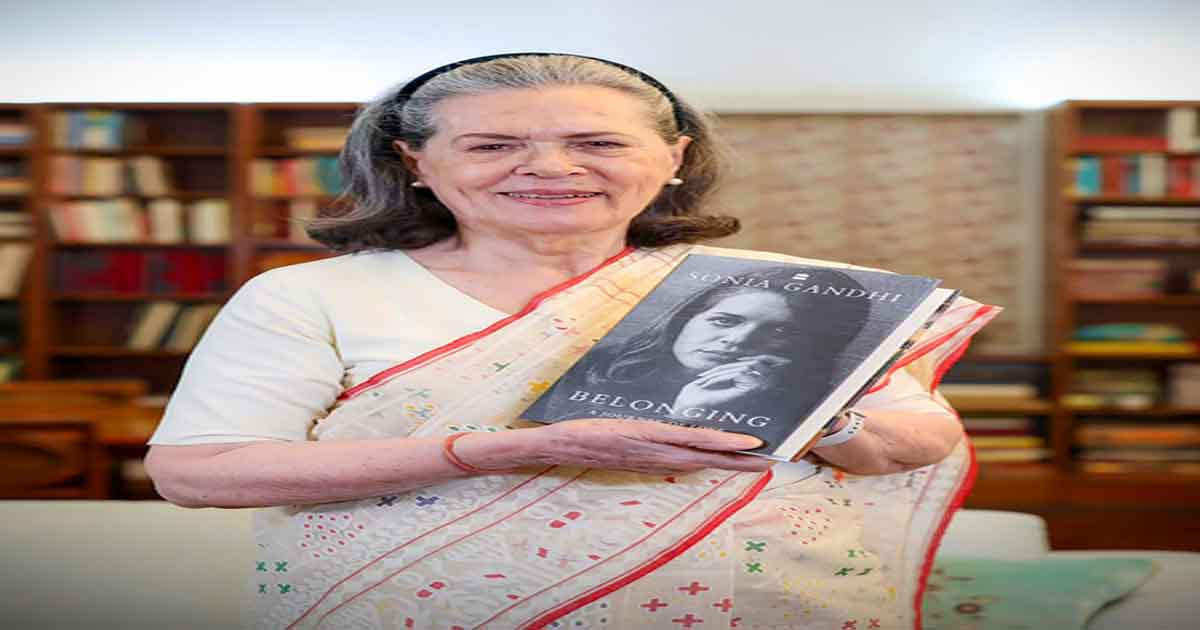
There is something quite intriguing about political memoirs, especially when they concern one of the most powerful political families in the country. The Gandhi family and its leaders have, over the decades, guarded their political secrets, maintained a carefully cultivated public image and kept internal differences, whether within the family or the party, behind closed doors.
But suddenly, one of the most powerful members of the family has decided to be candid and put her life story on paper.
Sonia Gandhi’s recently published memoir, ‘Belonging: A Journey of Love’, has brought out several uncomfortable questions about the family, the Congress party, its leadership and the way power was actually exercised during the UPA years, etc.
Equally interesting is the timing of its release, coming at a time when the family has been trying to build narratives, both political and personal, around Rahul Gandhi.
The irony is that a party which has repeatedly accused its political opponents of distorting history is now finding itself answering questions arising from the recollections of its own first family.
Whether the memoir is also an attempt to invigorate the party’s somewhat sullen cadres or build an aura around Rahul Gandhi, who has lately adopted an increasingly aggressive political posture on several issues, is open to interpretation. Whatever the intention, the book has raked up considerable controversy.
What makes the revelations particularly interesting is that they concern people who were not ordinary political functionaries but some of the most powerful names in the Congress establishment.
Take the case of former President Pranab Mukherjee. Sonia Gandhi has recalled a conversation with him in 2010. “On one occasion, in 2010, I think after expressing his frustration, he shocked me with the suggestion that perhaps it was time for a change at the top, which I understood as a hint of his long-held desire to become Prime Minister,” Sonia Gandhi writes in her book.
She understood this as his long-held desire to become Prime Minister, and the suggestion apparently came as a shock to her. Now, there is nothing unusual about a senior political leader aspiring to become Prime Minister. In fact, it would be rather surprising if someone with Pranab Mukherjee’s experience, political standing and years in government did not harbour such an ambition.
However, it was the reaction of his daughter, Sharmistha Mukherjee, that made the episode even more interesting. Her response reflected a certain uneasiness within the Gandhi family when it came to senior leaders asserting their own political ambitions.
Questioning why Sonia Gandhi was shocked by her father’s ambition, Sharmistha pointed out that Pranab had earned his position through decades of hard work and merit, without anybody serving him political positions on a platter because of dynastic entitlements. She even raised the uncomfortable question of whether Sonia was surprised that somebody outside the Gandhi-Nehru family could aspire to become the Prime Minister.
That was quite a pointed observation. And it has brought back a question that the Congress party has never been particularly comfortable answering. Does the party genuinely provide an equal opportunity to its senior leaders to rise to the top, or does the Gandhi family continue to remain the final authority on who gets what position and how far somebody can go?
The memoir also revisits another controversy that has followed Sonia Gandhi for years — whether she was the real power behind the Manmohan Singh government. Sonia has maintained that there was a clear division of responsibilities, with former PM Manmohan Singh running the government and her taking care of the party. She has rejected allegations that she interfered in official files, administrative matters, or appointments.
However, the political reality of the UPA years was that Sonia Gandhi was not just another Congress President. She was the chairperson of the UPA and the most powerful political figure in the ruling establishment. The National Advisory Council, the coordination mechanism between the party and the government, and the regular meetings of senior leaders were all part of a political arrangement in which her influence was undeniable.
There is a difference between exercising political influence and interfering in government functioning. But the perception that the Prime Minister’s authority was often overshadowed by the Congress leadership did not emerge out of thin air. It became one of the most persistent political criticisms of the UPA government. Sonia’s explanation may put forward her side of the story, but it is unlikely to put the controversy to rest. In fact, the book somehow deepens the thought.
The memoir has also reopened the debate over some of the most difficult chapters in Congress’ history, including the Emergency imposed by Indira Gandhi in 1975 and the anti-Sikh riots of 1984. Sonia describes the riots as a tragic episode and speaks of the failure to deliver timely justice. Her account has drawn criticism, particularly over the manner in which the responsibility and role of the Congress leadership are presented. She has also sought to defend her husband, Rajiv Gandhi, who succeeded his mother Indira Gandhi as the Prime Minister after her assassination in 1984, against allegations of complicity in the events that followed.
Even more interesting is her account of the Emergency and the manner in which she appears to place much of the blame for its excesses on Sanjay Gandhi, her brother-in-law. It is also interesting how she approaches the bitter family relations involving her sister-in-law, Maneka Gandhi. The differences between the two branches of the family, which eventually became public, add another dimension to the account of a family that was not only at the centre of Indian politics but also had its share of internal conflicts.
Political memoirs are, after all, personal accounts. Nobody should expect a leader to write a chargesheet against herself or her own family. But when the subject is a political party that has governed India for decades, its history cannot be treated as a purely family matter.
The events, decisions and personalities involved have shaped the country’s political course and therefore deserve public scrutiny.
Many questions remain unaddressed in the memoir. What about the Quattrocchi-Bofors controversy, the various scams that dogged the UPA years, the questions surrounding her voter ID, or the allegations of minority appeasement in the Babri Masjid and Batla House episodes, or the 2002 Gujarat riots? While she said the riots deeply affected her, Sonia failed to mention the plight of the Kashmiri Pandits who were forced to flee the Valley in the early 1990s. She talked about Kashmiri traditions and delicacies, but omitted the displacement and suffering of Kashmiri Hindus. These are issues that have been part of the country’s political debate for years, and readers may well have expected some answers.
And this is precisely where Congress finds itself in an uncomfortable position. For years, the party has spoken about its democratic traditions, institutional values and glorious political legacy. Questions about internal democracy, leadership succession and the extraordinary influence of one family have continued to follow it.
The family, too, has guarded its secrets rather well over the decades. But Sonia’s memoir now provides an account that, inevitably, represents only one side of the story. There will be others who may have a very different recollection of the same events.
Congress may have guarded its family secrets for years, but political memoirs have a way of bringing old conversations back into public life. And Sonia Gandhi’s book has sought to layer more secrets, as it provides a guided perspective and glimpse.
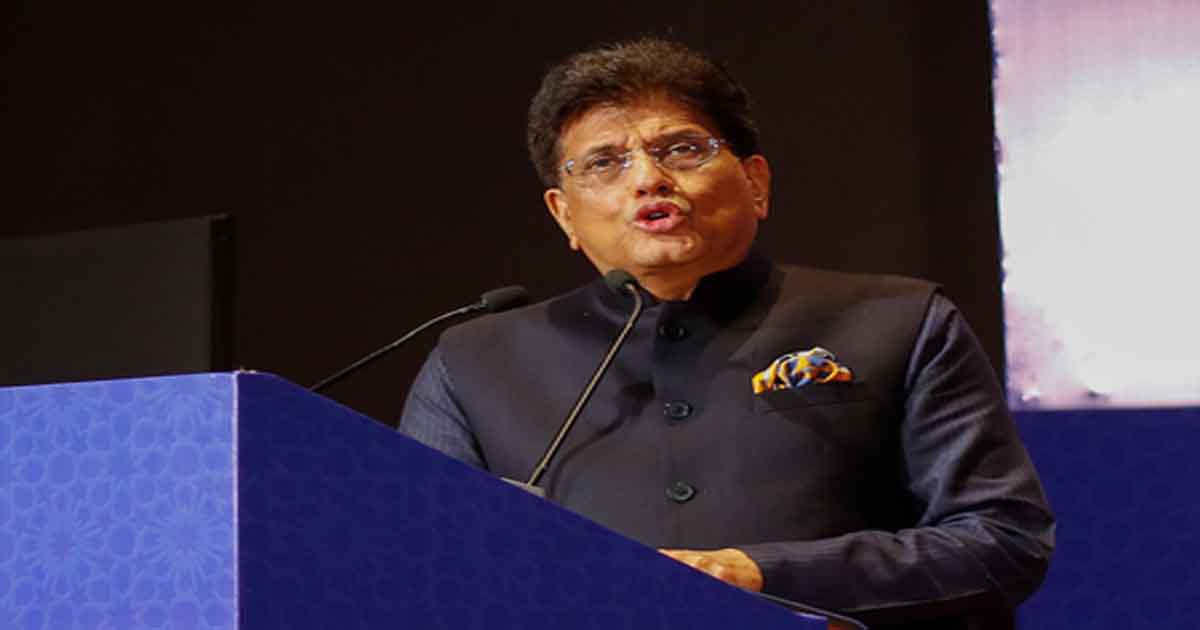
India has secured an assurance from the United States that Indian goods will enjoy preferential market access in the American market compared to competing countries under the proposed bilateral trade agreement (BTA), Commerce and Industry Minister Piyush Goyal said on Sunday.
Speaking to reporters during his two-day visit to Egypt, Goyal said the understanding was already reached at the leadership level when Prime Minister Narendra Modi and US President Donald Trump agreed on a broad framework for strengthening bilateral trade ties.
“This was already agreed between the leaders – President Trump and Prime Minister Narendra Modi when they announced that we have both come to a broad framework agreement a few months ago, and it has been acknowledged that India will get preferential trade access in the US with lower duties than our competitor countries,” Goyal said.
India and the US had finalised the framework for the first phase of the bilateral trade agreement in February, with both sides aiming to deepen economic engagement and expand market access.
However, the signing of the initial tranche has been delayed as the two countries continue negotiations amid changes in the US tariff regime.
The minister’s remarks come days after a senior government official said Washington had assured New Delhi of a comparative tariff advantage over competing nations under the proposed agreement.
The two sides are currently working towards concluding the first tranche of the pact by the end of the current financial year.
According to the official, discussions are continuing both on the first tranche and the broader bilateral trade agreement, while the final extent of tariff concessions and competitive advantages for Indian exports will depend on the framework eventually agreed upon.
Trade negotiations have gained added significance after the US Supreme Court struck down the Trump administration’s reciprocal tariffs that had formed the basis of earlier discussions.
Following the ruling, the US has been exploring alternative mechanisms under provisions of the Trade Act to develop a new tariff architecture.
Goyal is currently in Egypt to hold discussions aimed at enhancing bilateral trade and investment ties, even as India pursues trade negotiations with several key partners, including the United States.
National News
Eradicating Naxalism a mark of honour for tribal community, says BJP chief Nitin Nabin

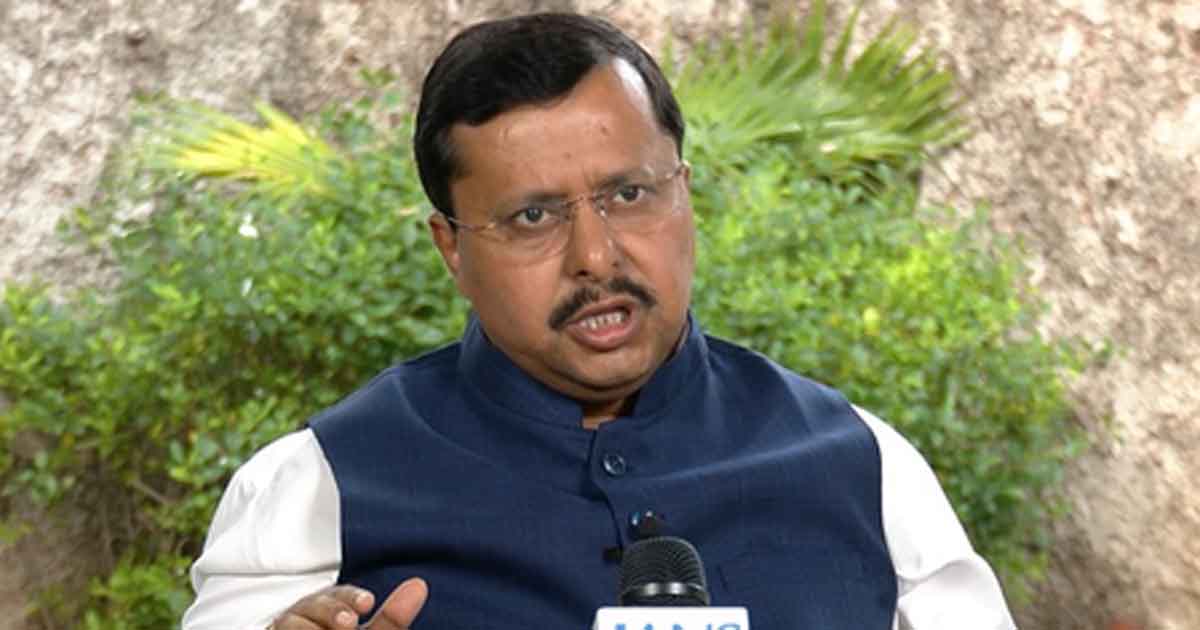
Bharatiya Janata Party (BJP) National President Nitin Nabin, on Sunday, paid tributes to the 151st birth anniversary of freedom fighter Birsa Munda, saying that the eradication of Naxalism from the country is a “mark of honour” for the tribal community.
Speaking to reporters here, Nabin said: “On the occasion of the birth anniversary of Bhagwan Birsa Munda, I extend my heartiest congratulations to all countrymen, especially the Tribal community.”
Noting that the day is observed as ‘Janjatiya Gaurav Diwas’, he said, “The way continuous efforts are being made for the progress of the community under the leadership of Prime Minister Narendra Modi, it is clear that we envision the development of this country together with the tribal community.”
“We will be able to fulfil the resolution of a developed India, only through our resolve to take the tribal community forward. Completely eradicating Naxalism from its roots in 2026 is something I view as a mark of honour for the tribal community,” he added.
The BJP chief further said, “PM Modi had taken oath that Naxalism will be eliminated from its roots from regions like parts of Chhattisgarh, Odisha, Telangana or Jharkhand. This year, when the Prime Minister went to celebrate Diwali with soldiers in Jharkhand’s Bastar, it was a message that Naxalism has been completely eradicated.”
Reiterating the government’s commitment to continue efforts towards integrating the Tribal community into the mainstream, he said, “Earlier, guns were raised in Bastar, but today the place is discussed for its contribution to sports.”
Pointing out that President Droupadi Murmu hails from the community, Nabin said, “As we celebrate Janjatiya Gaurav Diwas, we can proudly say that today several leaders belonging to tribal communities are heading several states as well as the country.”
Earlier in the day, Prime Minister Narendra Modi highlighted the strides the country has made in eliminating Maoism and said that the mothers and sisters of the tribal communities are blessing the government for this achievement.
“There used to be hundreds of violent incidents every year. Thousands of innocent people, a large number of them were tribals, lost their lives. However, people affected by Naxalism-Maoism were abandoned by the then governments, their rights were snatched away, and everybody remained silent,” he said while virtually addressing the Janjatiya Gaurav Diwas programme, being organised in Maharashtra’s Gadchiroli.
Contrasting the situation with this year, PM Modi said, “Children were taken away from their mothers by these Naxals; our daughters were taken away, and no one was able to do anything. However, today, when Naxalism-Maoism has been eliminated, mothers and sisters in the tribal community are giving us their blessings.”

FairPoint: Sonia’s memoir opens Gandhi family closed doors, but leaves much hidden

India to get preferential access in US market under trade pact: Piyush Goyal

Iran’s IRGC says drones hit US air defence radar station in Bahrain

Eradicating Naxalism a mark of honour for tribal community, says BJP chief Nitin Nabin

Nifty above 25,000 keeps bullish trend intact despite Friday’s dip: Market experts

Attack on democratic rights: INDIA Bloc leaders on detentions of anti-ECI protestors

Congress trying to protect 3 crore Bangladeshi infiltrators in voter list: HM Shah

Online betting: ED conducts searches at 20 premises in Mumbai, Pune, Hyderabad

Red Fort car blast probe exposes blueprint for spread of terror modules across India

Tiger Shroff attack: Bihar family denies accused is their son
-

 Crime4 years ago
Class 10 student jumps to death in Jaipur
-

 Maharashtra2 years ago
Mumbai Local Train Update: Central Railway’s New Timetable Comes Into Effect; Check Full List Of Revised Timings & Stations
-

 Maharashtra2 years ago
Mumbai To Go Toll-Free Tonight! Maharashtra Govt Announces Complete Toll Waiver For Light Motor Vehicles At All 5 Entry Points Of City
-

 Maharashtra2 years ago
False photo of Imtiaz Jaleel’s rally, exposing the fooling conspiracy
-

 National News2 years ago
Ministry of Railways rolls out Special Drive 4.0 with focus on digitisation, cleanliness, inclusiveness and grievance redressal
-

 Maharashtra2 years ago
Maharashtra Elections 2024: Mumbai Metro & BEST Services Extended Till Midnight On Voting Day
-

 National News2 years ago
J&K: 4 Jawans Killed, 28 Injured After Bus Carrying BSF Personnel For Poll Duty Falls Into Gorge In Budgam; Terrifying Visuals Surface
-

 Crime2 years ago
Baba Siddique Murder: Mumbai Police Unable To Get Lawrence Bishnoi Custody Due To Home Ministry Order, Says Report