
Crime
Three arrested in Bengaluru quarry collapse case

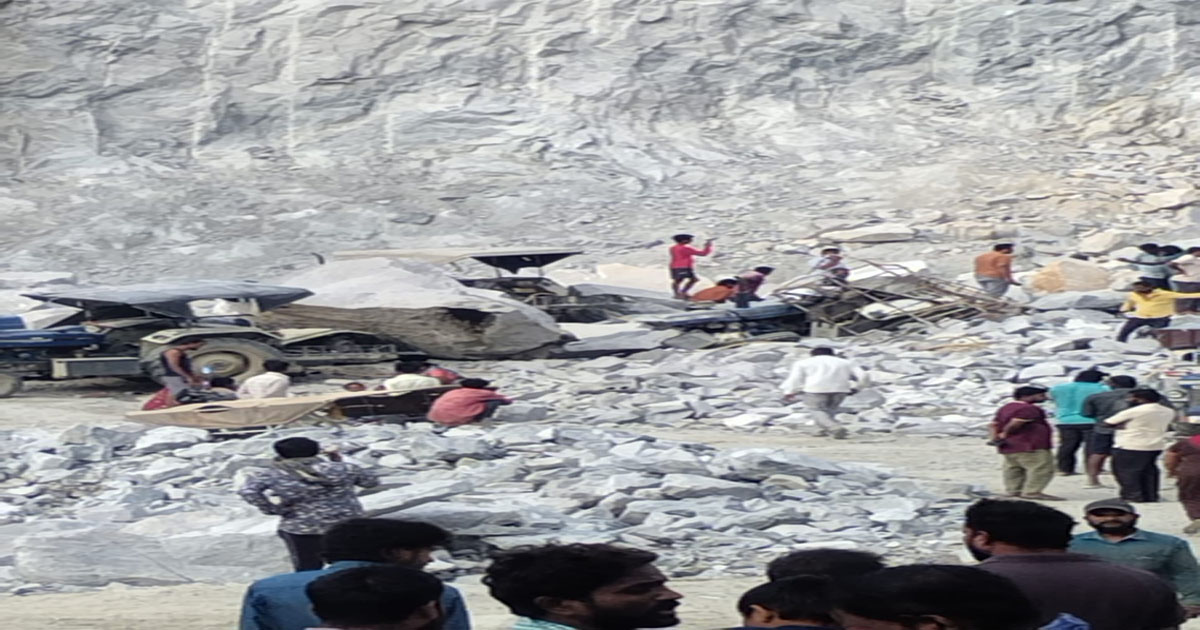
Bengaluru, July 3: The Karnataka Police on Friday arrested three persons in connection with the stone quarry boulder collapse at Madapattana village in Bengaluru South taluk that claimed the lives of seven workers.
The arrested accused have been identified as Panduranga, owner of Sai Ram Crusher; Lokesh, the quarry in-charge; and Raju, the local in-charge.
According to the police, the three have been taken into custody for questioning. Panduranga had taken Basaveshwara Crusher on lease and was operating the quarry. A case has been registered under the relevant provisions of the Bharatiya Nyaya Sanhita (BNS) based on a complaint filed by worker Gopikrishnan.
Police are also likely to question Uday Shankar, the owner of Kaveri Crusher, and D. Anandaswamy, the owner of Basaveshwara Crusher, as part of the ongoing investigation.
The tragedy occurred early Thursday morning at the Kaveri Crusher unit in Madapattana village under the jurisdiction of the Tavarekere Police Station when a massive boulder rolled down from an upper quarry and crashed onto workers at a lower quarry.
Seven workers were killed in the incident, while five others sustained injuries. One of the injured remains in critical condition, and four workers managed to escape.
The deceased were identified as Ramu, Rajpal Singh, Satyanarayan Singh, Ram Avtar Singh, Rajendra Prasad, Nuhar and Bhuvaneshwar Singh, all aged between their 30s and 40s. According to police, one of the deceased hailed from Yadgir district in Karnataka, while the others were from Madhya Pradesh. One of the injured workers is from Chhattisgarh.
Central Zone IGP S. Girish said the accident involved two adjoining quarries owned by different entities.
“There are two quarries at the location. The upper quarry belongs to one owner, while the lower quarry is owned by another. Work was underway at both sites early this morning. A JCB excavator operating at the upper quarry moved boulders, one of which rolled downhill and fell onto the workers at the quarry below,” he said.
“A total of 16 workers were at the lower quarry. Seven of them died on the spot. Five have been admitted to the hospital, one of whom is in critical condition, while four others managed to escape,” Girish added.
A worker from Tamil Nadu, Gopi, who narrowly escaped the accident, alleged that workers at the upper quarry failed to warn those working below before moving the rocks.
“Those working above should alert the workers below, but no one informed us. I have been working here for the past eight years. Four of us managed to escape. If they had warned us, we would have known about the danger. A stone hit me, but I still managed to run away. Around 15 to 30 people were working at the site. Tractors and excavators were mangled in the incident,” he said.
The force of the boulder impact crushed the victims beneath the rocks, making identification difficult. Police said some bodies were mutilated beyond recognition. A tractor, a tipper and other heavy machinery at the site were also extensively damaged.
Chief Minister D.K. Shivakumar, reacting to the incident on Thursday, said a detailed report had been sought from officials.
“A tragic incident has taken place at two adjoining quarries on Magadi Road. I have received information that seven persons have died. The bodies have been recovered, and senior officers have visited the spot. It has been ascertained that no blasting took place. I will receive a detailed report. It is yet to be determined whether the quarries were operating legally or illegally. The prescribed rules must be followed,” the Chief Minister said.
He added that action would be initiated after the report is received and compensation would be announced once complete details are available.
Karnataka Leader of the Opposition R. Ashoka visited the injured workers at the hospital on Thursday and alleged that the tragedy was the result of negligence on the part of the state government, while demanding accountability for the loss of seven lives.



At least 12 members of a Dalit family were injured, including two who suffered stab wounds, in an alleged attack following a dispute during an idol immersion procession in Bihar’s Phulwari Sharif area, police said on Thursday.
The incident took place in the Ishopur locality, where a group of around 25 people, allegedly led by Sanjay Yadav, entered the house of Ramkumar Chaudhary and attacked family members with sticks, clubs and knives.
The condition of Ramkumar Chaudhary and Pankaj Kumar was reported to be critical and both are undergoing treatment at AIIMS, Patna.
The other injured were identified as Aman, Riya Kumari, Bahadur Chaudhary, Lalmuni Devi, Pankaj Chaudhary, Ankit, Aarti Devi, Ajay Chaudhary, Deepak and Anil. They were taken to hospitals for treatment.
A video purportedly showing the assault, including the use of knives on the street, has also surfaced.
However, its authenticity and the complete sequence of events are yet to be established through an investigation.
According to local residents, police personnel from the nearby Ishopur police outpost reached the spot after hearing the commotion and attempted to intervene.
The officers were allegedly attacked by the assailants, leaving several police personnel injured.
Additional police forces were subsequently deployed, and the situation was brought under control.
The victims alleged that the attack stemmed from a longstanding dispute between the two families and claimed that similar incidents had occurred in the past.
However, the precise cause of the dispute and the circumstances leading to Thursday’s violence have not been officially established.
Police have detained two people in connection with the incident, while efforts are underway to trace other suspects.
Investigators are examining the circumstances surrounding the clash, the alleged assault on the family and the reported attack on police personnel.
Tension continued to prevail in the locality following the incident, while the injured remained under medical care and police pursued further legal action.
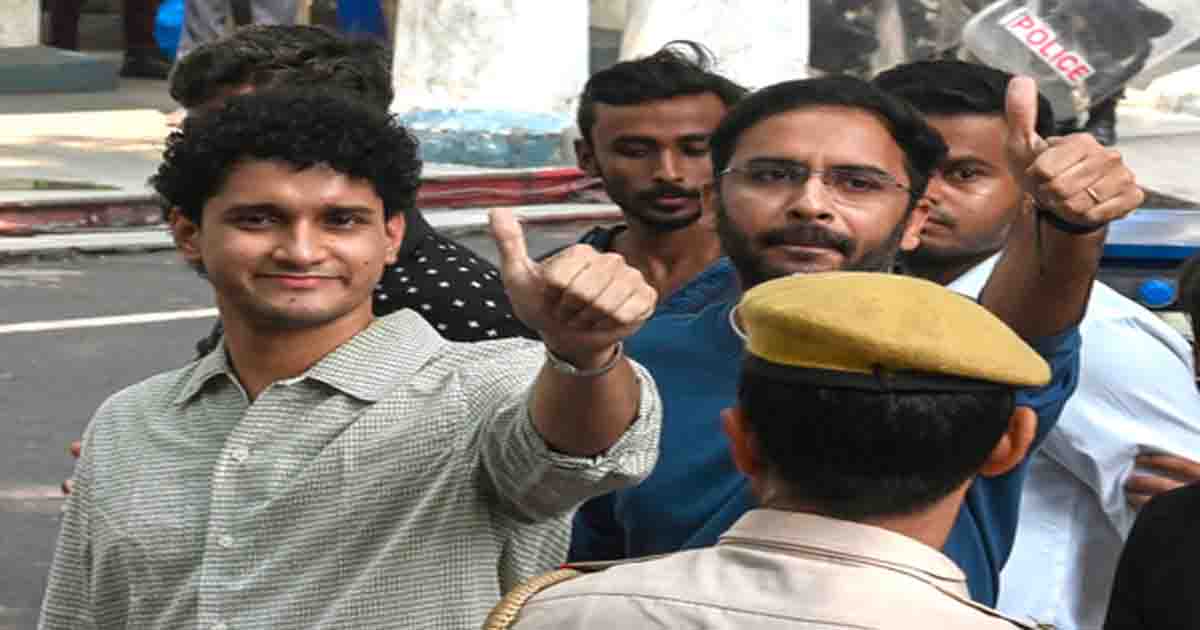
Cockroach Janta Party (CJP) leaders Saurav Das, Ashutosh Ranka and Ajinkya Shinde have sought more time to appear before the Delhi Police Crime Branch for questioning.
Das, Ranka, and Shinde were asked to appear before the Delhi Police Crime Branch at its office in Rajouri Garden at noon on Thursday. However, they requested more time from the Delhi Police.
The police will now issue fresh summons to them.
This comes a day after Das and Ranka were released from Tihar Jail following a week in judicial custody.
Earlier this week, Delhi Police transferred protest cases against the CJP leaders to the Crime Branch.
The cases are in connection with the incident on October 13, when Das, Ranka and Shinde, along with 11 others, trespassed into Jantar Mantar, which has been de-notified as the designated protesting site.
All were detained by the Delhi Police. While Shinde was released on bail bond, Das and Ranka remained in judicial custody for a week.
The CJP members were protesting against alleged irregularities in the Special Intensive Revision (SIR) of electoral rolls and raised slogans against Chief Election Commissioner (CEC) Gyanesh Kumar.
Das and Ranka were released on Wednesday after submitting written undertakings before a Special Executive Magistrate (SEM), assuring that they would maintain peace and refrain from calling for protests at Jantar Mantar until the site is de-notified in accordance with law.
SEM Ritu Raj directed the release of the two activists after they furnished personal bonds and surety bonds of Rs 50,000 each until the conclusion of the inquiry in connection with the Jantar Mantar trespassing case.
In their written undertakings, both activists promised not to commit any breach of peace and expressed full faith in the judiciary and all its instruments, including the SEM court.
The SEM court observed that the immediate measures required under Section 135(3) of the Bharatiya Nagarik Suraksha Sanhita (BNSS) to prevent a breach of peace or disturbance of public tranquillity could be adequately secured through the execution of bonds, supported by the written undertakings.
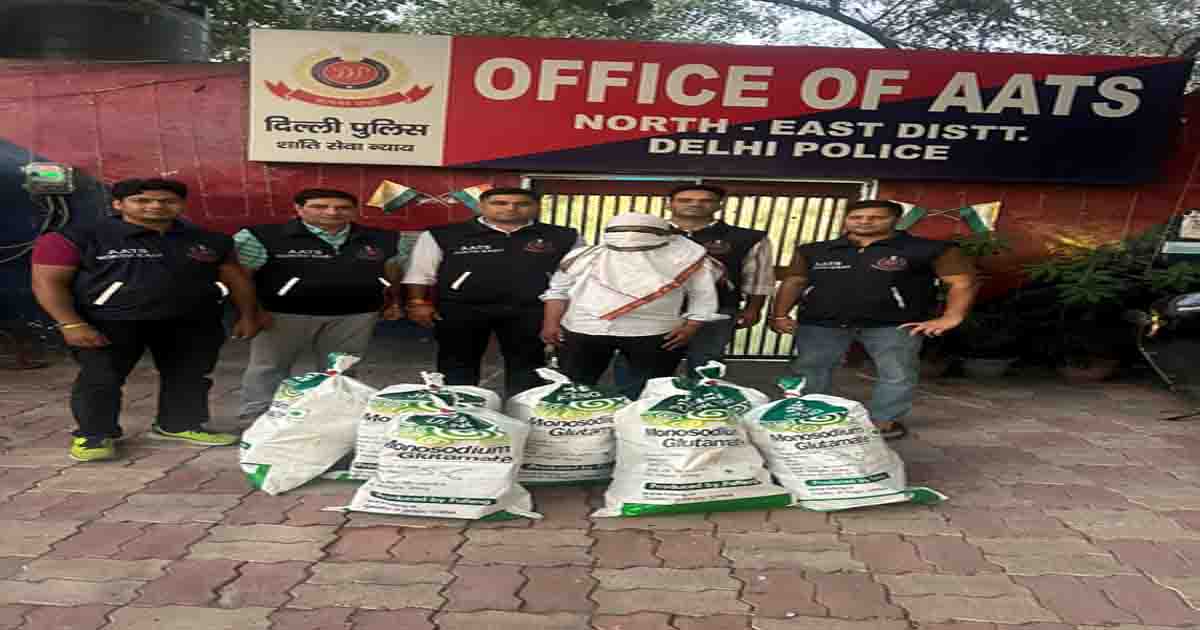
The Anti-Auto Theft Squad (AATS) of Delhi Police’s North-East District has apprehended a supplier of banned firecrackers and recovered 57.8 kg of the prohibited material from his possession, police said on Thursday.
The accused, identified as Vishal (35), a resident of Ashok Nagar in Delhi, was apprehended on October 21 following a targeted operation to curb the illegal supply of banned firecrackers in the district.
According to the police, the operation was conducted on the directions of senior officers by an AATS team led by Inspector Deepak Pandey, in-charge of AATS, North-East District. Acting on secret information, the team laid a trap in the Ashok Nagar area and apprehended the accused while he was carrying multiple sacks containing banned firecrackers weighing 57.8 kg.
Following the recovery, a case was registered under FIR No. 466/26, dated October 21, at Jyoti Nagar police station under Section 223(b) of the Bharatiya Nyaya Sanhita (BNS) and Section 9B of the Explosives Act. An investigation into the matter has been initiated.
Police said the accused had previously been involved in three criminal cases registered under Sections 188 and 286 of the Indian Penal Code (IPC), Sections 223(A) and 288 of the BNS, and Sections 115(2), 126(2) and 3(5) of the BNS.
In a separate incident earlier this month, a joint team of the Delhi Police’s Anti-Auto Theft Squad and Harsh Vihar police station uncovered an illegal storage facility for firecrackers in Mandoli village and recovered 567.30 kg of firecrackers and related material. One person was apprehended in connection with the case, police said on Wednesday.
According to the police, the incident came to light on October 12 when a police team conducting area patrol received information about firecrackers being stored at a premises in Mandoli. The information was immediately shared with Harsh Vihar police station, following which a team reached the location.
At the premises, located on the first floor of a house in Gali No. 12, near Government Senior Secondary School in Mandoli, police found a large quantity of firecrackers and materials used in their manufacture stored in cartons and sacks.
The recovered material was inspected, weighed, sampled and seized following the prescribed procedure.
An FIR (No. 315/2026) was subsequently registered at Harsh Vihar police station under Section 288 of the BNS and Section 9B of the Explosives Act, 1884.

Netanyahu speaks with PM Modi, invites him for Israel’s Independence Day along with heroic Indian pilot

Aasif Khan’s wife reveals actor suffered major heart attack, calls out Qazi Touqeer for mocking him

Four more arrested in Tiger Shroff firing case; two women accused of supplying weapons, accused remanded to police custody till October 26.

Swiggy’s Q2 net loss widens sequentially to Rs 922 crore

12 injured in attack on Dalit family in Patna, two critical

Rahul, Cong ecosystem want to force regime change: BJP after Neha Bora praises B’desh Gen-Z protest

Attack on democratic rights: INDIA Bloc leaders on detentions of anti-ECI protestors

BJP pays tribute to ex-President Abdul Kalam, recalls his enduring influence on generations of India’s youth

INDIA bloc begins protest march against ECI

Maha Congress stages agitation against Gyanesh Kumar
-

 Crime4 years ago
Class 10 student jumps to death in Jaipur
-

 Maharashtra2 years ago
Mumbai Local Train Update: Central Railway’s New Timetable Comes Into Effect; Check Full List Of Revised Timings & Stations
-

 Maharashtra2 years ago
Mumbai To Go Toll-Free Tonight! Maharashtra Govt Announces Complete Toll Waiver For Light Motor Vehicles At All 5 Entry Points Of City
-

 Maharashtra2 years ago
False photo of Imtiaz Jaleel’s rally, exposing the fooling conspiracy
-

 National News2 years ago
Ministry of Railways rolls out Special Drive 4.0 with focus on digitisation, cleanliness, inclusiveness and grievance redressal
-

 Maharashtra2 years ago
Maharashtra Elections 2024: Mumbai Metro & BEST Services Extended Till Midnight On Voting Day
-

 National News2 years ago
J&K: 4 Jawans Killed, 28 Injured After Bus Carrying BSF Personnel For Poll Duty Falls Into Gorge In Budgam; Terrifying Visuals Surface
-

 Crime2 years ago
Baba Siddique Murder: Mumbai Police Unable To Get Lawrence Bishnoi Custody Due To Home Ministry Order, Says Report