
Maharashtra
The ₹3.25 Crore Mirage: Why BEST’s Future Lies In Ridership, Not Revenue

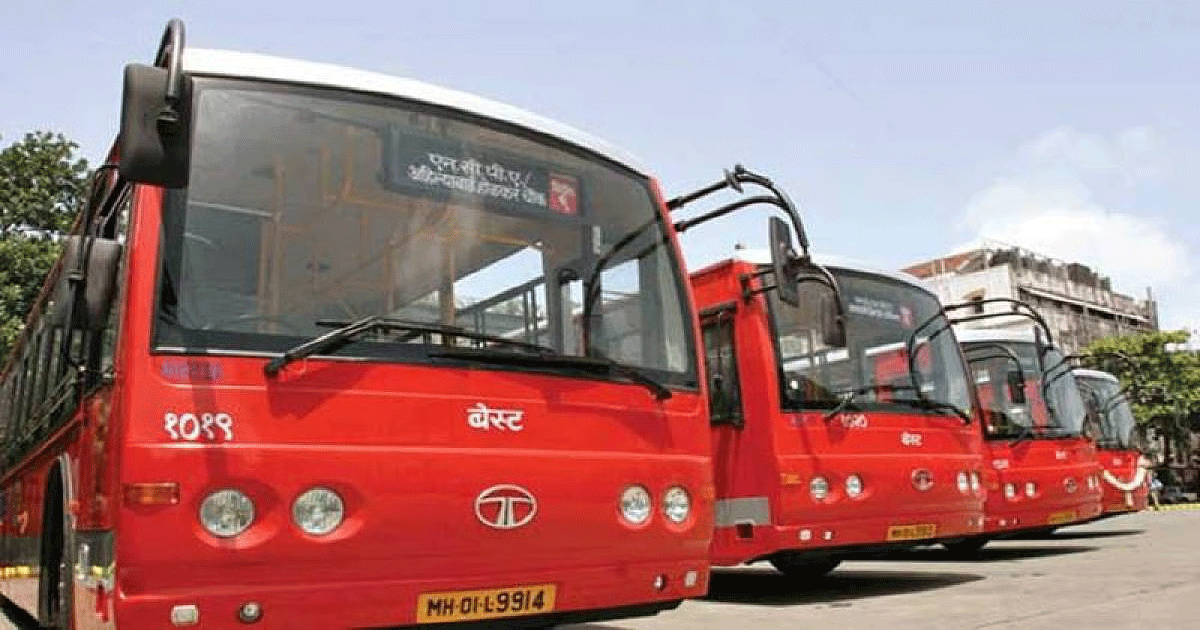
On August 6, the Brihanmumbai Electric Supply and Transport (BEST) reported daily revenue of ₹3.25 crore, one of its highest in months, following a May fare hike that doubled the minimum ticket price for both AC and non-AC buses. Officials hailed it as a step toward “sustainability,” citing not only higher collections but also “healthy” footfall.
Crowded Trains, Riskier Commutes After BEST Ridership Falls
Look past the balance sheet, however, and the picture shifts dramatically. Commuter rights groups estimate BEST’s daily ridership has fallen from roughly 3.5 million before the hike to about 2.5 million today, a loss of one million passengers in just three months. These commuters haven’t disappeared; they’ve been pushed onto already overcrowded local trains, where safety risks are mounting. A revenue spike that comes at the expense of passenger numbers is not sustainability, it’s a slow bleed of the very lifeblood that keeps a public transport system viable.
Mumbai once understood this. For decades, BEST operated as a cross-utility service, where surplus from electricity operations kept buses affordable, frequent, and extensive. The goal was mobility, not margin. Today, that ethos is slipping. Subcontracting to private operators has chipped away at service quality, while the fleet has shrunk under contractor mismanagement.
There is a proven, scalable way to do that: zero-fare bus travel for women. Far from being a “freebie,” such schemes, implemented in Delhi, Hyderabad, and Karnataka, have revived public transport, increased ridership, and strengthened economic participation.
Delhi’s Pink Ticket Programme Boosts Ridership and Inclusion
Delhi’s Pink Ticket programme, launched in 2019, has issued over 150 crore free rides. Women’s share of ridership has risen from 25% to over 33%, with daily beneficiaries reaching 11 lakh. Between 2019 and 2023, women’s ridership grew by 20%, easing crowding elsewhere, boosting workforce participation, and proving that zero fares can fortify rather than strain public finances. The cost is treated as a public investment.
Hyderabad’s Mahalakshmi Scheme Shows Rapid, Sustained Growth
Hyderabad’s Mahalakshmi scheme, rolled out in late 2023, shows even sharper gains: 200 crore free journeys in under two years, women’s ridership jumping from 35% to 60%, daily passenger numbers surging from 45 lakh to 60 lakh, and bus occupancy rates soaring from 53% to 97%. State reimbursements of ₹335 crore a month have turned potential deficits into fuller buses, healthier route economics, and measurable reductions in private vehicle use.
Karnataka’s Shakti Scheme Revives Urban and Rural Routes
Karnataka’s Shakti scheme tells a similar story. By mid-2025, it had delivered nearly 500 crore free rides, lifting Bengaluru’s BMTC ridership to its highest levels since 2015. In Mysuru, women now account for three-quarters of daily passengers. The state’s ₹11,994 crore investment has paid off in greater labour force participation, sustained rural and semi-urban routes.
Why Mumbai Should Adopt a Zero-Fare Policy for Women
For Mumbai, the lesson is clear. A zero-fare policy for women could stem BEST’s passenger losses, expand access to jobs and education, and stabilise routes through higher occupancy. As these states show, the broader social and environmental returns, cleaner air, less congestion, greater economic inclusion far outweigh the direct subsidy cost. The real dividend lies in productivity, climate resilience, and social cohesion.
Sustainability Lies in Moving People, Not Just Making Money
If BEST is to survive, its success must be measured not by how much revenue it collects, but by how many people it moves, safely, affordably, and inclusively. And the fastest way to achieve that is to start with the women who keep Mumbai moving.

Maharashtra
Mayor’s instructions to maintain water supply in Mumbai, focus on water management, alternative sources and solutions

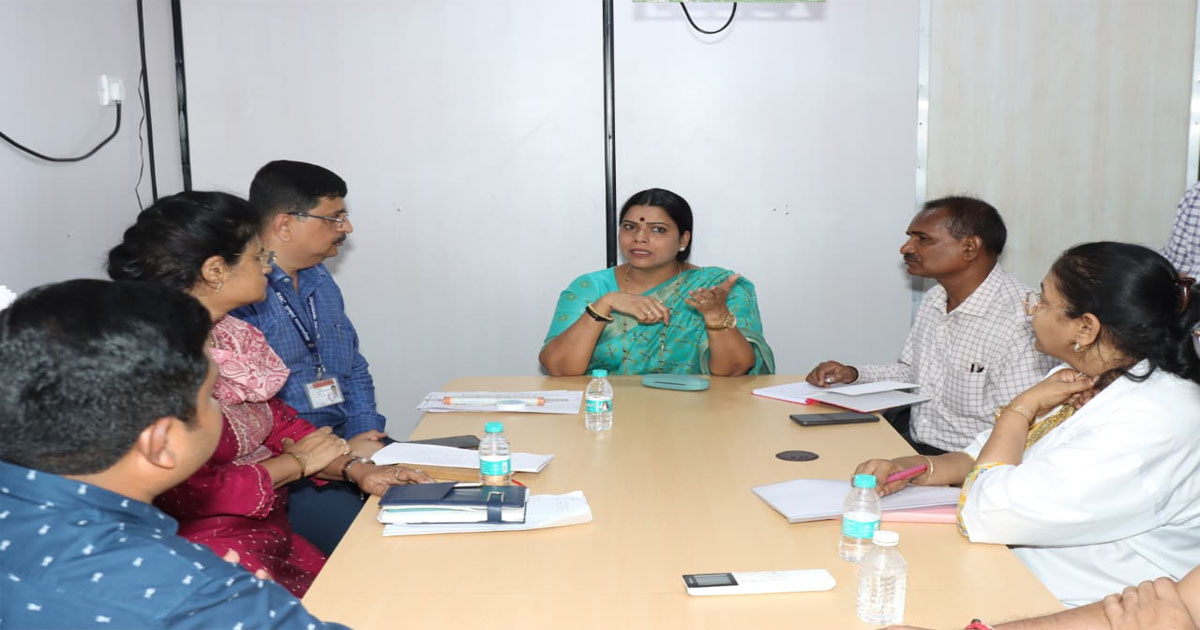
Mumbai: Taking note of the intense summer heat, increasing pressure on water resources and complaints received from citizens regarding water supply, Mumbai Mayor Ritu Tawde held detailed discussions with senior officers of the Municipal Corporation Water Department. The Mayor has directed to implement more effective measures to ensure uninterrupted and smooth water supply to the people of Mumbai while properly managing the currently available water resources. Mayor Ritu Tawde mentioned that the demand for water is continuously increasing due to the growing population in Mumbai. In the backdrop of climate change, it has become imperative to manage water supply in a more sustainable and multifaceted manner, keeping in mind the uncertainty of rainfall. In addition, in the current situation, the intensity of summer has also started increasing. In this regard, the Mayor has expressed the need to focus on revitalizing traditional water sources, exploring alternative water sources and making extensive efforts for water conservation and protection through active participation of citizens. In this context, Mayor Ritu Tawde has directed to immediately collect updated information about all government and private wells and boreholes in Mumbai and check their working condition. During the water shortage due to low rainfall in 2009, the Municipal Corporation had repaired wells for public consumption and provided water to the citizens. On this basis, the performance of all wells should be checked at present and necessary steps should be taken to immediately make these wells functional on priority basis. Mayor Tawde has also directed that the extent to which clean drinking water can be used from these wells should be studied on the basis of tests and its use should be planned accordingly instead of limiting it to gardening or cleaning. Meanwhile, given the increasing demand for water in Mumbai, it is important for private housing societies to actively participate in this process and cooperate with the administration. Housing societies should regularly maintain, repair and clean the wells and well pipes in their area and install necessary systems for water purification. Also, it is important to ensure that groundwater is extracted as per the rules and within sustainable limits. Rainwater harvesting is a very important measure to avoid water shortages in the future, and all housing societies should implement such a system in their area. This will help maintain the groundwater level and this measure will prove effective for long-term water security, Mayor Tawde has appealed. In Ghatkopar, where I live, a system of recharging rainwater, a system of purifying well water and supplying it to all the flats, all these have already been implemented. Others should follow suit. Efforts to ensure water supply should be comprehensive. For this, coordinated participation of citizens, housing societies and the industrial sector along with the administration is necessary. Mayor Ritu Tawde has also made a humble appeal that everyone should make a joint effort to avoid water wastage, increase recycling and adopt water conservation habits.
Maharashtra
Mumbai: Stolen goods worth over Rs 84 lakh handed over to original owners, stolen goods are distributed within four months on the initiative of the DCP
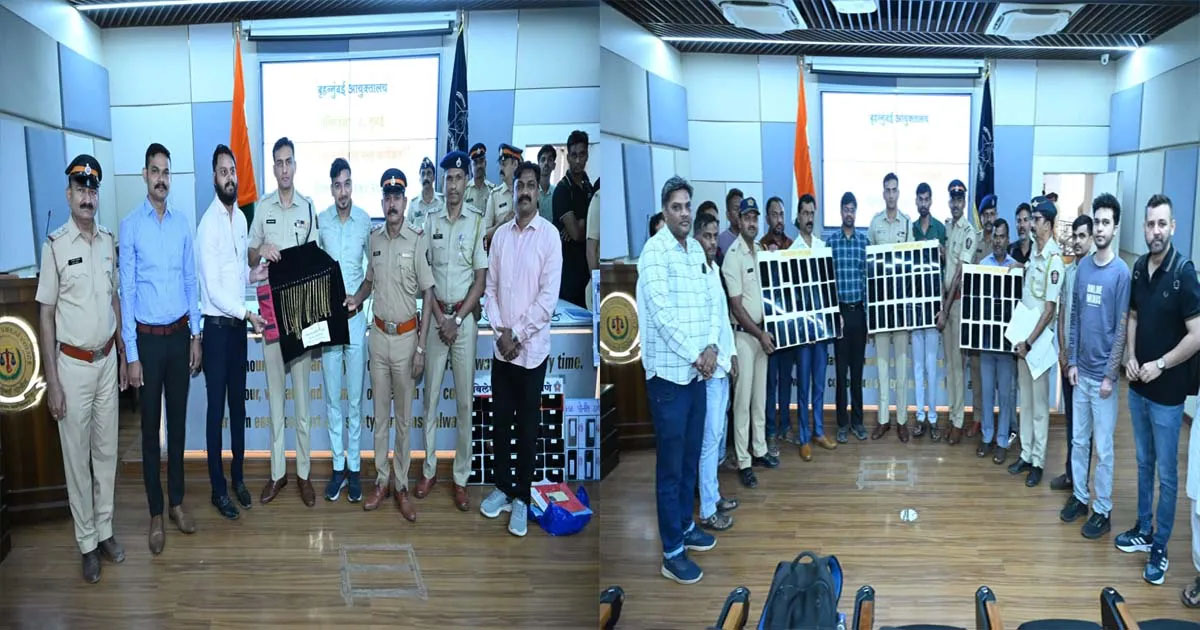
Mumbai: Police has returned stolen equipment and mobile phones seized in various theft cases to their rightful owners. After recovering stolen equipment from police stations Nirmal Nagar, BKC, Vakola, Kherwadi, Vile Parle, Sahar under the jurisdiction of Zone 8, the police today returned mobile phones worth over Rs 84 lakh, stolen motorcycles and vehicles to their rightful owners. DCP Zone 8 Manish Kalwaniya said that the police keeps organizing such programs in which stolen goods are distributed and these goods are handed over to their original owners. He said that every four months, their goods are returned to the original owners. In this, most of the stolen mobile phones have been recovered. After the recovery of the stolen mobile phones, the happiness of the citizens and victims has doubled as they had given up hope and hope regarding their goods. 277 stolen mobile phones have also been returned today. These mobile phones were recovered after technical investigation, along with the vehicles and stolen goods were also returned.
Maharashtra
Inspection of ongoing cleaning works in Methi River and eastern suburbs, planning of work in accordance with the drain in all three parts of the river: Additional Municipal Commissioner
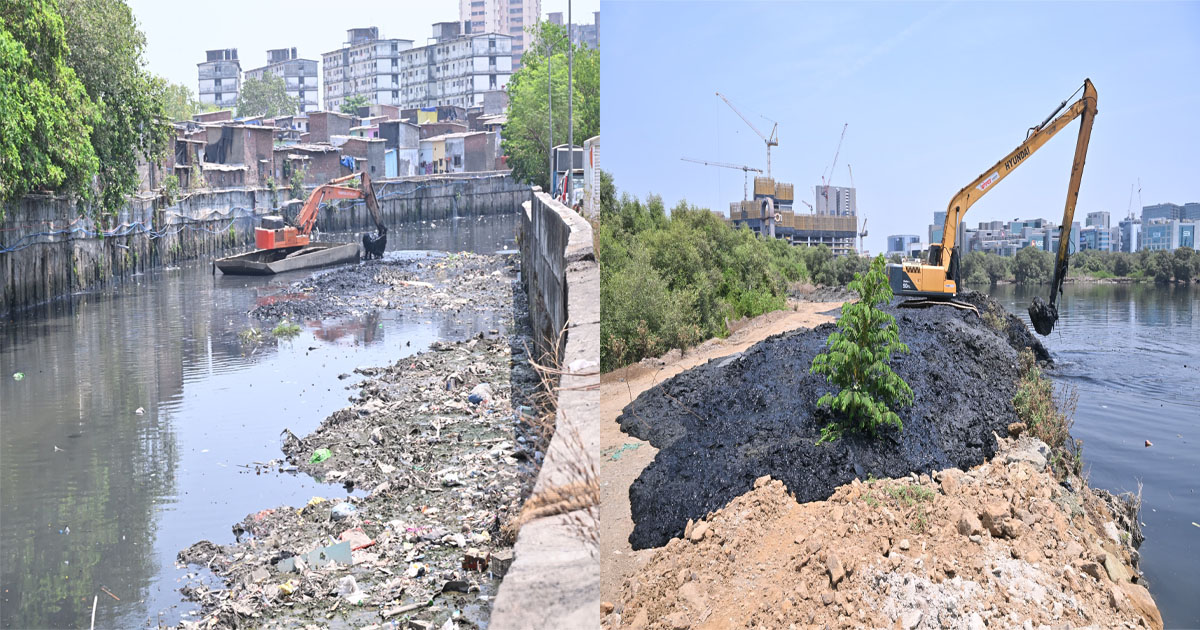
The pace of desilting work in all three parts of Mumbai Methi River and major and minor drains of Mumbai must be accelerated. Priority should be given to areas where rainwater accumulates and its drainage should be done with proper planning. Necessary action should be taken in respect of flood prone areas and this should be done in such a way that it is remedied. Strict planning should be made for when the work will start and end on a drain-wise basis. This information should be available on the dashboard of the Municipal Corporation carrying out drain cleaning. So that the citizens can get information about when the work of cleaning drains in their area will start and end. It should be ensured that the targets of the work to be done on a drain-wise basis are fixed every day and its strict implementation should be ensured. The contractor should provide the latest information about how much machinery is expected to be used by the contractor as per the terms and conditions of the tender and how much machinery is available daily. This information should also be displayed on the computer system (dashboard) of the drain cleaning. To prevent floating waste flowing on water in drains from entering the sea, wherever possible, a floating waste interceptor system (trash boom system) should be installed, various instructions issued by Additional Municipal Corporation Commissioner (Projects) Abhijit Bangar have said. The Mumbai Municipal Corporation administration is emphasizing on careful planning to complete the drain and river cleaning work in Mumbai within the stipulated time frame. In this regard, the work of removing silt from small and big drains has been started in the Mumbai Metropolitan Region. In this context, Additional Municipal Commissioner (Projects) Abhijit Bangar personally visited and inspected the ongoing drain cleaning work in the Methi River and Eastern Suburbs yesterday (April 3, 2026). The Municipal Corporation has started the silt removal work from March 12, 2026. Work has started at five locations under three packages on the Methi River in the Eastern Suburbs. Three of these locations (Connector Bridge, MMRDA office (Jitavan Udyan) in Bandra-Kurla Complex area and near Ambani School) were visited by Bangar today. He also visited Boundary Nallah in Milind East (T Division) and Soumya Nallah in Ghatkopar (N Division). He also gave necessary instructions. Along with this, Bangar also said that the silt removal work should be done in collaboration with local public representatives and their suggestions should be taken seriously. The process of silt removal from large and small drains including the Methi River is underway. It is expected that the entire scheduled work will be completed by May 31, 2026. There is a computer system for continuous monitoring of the progress of drain cleaning. It should be done on daily updated information.
A total of five locations of the Methi River are being effectively desilted. The work will be done in three packages. Bangar visited the Connector Bridge near the Methi River in Bandra-Kurla Complex. At that time, he said that the places for desilting should be planned along the entire length of the Methi River. It should be ensured that where there is dense population and where the bed of the Methi River is narrow, the cleaning of the drains will be done more carefully. The targets for cleaning the drains must be completed in the next 57 days. For this, the work should be planned and implemented according to the day, the bed of the Methi River is wide in the MMRDA office (Jitavan Adyan) in the Bandra-Kurla Complex area. The work of desilting from this place has been accelerated. It should be ensured that no illegal obstacles are erected at this place. Bangar also said that if found, strict action will be taken against the concerned. Sludge is being removed from the Methi River near Ambani School Bangar said here that if the sludge is removed through modern experiments along with traditional technology, then such experiments will be welcomed. The work of the contractor appointed to remove the sludge from the Methi River should be properly checked. After confirming that the contractor has done the sludge removal work properly and within the stipulated time, payment should be made on time. There should be no delay in this. However, while doing so, it is important to pay attention to the quality of work, consistency and whether the information available on the computer system is up to date or not. If this is not found, appropriate action will be taken against the contractor.
Presence of engineers is mandatory during drain cleaning work
Engineers should pay personal attention to the entire process of cleaning the drains. In addition, the presence of engineers will be mandatory during the drain cleaning work.

Mayor’s instructions to maintain water supply in Mumbai, focus on water management, alternative sources and solutions

Taxes, margins eat half of Pakistan’s petrol price, consumers cry: Report

Mumbai: Stolen goods worth over Rs 84 lakh handed over to original owners, stolen goods are distributed within four months on the initiative of the DCP

Inspection of ongoing cleaning works in Methi River and eastern suburbs, planning of work in accordance with the drain in all three parts of the river: Additional Municipal Commissioner

Mumbai LPG Crisis: Chaotic Rush Seen Outside Chembur Bharatgas Agency As 200-300 People Queue Since 5 AM For Gas Cylinders

Married Mumbai Woman Mocked In Andheri Society Over ‘Lift Kissing’ CCTV Video, Files Police Complaint

LPG Crisis In Maharashtra: Cyber Crime On Rise Amid Shortage, 2 Women Lose ₹4 Lakh In ‘Gas Update’ Online Scam In Kalyan-Dombivli

Mahayoti’s big gift to the people of Mumbai… Now there is no tax for houses up to 500 square feet, the Municipal Corporation has increased this limit to 700 square feet.

Dhurandhar 2 Box Office Collection Day 1: Ranveer Singh Starrer Takes An Exceptional Opening; Crosses ₹100 Crore Mark

T20 WC: ‘You just have to control your emotions and express yourself,’ says Piyush Chawla on handling pressure in final
-

 Crime4 years ago
Class 10 student jumps to death in Jaipur
-

 Maharashtra1 year ago
Mumbai Local Train Update: Central Railway’s New Timetable Comes Into Effect; Check Full List Of Revised Timings & Stations
-

 Maharashtra1 year ago
Mumbai To Go Toll-Free Tonight! Maharashtra Govt Announces Complete Toll Waiver For Light Motor Vehicles At All 5 Entry Points Of City
-

 Maharashtra2 years ago
False photo of Imtiaz Jaleel’s rally, exposing the fooling conspiracy
-

 National News1 year ago
Ministry of Railways rolls out Special Drive 4.0 with focus on digitisation, cleanliness, inclusiveness and grievance redressal
-

 Maharashtra1 year ago
Maharashtra Elections 2024: Mumbai Metro & BEST Services Extended Till Midnight On Voting Day
-

 National News2 years ago
J&K: 4 Jawans Killed, 28 Injured After Bus Carrying BSF Personnel For Poll Duty Falls Into Gorge In Budgam; Terrifying Visuals Surface
-

 Crime1 year ago
Baba Siddique Murder: Mumbai Police Unable To Get Lawrence Bishnoi Custody Due To Home Ministry Order, Says Report