
National News
Telangana presents Rs 2.56 lakh crore budget

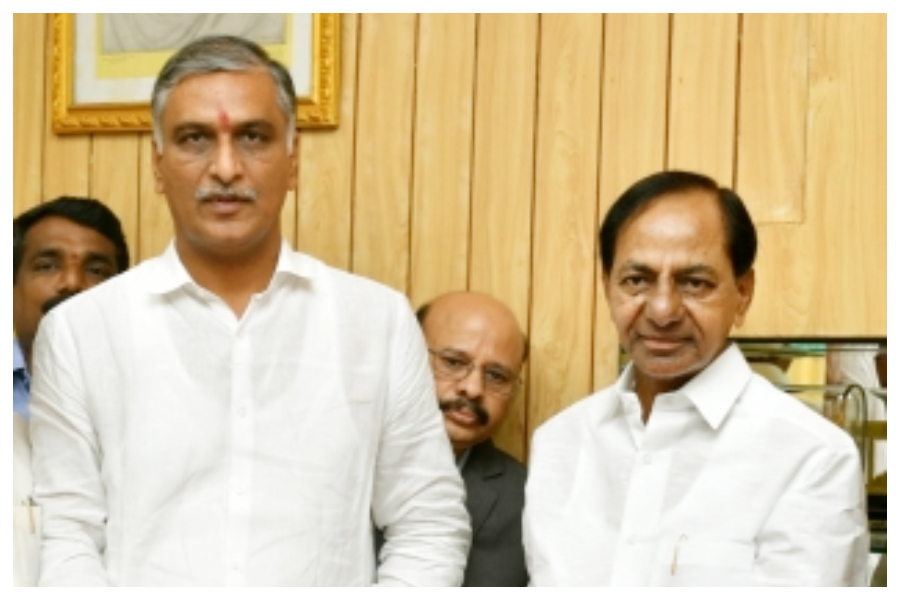
Telangana Finance Minister T. Harish Rao on Monday presented a Rs 2.56 lakh crore budget for financial year 2022-23, up from last year’s budget size of Rs 2.31 lakh crore.
Presenting the budget in the Assembly, he proposed total expenditure of Rs 2,56,958.51 crore. Out of this, revenue expenditure is Rs 1,89,274.82 crore and capital expenditure is Rs 29,728.44 crore.
The government allocated Rs 17,700 crore for Dalit Bandhu, a new scheme launched last year on pilot basis for economic empowerment of Dalits. Under the scheme, every Dalit family will get Rs 10 lakh grant for any entrepreneurial activity of its choice.
Harish Rao called it a historic and first of its kind scheme in the country providing the highest amount of assistance directly to the beneficiary.
In all the Assembly segments of the state, 11,800 families would get the benefit at the rate of 100 families per Assembly segment.
He said by the end of the next financial year, the programme would cover two lakh families, and the government is determined to cover all the Dalit families in the state in a phased manner.
Stating that Telangana recovered much faster following the aftermath of the Covid pandemic, Harish Rao said as per the advance estimates, the GSDP growth in 2021-22 is estimated at 11.2 per cent, at constant prices, as compared with the national GDP growth of 8.9 per cent.
At current prices, GSDP growth is estimated at 19.1 per cent as compared with the estimated GDP growth of 19.4 per cent.
He pointed out that the GSDP of Telangana in 2013-14, at the time of the state’s formation (2014) was Rs 4,51,580 crore, and by 2021-22, it has gone up to Rs 11,54,860 crore.
At the country level, during 2020-21, there was a negative growth rate of (-) 1.4 per cent due to the adverse impact of corona, and many states also registered negative growth rates. But Telangana clocked a positive growth rate of 2.2 per cent during 2020-21, he said.
“The fact that Telangana withstood the havoc of the pandemic is a testimony to the strong foundations laid since the formation of the state for sustained and resilient economy.”
The contribution of Telangana to the country’s GDP improved from 4.06 per cent in 2014-15 to 4.97 per cent in 2021-22. During the last seven years, Telangana is the only state in the country whose contribution in the national economy has grown by almost 1 per cent, the minister said.
He said that the growth of Telangana has become much more broad-based. Industry and services sectors recorded impressive growth over 2020-21, and the secondary sector consisting of manufacturing and construction recorded an impressive growth of 21.5 per cent in current prices over contraction of 0.3 per cent in 2020-21.
The services sector too improved its performance significantly to 18.3 per cent in the current year over the previous year’s growth of 0.9 per cent.
He claimed that in terms of growth of per capita income, Telangana’s performance has been spectacular. In 2014-15, the per capita income of Telangana at Rs 1,24,104 was higher than the national per capita income of Rs 86,647 by 1.43 times. By 2021-22, the per capita income of the state at Rs 2,78,833 exceeded the national average of Rs 1,49,848 by 1.86 times.
The state recorded a higher growth of 18.8 per cent in per capita income in 2021-22 as compared with the national growth of 18.1 per cent. In 2020-21, Telangana is a top-ranking state in per capita income among all the southern states. This is the achievement of the people of Telangana, he said.
Harish Rao said Telangana maintained its growth momentum even in adverse situations and that it has emerged as an economic powerhouse and as one of the fastest-growing states in the country.
He slammed the Centre for discrimination towards the state, and creating hurdles in the path of progress of the State, saying that instead of incentivising the states which are progressing, the Centre is trying to actively discourage them.
Harish Rao said the promises made in the Reorganisation Act are also not yet fulfilled. “As if this was not enough, whenever there is a discussion on the formation of Telangana, it is commented that it is like – ‘killing the mother for saving the baby’. These comments made by the elders at the Centre are an insult to the people of Telangana.”
Noting that the Information Technology and Investment Region project allocated to Telangana was cancelled, he said that 9 districts of the erstwhile state were notified as backward districts, but the grant which was supposed to be given to these districts is delayed. On one hand, the Centre talks about cooperative federalism, but on the other, it acts against the spirit of federalism and is encroaching on the powers of the state, he said.
He recalled that NITI Aayog had recommended that an amount of Rs 24,205 crore be released for Mission Bhagiratha and Mission Kakatiya schemes, but “the Centre has not even released 24 paise”.
The 15th Finance Commission has recommended that during 2020-21, an amount of Rs 723 crore is to be given to Telangana as a special grant, but the same was disregarded.
State specific grants of Rs 2,362 crore and sector specific grants of Rs 3,024 crore were also denied. In all, a sum of Rs 5,386 crore were denied to Telangana by the Centre, which did not even extend financial assistance to tackle Covid-19 pandemic, he said.
The enhanced borrowing under FRBM was linked to reforms in the power sector, and Telangana will be deprived of Rs 25,000 crore over the next five years, he said, adding that the “autocratic attitude of the Centre can be understood from this”.
“For the sake of these Rs 25,000 crore, the state has to implement a series of reforms in the power sector which are particularly against the farming community interests. The state government is not interested in making the farmers pay for the power which is being provided to them. That is not the policy of Telangana state. Chief Minister KCR has told Centre that such a policy would not be implemented as long as he is alive.”

National News
Congress Leader Rahul Gandhi Visits Sir Ganga Ram Hospital To Meet Sonia Gandhi; Cancels Kerala Visit

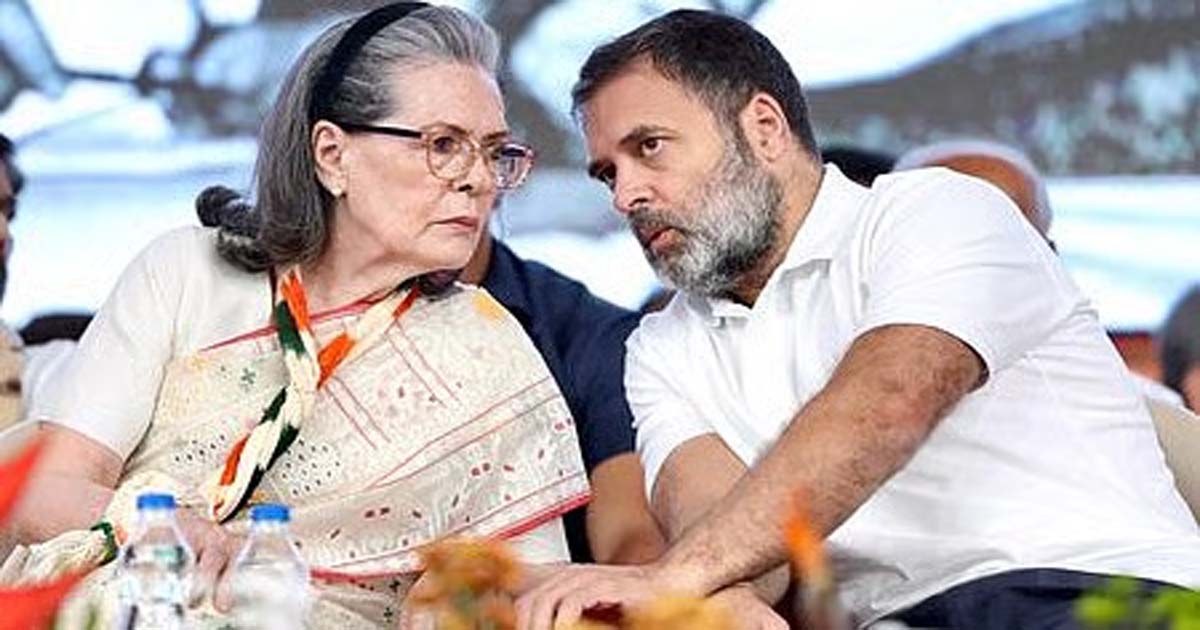
New Delhi: Congress leader Rahul Gandhi visited Sir Ganga Ram Hospital on Thursday morning, where his mother and Congress Parliamentary Party (CPP) Chairperson Sonia Gandhi was admitted after experiencing respiratory issues.
The veteran leader was admitted after experiencing respiratory issues at Sir Ganga Ram Hospital on Tuesday night.
As this happened, Rahul Gandhi, Leader of Opposition (LoP) Lok Sabha, did not visit Kerala for his scheduled visit ahead of the polls. Virtually addressing a rally held in Kozhikode, the Congress leader said that he could not attend the rally in person as his mother was hospitalised in New Delhi.
“I would have liked to come here, but I was forced to stay in today and was unable to come. Yesterday, my mother was hospitalised and I, as a son, was quite worried about her, so I decided to stay with her. I know that the people of Kerala will understand this. Last night, I was extremely worried about my mother’s health. The whole night, I was only comforted by one thing. I was comforted by a nurse from Kerala who came in every hour to check on my mother,” he said.
A hospital official said earlier that Sonia Gandhi remains stable and under observation. The veteran leader was being administered antibiotics, he added.
“Sonia Gandhi was admitted to Sir Ganga Ram Hospital on Tuesday at 10:22 PM. She is stable. Doctors are conducting further investigations to check for possible infection in the stomach and urinary tract. A team of doctors is closely monitoring her condition, and antibiotics have been administered,” a hospital official said.
As a precautionary measure, doctors decided to admit her for observation and further medical management.
On Wednesday, Sir Ganga Ram Hospital Chairman Dr Ajay Swaroop said that following a detailed medical examination, Sonia Gandhi’s bronchial asthma was mildly exacerbated by the combined effects of cold weather and prevailing pollution levels in Delhi.
The veteran leader was also admitted last year in June due to stomach-related issues. She was kept under observation at the hospital’s gastro department.
Before this, in the same month, Gandhi was admitted to Indira Gandhi Medical College and Hospital in Himachal Pradesh’s Shimla on June 7.
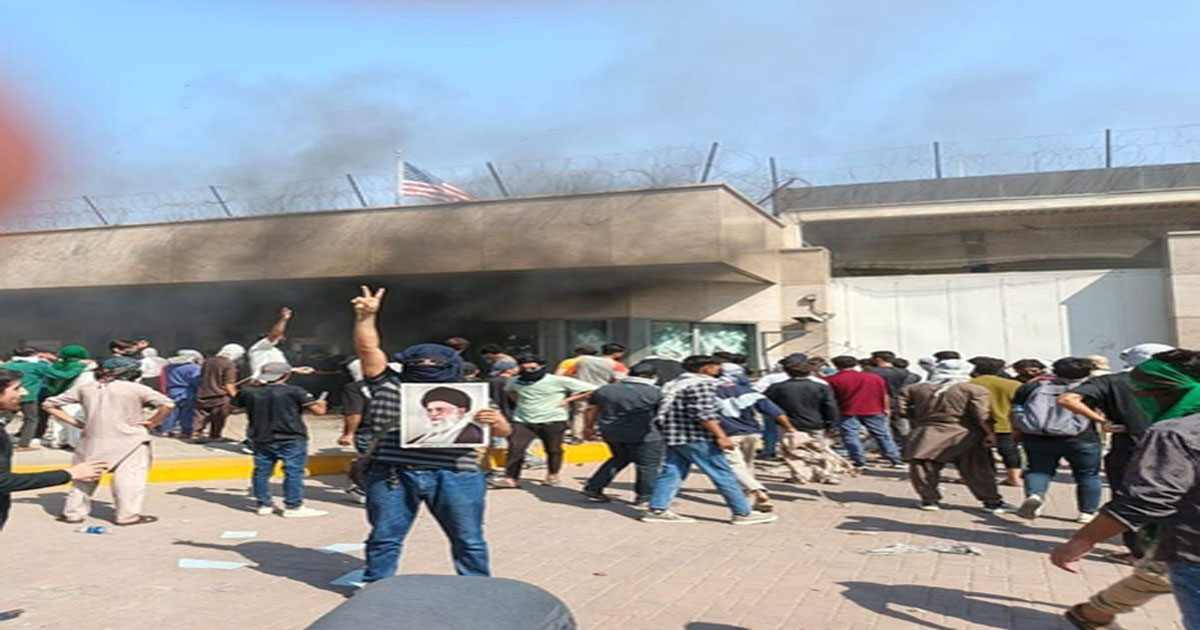
New Delhi, March 25: For Pakistan’s Army Chief Field Marshal Asim Munir, countering the pro-Iran Shia mobilisation in the country is increasingly becoming a headache. For Pakistan, countering this mobilisation is important as it is threatening to become bigger. However, the dilemma the establishment faces is that it cannot use its official machinery to take on the mobilisation of the Shias.
Pakistan has chosen to mediate between Iran and the United States, and hence it needs to remain neutral. Any direct action against the Shia mobilisation would infuriate Iran, and this is something that Islamabad wants to avoid.
An official said that Pakistan has now brought back its proxies to take on this problem. The Pakistan Army chief has ordered hardline Sunni elements and leaders from the Sipah-e-Sabah (SeS) and Jamaat-ud-Dawah (JuD) to take on the Shias who are mobilising in large numbers in support of Iran. These groups have, in the past, come to the rescue of the Pakistan establishment. When it comes to countering protesters who were seeking justice for jailed former Pakistan Prime Minister Imran Khan, it was these elements who took to the streets.
The members of the SeS and JuD have the backing of the army and ISI and have been given a free hand to indulge in street violence against those who are questioning the establishment, an official said.
The SeS is a banned Sunni Deobandi Islamist organisation and a former political party that was founded in 1985. This outfit came into existence only to oppose Shia influence in Pakistan. The SeS has a history of being involved in sectarian conflicts, including violence with the Shia organisation, Shipah-e-Muhammad, Pakistan.
The JuD, on the other hand, is the charity wing of the Lashkar-e-Taiba. The JuD follows the Ahl-i Hadith interpretation of Islam, which is similar to Wahhabism and Salafism.
An Intelligence Bureau official said that by involving the SeS and JuD, the Pakistan army chief would look to put down the mobilisation of the Shia. Since these groups have no accountability, the violence would not be blamed on the state, but on two individual organisations. This helps in the deniability factor, when Pakistan speaks with Iran, the official added.
Such violence will no doubt be scrutinised internationally and by foreign Intelligence agencies. The establishment would, however, try to get away by putting the blame on the SeS and JuD, while stating that it has nothing to do with them.
Another official said that both groups have been given immunity by the establishment. This means that they can choose to act the way they please.
Another official said that with such a plan in place, one could anticipate street violence and bloody clashes with the Shias in Pakistan.
By trying to mediate between Iran and the US, Pakistan wants to place itself in a position of power. Pakistan also wants to claim geopolitical relevance by offering to mediate between the two warring nations.
Field Marshal Asim Munir has taken this task upon himself and has been engaging directly with Iranian President Masood Pezeshkian. He has also been leveraging his relations with some of the Gulf nations and the US.
With Pakistan wanting geopolitical relevance, it cannot afford to officially crush the mobilisation that is taking place in support of Iran. If Pakistan ends up angering Iran at this juncture, then Tehran may not come to the table. This would hurt Pakistan’s ambitions of playing mediator and reclaiming geopolitical importance, another official said.
The JuD and the SeS have readily accepted what the Pakistan army chief has said, as they have done in the past. Officials say that both these outfits have had an agenda against the Shias for a long time, and hence the offer made by Field Marshal Munir is more than welcome for them.
National News
Mumbai Weather Update March 24, 2026: IMD Issues ‘Heatwave Alert’ For City As Temperatures Touch 36°C; Overall AQI Remains In ‘Poor’ Category
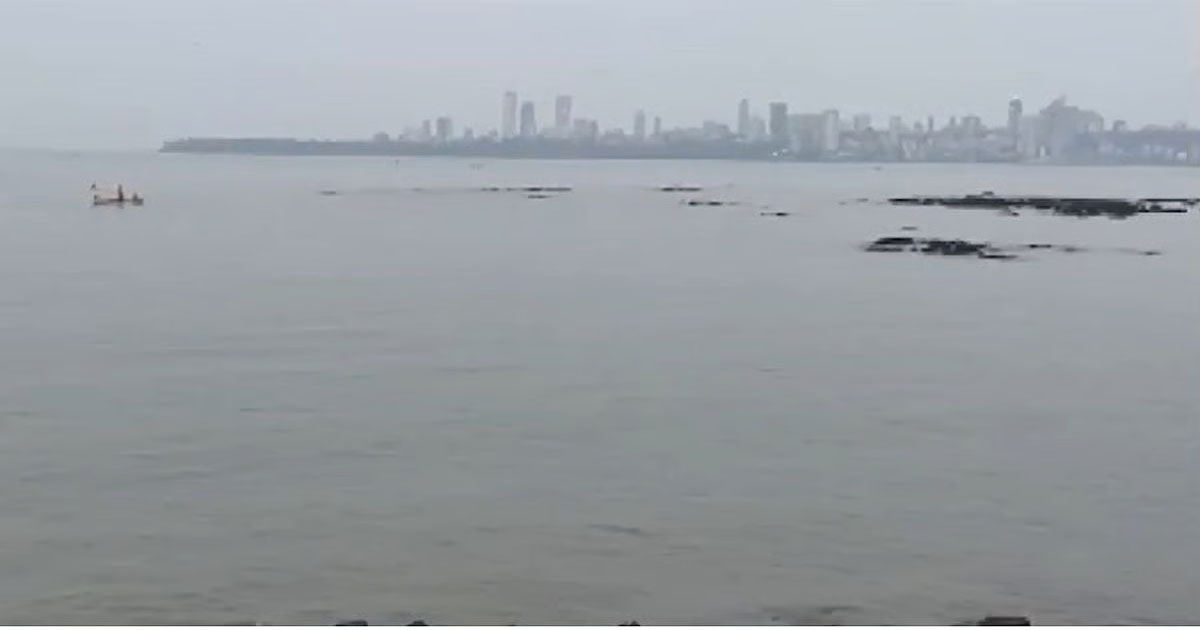
Mumbai: The city woke up to clear, sunny skies and rising temperatures on Tuesday, March 24, with the India Meteorological Department (IMD) issuing a ‘heatwave’ alert. As daytime temperatures are set to rise sharply, residents are urged to take necessary precautions to protect themselves from the heat. Meanwhile, Mumbai’s air quality has fluctuated over the past 24 hours but has continued to remain in the ‘poor’ category.
According to the IMD, Mumbai is likely to witness temperatures ranging between 22°C and 36°C, indicating a noticeable spike in heat levels. Citizens have been advised to avoid prolonged exposure to direct sunlight, stay well hydrated, and opt for light meals to cope with the increasing heat and humidity.
Morning observations from key weather stations suggested a rise in temperatures compared to the previous day. Colaba recorded 28.6°C, while Santacruz registered 30°C, both reflecting warmer conditions. Neighbouring regions reported even higher temperatures, with Thane touching 38°C and Navi Mumbai recording 36°C.
On the air quality front, Mumbai’s Air Quality Index (AQI) remained largely unchanged over the past 24 hours. As per AQI.in data, the city recorded an overall AQI of 112, placing it in the ‘poor’ category.
Throughout the day yesterday, the AQI levels fluctuated between ‘moderate’ and ‘poor’. The lowest AQI reading of 67 was recorded at 5.30 am this morning, before gradually rising to a high of 124 at 8.00 am.
At a local level, several areas continued to report significantly poor air quality. Subhash Nagar recorded the highest AQI at 263, falling under the ‘unhealthy’ category. This was followed by Govandi West (253), Kannamwar Nagar (250), Rajiv Gandhi Nagar (243), and Savitribai Phule Nagar (233), falling into the ‘Unhealthy’ category.
In contrast, some parts of the city reported relatively better air quality with Gamdevi Station 1 recording the lowest AQI at 25 (Good). Green Hills recorded an AQI of 47, also falling into the ‘good’ category. Other areas such as Mulgoan (58), Worli (72), and Malad (73) remained ‘moderate’ range.
As per standard air quality classifications, AQI values between 0 and 50 are considered ‘good’, 51 to 100 ‘moderate’, 101 to 200 ‘poor’, 201 to 300 ‘unhealthy’ and levels above 300 are classified as ‘severe’ or ‘hazardous’.

Panic Grips Navi Mumbai: Long Queue Of Residents Seen At Vashi Petrol Pump Amid Fuel Shortage Rumours

Mumbai: 28-Year-Old Ghatkopar Woman Killed By Speeding Tanker While Crossing Road, Driver Arrested

Congress Leader Rahul Gandhi Visits Sir Ganga Ram Hospital To Meet Sonia Gandhi; Cancels Kerala Visit

Rumours Debunked: Palghar District Administration Clarifies No Shortage Of Petrol And Diesel Despite Prevailing Global Tensions

Abu Asim Azmi expresses concern over incidents of hate speech-related crimes in Maharashtra, demands strict action in the House of Assembly

Married Mumbai Woman Mocked In Andheri Society Over ‘Lift Kissing’ CCTV Video, Files Police Complaint

Mumbai: JBCN International School In Borivali Gets Bomb Threat, Search Reveals Hoax, Students Safe

Mahayoti’s big gift to the people of Mumbai… Now there is no tax for houses up to 500 square feet, the Municipal Corporation has increased this limit to 700 square feet.

LPG Crisis In Maharashtra: Cyber Crime On Rise Amid Shortage, 2 Women Lose ₹4 Lakh In ‘Gas Update’ Online Scam In Kalyan-Dombivli

Rashmika Mandanna-Vijay Deverakonda Wedding: Virosh Turn Modern Day Prince & Princess For Their Dreamy Sangeet Ceremony
-

 Crime4 years ago
Class 10 student jumps to death in Jaipur
-

 Maharashtra1 year ago
Mumbai Local Train Update: Central Railway’s New Timetable Comes Into Effect; Check Full List Of Revised Timings & Stations
-

 Maharashtra1 year ago
Mumbai To Go Toll-Free Tonight! Maharashtra Govt Announces Complete Toll Waiver For Light Motor Vehicles At All 5 Entry Points Of City
-

 Maharashtra1 year ago
False photo of Imtiaz Jaleel’s rally, exposing the fooling conspiracy
-

 National News1 year ago
Ministry of Railways rolls out Special Drive 4.0 with focus on digitisation, cleanliness, inclusiveness and grievance redressal
-

 Maharashtra1 year ago
Maharashtra Elections 2024: Mumbai Metro & BEST Services Extended Till Midnight On Voting Day
-

 National News2 years ago
J&K: 4 Jawans Killed, 28 Injured After Bus Carrying BSF Personnel For Poll Duty Falls Into Gorge In Budgam; Terrifying Visuals Surface
-

 Crime1 year ago
Baba Siddique Murder: Mumbai Police Unable To Get Lawrence Bishnoi Custody Due To Home Ministry Order, Says Report