
National News
Telangana News: Denied Ambulance, Tribal Woman From Tulsipet Village Gives Birth On Road

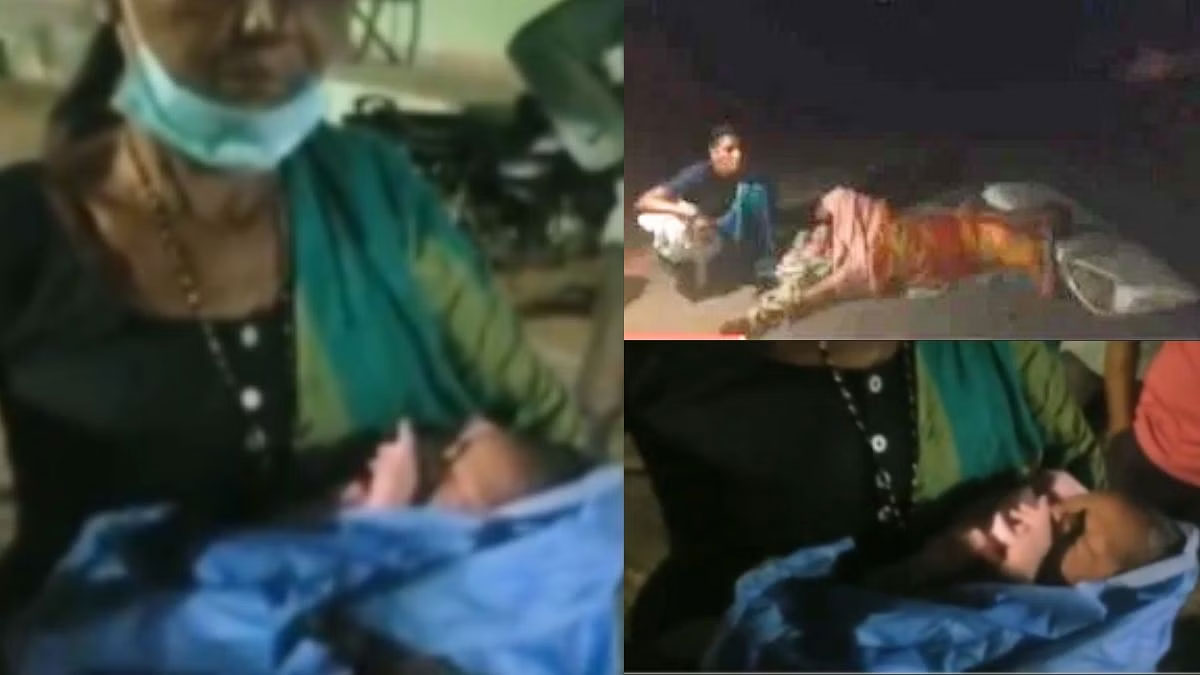
Hyderabad: An Adivasi woman gave birth to a baby on road while waiting for the ambulance in Telangana’s Nirmal district. The woman could not be shifted to hospital in time as the ambulance did not arrive despite the phone call from her family members. They were told that there is no fuel in the vehicle. Gangamani from remote Tulsipet village in Pembi mandal developed labour pains on Thursday night.
Road connectivity problem
As the village has no road connectivity, the woman’s family members carried her on their hands to cross a stream and reach the nearest road. When they called 108 ambulance service to reach the government hospital at mandal headquarters, they were told that the vehicle was running out of fuel.
The ambulance arrived only after the delivery. The villagers have demanded road connectivity to prevent such incidents.
Mother and newborn’s health
The woman had to go through the agony for four hours and delivered the baby on the road with the help of family members. Both the woman and baby boy were safe and shifted to hospital.

National News
CM Yogi’s ‘2 namoone’ jibe at Oppn over codeine row, Akhilesh hits back with a twist (Lead)

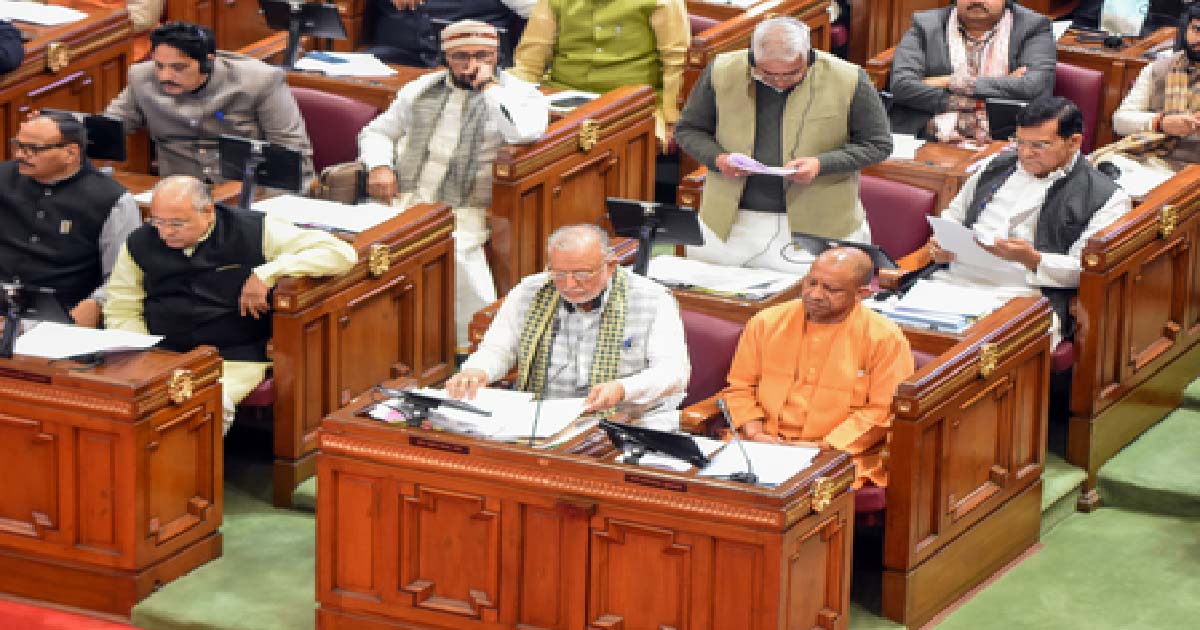
Lucknow, Dec 22: Uttar Pradesh Chief Minister Yogi Adityanath on Monday launched a tirade at the opposition over the codeine cough syrup controversy and hurled a ‘2 namoone’ jibe — pointed towards two ‘young’ leaders, one in Delhi and the other in Lucknow.
The Chief Minister, speaking in the Legislative Assembly, rejected any reports of death in the state due to codeine syrup and also vowed to take bulldozer action against those involved in its manufacture and illegal trade.
“No deaths have occurred from codeine cough syrup in Uttar Pradesh… There are two namoones inside the country, one sitting in Delhi and one in Lucknow. Whenever any discussion happens in the country, they immediately flee the country,” he said, taking a swipe at the Leader of Opposition (LoP) Rahul Gandhi and Samajwadi Party (SP) supremo Akhilesh Yadav, without taking names.
The Chief Minister added that strict action would be taken under the Narcotic Drugs and Psychotropic Substances (NDPS) Act against all those involved in illegal trade and also drew a link between the syrup’s licence with the then SP government.
“The biggest wholesaler, who was first caught by the STF, was issued a licence by the Samajwadi Party in 2016,” he pointed out.
CM Yogi’s remarks in the Assembly came on the back of opposition leaders staging a protest inside and outside the Assembly, demanding a discussion on the cough syrup matter.
The SP chief was, however, quick to respond to the Chief Minister’s diatribe and hit back with a twist.
Akhilesh Yadav interpreted CM Yogi’s remarks as “self-acceptance of two power centres” in the BJP and projected it as a fight between the two.
Insinuating that there was a power tussle between the BJP’s central leadership and the Yogi government, he said that it has come out in the open and the latter should be “wary of offending” the former.
“Self-Acceptance! No one expected the Delhi-Lucknow feud to escalate to this point. People holding constitutional positions should at least maintain some public decorum among themselves and not cross the bounds of propriety. BJP folks should not bring their party’s internal squabbles out to the crossroads. If someone takes offence somewhere, you might have to backtrack,” he wrote in a post on X.
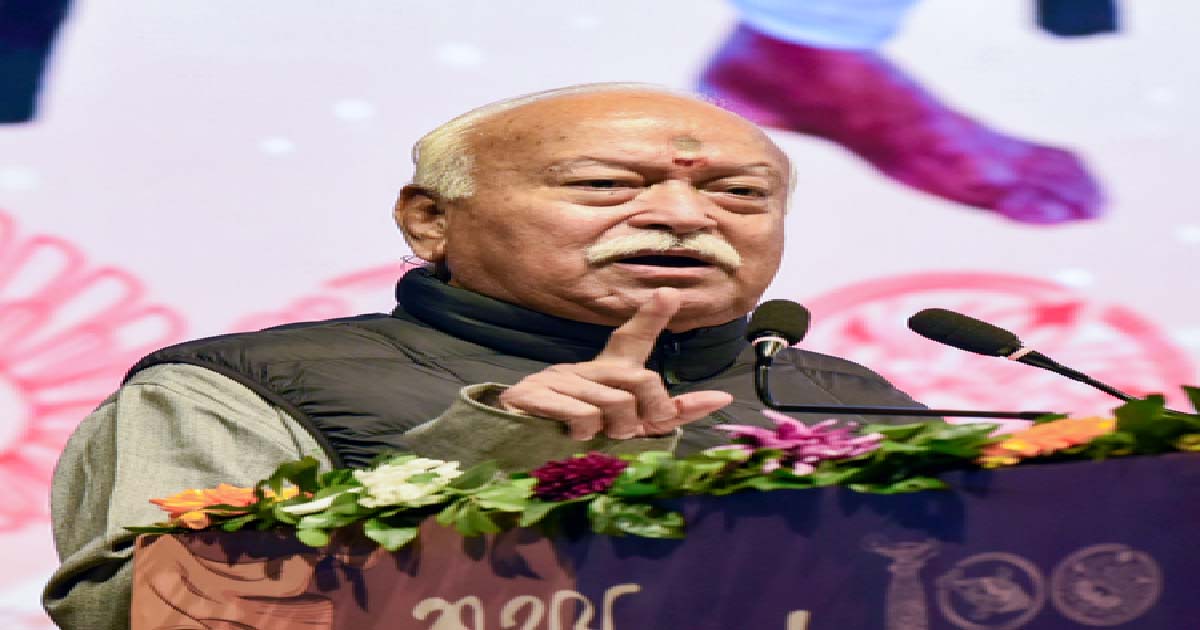
New Delhi, Dec 22: The BJP on Monday came out in support of Rashtriya Swayamsevak Sangh (RSS) chief Mohan Bhagwat’s remarks describing India as a “Hindu Rashtra” and his comments flagging what he termed “Islamic extremism” in West Bengal, triggering sharp political reactions across parties.
Addressing a gathering on Sunday, Bhagwat had asserted that India is a “Hindu nation” and said no constitutional sanction is required for it, as it is a “truth”.
He also raised questions over suspended Trinamool Congress MLA Humayun Kabir’s announcement to construct a Babri Masjid-like mosque in West Bengal, alleging that the move was “being done for votes”. The RSS chief further stated that government funds should not be used for the construction of religious places.
Backing Bhagwat’s remarks on Bengal, BJP spokesperson Pratul Shah Deo cited recent developments in Murshidabad, where an announcement regarding the construction of a Babri Masjid had been made.
Speaking to media, Deo said, “The entire West Bengal government called Maulanas there and afterwards, a large gathering was held where it was stated that we will build the Babri Masjid here. This is being done solely by the Trinamool Congress to appease the Muslim community, which is an insult to the Sanatanis. For show, they did suspend the MLA, but his arrest has not yet been made, indicating collusion between the government and this suspended MLA.”
He further alleged that the issue was deliberately raised with elections approaching.
“This is not an issue that needed to be raised at this time, but with elections in sight, the Trinamool Congress has deliberately raised this issue through one of its MLAs. So, the RSS chief is right,” Deo added.
BJP MLA Ram Kadam also supported Bhagwat’s remarks and stressed the need for Hindu unity.
Speaking to media, Kadam said, “Our Sarsanghchalak’s statement is true and attempts to shed light on the reality. On the sacred land of West Bengal, Mamata Banerjee and her supporters have caused suffering, harassment and oppression to our Hindus. They have forced their way into homes, committed misconduct against women and the people of Bengal are witnessing all of this.”
Kadam further alleged political motives behind references to Babri Masjid.
“Those who claim to speak in the name of Babri are doing so only for political gains. They do not care for anyone and are merely using excuses to gain control over a particular religion. However, if Hindus unite, no one would dare to engage in such Pakistan-pleasing, deceitful actions,” he said.
Shiv Sena leader Manisha Kayande emphasised that Hindus should unite in the face of emerging challenges.
“Considering the kind of activities taking place in our country and the nature of threats we face, Hindus should not divide themselves on the basis of caste and must unite. Our party firmly believes in this stance,” she told media.
The Opposition, however, strongly criticised the RSS chief’s remarks, asserting that India is governed by the Constitution and not by ideological declarations.
Samajwadi Party MP Awadhesh Prasad questioned the premise of the “Hindu Rashtra” statement.
Speaking to media, he said, “I would like to ask Mohan Bhagwat, very respectfully, what kind of Hindu nation he wants. Today, the highest constitutional and administrative positions in our country are held by Hindus. The President, the Prime Minister and the Chief Justice of the Supreme Court are all Hindus.”
Prasad pointed out that political leadership across parties is predominantly Hindu.
“Leaders of the ruling party are Hindus, and even leaders of the Opposition, including the Samajwadi Party, are Hindus. The Chief Minister of Uttar Pradesh is also a Hindu. So what is the scale or definition by which they measure who is Hindu and Hindu Rashtra?” he asked.
He further said Bhagwat must clarify whether such a vision aligns with constitutional values.
“Our country functions through the Constitution, through which Baba Saheb Ambedkar gave equal rights to all communities. Bhagwat should clarify whether he intends to follow the Constitution framed by Baba Saheb Ambedkar in his so-called Hindu Rashtra,” Prasad added.
Janata Unnayan Party founder Humayun Kabir also reacted to Bhagwat’s comments, dismissing fears of unrest.
Speaking to reporters, he said, “We respect Mohan Bhagwat, but his assessment that there might be riots here is incorrect. We will not allow any such situation. When a Trinamool leader announced the construction of a temple, there were no riots. So why would it happen now?”
Kabir further alleged links between the RSS and the Bengal government.
“Mohan Bhagwat needs the state government’s permission to visit here. Since Mamata Banerjee has been helping the RSS in the state, the number of their shakhas has increased from 558 to 12,000. On the other hand, madrasas receive nothing, and the Muslim community does not get any benefits,” he claimed.

New Delhi, Dec 22: The Supreme Court on Monday stayed the conviction of senior Nationalist Congress Party (NCP) leader and former Maharashtra minister Manikrao Kokate in the 1995 Nashik housing fraud case.
A Bench of Chief Justice of India (CJI) Surya Kant and Justice Joymalya Bagchi issued notice to the Maharashtra government on Kokate’s plea challenging the refusal of the Bombay High Court to stay his conviction. Though it protected his membership in the Maharashtra Legislative Assembly, the apex court clarified that Kokate will not be allowed to exercise any governmental powers while the proceedings are pending.
“Issue notice. Meanwhile, the conviction of the petitioner shall remain stayed to the extent that there shall be no disqualification as a Member of the Legislative Assembly. However, no power shall be exercised by the petitioner,” the CJI Kant-led Bench ordered.
The relief from the top court comes days after the Bombay High Court had refused to stay Kokate’s conviction but suspended his two-year jail sentence and granted him protection from arrest as it heard his revision plea against the sessions court verdict.
Earlier, a Nashik sessions court had convicted Kokate in a case involving the illegal acquisition of government flats reserved under the Chief Minister’s quota and sentenced him to two years’ rigorous imprisonment along with a fine of Rs 50,000.
Following the sessions court verdict, Kokate was stripped of the Sports and Minority Affairs portfolios, and he resigned from the Maharashtra Cabinet. His resignation was accepted by Maharashtra Deputy Chief Minister and NCP chief Ajit Pawar amid a chorus from the Opposition.
The case against Kokate and his brother Vijay Kokate dates back to 1995 and pertains to the alleged misappropriation of flats meant for low-income individuals who do not own any other property.
The prosecution alleged that the brothers submitted forged affidavits and documents to acquire flats in the Nirman View Apartment at Canada Corner in Nashik. Investigations had also revealed that the brothers were using two additional flats in the same building that had been allotted to other beneficiaries.
Based on an inquiry by the district administration, Vishwanath Patil, then an official of the Urban Land Ceiling (ULC) department, lodged a complaint, following which a fraud case was registered at the Sarkarwada Police Station.
Since his induction into the Cabinet, Kokate has frequently courted controversy. He was earlier divested of the Agriculture portfolio following allegations that he was playing games on his mobile phone during a Legislative Council session.
Kokate denied the charge, but the episode drew widespread criticism. He also drew criticism for remarks on farmers and for attacking coalition partner BJP during a municipal campaign.

Mumbai: Rickshaw driver beaten up in Vikhroli on suspicion of child theft, burqa-clad driver did this to collect fare, police claim

Municipal Corporation in Mumbai is committed to conducting administration and election process in a fearless, free and transparent environment: Bhushan Gagrani

Mira Road: Bundles Of Blank PVC Aadhar Card Found On Roadside Near Kashimira Ahead Of Municipal Corporations Polls 2026

CM Yogi’s ‘2 namoone’ jibe at Oppn over codeine row, Akhilesh hits back with a twist (Lead)

Drishyam 3 Release Date: Will It Be Ajay Devgn Starrer Vs Shah Rukh Khan’s King At The Box Office?

Kalyan College Namaz Controversy: SIO Demands Action Against Perpetrators

Sensex, Nifty open lower amid weak global cues

Veteran Bollywood Actor Dharmendra Passes Away at 89

Mukesh Ambani, Shiv Sena UBT Chief Uddhav Thackeray & Son Aaditya Share Warm Greetings At Mumbai’s Swadesh Event

Kartik Aaryan, Ananya Panday promote ‘Tu Meri Main Tera, Main Tera Tu Meri’ on Amitabh Bachchan’s KBC
-

 Crime3 years ago
Class 10 student jumps to death in Jaipur
-
 Maharashtra1 year ago
Mumbai Local Train Update: Central Railway’s New Timetable Comes Into Effect; Check Full List Of Revised Timings & Stations
-
 Maharashtra1 year ago
Mumbai To Go Toll-Free Tonight! Maharashtra Govt Announces Complete Toll Waiver For Light Motor Vehicles At All 5 Entry Points Of City
-
 Maharashtra1 year ago
False photo of Imtiaz Jaleel’s rally, exposing the fooling conspiracy
-
 National News1 year ago
Ministry of Railways rolls out Special Drive 4.0 with focus on digitisation, cleanliness, inclusiveness and grievance redressal
-
 Maharashtra1 year ago
Maharashtra Elections 2024: Mumbai Metro & BEST Services Extended Till Midnight On Voting Day
-

 National News1 year ago
J&K: 4 Jawans Killed, 28 Injured After Bus Carrying BSF Personnel For Poll Duty Falls Into Gorge In Budgam; Terrifying Visuals Surface
-
 Crime1 year ago
Baba Siddique Murder: Mumbai Police Unable To Get Lawrence Bishnoi Custody Due To Home Ministry Order, Says Report