
Maharashtra
Supreme Court Stays Bombay High Court’s Acquittal in 2006 Mumbai Train Blasts Case


New Delhi, July 24, 2025 — The Supreme Court of India has issued a stay on the Bombay High Court’s recent decision to acquit 12 men previously convicted in the 2006 Mumbai suburban train bombings. The apex court, however, clarified that the accused will not need to return to jail while the legal process continues.
The move comes days after the Maharashtra government filed a challenge against the High Court’s ruling, expressing serious concern over the acquittal of all 12 individuals who had been found guilty nearly a decade earlier. The Supreme Court agreed to examine the appeal and put the acquittal order on hold until further notice.
Background of the Case
On July 11, 2006, a series of coordinated bomb blasts targeted local trains on Mumbai’s Western Railway line during evening rush hour. The attacks resulted in the deaths of around 190 people and left over 800 injured. It was one of the deadliest terror strikes in India’s history.
In 2015, a special court convicted 12 men under anti-terror laws, sentencing five to death and the remaining to life imprisonment. However, the Bombay High Court overturned these convictions in July 2025, citing weak and unreliable evidence, inconsistencies in witness testimonies, and procedural lapses in the investigation.
Supreme Court’s Intervention
Responding to the state’s petition, the Supreme Court noted the seriousness of the matter and temporarily suspended the High Court’s decision. The court stated that although the acquittal order is stayed, the accused who had already been released will not be required to surrender at this stage.
Government’s Stand
The Maharashtra government described the High Court’s judgment as deeply concerning, arguing that the earlier trial had followed due process and that crucial evidence—such as confessions and material recovered—was improperly dismissed. The government urged the Supreme Court to uphold the original convictions in the interest of justice for the victims and their families.
What Lies Ahead
The Supreme Court is expected to conduct a detailed review of the High Court’s findings and the prosecution’s evidence. The final verdict could have a significant impact on how terrorism-related cases are investigated and prosecuted in the future, especially with respect to the handling of confessional statements, forensic evidence, and procedural safeguards.
The case continues to be a matter of national attention due to its historical gravity and implications for the justice system. Families of the victims, legal experts, and civil rights advocates are all watching closely as the country’s top court re-evaluates one of India’s most complex terror cases.

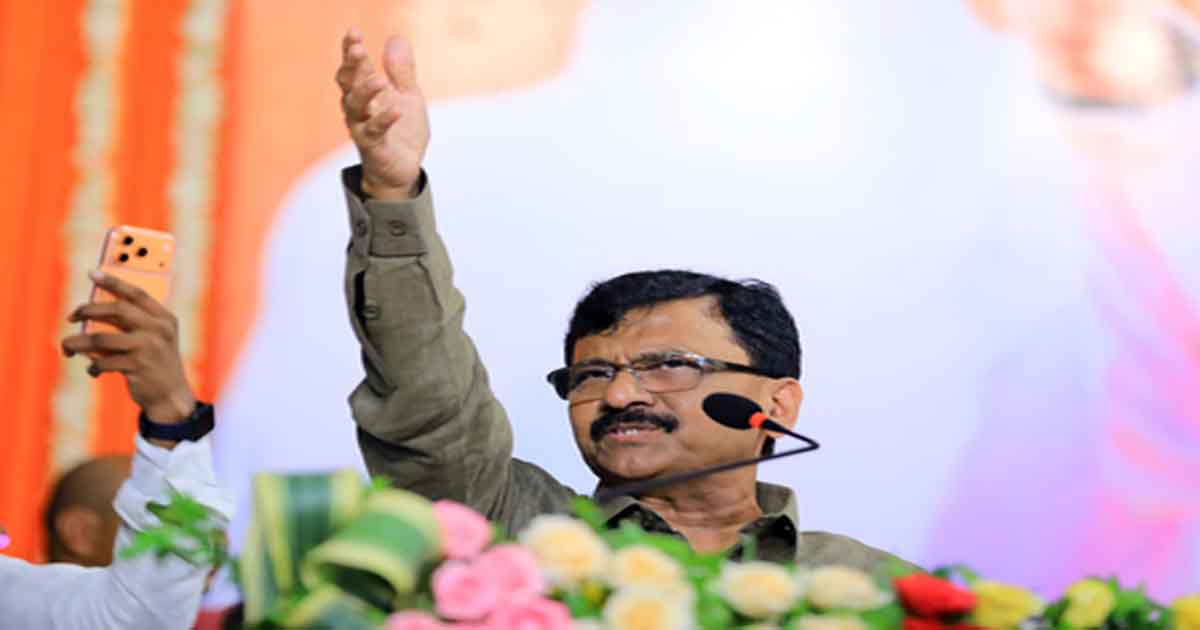
A political debate has emerged in Maharashtra following a proposal by Shiv Sena Uddhav Balasaheb Thackeray MP Sanjay Raut to rename the city of Nagpur as “Deekshabhoomi.”
Speaking to the media in Nagpur, Maharashtra Revenue Minister and Nagpur Guardian Minister Chandrashekhar Bawankule responded to the demand by stating that the global significance of Deekshabhoomi is already well known, regardless of Raut’s remarks.
Speaking to reporters in Mumbai, Raut on Friday stated that changing the city’s name would serve as a true tribute to B. R. Ambedkar, noting that Ambedkar’s historic social revolution began in Nagpur.
He challenged Maharashtra Chief Minister Devendra Fadnavis—who hails from and represents Nagpur—to initiate an official proposal for the name change.
He added that if the state government brings forward such a proposal, Shiv Sena (UBT) and party chief Uddhav Thackeray would extend their full support.
According to Raut, Dr B R Ambedkar initiated his social revolution in Nagpur, making the renaming of the city after Deekshabhoomi a fitting tribute.
He claimed that Shiv Sena (UBT) chief Uddhav Thackeray had also made suggestions regarding this, adding that his party would support the move if Chief Minister Devendra Fadnavis and the state government drafted a formal proposal.
Raut’s demand comes amid an ongoing political controversy over renaming Mumbai’s Dadar station as Chaityabhoomi.
Following confusion over whether the Dadar railway station or the Dadar Metro station was being renamed to Chaityabhoomi—which required a clarification from the Chief Minister’s Office he argued that rather than focusing solely on a smaller station, renaming an entire city like Nagpur to Deekshabhoomi would be a far greater honour to Dr Ambedkar’s legacy.
However, the Chief Minister’s Office (CMO) clarified that only the underground Metro Line 3 station is being renamed as Chaityabhoomi.
An initial official press release mistakenly stated that the Dadar railway station would be renamed, prompting a clarification from the Chief Minister’s Office (CMO) to prevent public confusion and political pushback.
During the same press interaction, Raut also criticised the state government over delays and rising costs associated with the construction of the Babasaheb Ambedkar memorial at Indu Mill in Mumbai.
Meanwhile, Minister Bawankule noted that Nagpur’s Deekshabhoomi—the sacred monument of Navayana Buddhism where Dr Ambedkar embraced Buddhism along with hundreds of thousands of followers on October 14, 1956—already enjoys international recognition.
“Every person visiting Nagpur visits Deekshabhoomi. Nagpur has established its global identity through the name of Deekshabhoomi, and the entire world knows its importance,” he stated, without committing to an official renaming proposal.
During the same media interaction, Bawankule reaffirmed the state government’s commitment to completing the B R Ambedkar Memorial at Mumbai’s Indu Mill compound.
He acknowledged that project costs have escalated and work faced temporary delays due to material shortages. However, he assured that the government has allocated the necessary funds and is working to finish the remaining construction promptly.
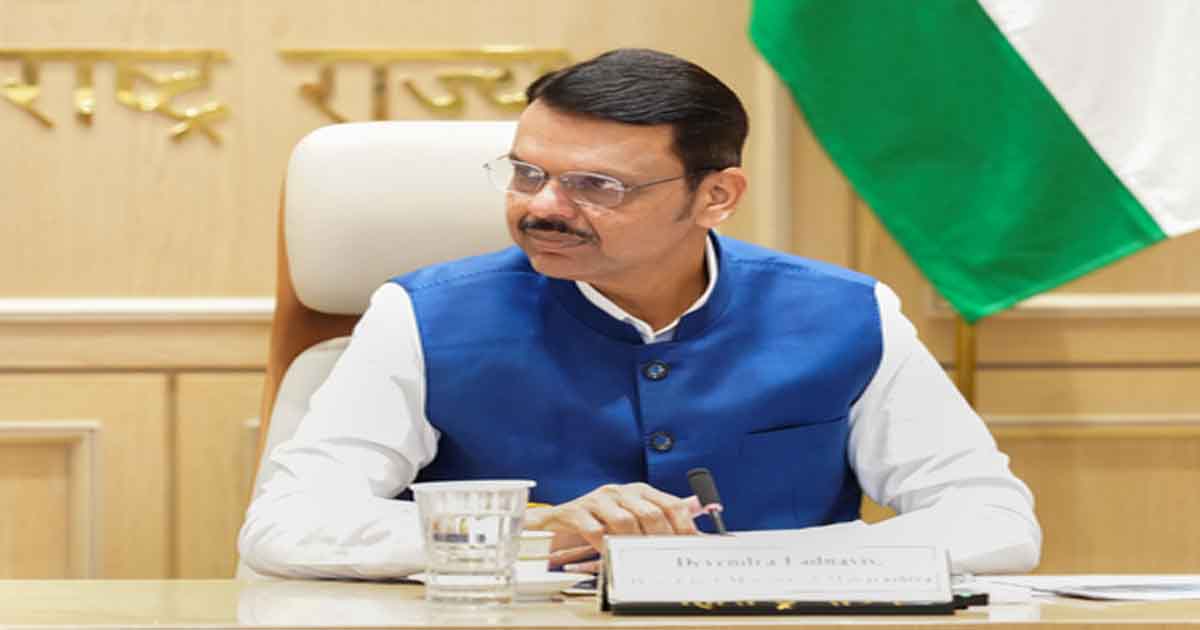
Chief Minister Devendra Fadnavis said on Friday said that long-term planning, proper land management, timely execution of infrastructure projects, and boosting agricultural productivity are vital to Maharashtra’s all-round development.
He added that the state government is actively implementing a range of development initiatives to achieve these goals.
He made the remarks during a review meeting on Maharashtra’s development projects at his official residence, held with NITI Aayog Vice Chairman Ashok Kumar Lahiri.
Thanking NITI Aayog, the Chief Minister noted that the think tank has consistently provided guidance and practical advice to the state, expressing hope for continued support going forward. He reiterated that the administration is working in mission mode to complete development works at a set pace.
During the meeting, special emphasis was placed on long-term planning for land acquisition. Lahiri urged authorities to resolve pending issues related to land acquisition, infrastructure, and agriculture on priority.
Observing that land development and sound management can generate substantial revenue, Lahiri emphasised acquiring land needed for future development projects in advance and managing it effectively.
Land available at lower costs today can become far more valuable in the future, he said, calling for an ambitious land acquisition policy framed with future generations in mind.
He also expressed satisfaction with the progress of the state government’s flagship Vadhavan Port project.
Earlier, CM Fadnavis presented the state’s long-term development roadmap—anchored around the goal of making Maharashtra a $5-trillion economy by 2047, aligned with Viksit Bharat 2047.
He further stated that the government has laid focus on developing Mumbai Metropolitan Region (MMR) into a major economic engine, with NITI Aayog partnering on the city-region growth strategy to scale MMR’s economy from $140 billion toward $300 billion by 2030 and $1 trillion long-term.
A special development plan under post-Naxal development initiatives is being implemented to turn Gadchiroli into India’s first major integrated steel hub, alongside investments in infrastructure, education, healthcare, and employment.
Maharashtra
Prabhadevi anti-encroachment demolition drive halted after Maha Dy CM Shinde talks with Railway Minister Vaishnaw

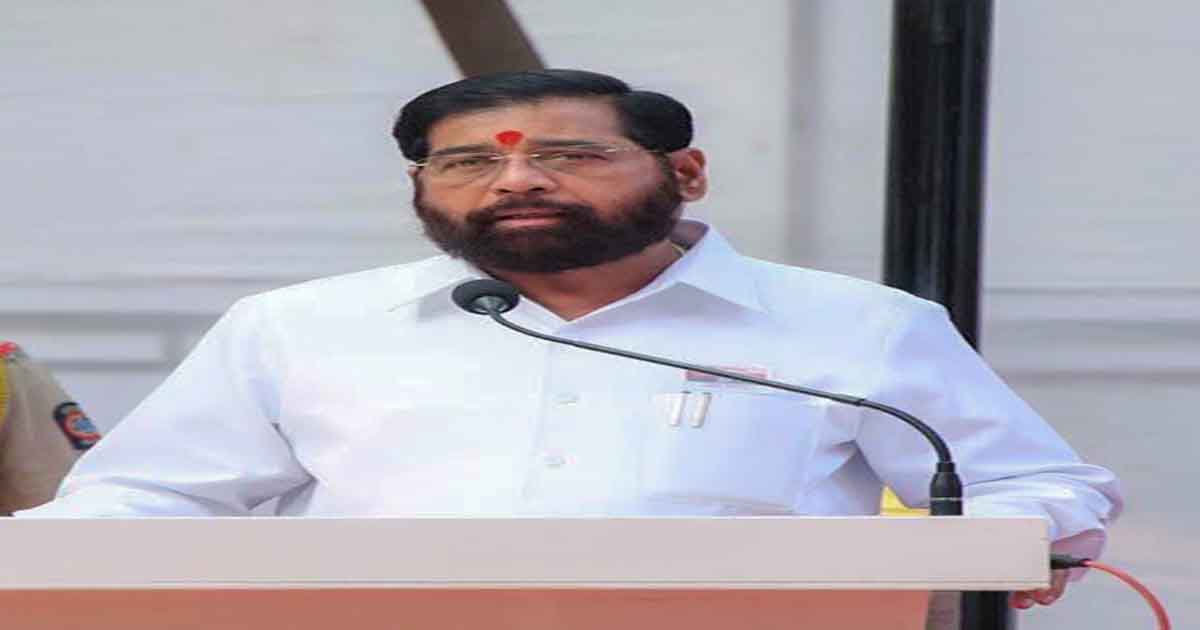
A major anti-encroachment demolition drive near Prabhadevi railway station on the Western line was on Friday abruptly halted following a direct phone call between Maharashtra Deputy Chief Minister Eknath Shinde and Union Railway Minister Ashwini Vaishnaw.
Western Railway had scheduled a two-day demolition drive on Thursday and Friday to clear 101 unauthorised structures situated on railway land on the west side of Prabhadevi station.
A demolition squad, accompanied by JCB excavators and a heavy police deployment, arrived at the site to execute the action.
The move triggered fierce protests from local residents, who demanded proper rehabilitation before any structures were razed.
Shiv Sena (UBT) leader Ajay Choudhari and Maharashtra Navnirman Sena (MNS) leader Bala Nandgaonkar joined the residents on the streets, attempting to halt the drive through urgent phone calls to authorities.
Despite the opposition, railway officials and police initially refused to back down. The standoff ended only after Dy CM Shinde intervened and spoke directly with Union Railway Minister Ashwini Vaishnaw. Urging an immediate stop to the demolition, he requested that further action be taken only after taking local residents into confidence.
Following the conversation, Minister Vaishnaw issued immediate orders to suspend the operation, prompting the JCBs and demolition teams to withdraw from the area.
Shinde explained that a joint meeting between the Slum Rehabilitation Authority (SRA), the State Housing Department, and the Railway Ministry had already taken place the previous week.
“I personally discussed this with Railway Minister Ashwini Vaishnaw during that meeting,” Shinde said.
“These residents have been living here for 50 to 60 years; they are not recent settlers. We must ensure their proper rehabilitation. Together, the Railway Department and the Housing Department will rehabilitate them. Accordingly, the Railways’ R&D wing and our SRA policy team jointly prepared a Detailed Project Report (DPR), and it was decided that no demolition should occur until the rehabilitation process is settled,” he said.
Expressing disappointment that railway officials still proceeded to the site despite the agreement, Shinde added, “I just spoke with Ashwini Vaishnaw and reminded him that this action shouldn’t happen given our prior understanding. He assured me that he would instruct his officials to stop the drive immediately.”

Sanjay Raut demands renaming Nagpur to ‘Deekshabhoomi’; sparks debate in Maha

Maha CM directs long term water supply planning for Mumbai and Pune Metropolitan regions

UP CM Yogi Adityanath pays last respects to mother at ancestral village in Uttarakhand

K’taka: Parents abduct medical student over relationship with Hindu youth

Anant Singh’s daughter’s ‘Tilak’ ceremony held in Barh; 100-vehicle convoy for Danapur turns heads

Congress trying to protect 3 crore Bangladeshi infiltrators in voter list: HM Shah

Red Fort car blast probe exposes blueprint for spread of terror modules across India

Trump flags Iran targets as talks continue

‘Conspiracy, not accident’: NCP on Ajit Pawar death

BJP, Shiv Sena slam Mallikarjun Kharge for terming Diwali ‘Khushiyon ka Eid’
-

 Crime4 years ago
Class 10 student jumps to death in Jaipur
-

 Maharashtra2 years ago
Mumbai Local Train Update: Central Railway’s New Timetable Comes Into Effect; Check Full List Of Revised Timings & Stations
-

 Maharashtra2 years ago
Mumbai To Go Toll-Free Tonight! Maharashtra Govt Announces Complete Toll Waiver For Light Motor Vehicles At All 5 Entry Points Of City
-

 Maharashtra2 years ago
False photo of Imtiaz Jaleel’s rally, exposing the fooling conspiracy
-

 National News2 years ago
Ministry of Railways rolls out Special Drive 4.0 with focus on digitisation, cleanliness, inclusiveness and grievance redressal
-

 Maharashtra2 years ago
Maharashtra Elections 2024: Mumbai Metro & BEST Services Extended Till Midnight On Voting Day
-

 National News2 years ago
J&K: 4 Jawans Killed, 28 Injured After Bus Carrying BSF Personnel For Poll Duty Falls Into Gorge In Budgam; Terrifying Visuals Surface
-

 Crime2 years ago
Baba Siddique Murder: Mumbai Police Unable To Get Lawrence Bishnoi Custody Due To Home Ministry Order, Says Report