
Crime
Stampede case: RCB Marketing Head, DNA staffers among four held in Bengaluru


Bengaluru, June 6: Four people, including the Royal Challengers Bengaluru (RCB) Marketing Head and DNA Event Management Company staffers, were arrested on Friday in connection with the stampede near the Chinnaswamy Stadium in Bengaluru that claimed 11 lives.
Nikhil Sosale, Head of Marketing for RCB, along with Sunil Matthew, Kiran, and Sumanth from DNA Event Management, have been arrested, according to the police.
Police said the accused have been arrested in a joint operation at the Bengaluru International Airport.
The police have also raided the residences of Karnataka State Cricket Association (KSCA) Secretary Shankar and KSCA Treasurer Jayaram.
The personnel of the Cubbon Park police, who have registered the case in this regard and the special wing of the Central Crime Branch (CCB) conducted the joint operation.
The arrested individuals were on their way to Mumbai. All four accused have been brought to the Cubbon Park Police Station, where they were being interrogated by Seshadripuram Assistant Commissioner of Police (ACP).
Even after the permission for the victory parade was not given, Sosle posted a message on social media about the victory parade and later deleted it, the police said.
He also announced that free tickets are available at the Stadium for the victory celebration event.
He allegedly further announced that the tickets would be available at Gate numbers 9 and 10 at 1 p.m. on Wednesday, and did not make arrangements to distribute the tickets.
The post was also made on the Royal Challengers’ official handle that the entry will be given at 3 p.m. This post has led to the gathering of lakhs of people, police said.
The DNA Company has acted as per the directions of Sosle. Among the total 21 gates, only three gates were opened, creating chaos.
Karnataka Chief Minister Siddaramaiah on Thursday announced the suspension of five senior police officers, including the Bengaluru Police Commissioner and DCP (Central Division), in connection with the stampede incident on June 4.
“Such an incident has not occurred since I became an MLA, minister, Dy CM, and Chief Minister. This incident has deeply saddened us,” he stated.
The Karnataka Police in the FIR claimed that the accused parties — RCB franchise, DNA event management firm, and the Karnataka State Cricket Association (KSCA) Administrative Committee — organised the victory celebration without the necessary permissions.
The FIR has been registered under Sections 105 (culpable homicide not amounting to murder), 115(2) (voluntarily causing hurt), 118(1) (voluntarily causing hurt or grievous hurt by using dangerous weapons or means), 118(2) read with Section 3(5) (voluntarily causing grievous hurt, when the act is done by several persons in furtherance of common intention), 190 (unlawful assembly), 132 (criminal force to deter a public servant), 125(a) (filing false affidavit), and 125(b) (rash and negligent acts that endanger human life) of Bharatiya Nyaya Sanhita.


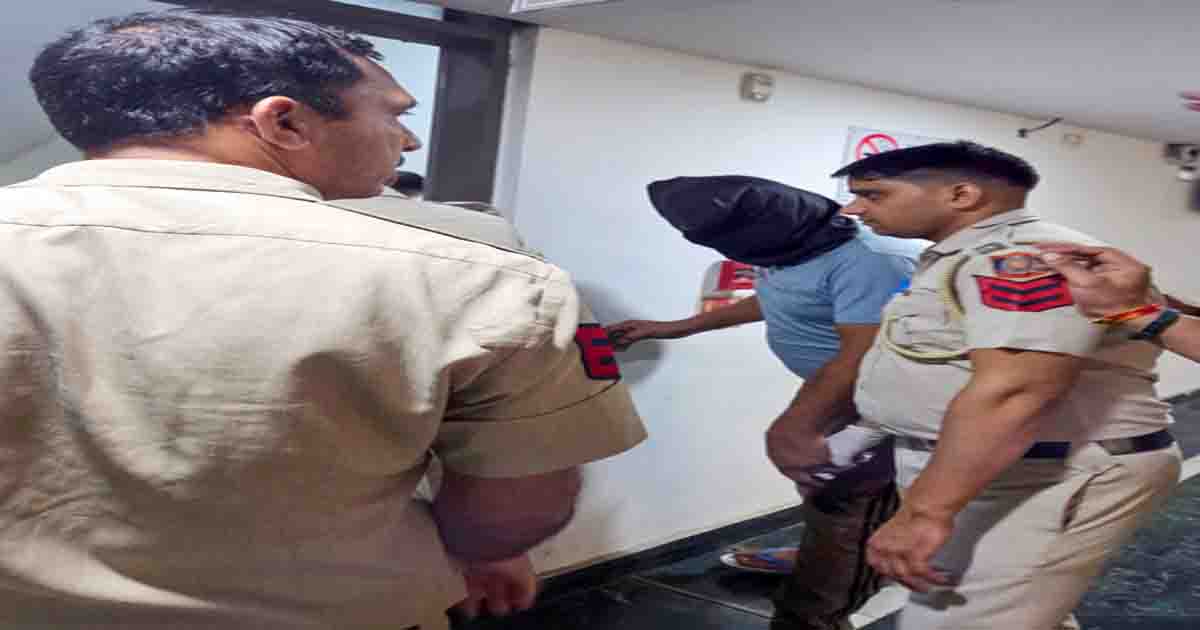
Necessary safety and security measures have been implemented at the DDA-maintained Aastha Kunj Park, Kalkaji, including deployment of the allotted security personnel, installation of 105 additional lights and CCTV surveillance, an official said on Saturday.
Further strengthening of lighting arrangements is under process, with due consideration to the ecological sensitivity of the Morphological Ridge, said the official on a day when Union Home Minister Amit Shah reviewed the city’s security during a visit to the Delhi Police headquarters.
The new security framework for the park comes against the backdrop of the alleged gang rape of a 17-year-old girl at Aastha Kunj Park on September 21. Three accused were arrested for the crime.
The incident exposed that Aastha Kunj Park — a 142-acre DDA park with 29 multi-access points — continues to suffer from poor lighting, broken perimeter walls, unmanned or missing gates, and a lack of CCTV coverage inside the premises.
According to a status report on the beefed-up security at the DDA park, all security guards, as per the presently allotted strength, have been deployed in the park. Considering its extensive area of 142.41 acres and 29 gates, regular patrolling is undertaken to ensure security coverage across the park.
Two siren-equipped motorcycles, along with torches and essential safety equipment, are deployed for night patrolling. Surprise night inspections are also conducted by the site in-charge, security supervisor and departmental staff to verify security arrangements and guard deployment, said the status report.
For addressing dark spots in the green zone, all 340 existing lights in the park are presently functional. Further, 105 additional lights have been installed in accordance with the recommendations of the Safety Audit Report, it said.
A joint inspection has been conducted with officials of the electrical department, and the proposal for installation of high-mast lights at suitable identified locations is under process, said the status report.
The official pointed out that augmentation of security facilities is being done while bearing ecological considerations in mind.
“Approximately 99 per cent of the park area falls within the Morphological Ridge. Accordingly, additional illumination in densely vegetated areas is being planned judiciously to avoid disturbance to the natural flora and fauna while ensuring adequate lighting along pathways and visitor-use areas,” said the official.
Other steps taken by the agencies include installation of four CCTV cameras, closure of gates at 9 p.m. and biometric attendance for all security guards, said the official.

The Cyber Police Station of Delhi Police’s Central District has arrested a 26-year-old man for cheating a woman Constable of approximately Rs 24 lakh in an investment scam, officials said on Saturday.
The accused, identified as Vikrant Kumar alias Vicky Tomar, a resident of Vazidpur village in Uttar Pradesh’s Baghpat district, was arrested in connection with FIR No. 271/2026, registered on September 8 under Sections 318(4), 316(2) and 74 of the Bharatiya Nyaya Sanhita (BNS).
According to the police, the case was registered following a complaint by Constable Shiwani of Delhi Police, who alleged that the accused approached her on Instagram under the pretext of seeking guidance regarding recruitment to the Delhi Police through the sports quota.
The conversation subsequently shifted to WhatsApp, where the accused allegedly established a rapport with the woman and portrayed himself as a prominent figure in cricket.
Investigators said he later persuaded her to invest money by promising high returns. Trusting his assurances, the complainant allegedly transferred her savings from her Axis Bank account, took a personal loan of Rs 12 lakh and borrowed additional money from acquaintances.
The woman was cheated of approximately Rs 24 lakh in total, the police said.
Of the total amount, around Rs 8 lakh was transferred to bank accounts linked to the online betting platform 1x.com, allegedly at the accused’s direction.
The police are investigating the financial transactions to establish the complete money trail and determine whether other individuals or accounts were involved in the alleged fraud.
The complaint also includes allegations of sexual misconduct. According to the police, during an in-person meeting, the accused allegedly touched the complainant’s waist inappropriately with the intention of outraging her modesty.
The allegation forms part of the case registered against him under the relevant provisions of the BNS.
The Cyber Police Station’s Central District team is continuing its investigation to determine whether the accused allegedly defrauded other people using a similar modus operandi.
Officials said efforts were underway to identify potential victims and establish whether additional financial transactions were linked to the case.
The police have not ruled out the possibility of further developments as the investigation progresses.

The Directorate of Enforcement (ED), Hyderabad Zonal Office, on Friday conducted search operations at seven premises across Hyderabad, Secunderabad and Medchal-Malkajgiri in Telangana under the Prevention of Money Laundering Act (PMLA), an official statement said on Saturday.
The raids targeted the registered office of M/s Kanakadhara Ventures Pvt. Ltd. (KVPL), the residences of its directors, and premises linked to entities and individuals alleged to have acted as conduits for the diversion of bank funds.
The searches form part of an ongoing investigation into the alleged “misutilisation” and diversion of credit facilities sanctioned to KVPL and its directors, the ED statement said.
The ED case stems from an FIR dated December 8, 2022, registered by the Central Bureau of Investigation, Bank Securities and Fraud Branch (BS&FB), Bangalore, on a complaint from Punjab National Bank.
The FIR alleges offences under Sections 120-B, 420, 468 and 471 of the Indian Penal Code, and provisions of the Prevention of Corruption Act, 1988.
According to the agency, a consortium of banks led by Punjab National Bank — comprising IDBI Bank, Union Bank of India, Andhra Bank (now UBI) and Bank of Baroda — suffered a loss of Rs 326.49 crore.
ED investigations revealed that Bank Guarantee and Letter of Credit facilities granted to KVPL were misused. Funds were allegedly diverted through related and conduit entities on the strength of fabricated steel purchase invoices and transport documents.
The company is also accused of operating bank accounts outside the consortium arrangement without the knowledge of the lending banks, the statement said.
During the searches, officials seized incriminating documents, digital devices and other records related to the diversion and layering of funds. Unaccounted cash amounting to Rs 15 lakh was also recovered.
Multiple immovable properties and investments linked to the case have been identified.
ED said further investigation is underway.
The coordinated action underscores the agency’s continued focus on tracing the proceeds of bank frauds and cracking down on complex money-laundering networks involving corporate entities.

Bihar: JD (U) expels Anant Singh, wife Neelam Devi from party for six years

Iranian Speaker Qalibaf unable to attend BRICS Parliamentary Forum in New Delhi

‘Searching for Rs 500 crores too’: Shrikant Shinde reacts to audio clip row

Naseeruddin Shah backs SRFTI students’ protest: BJP trying to frighten future filmmakers

Delhi Aastha Kunj Park: CCTV, 105 new lights in place after last month’s gang rape

Rahul, Cong ecosystem want to force regime change: BJP after Neha Bora praises B’desh Gen-Z protest

BJP pays tribute to ex-President Abdul Kalam, recalls his enduring influence on generations of India’s youth

Attack on democratic rights: INDIA Bloc leaders on detentions of anti-ECI protestors

INDIA bloc begins protest march against ECI

Maha Congress stages agitation against Gyanesh Kumar
-

 Crime4 years ago
Class 10 student jumps to death in Jaipur
-

 Maharashtra2 years ago
Mumbai Local Train Update: Central Railway’s New Timetable Comes Into Effect; Check Full List Of Revised Timings & Stations
-

 Maharashtra2 years ago
Mumbai To Go Toll-Free Tonight! Maharashtra Govt Announces Complete Toll Waiver For Light Motor Vehicles At All 5 Entry Points Of City
-

 Maharashtra2 years ago
False photo of Imtiaz Jaleel’s rally, exposing the fooling conspiracy
-

 National News2 years ago
Ministry of Railways rolls out Special Drive 4.0 with focus on digitisation, cleanliness, inclusiveness and grievance redressal
-

 Maharashtra2 years ago
Maharashtra Elections 2024: Mumbai Metro & BEST Services Extended Till Midnight On Voting Day
-

 National News2 years ago
J&K: 4 Jawans Killed, 28 Injured After Bus Carrying BSF Personnel For Poll Duty Falls Into Gorge In Budgam; Terrifying Visuals Surface
-

 Crime2 years ago
Baba Siddique Murder: Mumbai Police Unable To Get Lawrence Bishnoi Custody Due To Home Ministry Order, Says Report