
National News
Silencing activists, sanctioning splits, a systematic destruction of democracy: Shiv Sena(UBT) in ‘Saamana’

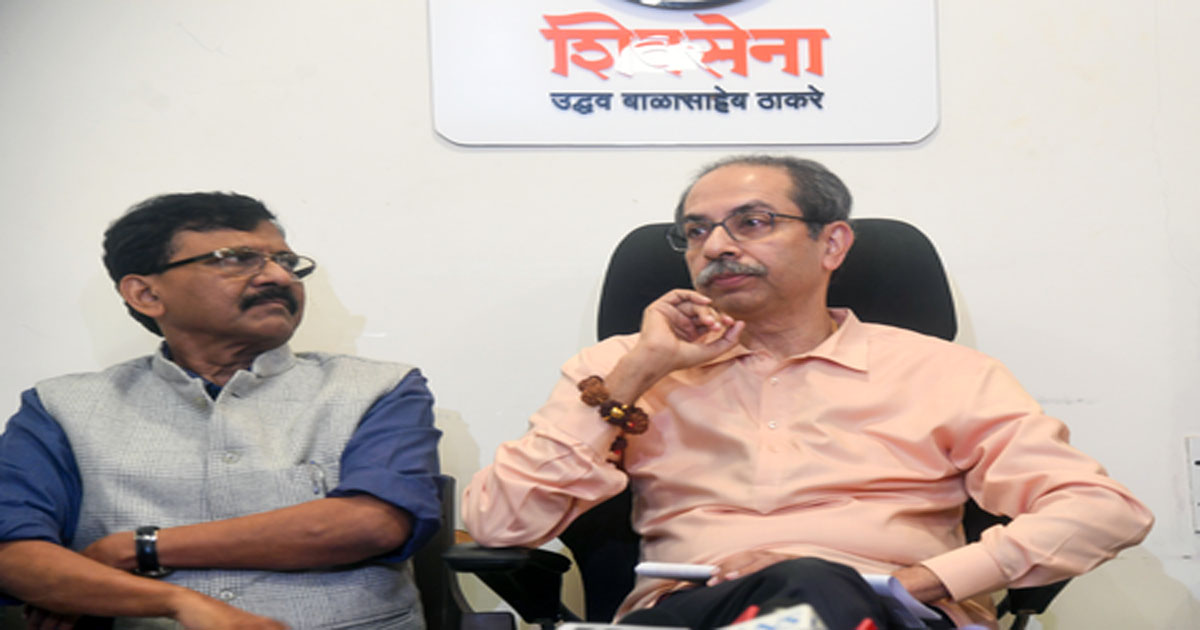
Mumbai, July 20: The Shiv Sena Uddhav Balasaheb Thackeray on Monday accused the BJP-led government at the Centre of committing an “assault on Indian democracy, freedom, and the Constitution”.
In an editorial in the party’s mouthpiece ‘Saamana’, the party focused on two key developments over the past two days: the early morning police action against activist Sonam Wangchuk at Jantar Mantar and the Lok Sabha Speaker’s recognition of rebel factions from the Shiv Sena and Trinamool Congress.
According to the editorial, activist Sonam Wangchuk was forcibly removed by Delhi Police from Jantar Mantar, where he had been on the 20th day of a hunger strike demanding the resignation of Union Education Minister Dharmendra Pradhan following the NEET paper leak controversy. The editorial characterised the police action as a “cowardly night operation”, stating that armed police entered the protest site after midnight like “thieves to drag away an exhausted activist who was unable to resist”.
It drew comparisons between the crackdown and an anti-terrorist combing operation, arguing that it highlighted the government’s fear of growing public support for Wangchuk.
The editorial said that despite being admitted to the hospital, Wangchuk is continuing his protest from the intensive care unit (ICU). The editorial referred to a handwritten message sent by Wangchuk to the citizens of India, “This is the Second Freedom Movement. A Fear-Free India, an Injustice-Free India!”
The editorial warned that the activist’s movement would continue to spread across the country despite government suppression.
Further, the Thackeray camp alleged that under cover of darkness, the Speaker recognised ‘defector’ factions from the Shiv Sena and Trinamool Congress in direct violation of the 10th Schedule of the Indian Constitution, which does not grant recognition to party splits.
The editorial alleged that six MPs elected under the Shiv Sena’s ‘Flaming Torch’ (Mashal) symbol were “bought for Rs 50 crore each by the Eknath Shinde faction” before seeking a merger, which was subsequently approved by the Speaker. The editorial termed this decision a direct assault on parliamentary integrity and constitutional norms.
The Uddhav Thackeray-led Shiv Sena claimed that the Modi government survives entirely on “falsehoods, repression, and gunpoint threats”. Much like the NEET exam scam, “PM Modi and his people won the election through widespread electoral malpractices. It is no longer hidden that these leaders came to power by burning the pyres of freedom and democracy”.
“Under the 10th Schedule of the Constitution, no form of party splitting is recognised. Still, BJP engineers splits in parties daily to build new outfits, and the Speaker continues to legitimise these traitorous groups. This ongoing destruction of freedom, democracy, and the Constitution by the Modi government must now be exposed on the global stage,” remarked the editorial.
The editorial asserted that the actions against the Shiv Sena, TMC, and Aam Aadmi Party (AAP) demonstrate an attempt to suppress opposition voices through authority and intimidation.
The editorial called for bringing the Modi government’s actions regarding Indian democracy and constitutional violations before the international community. “Just as there is no forgiveness for the thieves of the Ram Temple, there will be no forgiveness for those who legitimise traitors,” it said.


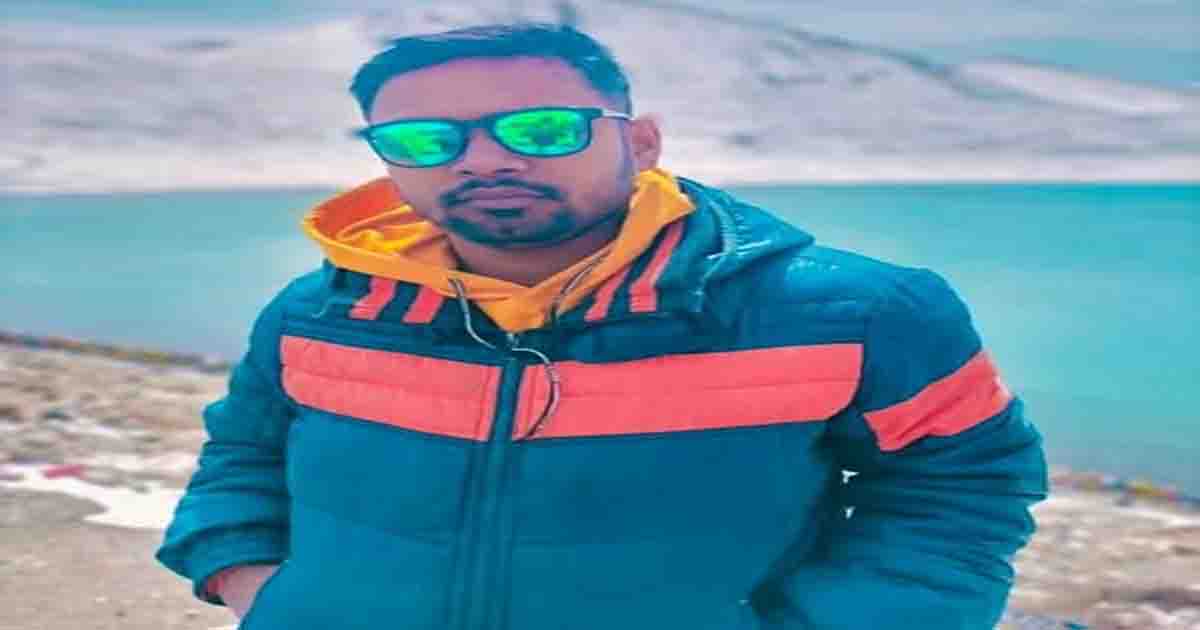
Police said on Thursday that a Bharatiya Janata Party (BJP) worker was first brutally hacked and then shot dead by a group of miscreants in a minority-dominated Malda district in West Bengal.
The incident occurred on Wednesday night. The deceased has been identified as Samir Ghosh.
“As per information available so far, a group of assassins first hacked Ghosh brutally. Thereafter, to ensure his death, he was shot from close range, which led to his death on the spot,” said a state police officer.
After receiving news of the incident, high-ranking police officials from the district reached the spot on Wednesday night.
The reason for this murder and those involved in the brutal killing were being investigated.
The police have detained one person who was being questioned.
Gosh’s family members have accused local miscreants associated with Trinamool Congress of being responsible for the brutal murder because he was associated with the BJP.
However, the local Trinamool Congress leadership has denied the allegations. Acute tension prevailed in the area.
It is learnt that the incident took place on Wednesday night in the Ramkeli area of English Bazar police station in Malda district. Allegedly, while the people were busy with idol immersion, some people entered Gosh’s house.
It is alleged that before anyone realised anything, he was attacked with sharp weapons. After that, he was also shot at from a close range to ensure his death, his family members alleged.
The brother of the deceased BJP worker said that his brother had been receiving threats in various ways for a long time for his association with the BJP, and he was even asked to leave the locality.
However, he did not leave the house out of fear. The incident took place on the occasion of Vijaya Dashami.
The brother of the deceased person also alleged that Gosh was alone at home at the time of the incident. The miscreants took advantage of that opportunity and entered the house and committed the brutal act.
The brother also claimed that all the accused persons have links with the Trinamool Congress. He also claimed that this murder had been planned for a long time.
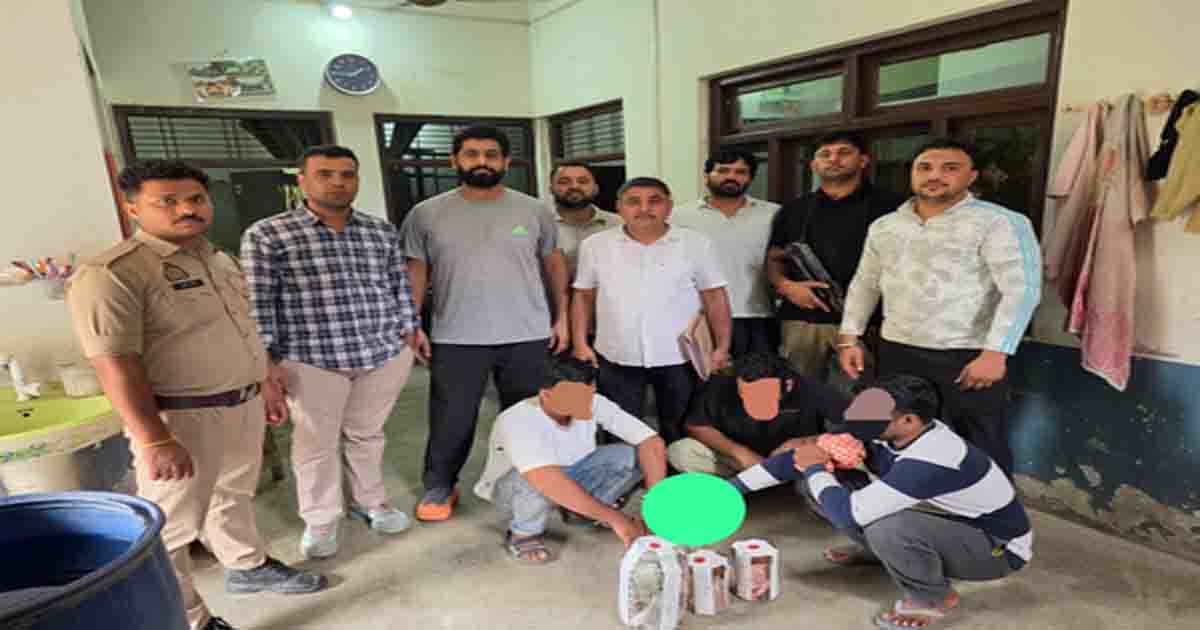
Delhi Police busted an interstate heroin supply and manufacturing network extending from Delhi and Haryana to Uttar Pradesh and Jharkhand, arresting seven accused and recovering 8.128 kg of heroin worth approximately Rs 60 crore in the international market.
The operation, conducted by the Special Staff of Rohini district under the Nasha Mukt Bharat Abhiyan, also led to the seizure of 3.291 kg of chemicals and raw materials used in heroin manufacturing, Rs 12.81 lakh in cash, three SUVs, a motorcycle and equipment used in the illegal drug production process.
According to the police, the operation was carried out by a team led by Inspector Sandeep Godara under the supervision of ACP (Operations) Ajmer Singh. The investigation uncovered links between suppliers, a heroin manufacturing unit and a person involved in illegal opium poppy cultivation.
The operation began on September 16, when police received information about narcotics movement in the Begumpur police station area. Acting on the tip-off, a team laid a trap in Sector 32, Begumpur, and intercepted a car. The police arrested Laxman Hooda, 58, a resident of Rohtak, Haryana, and recovered 300 grams of heroin and Rs 3 lakh in cash from the vehicle.
On September 17, the police arrested another accused, Anil alias Bhola, 51, from Sonipat, Haryana, and recovered 501 grams of heroin from his car. Anil has been involved in 12 criminal cases. He had previously been arrested in an NDPS case registered at Bhalswa Dairy police station in 2025.
After being granted interim bail, he failed to surrender and was subsequently declared a proclaimed offender by a court.
Further investigation and technical surveillance led the police to a heroin manufacturing facility in Sita Colony, Jankipuram, Lucknow, Uttar Pradesh, on October 4.
The police arrested Bablu, 35, and recovered 6.275 kg of freshly manufactured heroin. They also seized 2.504 kg of sodium, 787 grams of acetic anhydride, a gas cylinder, a mixer-grinder, utensils, a tub, an electronic weighing machine, polythene and other manufacturing equipment.
Following Bablu’s interrogation, the police traced and arrested Ruksar Ali alias Raju, the alleged owner and main source supplier of the manufacturing facility, from Bareilly, Uttar Pradesh, after an extensive search. Ruksar has previously been involved in three NDPS cases, according to the police.
On October 6, Ajaj Ahmed, 38, was arrested in Bareilly for supplying crude opium to Ruksar. The police recovered 501 grams of heroin and a motorcycle from him.
The investigation subsequently led to the arrest of Mohammad Azhar, 20, from Badaun, Uttar Pradesh, on October 16. He allegedly supplied heroin and crude opium to Ajaj. The police recovered 551 grams of heroin, Rs 9,81,700 in cash and a car from his possession.
On October 18, the team reached Jharkhand’s Chatra district, a Naxalite-affected area, and arrested Prakash Kumar, 31. He supplied raw opium to the other accused and was involved in illegal opium poppy cultivation on his agricultural land.
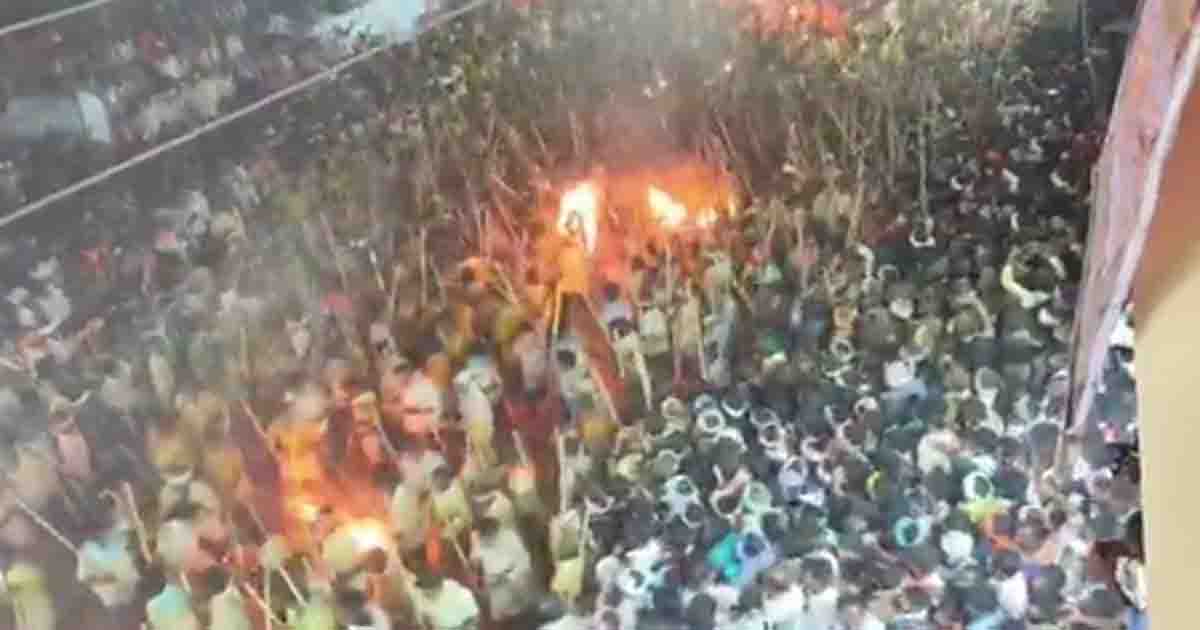
One person was killed, and more than 100 were injured in the traditional fight with sticks during the Dussehra celebrations in Andhra Pradesh Kurnool district.
Like every year, two groups attacked each other with sticks during Devaragattu Banni Utsav held as part of celebrations at Deveragattu village in Holagonda ‘mandal’ (block) late on Wednesday night.
The injured were admitted to hospitals at Adoni and Alur, and the condition of 10 of them is stated to be critical.
Those with simple injuries were treated at a temporary hospital set up by the authorities.
The deceased was identified as Potaraju (28) of Alur.
The stick fight is organised every year as part of the Dussehra celebrations at Mala Malleswara Swamy temple, located on a hillock. Like in the past, the villagers defied the police orders to organise the fight, which they claim is part of their tradition.
As part of the annual celebrations, people from different villages divide into two groups to fight with sticks to secure the idols of the deities Mallamma and Malleswara Swamy after their ceremonial wedding at midnight.
Both groups participated in the event with enthusiasm. The preventive measures taken by the police to stop the fight had no impact.
Every year, people from the villages around the temple divide into two groups and fight with sticks to take control of the idols.
Villagers from Nerani, Nerani Tanda and Kothapeta villages fight with devotees from Arikera, Aluru, Suluvai, Ellarthi, Nidravatti and Bilehall villages. They mercilessly attack each other with sticks, and in the fight, many receive grievous injuries. However, devotees consider these injuries as a good omen.
Attempts by authorities to dissuade villagers from organising the fight have not yielded results. Every year, the police deploy forces to prevent the fight, but the villagers defy the orders and organise the fight. This year, more than 1,000 police personnel were deployed.
Villagers believe that Lord Shiva took the form of Bhairava and clobbered two demons, Mani and Mallasura, with sticks. The villagers enact the scene on Vijayadashami day. A group of villagers from the demon’s side try to snatch the idols from the rival group, called the god’s team. They fight with sticks to take control of the idols.
Thousands of people from various parts of Kurnool, surrounding districts and neighbouring states like Telangana and Karnataka gather in the village to watch the traditional fight.

BJP worker brutally attacked, shot dead in Bengal’s Malda; police detain one

Delhi Police busts interstate heroin network, arrests seven; drugs worth Rs 60 Cr seized

One killed, 100 injured in traditional stick fight in Andhra Kurnool

Four injured in sleeper bus-tempo collision in J&K Udhampur

Sonia Gandhi makes Instagram debut, shares first look of her memoir ‘Belonging’

Rahul, Cong ecosystem want to force regime change: BJP after Neha Bora praises B’desh Gen-Z protest

Attack on democratic rights: INDIA Bloc leaders on detentions of anti-ECI protestors

BJP pays tribute to ex-President Abdul Kalam, recalls his enduring influence on generations of India’s youth

INDIA bloc begins protest march against ECI

Maha Congress stages agitation against Gyanesh Kumar
-

 Crime4 years ago
Class 10 student jumps to death in Jaipur
-

 Maharashtra2 years ago
Mumbai Local Train Update: Central Railway’s New Timetable Comes Into Effect; Check Full List Of Revised Timings & Stations
-

 Maharashtra2 years ago
Mumbai To Go Toll-Free Tonight! Maharashtra Govt Announces Complete Toll Waiver For Light Motor Vehicles At All 5 Entry Points Of City
-

 Maharashtra2 years ago
False photo of Imtiaz Jaleel’s rally, exposing the fooling conspiracy
-

 National News2 years ago
Ministry of Railways rolls out Special Drive 4.0 with focus on digitisation, cleanliness, inclusiveness and grievance redressal
-

 Maharashtra2 years ago
Maharashtra Elections 2024: Mumbai Metro & BEST Services Extended Till Midnight On Voting Day
-

 National News2 years ago
J&K: 4 Jawans Killed, 28 Injured After Bus Carrying BSF Personnel For Poll Duty Falls Into Gorge In Budgam; Terrifying Visuals Surface
-

 Crime2 years ago
Baba Siddique Murder: Mumbai Police Unable To Get Lawrence Bishnoi Custody Due To Home Ministry Order, Says Report