
National News
Four injured in sleeper bus-tempo collision in J&K Udhampur


At least four passengers were injured on Thursday in Jammu and Kashmir Udhampur district when a sleeper bus collided with a tempo.
Officials said four female passengers sustained minor injuries after a sleeper bus and a tempo collided at Garnai in the district.
The accident reportedly occurred around 7.30 a.m. The injured passengers were shifted to the Government Medical College (GMC), Udhampur, for medical treatment.
“Police have taken cognisance of the incident, and further investigation has been started,” officials said.
On Wednesday, two passengers were killed and 15 others injured when a bus veered off the road and rolled down into a gorge in Latti-Basantgarh tehsil in Udhampur district.
Officials said the accident happened after a bus went out of the driver’s control, skidded off the road and then dropped into a deep gorge in the district. The bus was on its way from Poichound to Ramnagar when the accident occurred at Gulli Gala at around 8 a.m. Officials said locals started a rescue operation immediately after the accident.
They shifted 17 passengers to a primary health centre in Basantgarh. After first aid, all the injured passengers were shifted to Ramnagar hospital, where a woman and a 6-year old girl succumbed to critical injuries.
Lt. Governor Manoj Sinha and Chief Minister Omar Abdullah offered condolences to the bereaved families and ordered the officials to ensure the best medical treatment for the injured.
Road accidents in Jammu and Kashmir (J&K) stem from a combination of human error, difficult topography, and infrastructure challenges, as documented by the Motor Vehicles Department and traffic authorities.
The primary causes of road accidents are exceeding speed limits, rash driving, sudden manoeuvres, and reckless driving on highways and sharp curves.
Overloading by passenger and commercial vehicles, particularly in hilly districts like Doda, Kishtwar, and Rajouri, can cause the vehicles to lose balance and fall into gorges.
J&K features steep gradients, narrow carriageways, sharp blind bends, and long hill stretches where a minor loss of control can turn fatal.
Rain, heavy snowfall, dense fog, and recurring landslides reduce visibility and make road surfaces dangerously slick.
’Black Spots’, Inadequate parapet walls, missing crash barriers, insufficient signage, poor lighting, and unaddressed potholes increase the severity of accidents.

National News
Raj Thackeray accuses BJP of stoking Marathi–North Indian divide over Chhath Puja; urges Sainiks to avoid ‘political trap’

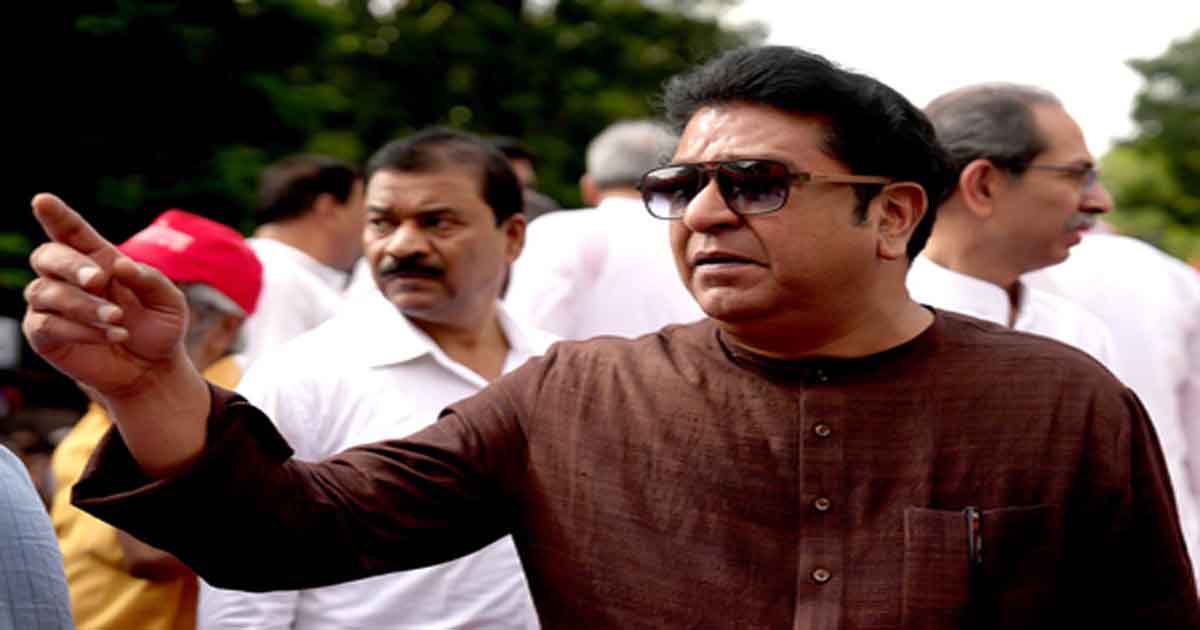
Maharashtra Navnirman Sena (MNS) chief, Raj Thackeray, on Friday launched a scathing attack on the Bharatiya Janata Party (BJP), accusing it of attempting to manufacture regional and linguistic conflict in Mumbai ahead of Chhath Puja to reap political dividends in the upcoming Uttar Pradesh Assembly elections.
In a strongly-worded statement, Thackeray urged the Marathi populace and his party cadre—the Maharashtra Sainiks—to exercise strategic restraint and refrain from falling into what he described as a “trap” laid by the BJP.
Thackeray’s remarks come amid heightened political tension in Mumbai following controversies over Bhojpuri songs being played over public announcement systems at several railway stations, including Chhatrapati Shivaji Maharaj Terminus (CSMT) and Wadala.
While MNS and Shiv Sena (UBT) workers objected to the broadcasts, Thackeray alleged the episode was part of a broader, orchestrated campaign on social media to frame the festival as a “cultural invasion” and provoke a backlash.
“The BJP remains frustrated because the conflict they so desire has failed to materialise,” Thackeray stated, claiming the party’s traditional “divide and rule” playbook was losing traction.
He accused the BJP of routinely polarising communities along religious lines ahead of Lok Sabha polls, stoking caste tensions before state elections, and manufacturing regional friction—such as the kabutarkhana (pigeon-feeding) dispute—during civic polls.
Drawing parallels to Chhatrapati Shivaji Maharaj’s guerrilla warfare tactics, the MNS chief advised his supporters not to react impulsively on “a battlefield of their choosing.”
“Do not take our restraint as a sign of cowardice,” Thackeray warned, adding that his party would choose the time and manner of its response.
He also addressed North Indian and Gujarati residents in Mumbai directly, cautioning them against being used as political pawns while reiterating that Maharashtra belongs to the Marathas.
Beyond the Chhath Puja row, Thackeray broadened his offensive against the Centre and state leadership, alleging crony capitalism and environmental degradation. He accused the government of “selling off Maharashtra piece by piece” to a favoured industrialist, alleging that forest lands and parts of the Sahyadri mountain range were being handed over while society remained “unvigilant.”
Thackeray also questioned the impartiality of the Election Commission and claimed that youth-led “Gen Z” unrest signaled the beginning of the BJP’s political decline at both the Centre and state levels. Concluding his message, he challenged the BJP to move past divisive politics and urged Marathi citizens to remain alert and united.
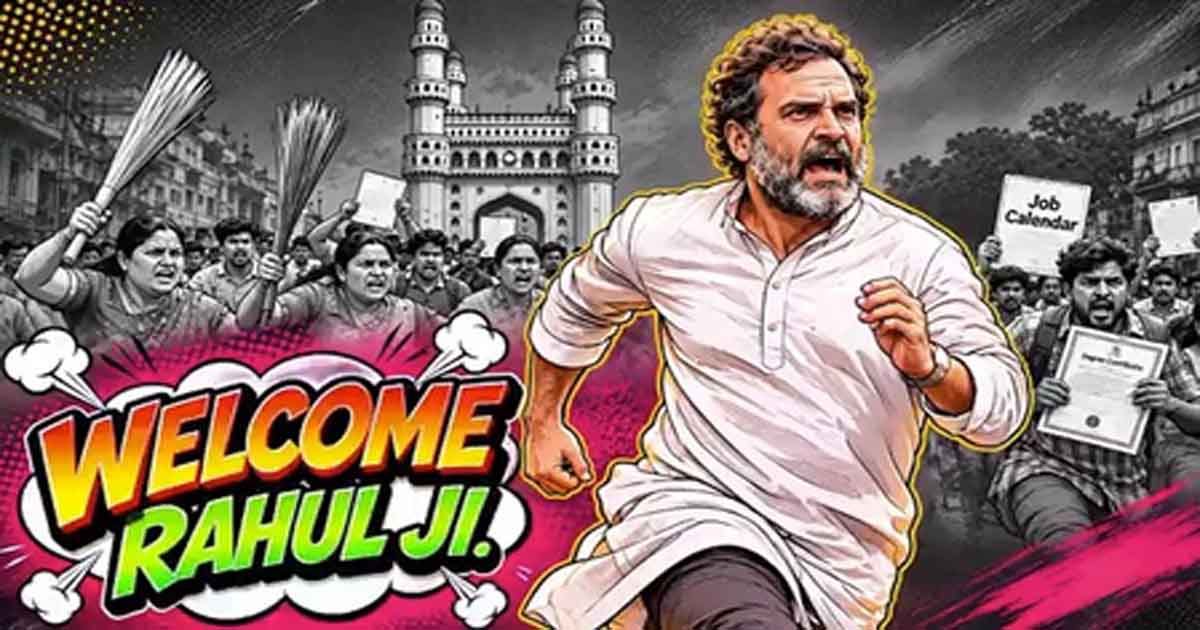
Ahead of Congress leader Rahul Gandhi’s visit to Hyderabad on Saturday, the Bharat Rashtra Samithi (BRS) has released a special rap song questioning the Congress leadership over the unfulfilled promises made to the people of Telangana.
Through the song, titled around the theme of welcoming Rahul Gandhi to Hyderabad, BRS raises questions over the Congress party’s six guarantees and its key election promises.
The rap specifically highlights the promise of implementing six guarantees within 100 days, the Rs 2,500 monthly assistance for women, Rs 4,000 pensions and other assurances made by Congress before the Telangana Assembly elections in 2023.
The song also questions the government over the delay in fulfilling these commitments and asks Rahul Gandhi to explain the status of the promises made to Telangana.
Meanwhile, BRS Working President K.T. Rama Rao took to social media to question Rahul Gandhi ahead of his visit to attend the Bharat Summit being organised by the Telangana government.
Rama Rao asked the Lok Sabha Leader of Opposition why he did not visit Telangana when different sections of people were staging protests over the unfulfilled promises of the state government.
“You didn’t show up when students demanding jobs (that you promised) were being throttled & getting beaten up by Congress police. You were unperturbed when tribal women of Lagacharla were beaten, disrobed & molested for their lands. When Hydraa bulldozers were destroying homes of hardworking Telangana people- you were sleeping in Delhi. You had no time when over 10,000 trees were felled overnight, deers & peacocks, and a rich ecosystem was razed at Kancha Gachibowli HCU lands or when KBR park was being destroyed,” the BRS leader said in a post on ‘X’.
“You didn’t flinch when the Constitutional processes were being ridiculed & 10 BRS MLAs were being bought off to join Congress Women legislators’ sarees were pulled, beaten in front of the Assembly – did you have a word to offer Rahul? You couldn’t speak about farmer suicides, weaver suicides, journalists’ midnight arrests, crony capitalism, land grabbing….!!! Your own MLAs & ministers are openly speaking about brazen corruption,” he said.
“You chose silence when it mattered! NOW! You waltz in shamelessly for a propaganda stunt with ₹100 Cr Telangana people’s money. Where do you get off Rahul Gandhi,” asked Rama Rao.
National News
Ram Kadam criticises Sonia Gandhi over Anna Hazare remarks in memoir; defends Bhojpuri songs at Mumbai stations
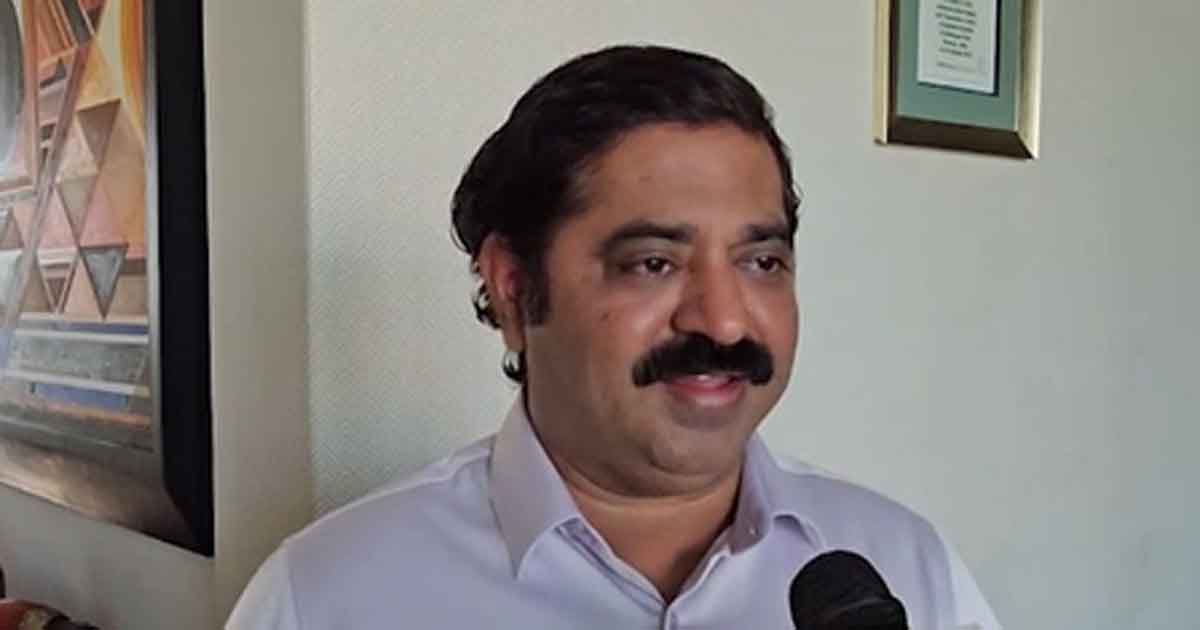
BJP leader Ram Kadam on Friday criticised Congress Parliamentary Party Chairperson, Sonia Gandhi, over her remarks on Anna Hazare’s 2011 anti-corruption movement in her recently released memoir titled, ‘Belonging: A Journey of Love’, saying it was unacceptable to question the integrity of a person who had fought for the implementation of the Lokpal without seeking political gains.
An excerpt from Sonia Gandhi’s memoir read, “A well-known activist from Maharashtra, Baburao ‘Anna’ (Marathi for ‘father’ or ‘elder brother’) Hazare, emerged as the figurehead of a movement that titled itself ‘India Against Corruption.’ Some of its prominent participants have stated since that it was covertly organised and supported by the BJP and RSS.”
The social activist himself also rubbished the claims. Hazare said, “This is wrong. I don’t have any connection with the BJP or RSS. I don’t participate in their programmes. My country is my priority.”
Kadam said Hazare’s nationwide movement had received widespread public support because its demand was justified and had compelled the government to accept the demands raised by the activist.
“In 2011, Anna Hazare launched a major nationwide movement demanding the implementation of the Lokpal. People supported his movement because his demand was justified. He was not seeking anything for himself but was fighting for the country. Was demanding a Lokpal wrong?” Kadam told media.
Taking exception to Sonia Gandhi’s criticism of Hazare and his movement in her book, Kadam questioned the basis of her remarks.
“Anna Hazare is an honest and respected individual who has served the country without seeking any political position or award. Criticising such a personality and making it appear that others were behind his movement is unacceptable,” he said.
Kadam maintained that the movement had been successful, pointing out that the government had to accept the demands raised by Hazare at the time.
The BJP leader also weighed in on the controversy over Bhojpuri songs being played at Mumbai railway stations during Chhath celebrations, asserting that Maharashtra’s linguistic identity and its tradition of respecting other languages could coexist.
“For Maharashtra, Marathi is the supreme language, and it will remain so till eternity. Having said that, this is also the land of Chhatrapati Shivaji Maharaj. This is the land that respects all languages,” Kadam said.
Describing Maharashtra’s cultural identity as multilingual, he noted that people speaking different languages had made Mumbai their home.
“The cultural image of Maharashtra is multilingual. People of all languages live in Mumbai,” he said.
Kadam also highlighted the significance of Chhath for migrant communities from Bihar, Jharkhand and Uttar Pradesh living in Maharashtra, saying the festival was observed by millions of devotees.
“Chhath is celebrated by millions of devotees of Bihar, Jharkhand, and Uttar Pradesh, who live in Maharashtra. One needs to understand that language can’t be made into a political tool to exert dominance,” he said.
Without naming any party, Kadam said political groups seeking to impose linguistic dominance had lost public support.
“This is the reason that the parties trying to push for dominance through language supremacy are nowhere to be found today,” he added.

Raj Thackeray accuses BJP of stoking Marathi–North Indian divide over Chhath Puja; urges Sainiks to avoid ‘political trap’

BRS releases rap song to question Congress ahead of Rahul Gandhi Hyderabad visit

Ram Kadam criticises Sonia Gandhi over Anna Hazare remarks in memoir; defends Bhojpuri songs at Mumbai stations

Centre extends five-year ban on Zakir Naik Islamic Research Foundation

Sheikh Hasina says India-Bangladesh ties too important to be held hostage to political differences

Rahul, Cong ecosystem want to force regime change: BJP after Neha Bora praises B’desh Gen-Z protest

BJP pays tribute to ex-President Abdul Kalam, recalls his enduring influence on generations of India’s youth

Attack on democratic rights: INDIA Bloc leaders on detentions of anti-ECI protestors

Congress trying to protect 3 crore Bangladeshi infiltrators in voter list: HM Shah

Online betting: ED conducts searches at 20 premises in Mumbai, Pune, Hyderabad
-

 Crime4 years ago
Class 10 student jumps to death in Jaipur
-

 Maharashtra2 years ago
Mumbai Local Train Update: Central Railway’s New Timetable Comes Into Effect; Check Full List Of Revised Timings & Stations
-

 Maharashtra2 years ago
Mumbai To Go Toll-Free Tonight! Maharashtra Govt Announces Complete Toll Waiver For Light Motor Vehicles At All 5 Entry Points Of City
-

 Maharashtra2 years ago
False photo of Imtiaz Jaleel’s rally, exposing the fooling conspiracy
-

 National News2 years ago
Ministry of Railways rolls out Special Drive 4.0 with focus on digitisation, cleanliness, inclusiveness and grievance redressal
-

 Maharashtra2 years ago
Maharashtra Elections 2024: Mumbai Metro & BEST Services Extended Till Midnight On Voting Day
-

 National News2 years ago
J&K: 4 Jawans Killed, 28 Injured After Bus Carrying BSF Personnel For Poll Duty Falls Into Gorge In Budgam; Terrifying Visuals Surface
-

 Crime2 years ago
Baba Siddique Murder: Mumbai Police Unable To Get Lawrence Bishnoi Custody Due To Home Ministry Order, Says Report