
Business
Sensex plunges nearly 2 pc amid US reciprocal tariff concerns

Mumbai, April 1: Indian stock markets on Tuesday witnessed a sharp decline on the first trading day of the new financial year. The fall came as investors reacted to global market concerns, especially the upcoming US reciprocal tariffs on April 2.
The Sensex, which represents 30 major companies, dropped by 1,390.41 points or 1.80 per cent to close at 76,024.51. During the trading session, it fluctuated between an intra-day high of 77,487.05 and a low of 75,912.18.
The Nifty index also tumbled 353.65 points or 1.50 per cent, ending at 23,165.70. It touched a high of 23,565.15 and a low of 23,136.40 during the intra-day.
Almost all stocks in the Sensex index ended lower, except Zomato, IndusInd Bank, and State Bank of India (SBI).
The biggest losers included HCL Technologies, Bajaj Finserv, HDFC Bank, Bajaj Finance, and Infosys, which saw their share prices decline by up to 3.66 per cent.
Midcap and smallcap stocks also faced pressure. The Nifty Midcap100 index closed 0.86 per cent lower, while the Nifty Smallcap100 index slipped 0.70 per cent.
The BSE Midcap index was down 0.9 per cent, whereas the Smallcap index managed to rise slightly by 0.2 per cent.
Sector-wise, most indices ended in the red, with IT, real estate, and consumer durables stocks falling by around 2 per cent each. Only media, oil & gas, and telecom stocks managed to stay positive.
Market volatility also surged as the India VIX, commonly known as the fear index, jumped 8.37 per cent to 13.78 points. This suggests that investors are increasingly cautious about the market’s direction.
Analysts suggest that market fluctuations may continue until there is more clarity on global trade relations and economic policies as investors remain concern about Trump’s tariff policies and their impact on international trade.
“Amid heightened global volatility ahead of the anticipated US reciprocal tariff announcement tomorrow (US time), the domestic market witnessed a significant sell-off today. Investors are eagerly awaiting the specifics of these tariffs while also keeping a close eye on ongoing negotiations for a potential Indo-US trade agreement,” said Vinod Nair, Head of Research, Geojit Investments Limited.
The IT sector was among the hardest hit due to its substantial exposure to the US market, and real estate stocks fell following Maharashtra’s upward revision of ready reckoner rates, which affect property valuations.


New Delhi, Oct 7: The Delhi High Court on Wednesday permitted a senior director of Vivo Mobile India to travel to Bangkok for four days for official meetings and directed suspension of the Look Out Circular (LOC) issued against him during the period.
A single-judge Bench of Justice Sachin Datta allowed Harinder Dahiya, the company’s Senior Director of Finance and Accounts, to travel to Thailand, from October 12 to 15 for official meetings concerning statutory audit matters, audit and control transformation, litigation, and business and finance strategy at Vivo India.
The High Court also permitted release of his passport and directed that the LOC against him will remain suspended during the four-day period.
Dahiya had challenged the March 19, 2026 order of the Patiala House Courts, which had rejected his plea seeking setting aside of the LOC, permission to travel abroad and release of his passport.
The Enforcement Directorate (ED) opposed the application, contending that Dahiya, as Director and Chief Financial Officer of Vivo India, had played a crucial role in the alleged siphoning of proceeds of crime stated to be around Rs 20,241 crore.
The federal anti-money laundering agency also said that the official meetings could be attended virtually and relied on another order of the High Court, by which the travel application of co-accused Guangwen Kuang alias Andrew Kuang was dismissed.
However, the Delhi High Court said the earlier order concerning Kuang did not assist the ED as it was based on his foreign nationality and the absence of an extradition treaty with China.
Dahiya, an Indian national travelling to Thailand, stood on a different footing, it said.
As part of the conditions, Dahiya has been directed to deposit original title documents of his immovable assets with the High Court Registry as security until his return and furnish his travel itinerary, flight details, address of stay and contact number in Thailand to the investigating officer and trial court.
He has also been directed to intimate the investigating officer and trial court within 24 hours of his return, re-deposit his passport within the same period and appear before the trial court on the next date fixed.
The High Court also directed that Dahiya will not contact any witness, tamper with evidence or do anything prejudicial to the proceedings.
The LOC will automatically revive after October 15.
The High Court clarified that its observations were confined to the present application and would not amount to an expression on the merits of the main case.
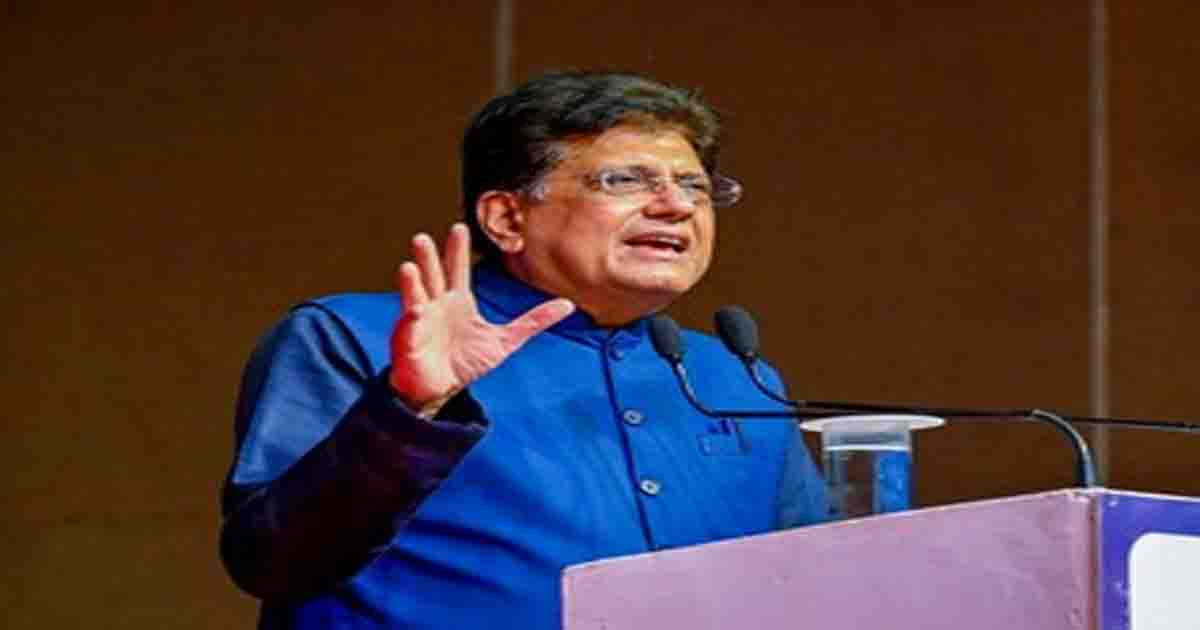
New Delhi, Oct 7: Union Commerce and Industry Minister Piyush Goyal met senior executives of leading US companies in New York to discuss opportunities to expand investment and strengthen trade ties between the two countries, according to an official statement on Wednesday.
Goyal held meetings with senior executives from Blackstone, Neuberger Berman, Estée Lauder Companies, IBM, MetLife, General Atlantic and AIA Group, the Commerce Ministry said in a statement.
In his meetings with Blackstone President and Chief Operating Officer Jonathan Gray and Prakash Melwani, chairman of the company’s international private equity business, the minister discussed expanding the firm’s investments and partnerships in India across key sectors.
Goyal also met Neuberger Berman Chairman and CEO George Walker and members of the firm’s leadership team to discuss opportunities to deepen investment ties and engagement in financial and wealth management services.
With Estée Lauder Companies President and CEO Stéphane de Faverie, he discussed growth opportunities in India, including increased manufacturing and sourcing, as well as the country’s growing beauty and personal care market.
He also met IBM Chairman and CEO Arvind Krishna to discuss strengthening the company’s engagement in India and expanding cooperation in artificial intelligence, cloud infrastructure, quantum computing and other emerging technologies.
His meeting with MetLife President and CEO Michel A. Khalaf focused on the company’s growth opportunities in India and the expansion of the insurance and financial services sector, according to the ministry.
Apart from that, Goyal also met General Atlantic Chairman and CEO William E. Ford to discuss opportunities to deepen the investment firm’s business engagement with India.
With AIA Group Non-Executive Chairman Mark Tucker, Goyal discussed the company’s engagement in India and opportunities in the insurance and financial services sectors, including India’s goal of achieving “Insurance for All by 2047”, the ministry said.
The meetings covered investment opportunities across financial services, manufacturing, energy, technology and artificial intelligence, and ways to strengthen economic and commercial ties between India and the United States, the ministry said.

Navi Mumbai, Oct 6: Navi Mumbai International Airport (NMIA) is strengthening the passenger experience with expanded mobility, transit hospitality and airline support as more flights prepare to shift from capacity-constrained Chhatrapati Shivaji Maharaj International Airport (CSMIA) in Mumbai.
The focus of NMIA, one of India’s largest greenfield airports and operated by Adani Airport Holdings Limited (AAHL), on customer comfort also extends to a futuristic digital art programme and experience zone designed to create a more soothing and engaging environment for passengers.
The measures come ahead of the winter flying schedule, which runs from October 25, 2026, to March 27, 2027.
Maharashtra State Road Transport Corporation will start electric e-Shivai services from October 7 to Dadar, Borivali and Pune, with fares of Rs 170, Rs 210 and Rs 450, respectively. Children below 12 years of age and women travelling with a National Common Mobility Card will be eligible for half-fare.
‘Chalo’ operates 21 daily services to Marol, Bandra, Dadar and Colaba, while Navi Mumbai Municipal Transport runs seven dedicated airport routes.
Bharat Taxi will begin operations with up to 40 vehicles from October 10. Cityflo, Aarya and Chalo will also operate a complimentary hourly shuttle between NMIA and CSMIA.
The airport’s passenger transport network includes 3,787 app-based taxis, 184 car rentals, 171 autorickshaws and 547 buses.
NMIA is also connected to Panvel, Targhar and Bamandongri suburban railway stations, as well as major road corridors including Atal Setu and the Sion-Panvel Highway.
Inside Terminal 1, AAHL will open an 80-room Swirl Transit Hotel in mid-October, offering four-hour and overnight stays, showers, workstations, Wi-Fi and 24-hour dining.
A 21-room Swirl property is also planned at Lokapriya Gopinath Bardoloi International Airport (LGBIA) in Guwahati.
TajSATS’ flight kitchen at NMIA serves more than 40 departing flights a day, with capacity for 7,500 meals daily and expansion to 15,000 as demand rises.
It serves domestic and international carriers, provides local meal uplift for international airlines, and adds to the culinary offering for passengers. TajSATS, which has more than four decades of aviation catering experience, also operates the flight kitchen at CSMIA.

Delhi HC permits Vivo India executive to travel abroad, suspends LOC for four days

Cops detain INDIA bloc leaders heading to Jantar Mantar

Kangana Ranaut on PM Modi completing 25 years: ‘His public life is an inspiring journey of service to the nation’

Gujarat Police arrest man in Facebook honey-trap extortion case

Karan Johar, Kajol, Parineeti Chopra shower love on Kiara Advani, Sidharth Malhotra after second pregnancy announcement

Gift to President Putin part of PM Modi bid to globally display India’s heritage

PM Modi’s warm camaraderie with Putin, Xi on full display at BRICS Summit

Corporators of all parties in trouble! Corporators of all major parties including Shiv Sena (UBT), BJP and Congress are facing legal challenges.

Complaint against Netflix & Mukesh Chhabra for inappropriate language on ‘India’s Got Latent 2’

Maha Congress stages agitation against Gyanesh Kumar
-

 Crime4 years ago
Class 10 student jumps to death in Jaipur
-

 Maharashtra2 years ago
Mumbai Local Train Update: Central Railway’s New Timetable Comes Into Effect; Check Full List Of Revised Timings & Stations
-

 Maharashtra2 years ago
Mumbai To Go Toll-Free Tonight! Maharashtra Govt Announces Complete Toll Waiver For Light Motor Vehicles At All 5 Entry Points Of City
-

 Maharashtra2 years ago
False photo of Imtiaz Jaleel’s rally, exposing the fooling conspiracy
-

 National News2 years ago
Ministry of Railways rolls out Special Drive 4.0 with focus on digitisation, cleanliness, inclusiveness and grievance redressal
-

 Maharashtra2 years ago
Maharashtra Elections 2024: Mumbai Metro & BEST Services Extended Till Midnight On Voting Day
-

 National News2 years ago
J&K: 4 Jawans Killed, 28 Injured After Bus Carrying BSF Personnel For Poll Duty Falls Into Gorge In Budgam; Terrifying Visuals Surface
-

 Crime2 years ago
Baba Siddique Murder: Mumbai Police Unable To Get Lawrence Bishnoi Custody Due To Home Ministry Order, Says Report