
Business
Sensex, Nifty open lower amid rising geopolitical tensions


Mumbai, Jan 12: The Indian benchmark indices continued their decline on Monday amid rising geopolitical tensions and uncertainty surrounding the India-US trade deal.
As of 9.22 am, Sensex slipped 95 points, or 0.44 per cent to 83,212 and Nifty eased by 95 points, or 0.37 per cent to 25,588.
Main broad-cap indices were in line with benchmark indices, with the Nifty Midcap 100 down 0.33 per cent, while the Nifty Smallcap 100 lost 0.57 per cent.
Except metal and FMCG, all other sectoral indices were in the red zone — with pharma, realty and media down over 1.4 per cent.
Immediate Nifty support lies at 25,500–25,600 zone, while a sustained breakout above 25,800–25,850 is essential to stabilise near-term momentum, market watchers said.
The US administration’s strange comments are complicating the US-India trade deal, they added. The Venezuelan crisis, Iran crisis, and US President Donal Trump’s threats on Greenland are also worrying the stock markets, raising the India VIX, indicating high volatility.
Investors are also keen on an expected ruling on Trump tariffs from the US Supreme Court which didn’t materialise last week.
Therefore, Q3 results and management commentary from the tech majors and other large caps in banking will influence the market trend in the near-term, analysts said.
Asia-Pacific markets traded in the green zone during the morning session, tracking Wall Street gains from last week after a US job report showed that the unemployment rate fell, indicating resilience in the labor market.
In Asian markets, China’s Shanghai index gained 0.75 per cent, and Shenzhen added 1.31 per cent, Japan’s Nikkei advanced 1.61 per cent, while Hong Kong’s Hang Seng Index gained 0.74 per cent. South Korea’s Kospi advanced 1.08 per cent.
The US markets were mostly in the last trading session as Nasdaq added 0.82 per cent. The S&P 500 gained 0.65 per cent, and the Dow moved up 0.48 per cent.
On January 9, foreign institutional investors (FIIs) sold net equities worth Rs 8,808 crore, while domestic institutional investors (DIIs) were net buyers of equities worth Rs 15,700 crore.


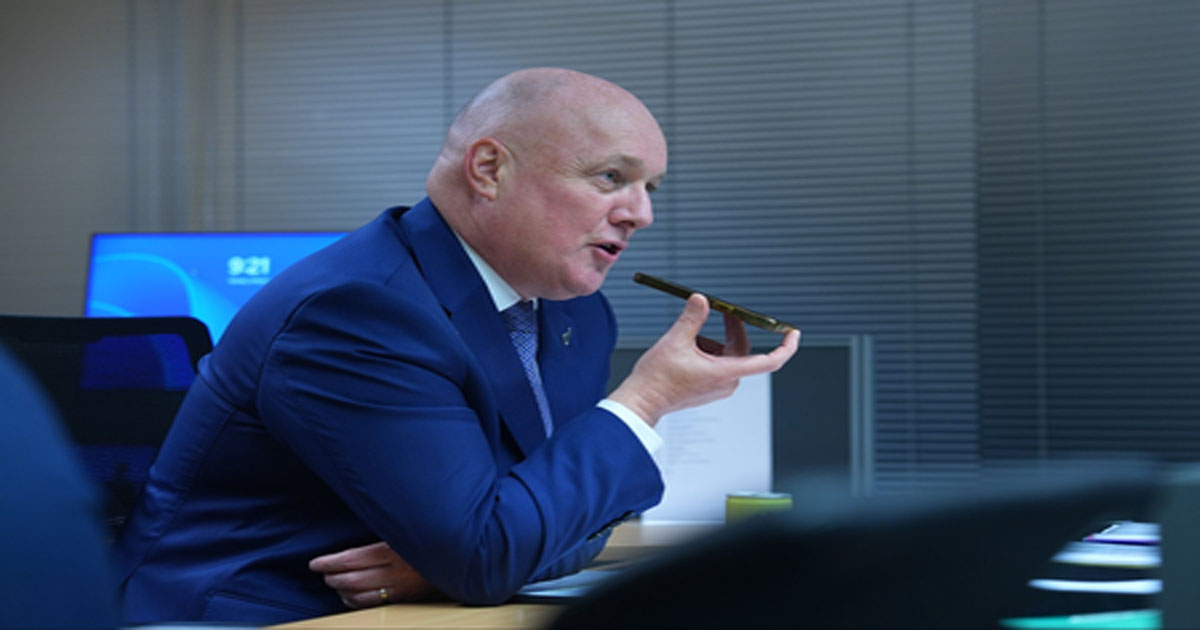
New Delhi, April 24: As India and New Zealand prepare to sign a Free Trade Agreement (FTA) on Monday, both sides are expected to benefit from expanded trade ties and improved market access, New Zealand Prime Minister Christopher Luxon has said.
Taking to the social media platform X, Luxon said, “We will sign a Free Trade Agreement with India on Monday.”
In a video message, Luxon said the agreement would improve market access for New Zealand exporters, particularly manufacturers of marine jet systems used in boats and exported to over 70 countries.
He added that the deal would help reduce trade barriers and strengthen commercial engagement between the two countries.
He also noted that certain exporters currently face tariffs while accessing the Indian market, and said the agreement would gradually ease such duties, improving competitiveness and supporting higher trade flows.
Luxon said the FTA would support increased business activity, employment opportunities and economic growth in New Zealand, while also strengthening bilateral trade linkages with India.
He added that the agreement would bring ‘more jobs, higher wages and more opportunities,’ highlighting the broader economic impact of the deal.
Once signed, the FTA is expected to expand trade and investment ties between the two countries and enhance export opportunities on both sides in a large and growing global market environment.
Earlier this month, legal verification of the New Zealand-India FTA was completed, with both countries agreeing to sign the pact on April 27 in the presence of a large contingent of business representatives, New Zealand Trade and Investment Minister Todd McClay said.
In a statement, McClay described the agreement as a “once-in-a-generation opportunity,” saying it would strengthen bilateral trade relations and provide improved access to each other’s markets.
He said that amid global economic and geopolitical uncertainty, strengthening trade partnerships remains important for long-term economic stability.
McClay added that signing the FTA would allow New Zealand to formally initiate parliamentary treaty examination, enabling public scrutiny of the agreement.
Mumbai, Gold and silver prices started the session on a weaker note on Friday, with both precious metals declining by nearly 1 per cent in early trade on the Multi Commodity Exchange (MCX).
Gold futures for June 5 opened 0.39 per cent or Rs 594 lower at Rs 1,51,167 per 10 grams compared to the previous close of Rs 1,51,761.
Later, the yellow metal touched an intra-day low of Rs 1,50,750, down 0.66 per cent or Rs 1,011. At the last count, it was trading at Rs 1,51,449, a decrease of Rs 312 or 0.21 per cent. During the session so far, gold has touched an intra-day high of Rs 1,51,457.
On the other hand, silver futures for May 5 declined as much as 0.95 per cent or Rs 2,313 to Rs 2,39,200, an intraday low. The white metal was trading at Rs 2,41,345, down Rs 168 or 0.07 per cent. It recorded an intraday high of Rs 2,41,382, down 0.05 per cent or Rs 131.
In the international market, precious metals also witnessed selling pressure. COMEX gold was down nearly 1 per cent at $4,684 per ounce, while COMEX silver also slipped around 1 per cent to $74.81 per ounce.
According to commodity analysts, gold and silver prices are under pressure due to a stronger US dollar, rising bond yields, and uncertainty over geopolitical tensions in the Middle East.
They further said that crude oil moving back above $100 per barrel has raised inflation concerns, adding to pressure on precious metals.
Moreover, Brent crude was trading at more than $100 per barrel or 2 per cent higher.
Equity benchmarks Sensex and Nifty also traded up to 1 per cent lower in early trade on Friday.
Mumbai, April 23: The Indian equity markets posted sharp losses early on Thursday tracking cautious global cues and sustained foreign institutional selling, after the recent rally.
As of 9.25 am, Sensex lost 671 points, or 0.85 per cent, to reach 77,845 and Nifty dipped 179 points, or 0.74 per cent, to reach 24,198.
Main broad-cap indices showed divergence with the benchmark indices, as the Nifty Midcap 100 dipped 0.34 per cent, and the Nifty Smallcap 100 lost 0.16 per cent.
All sectoral indices traded in red except pharma as well as oil and gas up 0.71 per cent and 0.02 per cent. Nifty auto and consumer durables were the top losers down 1.03 per cent and 1.61 per cent respectively.
The immediate support zone of Nifty is placed at near 24,100–24,000, while resistance is observed in the 24,400–24,500 range.
In the previous session, benchmark indices on a weaker note after failing to sustain higher levels. Selling pressure was visible in banking and financial stocks following their recent outperformance.
IT stocks also remained weak, tracking subdued global cues and uncertainty in overseas markets. FMCG, Energy and other defensive sectors showed relative resilience.
The US markets gained after President Donald Trump extended a ceasefire with Iran, saying it was warranted due to Tehran’s “seriously fractured” government.
President Trump said the ceasefire will be in place until Iran submits a proposal or concludes talks, even as the US military continues its blockade of Iranian ports.
On the fundamental side, earnings remain a strong tailwind, with Q1 earnings growth tracking and forward EPS estimates seeing upward revision, market participants said.
In Asian markets, China’s Shanghai index lost 0.74 per cent, and Shenzhen dipped 1.48 per cent, Japan’s Nikkei lost 1.06 per cent, and Hong Kong’s Hang Seng Index declined 1.2 per cent. South Korea’s Kospi lost 0.91 per cent.
The US markets ended in green overnight as Nasdaq gained 1.64 per cent. The S&P 500 advanced 1.05 per cent, and the Dow Jones added 0.69 per cent.
On April 22, foreign institutional investors (FIIs) net sold equities worth Rs 2,078 crore in India, while domestic institutional investors (DIIs) were also net sellers of equities worth Rs 1,078 crore.

Mumbai Police arrests 367 absconding and wanted accused

Public representatives should cooperate for effective implementation of SIR program in Mumbai: Municipal Commissioner Ashwini Bhide

Goa Cyber Police Arrest Maharashtra Man In ₹61.84 Lakh Digital Arrest Scam Case

After Nashik, conspiracy to create Love jihad and corporate jihad in sexual harassment cases in Mumbai, accused arrested, police deny corporate jihad point

Additional Municipal Commissioner Dr. Vipin Sharma has directed the hospital administration to appoint specialist doctors to treat elderly patients undergoing treatment for leprosy.

Mumbai: 28-Year-Old Ghatkopar Woman Killed By Speeding Tanker While Crossing Road, Driver Arrested

Bharti Airtel Receives ₹1,74,000 Penalty Notice From DoT For Subscriber Verification Lapses

Dhurandhar 2 Box Office Collection Day 9: Ranveer Singh Starrer Earns ₹41.55 Crore On Its Second Friday; Enters ₹700 Crore Club

PM Modi & US President Donald Trump Hold Crucial Talks As West Asia Crisis Deepens; Musk Joins Call

Ashok Kharat Sexual Exploitation Case: 2 More Cases Filed Against Self-Styled Astrologer & Godman; Total Complaints Rise To 10 In Nashik
-

 Crime4 years ago
Class 10 student jumps to death in Jaipur
-

 Maharashtra2 years ago
Mumbai Local Train Update: Central Railway’s New Timetable Comes Into Effect; Check Full List Of Revised Timings & Stations
-

 Maharashtra2 years ago
Mumbai To Go Toll-Free Tonight! Maharashtra Govt Announces Complete Toll Waiver For Light Motor Vehicles At All 5 Entry Points Of City
-

 Maharashtra2 years ago
False photo of Imtiaz Jaleel’s rally, exposing the fooling conspiracy
-

 National News2 years ago
Ministry of Railways rolls out Special Drive 4.0 with focus on digitisation, cleanliness, inclusiveness and grievance redressal
-

 Maharashtra1 year ago
Maharashtra Elections 2024: Mumbai Metro & BEST Services Extended Till Midnight On Voting Day
-

 National News2 years ago
J&K: 4 Jawans Killed, 28 Injured After Bus Carrying BSF Personnel For Poll Duty Falls Into Gorge In Budgam; Terrifying Visuals Surface
-

 Crime2 years ago
Baba Siddique Murder: Mumbai Police Unable To Get Lawrence Bishnoi Custody Due To Home Ministry Order, Says Report