
Business
Sensex ends flat ahead of key PM Modi-Trump meet, Nifty holds 23,000 level

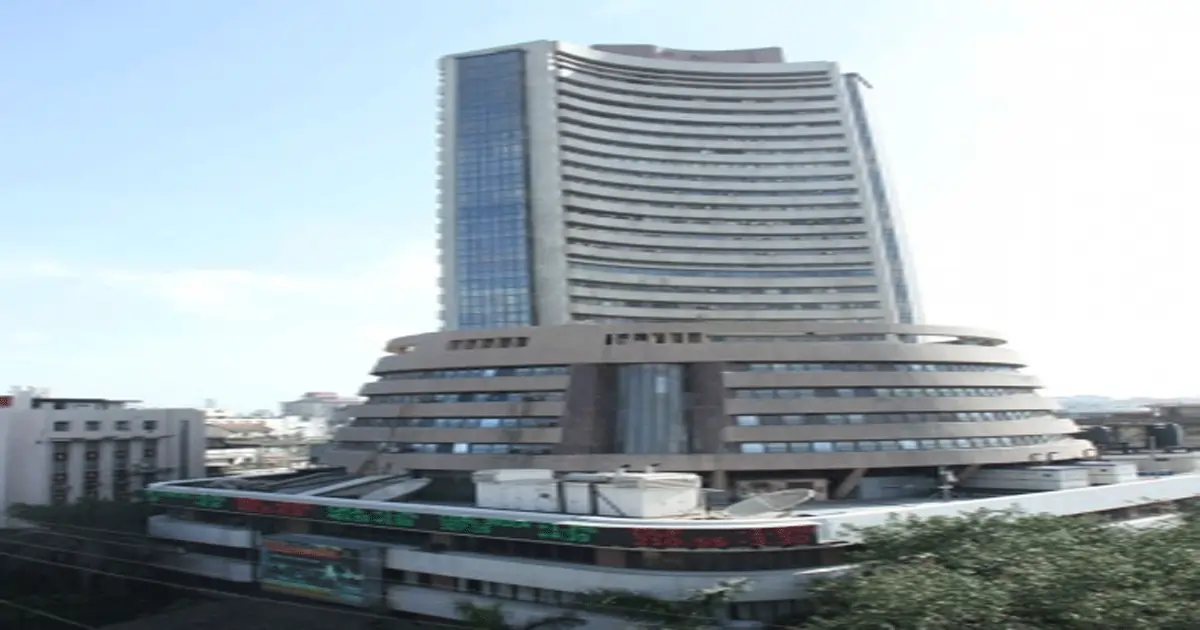
Mumbai, Feb 13: The Indian stock market on Thursday saw a choppy session as benchmark indices gave up early gains and ended flat, with investors awaiting the outcome of the meeting between Prime Minister Narendra Modi and US President Donald Trump that aims to boost the growing relations between the two largest democracies.
The Sensex closed at 76,138.97 by slipping 32.11 points or 0.04 per cent from its previous close. The index moved within a range of 76,764.53 and 76,013.43 during the day.
Similarly, the Nifty also ended on a muted note as closing at 23,031.40 which was down by 13.85 points or 0.06 per cent.
The index touched an intra-day high of 23,235.50 but also slipped to a low of 22,992.20 before closing.
During the early hours, both the indices traded higher as buying was seen in the PSU bank and financial service sectors.
The Sensex was up by 244.25 points or 0.32 per cent in early trade while the Nifty climbed 79.25 points or 0.34 per cent during opening hours.
Among the Nifty stocks, 27 ended in negative territory which dragged the market lower.
Hero MotoCorp, Infosys, and Larsen & Toubro (L&T) were the biggest losers with shedding up to 4.93 per cent.
Meanwhile, Sun Pharma, Bajaj FinServ, Tata Steel, Bajaj Finance, and Cipla emerged as the top gainers by rising by up to 3.12 per cent.
The broader market showed mixed sentiments as the Nifty Midcap 100 index ended with a modest gain of 0.25 per cent, while the Nifty Smallcap 100 index declined by 0.37 per cent.
Sectorally, financial services, pharma, metal, healthcare, private banking, and realty stocks performed well, with gains of up to 1.47 per cent.
Going forward, rupee movement will depend on further dollar index trends and global risk sentiment, with key support seen near 86.60 and resistance around 87.10″
PM Modi arrived in the US after a visit to France, where he had co-chaired the Artificial Intelligence Action Summit with French President Emmanuel Macron.
The Prime Minister and the US President were set to hold bilateral discussions in the White House on Thursday (US time).


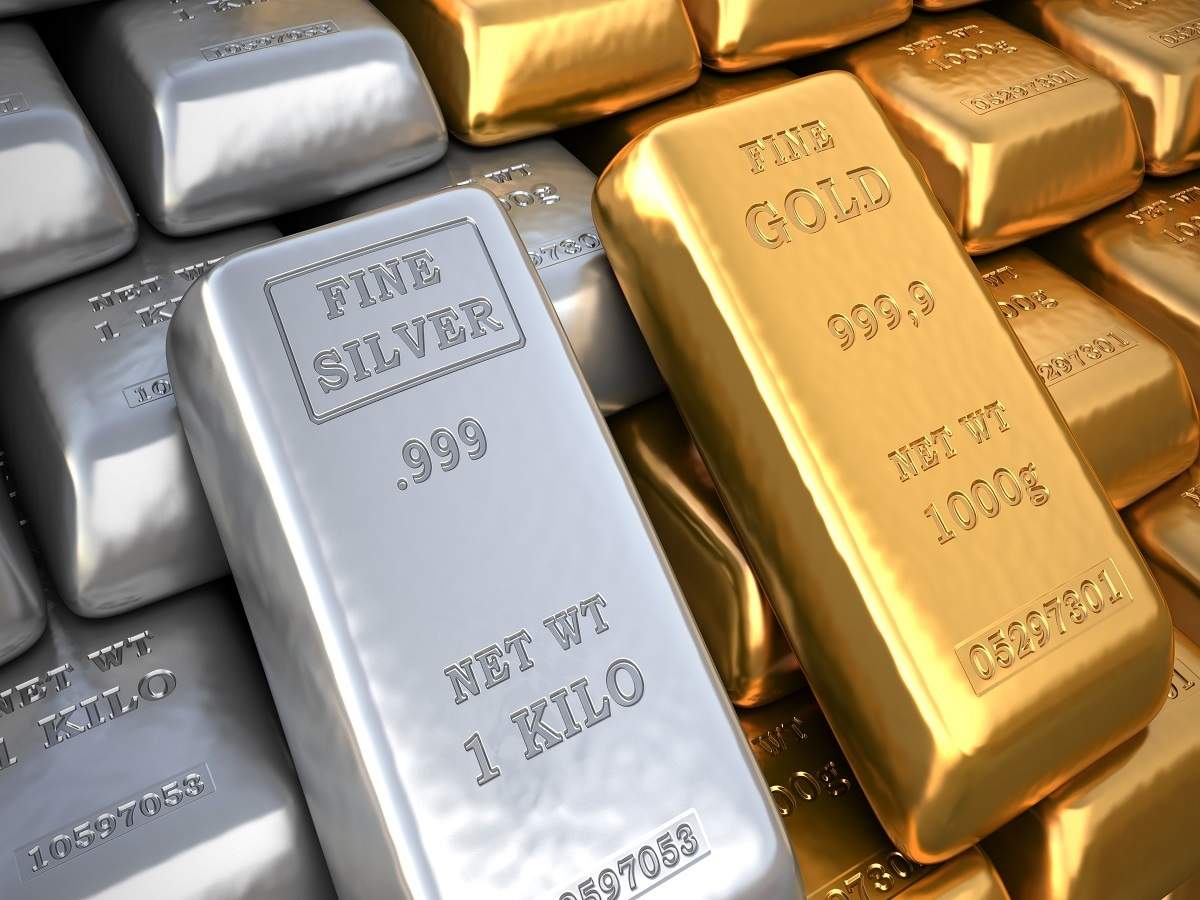
Mumbai, Gold and silver traded higher on Wednesday, tracking weakness in oil prices and the dollar index, with both precious metals gaining up to 3 per cent.
On the Multi Commodity Exchange (MCX), gold futures (June 5) opened at Rs 1,52,000 per 10 grams, up Rs 2,247 or 1.5 per cent from the previous close of Rs 1,49,753.
At 11:30 am, gold was trading at Rs 1,52,419, up Rs 2,666 or 1.78 per cent. So far in the session, the yellow metal has touched an intraday high of Rs 1,52,450, up Rs 2,697 or 1.8 per cent. At the intraday low, it was still trading higher by Rs 1,900 or 1.26 per cent at Rs 1,51,653.
Meanwhile, silver futures (July 3) opened at Rs 2,49,316 per kg — also the intraday low so far — a jump of Rs 5,000 or 2.04 per cent from the previous close. At the time of filing the report, it was trading at Rs 2,51,699, up Rs 7,383 or 3.02 per cent.
In the international market as well, precious metals were trading higher. COMEX gold was up 1.92 per cent at $4,656 per ounce, while silver gained 3.45 per cent to $76.12 per ounce.
Analysts said gold prices edged higher after recovering from a one-month low, supported by easing concerns over US-Iran tensions and some stability in oil prices.
However, elevated crude prices and expectations of a prolonged higher interest rate environment continue to cap gains in bullion, they added.
In addition, the dollar index slipped 0.34 per cent to 97.97. The dollar index measures the US dollar’s strength against a basket of six major currencies, the euro, Japanese yen, pound sterling, Canadian dollar, Swedish krona and Swiss franc.
Typically, a weaker dollar supports prices of precious metals like gold and silver.
On Tuesday, international oil benchmark Brent crude fell 2.30 per cent to $107.33 per barrel, while US West Texas Intermediate crude declined 3 per cent to $99.12 per barrel.
Mumbai, May 4: Gold and silver prices declined up to 1 per cent on Monday amid signs of easing geopolitical tensions between the US and Iran, following remarks by US President Donald Trump.
On the Multi Commodity Exchange (MCX), gold contracts for June 5 opened at Rs 1,51,150, down Rs 382 or 0.25 per cent from the previous close of Rs 1,51,532.
At around 11.30 a.m., gold was trading at Rs 1,50,623, lower by Rs 729 or 0.48 per cent. The yellow metal touched an intraday low of Rs 1,50,400, a decline of 0.62 per cent or Rs 952, and an intraday high of Rs 1,51,347.
On the other hand, silver contracts for July 3 opened at Rs 2,50,699, down Rs 238 or 0.09 per cent compared to the previous close of Rs 2,50,937. The white metal was trading at Rs 2,49,600, down Rs 1,337 or 0.53 per cent.
So far in the session, silver futures hit a low of Rs 2,49,600, a decrease of 1.05 per cent or Rs 2,599, and a high of Rs 2,51,231.
Meanwhile, in the international market, both precious metals remained under pressure. COMEX gold was down 0.55 per cent at $4,619 per ounce, while silver declined 0.48 per cent to $76.065 per ounce.
A commodity market expert said gold prices extended last week’s decline, hovering near one-month lows, as a stronger dollar and elevated crude oil prices weighed on sentiment.
The expert further noted that while easing US-Iran tensions reduced some safe-haven demand, supply risks in the Strait of Hormuz continued to fuel inflation concerns, prompting a cautiously hawkish stance from major central banks, which also weighed on bullion.
US President Donald Trump said the United States would initiate efforts to help vessels stranded in the Strait of Hormuz, describing the move as a humanitarian gesture aimed at assisting neutral countries not involved in the ongoing US-Iran conflict.
According to Trump, Washington would launch ‘Project Freedom’ to guide the stranded ships and their crews safely through the route.
However, he warned that Iran would face a strong response if any threat emerged.
In addition, crude oil prices declined sharply.
Brent crude fell 0.61 per cent to $107.51 per barrel, while US West Texas Intermediate (WTI) dropped 2.77 per cent to $99.11 a barrel.
New Delhi, May 3: Amid the ongoing West Asia conflict, OPEC+ countries have agreed in principle to raise oil output targets in June.
Multiple reports say that seven OPEC+ countries have agreed to raise oil output targets by about 188,000 barrels per day next month. The output hike would rather be largely symbolic until Strait of Hormuz reopens.
This will be the third consecutive monthly increase amid the geopolitical crisis and the departure of the UAE from the group.
With the UAE leaving, OPEC+ includes 21 members, including Iran.
However, only the seven nations (and the UAE) have been involved in monthly production decisions. Iran, also an OPEC+ member, has seen its own exports dwindle amid the blockade.
Crude oil output from all OPEC+ members averaged 35.06 million bpd in March, down 7.70 million bpd from February.
Last week, the UAE announced it was leaving the OPEC and OPEC+ cartels in what is seen as a major setback to the group of oil-exporting countries led by Saudi Arabia. The UAE said the decision reflected its “long-term strategic and economic vision and evolving energy profile”.
The exit of the UAE is expected to weaken the oil cartel at a time when the Persian Gulf countries have taken a huge hit to their exports due to the closure of the Strait of Hormuz by an embattled Iran. The UAE accounts for around 15 per cent of the OPEC oil exports.
Reports also surfaced that Kuwait exported zero barrels of crude oil in April, a situation not seen since the 1991 Iraqi occupation, due to blockade of the Strait of Hormuz.
Kuwait Petroleum Corp declared force majeure, impacting around 2 million barrels per day. The blockade has led to a complete disruption in Kuwaiti exports.
Meanwhile, oil prices dropped after reports said Iran proposed fresh talks with the United States using Pakistan as a mediator.
West Texas Intermediate fell more than five per cent and dropped below $100 per barrel. It later recovered to $101.7.
Brent crude also fell more than three per cent to $106.98 before rising again to $108.4.

BMC Employee Booked For 1997 Job Fraud Using Forged Documents; 29-Year Service Under Scanner, FIR Filed

Colaba Police Book 2 For Impersonation In IBPS Recruitment To Secure New India Assurance Administrative Officer Job

24-Hour Water Cut Announced In Mira-Bhayandar & Parts Of Thane From May 7 Due To MIDC Maintenance

Ex bank officer digitally arrested for 54 days on threat of implication in Delhi bomb blast; Rs 40 lakh extorted in Mumbai

Gold, silver prices gain up to 3 pc on weak dollar, oil prices

‘Son Falsely Implicated, We Are Well-Educated’: Father Of Accused Tausif Attar Defends Son After Skullcap, Namaz Coercion Allegations Rock TCS Nashik

Asha Bhosle’s son says last respects to be paid at residence in Lower Parel, followed by last rites at Shivaji Park

Mumbai: 15th arrest in Rohit Shetty shooting case, shooter identified, arrested, more arrests possible

Crude oil prices tank up to 20 pc over Iran ceasefire announcement

‘Scary & Traumatic’: Commuter Alleges Mobbing By Auto Drivers Over Uber Bike Booking In Navi Mumbai
-

 Crime4 years ago
Class 10 student jumps to death in Jaipur
-

 Maharashtra2 years ago
Mumbai Local Train Update: Central Railway’s New Timetable Comes Into Effect; Check Full List Of Revised Timings & Stations
-

 Maharashtra2 years ago
Mumbai To Go Toll-Free Tonight! Maharashtra Govt Announces Complete Toll Waiver For Light Motor Vehicles At All 5 Entry Points Of City
-

 Maharashtra2 years ago
False photo of Imtiaz Jaleel’s rally, exposing the fooling conspiracy
-

 National News2 years ago
Ministry of Railways rolls out Special Drive 4.0 with focus on digitisation, cleanliness, inclusiveness and grievance redressal
-

 Maharashtra1 year ago
Maharashtra Elections 2024: Mumbai Metro & BEST Services Extended Till Midnight On Voting Day
-

 National News2 years ago
J&K: 4 Jawans Killed, 28 Injured After Bus Carrying BSF Personnel For Poll Duty Falls Into Gorge In Budgam; Terrifying Visuals Surface
-

 Crime2 years ago
Baba Siddique Murder: Mumbai Police Unable To Get Lawrence Bishnoi Custody Due To Home Ministry Order, Says Report