
National News
SC junks TN govt’s plea against HC order allowing RSS to take out march

The Supreme Court on Tuesday dismissed a plea by Tamil Nadu government challenging the Madras High Court order, which allowed Rashtriya Swayamsevak Sangh (RSS) to conduct a route march across the state.
A bench headed Justice V. Ramasubramanian said the appeal is dismissed. During the hearing, RSS had contended that if its march is being attacked by a terrorist organisation in Tamil Nadu, then the state government has to protect it.
Senior advocate Mukul Rohatgi, representing the Tamil Nadu government, had submitted before the court that “We are not totally opposed to having route marches and public meetings across the state, but it cannot be in every street, every mohallaa.”.
Rohatgi argued that RSS cannot seek a carte blanche in conducting the marches and added that the high court had agreed that the situation of security in the state offered a mixed bag. He stressed that the state government cannot shut its eyes to law-and-order concerns.
The bench had orally observed that a balance should be struck between the language of power and the language of democracy. Senior advocate Mahesh Jethmalani, representing the RSS, submitted that the state government cannot stop an organisation from holding peaceful marches by citing apprehensions in connection with a banned outfit.
Jethmalani further added that they are unable to control a terrorist organisation there and that is why they want to ban the march, and after the PFI ban there have been no incidents. He had submitted, “what is your apprehension?……If I am being attacked by a terrorist organisation then the state has to protect me.” Jethmalani informed the bench that they are not going to do anything till March 11 or March 12, while insisting that the government cannot ban the march.
He said RSS cannot be singled out against the backdrop that marches have been held by Dalit Panthers and the ruling DMK party, and pressed that state cannot abdicate its responsibilities.
The state government said it would in the meanwhile, communicate with the other inputs it had received about threats and suggest routes for the marches. “We will work it out,” said Rohatgi.
The state government had contended that it was not pressing for an absolute ban on the marches, rather only highlighting the issue of security to participants in certain sensitive areas, which has a presence of the banned Popular Front of India (PFI), which have witnessed bomb blasts in the past. Detailed order of the apex court in the matter will be uploaded later in the day.
On March 1, the Supreme Court agreed to examine the Tamil Nadu government plea challenging the Madras High Court order, which allowed Rashtriya Swayamsevak Sangh (RSS) to conduct a route march across the state.

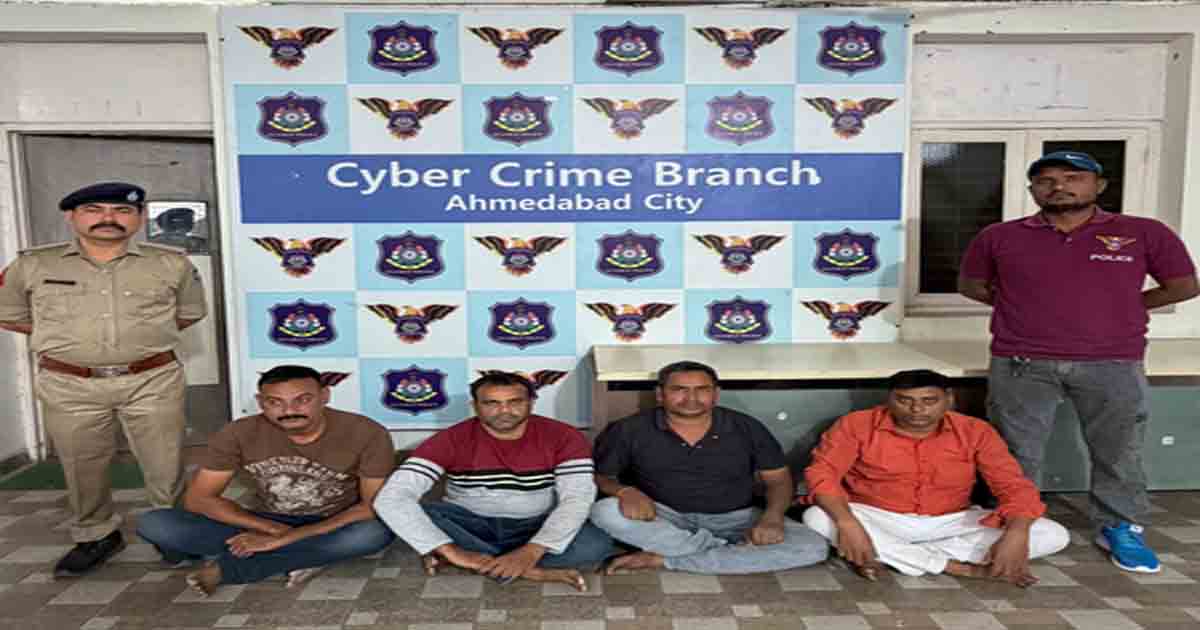
The Ahmedabad City Cyber Crime Branch of Gujarat has arrested four members of an alleged inter-state cyber fraud gang from Mumbai for diverting a business payment of Rs 6.55 lakh through email spoofing by impersonating the owner of a company and sending forged bank account details.
The accused allegedly hacked into email communications between Global Pantry Grocery Company and Maya Agrovet Limited, altered the email ID of the latter’s owner and sent a forged letter bearing Yes Bank’s letterhead, stamp and signature to divert a payment of Rs 6,55,111 into a fraudulent bank account.
According to the complaint, the fraud was committed before August 26, when the accused allegedly gained unauthorised access to the computer systems of one of the two companies and entered their email correspondence relating to business transactions.
They changed the email ID of Maya Agrovet Limited’s owner from ahgandhi.vishal@gmail.com to ahgandhi.vishal63@gmail.com and added two other email IDs, gatewayserv@yahoo.com and veertrdws@gmail.com, to the correspondence.
The accused then allegedly sent an email from the altered address containing a forged letter on Yes Bank letterhead.
The document mentioned the account personal name as MAYA AGROVET LIMITED and the registered account name as R K ENTERPRISES. It also carried a purported bank stamp and signature.
The complainant company was consequently induced to transfer Rs 6,55,111, which was due to Maya Agrovet Limited, into the account mentioned in the letter.
An FIR was registered on November 14 at the Cyber Crime Police Station under relevant provisions of the Bharatiya Nyaya Sanhita, 2023, and the Information Technology Act.
Police Inspector B N Patel and his team used technical analysis and human intelligence to identify the alleged perpetrators.
The team subsequently travelled to Mumbai and arrested four accused. Further investigation is underway to identify and trace other persons allegedly involved in the fraud.
The arrested accused have been identified as Ravindrakumar Kashyap, 42, Mohammad Riyaz Ansari, 38, Kamlesh Singh, 41, and Zulfikar Ali Siddiqui, 47. All four were residing in different localities of Nalasopara and Virar in Maharashtra’s Palghar district.
Kashyap is originally from Basti district and Singh from Prayagraj district in Uttar Pradesh. According to the police, Kashyap allegedly provided seven bank accounts to Riyaz, into which the fraud proceeds were deposited.
He withdrew the money and handed it over to Riyaz in return for a commission. Riyaz allegedly passed the bank accounts and withdrawn cash to Kamlesh, also receiving a commission.
Kamlesh allegedly arranged documents required to open the bank accounts, including shop-related papers, banners, firm registration documents and stamps, with the assistance of other accused.
He also allegedly supplied the accounts and cash to his associates in return for commissions. Siddiqui allegedly facilitated the depositing of the fraud proceeds into the bank accounts on the instructions of a co-accused and received a commission.
Police said he had previously been jailed in an NDPS case.
The four have been booked under Sections 54, 61(2)(a), 318(4), 319(2), 336(2), 336(3), 338 and 340(2) of the Bharatiya Nyaya Sanhita, along with Sections 43(a), 43(c), 43(i), 66, 66C and 66D of the Information Technology Act.

A specially designated Fast Track Court at the Rouse Avenue Courts Complex in Delhi on Saturday framed charges against all 14 accused in the National Eligibility-cum-Entrance Test (Undergraduate) (NEET-UG) 2026 question paper leak case, with all of them pleading not guilty and expressing their willingness to face trial.
The accused appeared before the Fast Track Court, constituted to deal with offences under the Public Examinations (Prevention of Unfair Means) Act, 2024, denied the charges framed against them and opted to contest the case on merits.
The court directed that the day-to-day trial proceedings against the accused will commence from November 25.
The accused against whom charges have been framed include Yash Yadav, Mangilal Biwal, Dinesh Biwal, Vikas Biwal, Shubham Khairnar, Dhananjay Lokhande, Prahlad Vithalrao Kulkarni, Tejas Harshad Kumar, Manoj Shirure, Shivraj Raghunath Motegaonkar, Manisha Waghmare, Manisha Mandhare and Manisha Sanjay Hawaldar.
The case relates to the alleged leakage of confidential question papers ahead of the NEET-UG 2026 examination, held on May 3 and subsequently cancelled following the paper leak controversy.
The Central Bureau of Investigation (CBI) filed a charge sheet against the 13 accused on July 28, alleging that the question papers were leaked through a network involving National Testing Agency (NTA) subject experts, intermediaries, coaching operators and others.
According to the probe agency, three NTA subject experts entrusted with translating, back-translating and proofreading the question papers allegedly took confidential examination questions out of the NTA’s office in Delhi by exploiting security lapses.
The CBI claimed that one of the accused, P.V. Kulkarni, wrote down all 135 Chemistry questions, along with their answer options, on small slips of paper and concealed them while leaving the confidential section.
The agency also flagged shortcomings in CCTV surveillance at the NTA office, saying that only 20-25 days of CCTV backup were available and that there was no dedicated control room to monitor the live feed from the confidential section.
The charge sheet against the 13 accused cited 360 witnesses, 422 documents and 43 material objects in support of the prosecution’s case.
The accused have been charged under various provisions of the Bharatiya Nyaya Sanhita (BNS), the Prevention of Corruption Act and the Public Examinations (Prevention of Unfair Means) Act, 2024.
The CBI subsequently filed a supplementary charge sheet against Sheshrao Bajrang Suryavanshi, the 14th accused arrested in the case, before the special court in October.
The probe agency claimed that Suryavanshi was linked to another accused, Shubham Khairnar, a career counsellor arrested in Maharashtra’s Nashik, for allegedly circulating the question paper on social media.
The CBI registered the case on May 12 following a complaint from the Department of Higher Education under the Union Ministry of Education over alleged irregularities and leakage of confidential NEET-UG question papers.
The original examination was cancelled, and a re-examination was conducted on June 21 under heightened security arrangements.
International News
Shekhawat meets Iranian cultural body chief, highlights significance of Persian language in India

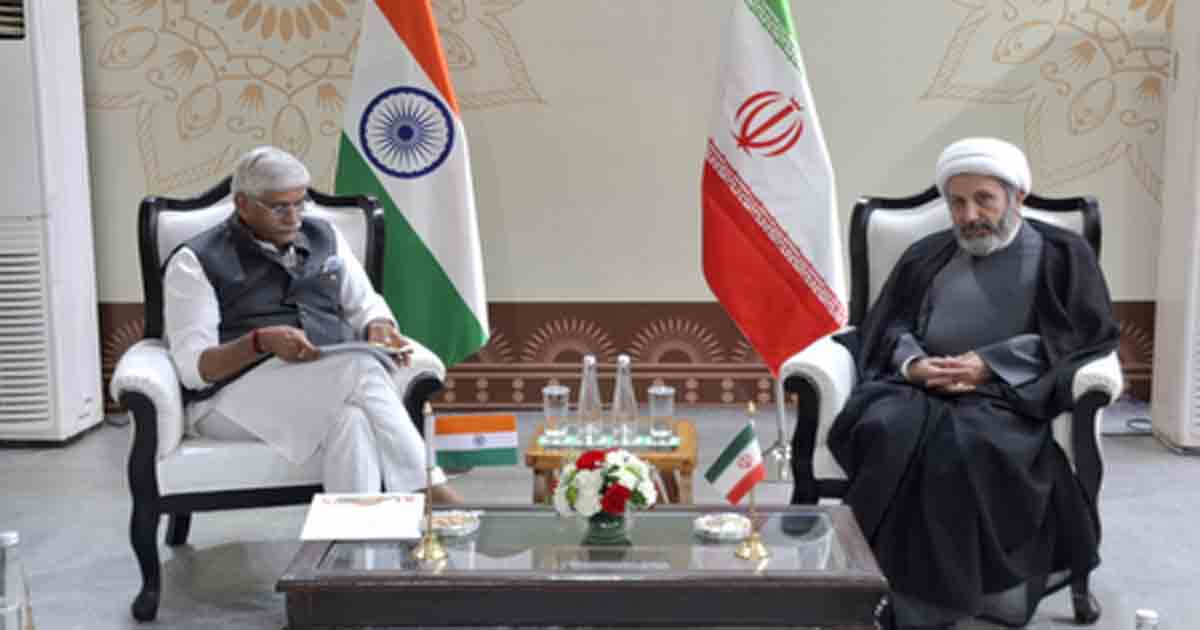
Culture and Tourism Minister Gajendra Singh Shekhawat on Saturday held a meeting with Mohammad Mahdi Imanipour, President of Iran’s Islamic Culture and Relations Organisation, on the sidelines of the first Shanghai Cooperation Organisation (SCO) Civilisational Dialogue Forum in New Delhi, during which he highlighted the historical and cultural significance of the Persian language in India, the Iranian Embassy in India said.
“During the meeting, the Indian Minister of Culture highlighted the historical and cultural significance of the Persian language in India, stating, ‘Persian is not considered a foreign language for us.’ He noted that under India’s National Education Policy 2020 (NEP 2020), Persian has been included alongside other classical languages of India,” the Iranian Embassy posted on X.
The two sides discussed ways to expand and strengthen cultural and artistic cooperation between Iran and India.
“Shekhawat also appreciated the cultural activities organised by the Embassy of the Islamic Republic of Iran in India, including film festivals and other cultural events, and emphasised India’s interest in strengthening cultural relations with Iran. He also expressed interest in cooperation with Iranian cultural institutions in the field of manuscripts,” the Embassy stated.
Imanipour expressed his appreciation for the Indian government’s cooperation in facilitating the transfer of medicines to Iran and thanked India for its valuable cooperation during the recent war, the Iranian Embassy said.
“Dr. Imanipour further proposed organising a joint Iranian and Indian Cultural Week and expressed Iran’s readiness to develop joint cultural programmes. He invited Indian artists to visit Iran and organise a grand cultural week in the country. The Indian Minister welcomed the proposal and expressed India’s readiness to cooperate in this regard,” it mentioned.
Highlighting the considerable potential for cooperation in the field of cinema, Imanipour also expressed Iran’s readiness to expand collaboration with India in film and cinema. He said that the Islamic Culture and Relations Organisation has 65 cultural missions around the world and is ready to expand cultural cooperation with India across various fields.
On Friday, Prime Minister Narendra Modi underlined mutual trust and shared civilisational values as the bedrock of stronger regional cooperation while addressing the inaugural SCO Civilisational Dialogue Forum.
“When we adopt this liberal vision, our diversity itself becomes the foundation of our unity,” PM Modi said.

Elderly man in Pune loses Rs 5 lakh in digital arrest scam

Powai Police Hand Over 10-Year-Old Boy to His Parents; DCP Datta Nalawade Praises Police for Their Humanity and Efforts.

Shiv Sena Organises a Blood Donation Drive in Mumbai.

Gujarat Police bust inter-state ’email spoofing’ racket, arrest four in Mumbai

Saudi-led coalition intercepts Houthi ballistic missiles targeting Riyadh

Congress trying to protect 3 crore Bangladeshi infiltrators in voter list: HM Shah

Red Fort car blast probe exposes blueprint for spread of terror modules across India

Trump flags Iran targets as talks continue

‘Conspiracy, not accident’: NCP on Ajit Pawar death

BJP, Shiv Sena slam Mallikarjun Kharge for terming Diwali ‘Khushiyon ka Eid’
-

 Crime4 years ago
Class 10 student jumps to death in Jaipur
-

 Maharashtra2 years ago
Mumbai Local Train Update: Central Railway’s New Timetable Comes Into Effect; Check Full List Of Revised Timings & Stations
-

 Maharashtra2 years ago
Mumbai To Go Toll-Free Tonight! Maharashtra Govt Announces Complete Toll Waiver For Light Motor Vehicles At All 5 Entry Points Of City
-

 Maharashtra2 years ago
False photo of Imtiaz Jaleel’s rally, exposing the fooling conspiracy
-

 National News2 years ago
Ministry of Railways rolls out Special Drive 4.0 with focus on digitisation, cleanliness, inclusiveness and grievance redressal
-

 Maharashtra2 years ago
Maharashtra Elections 2024: Mumbai Metro & BEST Services Extended Till Midnight On Voting Day
-

 National News2 years ago
J&K: 4 Jawans Killed, 28 Injured After Bus Carrying BSF Personnel For Poll Duty Falls Into Gorge In Budgam; Terrifying Visuals Surface
-

 Crime2 years ago
Baba Siddique Murder: Mumbai Police Unable To Get Lawrence Bishnoi Custody Due To Home Ministry Order, Says Report