
National News
SC asks Centre to give data on cases registered against Muslim men for pronouncing triple talaq


New Delhi, Jan 29: The Supreme Court on Wednesday told the Centre to furnish data on criminal cases registered under the 2019 Muslim Women (Protection of Rights on Marriage) Act, which criminalises pronouncement of triple talaq by Muslim men.
A Bench headed by Chief Justice of India, Sanjiv Khanna was hearing a batch of petitions filed by several Muslim organisations challenging the constitutionality of the 2019 law enacted by the Parliament.
The petitioners contended before the top court that since the practice of triple talaq has no legal effect after the Shayara Bano case, it cannot be criminalised.
In 2017, ‘talaq-e-biddat (triple talaq)’ was set aside by the Constitution Bench in the case of Shayara Bano Vs. Union of India as it violated the fundamental rights and the rights of equality guaranteed to a woman under the Constitution and suggested the practice be made punishable.
The CJI Khanna-led Bench told Solicitor General Tushar Mehta, the second highest law officer of the Centre, to place on record data on the number of FIRs and charge sheets filed against Muslim men for pronouncing instant triple talaq to divorce spouses.
The apex court took note of the petitioners’ submission that triple talaq should not be criminalised when the practice is banned and no divorce can take place by uttering talaq three times at once.
The Bench, also comprising Justice Sanjay Kumar, fixed the petitions for final hearing in the week commencing March 17.
In an affidavit filed before the Supreme Court, the Centre defended the constitutional validity of the Muslim Women (Protection of Rights on Marriage) Act, 2019.
“It was seen that setting aside talaq-e-biddat (triple talaq) by the Supreme Court has not worked as a sufficient deterrent in bringing down the number of divorces by this practice among certain Muslims. (T)he victims of talaq-e-biddat have no option but to approach the police for redressal of their grievances and the police were helpless as no action could be taken against their husbands in the absence of punitive provisions in the law.
“Therefore, in order to prevent the aforesaid practice, it was felt that there was an urgent need for stringent provisions in the law which act as a deterrent to Muslim husbands divorcing their wives by adopting instantaneous and irrevocable talaq,” said the affidavit filed by the Union Ministry of Law and Justice before the apex court.
It said that the practice of talaq-e-biddat legitimised and institutionalised abandonment of wives by their husbands and did not simply result in a private injury but in a public wrong as it militated against the rights of women and the social institution of marriage itself.
The Parliament in its wisdom has enacted the impugned Act to protect the rights of married Muslim women who are being divorced by triple talaq and the law in question helps in ensuring the larger constitutional goals of gender justice and gender equality of married Muslim women, the affidavit added.
The Centre said that the Supreme Court has consistently held that the court cannot go into the wisdom of the measure and cannot enter into a discussion as to what the law should be.
“It is the function of the legislature alone to determine what is and what is not good and proper for the people of the land and they must be given widest latitude to exercise their functions within the limit of their powers else all progress is barred.
“Defining offences and prescribing appropriate penalties is a core function of the State. Whether or not a particular type of conduct ought to be criminalised, and what punishment is to be imposed for such conduct is to be determined by the legislature in light of the prevailing social circumstances,” the affidavit said.
Further, it said that a similar petition challenging the validity of the Muslim Women (Protection of Rights on Marriage) Ordinance, 2018, which was on similar lines to the impugned Act, was dismissed by the Delhi High Court in September 2018.
“It is submitted that where the Shayara Bano case itself has held the practice of triple talaq to be manifestly arbitrary, it cannot be argued that a law criminalising the practice is manifestly arbitrary,” contended Centre before the Supreme Court, adding that there is no basis to the claim that marriages being under personal law, are exempted from the application of the general criminal law and “marriages are a social institution in which the State has a special interest in protecting.”

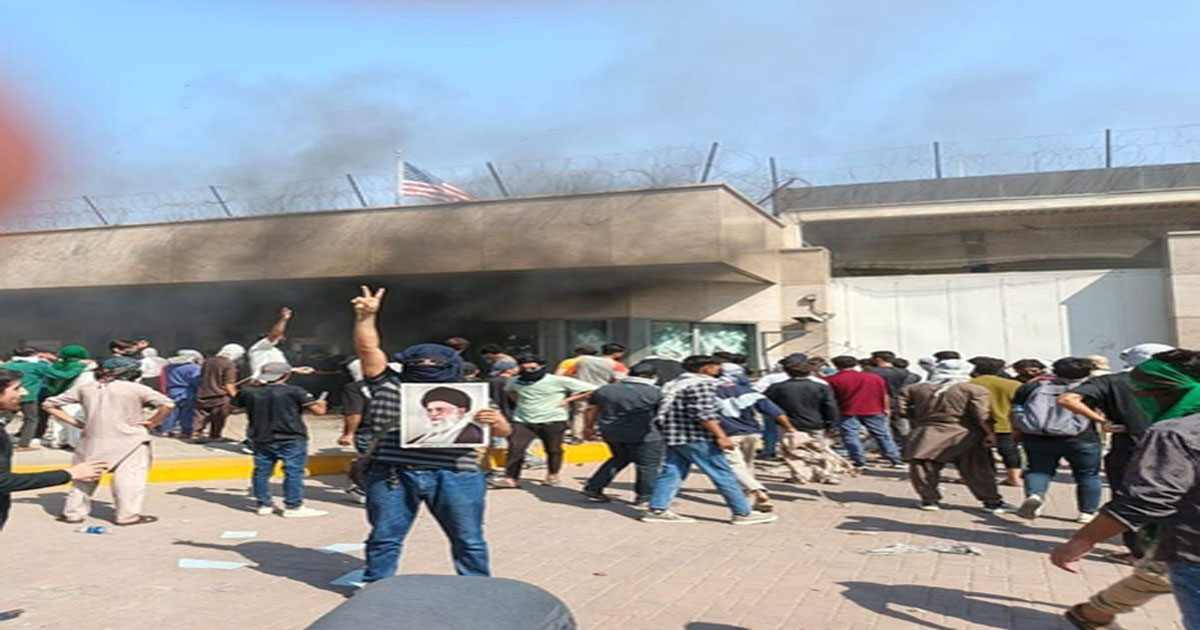
New Delhi, March 25: For Pakistan’s Army Chief Field Marshal Asim Munir, countering the pro-Iran Shia mobilisation in the country is increasingly becoming a headache. For Pakistan, countering this mobilisation is important as it is threatening to become bigger. However, the dilemma the establishment faces is that it cannot use its official machinery to take on the mobilisation of the Shias.
Pakistan has chosen to mediate between Iran and the United States, and hence it needs to remain neutral. Any direct action against the Shia mobilisation would infuriate Iran, and this is something that Islamabad wants to avoid.
An official said that Pakistan has now brought back its proxies to take on this problem. The Pakistan Army chief has ordered hardline Sunni elements and leaders from the Sipah-e-Sabah (SeS) and Jamaat-ud-Dawah (JuD) to take on the Shias who are mobilising in large numbers in support of Iran. These groups have, in the past, come to the rescue of the Pakistan establishment. When it comes to countering protesters who were seeking justice for jailed former Pakistan Prime Minister Imran Khan, it was these elements who took to the streets.
The members of the SeS and JuD have the backing of the army and ISI and have been given a free hand to indulge in street violence against those who are questioning the establishment, an official said.
The SeS is a banned Sunni Deobandi Islamist organisation and a former political party that was founded in 1985. This outfit came into existence only to oppose Shia influence in Pakistan. The SeS has a history of being involved in sectarian conflicts, including violence with the Shia organisation, Shipah-e-Muhammad, Pakistan.
The JuD, on the other hand, is the charity wing of the Lashkar-e-Taiba. The JuD follows the Ahl-i Hadith interpretation of Islam, which is similar to Wahhabism and Salafism.
An Intelligence Bureau official said that by involving the SeS and JuD, the Pakistan army chief would look to put down the mobilisation of the Shia. Since these groups have no accountability, the violence would not be blamed on the state, but on two individual organisations. This helps in the deniability factor, when Pakistan speaks with Iran, the official added.
Such violence will no doubt be scrutinised internationally and by foreign Intelligence agencies. The establishment would, however, try to get away by putting the blame on the SeS and JuD, while stating that it has nothing to do with them.
Another official said that both groups have been given immunity by the establishment. This means that they can choose to act the way they please.
Another official said that with such a plan in place, one could anticipate street violence and bloody clashes with the Shias in Pakistan.
By trying to mediate between Iran and the US, Pakistan wants to place itself in a position of power. Pakistan also wants to claim geopolitical relevance by offering to mediate between the two warring nations.
Field Marshal Asim Munir has taken this task upon himself and has been engaging directly with Iranian President Masood Pezeshkian. He has also been leveraging his relations with some of the Gulf nations and the US.
With Pakistan wanting geopolitical relevance, it cannot afford to officially crush the mobilisation that is taking place in support of Iran. If Pakistan ends up angering Iran at this juncture, then Tehran may not come to the table. This would hurt Pakistan’s ambitions of playing mediator and reclaiming geopolitical importance, another official said.
The JuD and the SeS have readily accepted what the Pakistan army chief has said, as they have done in the past. Officials say that both these outfits have had an agenda against the Shias for a long time, and hence the offer made by Field Marshal Munir is more than welcome for them.
National News
Mumbai Weather Update March 24, 2026: IMD Issues ‘Heatwave Alert’ For City As Temperatures Touch 36°C; Overall AQI Remains In ‘Poor’ Category


Mumbai: The city woke up to clear, sunny skies and rising temperatures on Tuesday, March 24, with the India Meteorological Department (IMD) issuing a ‘heatwave’ alert. As daytime temperatures are set to rise sharply, residents are urged to take necessary precautions to protect themselves from the heat. Meanwhile, Mumbai’s air quality has fluctuated over the past 24 hours but has continued to remain in the ‘poor’ category.
According to the IMD, Mumbai is likely to witness temperatures ranging between 22°C and 36°C, indicating a noticeable spike in heat levels. Citizens have been advised to avoid prolonged exposure to direct sunlight, stay well hydrated, and opt for light meals to cope with the increasing heat and humidity.
Morning observations from key weather stations suggested a rise in temperatures compared to the previous day. Colaba recorded 28.6°C, while Santacruz registered 30°C, both reflecting warmer conditions. Neighbouring regions reported even higher temperatures, with Thane touching 38°C and Navi Mumbai recording 36°C.
On the air quality front, Mumbai’s Air Quality Index (AQI) remained largely unchanged over the past 24 hours. As per AQI.in data, the city recorded an overall AQI of 112, placing it in the ‘poor’ category.
Throughout the day yesterday, the AQI levels fluctuated between ‘moderate’ and ‘poor’. The lowest AQI reading of 67 was recorded at 5.30 am this morning, before gradually rising to a high of 124 at 8.00 am.
At a local level, several areas continued to report significantly poor air quality. Subhash Nagar recorded the highest AQI at 263, falling under the ‘unhealthy’ category. This was followed by Govandi West (253), Kannamwar Nagar (250), Rajiv Gandhi Nagar (243), and Savitribai Phule Nagar (233), falling into the ‘Unhealthy’ category.
In contrast, some parts of the city reported relatively better air quality with Gamdevi Station 1 recording the lowest AQI at 25 (Good). Green Hills recorded an AQI of 47, also falling into the ‘good’ category. Other areas such as Mulgoan (58), Worli (72), and Malad (73) remained ‘moderate’ range.
As per standard air quality classifications, AQI values between 0 and 50 are considered ‘good’, 51 to 100 ‘moderate’, 101 to 200 ‘poor’, 201 to 300 ‘unhealthy’ and levels above 300 are classified as ‘severe’ or ‘hazardous’.
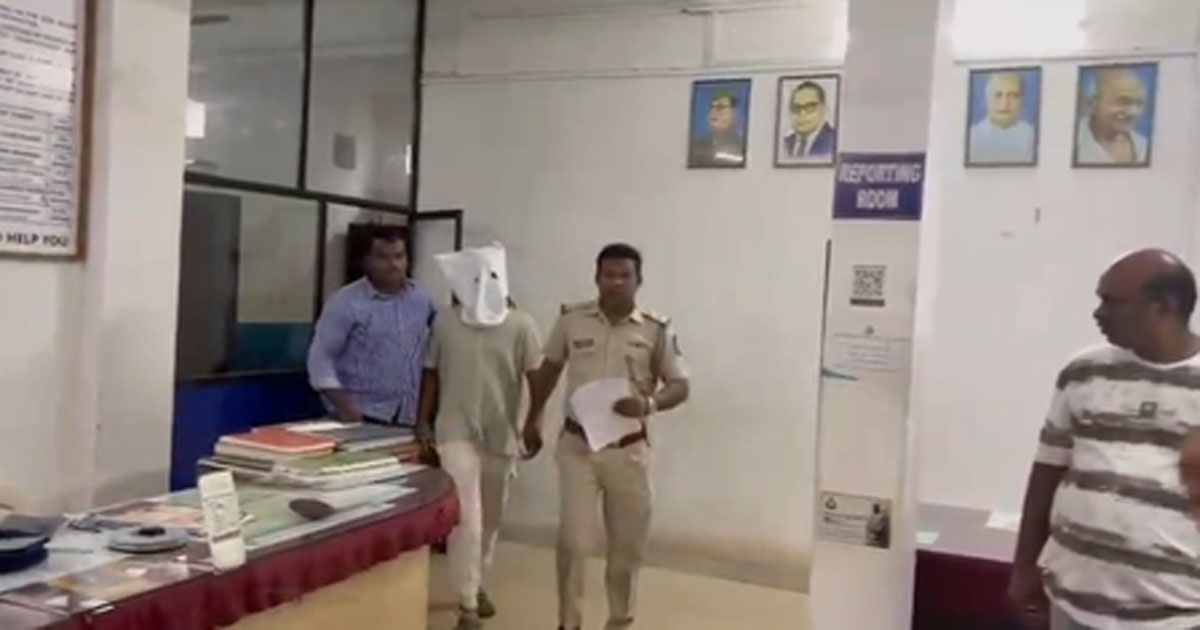
Panaji, March 23: The South Goa Police arrested 20-year-old Soham Sushant Naik in the wee hours of Monday following an intense public outcry over an alleged sex scandal involving 25 to 30 minor girls. Naik, a resident of Madegal-Cacora and the son of a BJP Curchorem Municipal councillor, was taken into custody after a mob of concerned citizens and local leaders picketed the police station.
The investigation suggests a disturbing pattern of abuse spanning the last three years. According to preliminary reports, the BJP corporator’s son allegedly engaged in sexual relations with numerous minors, filming the encounters and subsequently using the footage to threaten the victims into silence.
The scandal came to light last week after Soham Sushant Naik allegedly boasted about his actions during a social gathering, showing explicit videos of the victims to his associates. As rumours of the sexual abuse recordings spread through South Goa, local tension reached a boiling point.
However, before this, the case was being discussed in South Goa for the last few days. Local citizens gathered at the Kudchade police station on Sunday night seeking action as the case was linked to a local BJP corporator. Finally, the police took the corporator’s son Soham Naik into custody.
The action came after the accused showed some videos to his friends at a drinking party last week. This led to the revelation of the years of alleged sexual abuse of minors by the BJP leader’s son.
On Sunday, Curchorem residents had marched to the police station demanding a fair probe into the alleged sex-racket videos involving minors.
The protestors had warned of a bandh if police failed to act immediately and arrest the accused within 48 hours. The residents had also demanded that the police register a suo motu FIR in the case rather than wait for victims to come forward.
State Congress president Amit Patkar demanded that the government step in, take suo motu cognisance, and order a prompt, impartial, and time-bound enquiry into the horrific case.
The South Goa Police are currently investigating the digital evidence and determining the full scale of the exploitation of the minor girls by Soham Sushant Naik.
Soham Sushant Naik remains in custody as forensic teams work to recover the alleged videos used for blackmailing the minor girls.

Rumours Debunked: Palghar District Administration Clarifies No Shortage Of Petrol And Diesel Despite Prevailing Global Tensions

Abu Asim Azmi expresses concern over incidents of hate speech-related crimes in Maharashtra, demands strict action in the House of Assembly

Black magic was performed at Ajit Pawar’s house, Rohit Pawar’s sensational summary, demand for investigation

Amin Patel strongly demands that the Kamatipura Rehabilitation project be completed as soon as possible, and assures to start the work.

Impostor Baba Ashok Kharat declared as incarnation of Shankar, Chief Minister Fadnavis claims in the Assembly, details presented

Married Mumbai Woman Mocked In Andheri Society Over ‘Lift Kissing’ CCTV Video, Files Police Complaint

Mumbai: JBCN International School In Borivali Gets Bomb Threat, Search Reveals Hoax, Students Safe

Mahayoti’s big gift to the people of Mumbai… Now there is no tax for houses up to 500 square feet, the Municipal Corporation has increased this limit to 700 square feet.

LPG Crisis In Maharashtra: Cyber Crime On Rise Amid Shortage, 2 Women Lose ₹4 Lakh In ‘Gas Update’ Online Scam In Kalyan-Dombivli

Rashmika Mandanna-Vijay Deverakonda Wedding: Virosh Turn Modern Day Prince & Princess For Their Dreamy Sangeet Ceremony
-

 Crime4 years ago
Class 10 student jumps to death in Jaipur
-

 Maharashtra1 year ago
Mumbai Local Train Update: Central Railway’s New Timetable Comes Into Effect; Check Full List Of Revised Timings & Stations
-

 Maharashtra1 year ago
Mumbai To Go Toll-Free Tonight! Maharashtra Govt Announces Complete Toll Waiver For Light Motor Vehicles At All 5 Entry Points Of City
-

 Maharashtra1 year ago
False photo of Imtiaz Jaleel’s rally, exposing the fooling conspiracy
-

 National News1 year ago
Ministry of Railways rolls out Special Drive 4.0 with focus on digitisation, cleanliness, inclusiveness and grievance redressal
-

 Maharashtra1 year ago
Maharashtra Elections 2024: Mumbai Metro & BEST Services Extended Till Midnight On Voting Day
-

 National News2 years ago
J&K: 4 Jawans Killed, 28 Injured After Bus Carrying BSF Personnel For Poll Duty Falls Into Gorge In Budgam; Terrifying Visuals Surface
-

 Crime1 year ago
Baba Siddique Murder: Mumbai Police Unable To Get Lawrence Bishnoi Custody Due To Home Ministry Order, Says Report