
International News
Saudi Arabia restores diplomatic ties with Canada

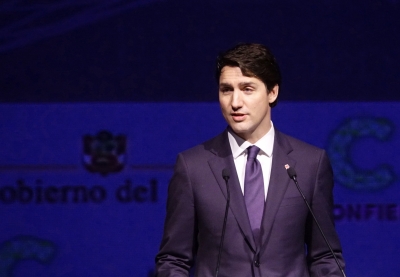
Saudi Arabia and Canada have agreed to restore diplomatic relations and appoint ambassadors, the Saudi foreign ministry announced.
The Ministry said on Wednesday in a statement that the decision was made based on the two sides’ wishes to restore ties on the basis of mutual respect and common interests, news agency reported.
“Canada has appointed a new ambassador to the Kingdom of Saudi Arabia, Jean-Philippe Linteau,” the Canadian Foreign Ministry said in a statement while announcing the decision.
The move follows discussions between Saudi Arabian Crown Prince Mohammed bin Salman bin Abdulaziz Al Saud and Canadian Prime Minister Justin Trudeau during the APEC summit in the Thai capital of Bangkok in November 2022, the Ministry added.
Saudi Arabia recalled its ambassador from Canada in 2018 after a dispute over Canada’s demand for Saudi Arabia to release detained activists.


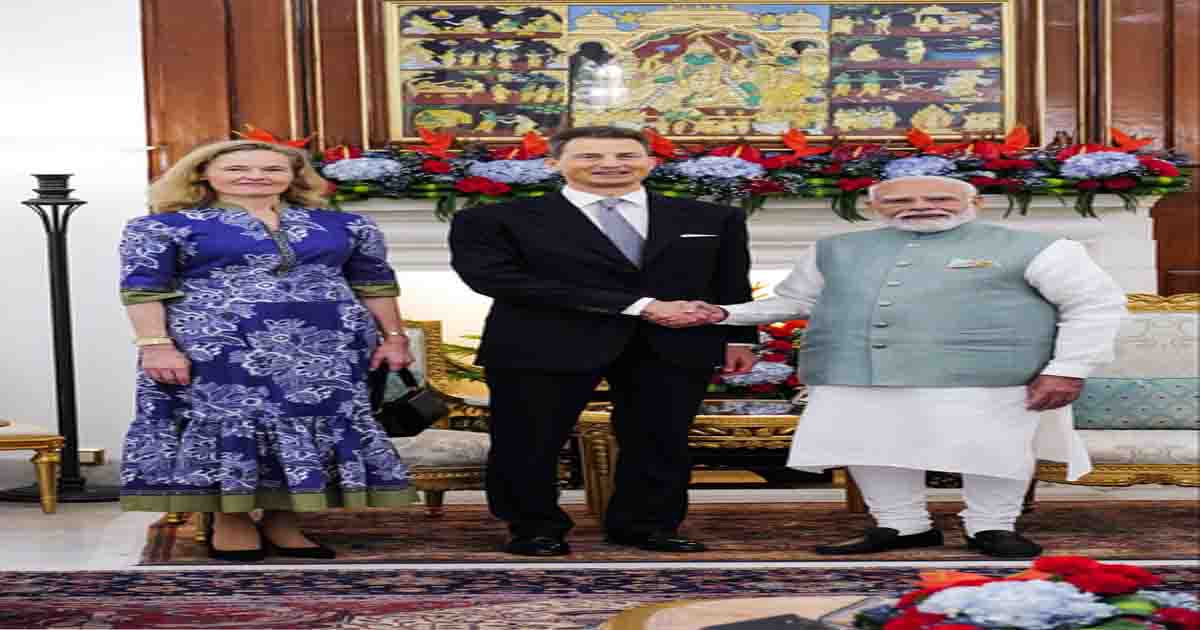
Prime Minister Narendra Modi held a meeting with Liechtenstein’s Prince Alois and Princess Sophie at the Hyderabad House in New Delhi on Tuesday, discussing ways to further deepen cooperation in trade, innovation, science and technology, skill development and people-to-people ties.
During the meeting, the two sides reaffirmed their commitment to working together to reform and strengthen multilateral institutions, including the United Nations. They welcomed the positive momentum generated by the India-European Free Trade Association (EFTA) Trade and Economic Partnership Agreement (TEPA) and reaffirmed their commitment to strengthen bilateral partnership.
“PM Narendra Modi held extensive discussions with H.S.H. Hereditary Prince Alois of Liechtenstein and H.R.H. Hereditary Princess Sophie at Hyderabad House today. The leaders reviewed the entire spectrum of India–Liechtenstein relations and discussed ways to further deepen cooperation in trade and investment, innovation, science and technology, skill development and people-to-people ties,” the Ministry of External Affairs (MEA) wrote on X.
“They also reaffirmed their commitment to working together to reform and strengthen multilateral institutions, including the United Nations. They welcomed the positive momentum generated by the India–EFTA TEPA and reaffirmed their commitment to further strengthening the bilateral partnership,” it added.
Earlier in the day, Prince Alois and Princess Sophie paid tribute to Mahatma Gandhi at Rajghat in New Delhi.
External Affairs Minister (EAM) S Jaishankar also called on Liechtenstein Prince and discussed bilateral ties and emerging opportunities under the India-EFTA TEPA.
“A pleasure to call on H.S.H. Hereditary Prince Alois of Liechtenstein, on a State Visit to India. Our bilateral partnership is witnessing strong momentum across a wide range of domains, driven by the opportunities enabled by India – EFTA TEPA,” the EAM posted on X after the meeting.
Prince Alois was accorded a ceremonial welcome at the forecourt of Rashtrapati Bhavan. President Droupadi Murmu and PM Modi warmly welcomed Prince Alois upon his arrival. Speaking to the reporters, Prince Alois expressed gratitude to President Murmu and PM Modi for the invitation and warm welcome and said, “I am very honoured to be in India on the occasion of Liechtenstein’s first state visit to this remarkable country.”
“This historic visit bears testimony to the importance that Liechtenstein attaches to the relationship with India,” he said.
Speaking about the conclusion of the TEPA with India, which entered into force a year ago, the visiting Prince called it a “significant milestone” in strengthening bilateral ties. “We are determined to build on this momentum and strengthen our ties with India even further.”
“In particular, we see tremendous potential in expanding our economic cooperation in areas such as innovation, advanced manufacturing, financial services, education and technology. Across these and many other areas, our two countries possess complementary strengths that we can bring together for the lasting benefit of both our countries,” Prince Alois added.
Later in the day, Finance Minister Nirmala Sitharaman and Union Minister of State for Skills Development and Entrepreneurship Jayant Chaudhary will call on Prince Alois.
Prince Alois will then meet President Droupadi Murmu, who will also host an official banquet in his honour.
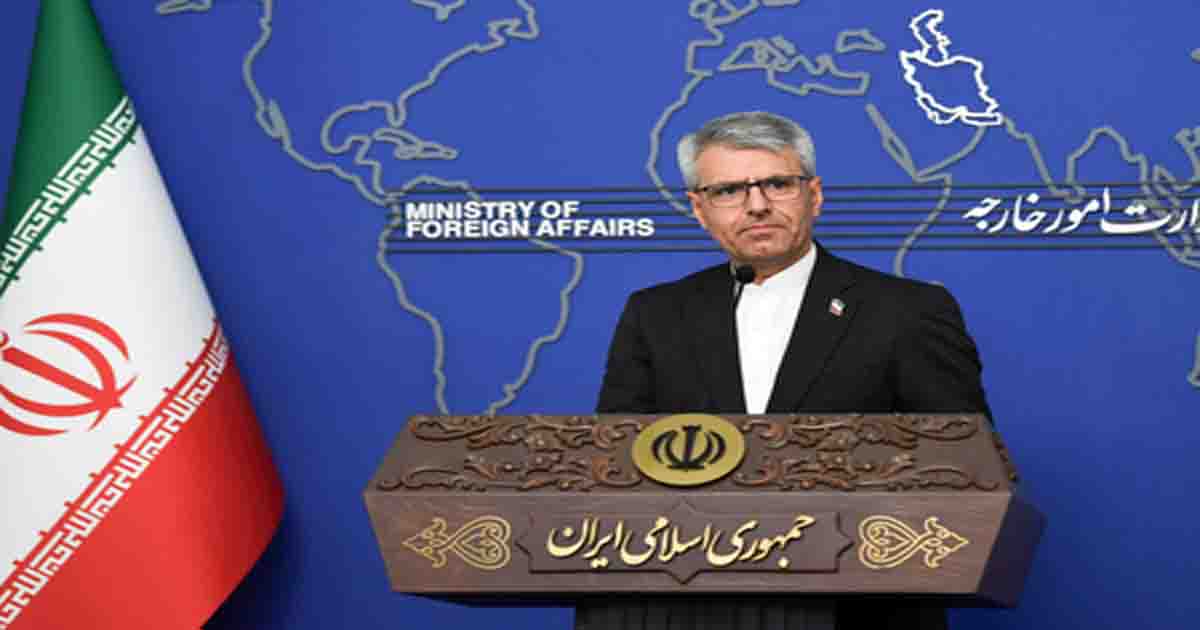
Iranian Foreign Ministry spokesman Esmaeil Baghaei said the outcome of Israel’s parliamentary election on October 27 would make no difference to Iran.
Speaking at a weekly press conference in Tehran on Monday, Baghaei criticised Israel’s record in West Asia, saying it had brought nothing to the region but “violence and massacre.” He also accused Israel of continuing what he called “genocide” against Palestinians and said Israeli threats against Iran were part of its hostile conduct, Xinhua News Agency reported.
Responding to Israeli officials’ claims that Iran might launch preemptive strikes to disrupt the election, Baghaei warned that Israel was “highly adept at carrying out false-flag operations.”
He said Iran was closely monitoring developments and that its armed forces would not hesitate to defend the country’s territory, adding that Iran was in a state of war and would exercise its right to self-defence.
Meanwhile, Iran’s Foreign Minister Seyed Abbas Araghchi on Sunday reiterated that the administration of the Strait of Hormuz and routes in the waterway will not be the same as they were in the past, according to the official news agency IRNA.
Araghchi made the remarks at a ceremony in the Iranian capital Tehran, while stressing that “fundamental and strategic” changes have taken place in West Asia following the US-Israeli war against Iran.
“We must accept that new realities have taken hold. The routes in the Strait of Hormuz will not be the same as they once were, and the strait’s management will also not be as it was in the past,” he said. “There are matters on which we have held negotiations, and these negotiations will continue.”
The minister stressed that the region’s security must be ensured by regional countries and without reliance on foreign forces, “who have come to the region aiming to safeguard their own interests and protect Israel, and whose continued presence will lead to nothing but insecurity for the entire region.”
He added that Iran was ready to cooperate with all regional countries.
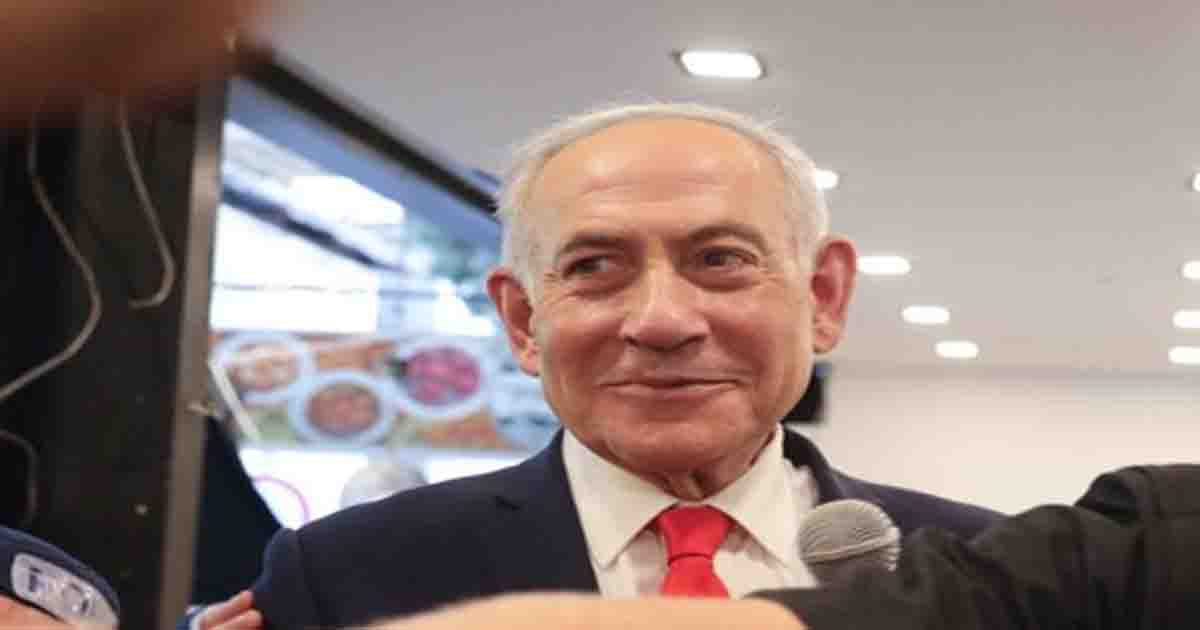
As Israel heads to a crucial parliamentary election on Tuesday, incumbent Prime Minister Benjamin Netanyahu faces a challenge from key candidates including Gadi Eisenkot, Naftali Bennett, Yair Lapid, Avigdor Lieberman and Yair Golan, local media reported.
Netanyahu has positioned himself as the strongest candidate to safeguard Israel’s security and handle its international ties.
His Likud party is focusing on military successes against Hamas, Hezbollah and Iran, while critics argue that the October 7 attack exposed serious security lapses under his leadership, Israeli media outlet i24 News reported.
Former Israel Defense Forces (IDF) chief of staff Gadi Eisenkot has emerged as a prominent challenger to Netanyahu. His newly formed Yashar party combines a security-oriented agenda with pledges to restore public confidence and reinforce democratic institutions.
Furthermore, former prime ministers Naftali Bennett and Yair Lapid have united to build an alliance, the Beyachad party, spanning right-wing and centrist voters. Their platform focuses on national security, integrating ultra-Orthodox men into military service and the workforce, supporting reservists and reforming the constitutional framework.
Led by Avigdor Lieberman, the Yisrael Beiteinu party combines a tough security stance with secular policies.
While the party traditionally drew support from immigrants from the former Soviet Union, it is now reaching out to a broader electorate that demands compulsory military service for all and less religious influence over public affairs.
Additionally, Yair Golan’s Democratic Party opposes annexation, favours a diplomatic resolution to the Israeli-Palestinian conflict and supports cooperation with moderate regional partners, i24 News reported.
Meanwhile, Netanyahu’s opponents are exploring possible post-election arrangements as opinion polls point to a closely contested race, according to a report in The Jerusalem Post.
“Israel’s anti-Netanyahu bloc is preparing for the possibility of forming a minority government after the upcoming elections, despite opposition from Avigdor Liberman and Naftali Bennett, while a broad agreement is emerging among the parties to replace Knesset Speaker Amir Ohana even before a coalition deal is reached,” the report stated.
“In most polls, the anti-Netanyahu camp holds an advantage over the outgoing coalition bloc, but the Zionist parties seeking political change fall short of the majority needed to form a government based on their current agreements,” it noted.
Nearly three years after the deadliest attack in Israel’s history triggered a devastating war on multiple fronts, Israelis are preparing to cast their votes in an election widely regarded as one of the most consequential in the country’s history, with implications extending well beyond the political future of Prime Minister Benjamin Netanyahu and his opponents, The Times of Israel reported.
The report suggests that the Tuesday election, the first since the Hamas-led October 7, 2023, massacre, is taking place against a backdrop of deep divisions over accountability for the failures that enabled the attack, the burden of military service, and the independence of Israel’s democratic institutions and judiciary,

True success of science lies in taking innovation from lab to land: PM Modi

Another Class 12 student found dead in Delhi; suicide suspected

ECI’s affidavit on SIR deceptive: Jairam Ramesh

Maha CM defends pumped storage project in Karjat amid environmental backlash

Waqf Property Report Pending for Three Years: Rais Shaikh Accuses NCP of Ignoring Muslim Community’s Issues

Rahul, Cong ecosystem want to force regime change: BJP after Neha Bora praises B’desh Gen-Z protest

Attack on democratic rights: INDIA Bloc leaders on detentions of anti-ECI protestors

BJP pays tribute to ex-President Abdul Kalam, recalls his enduring influence on generations of India’s youth

INDIA bloc begins protest march against ECI

Maha Congress stages agitation against Gyanesh Kumar
-

 Crime4 years ago
Class 10 student jumps to death in Jaipur
-

 Maharashtra2 years ago
Mumbai Local Train Update: Central Railway’s New Timetable Comes Into Effect; Check Full List Of Revised Timings & Stations
-

 Maharashtra2 years ago
Mumbai To Go Toll-Free Tonight! Maharashtra Govt Announces Complete Toll Waiver For Light Motor Vehicles At All 5 Entry Points Of City
-

 Maharashtra2 years ago
False photo of Imtiaz Jaleel’s rally, exposing the fooling conspiracy
-

 National News2 years ago
Ministry of Railways rolls out Special Drive 4.0 with focus on digitisation, cleanliness, inclusiveness and grievance redressal
-

 Maharashtra2 years ago
Maharashtra Elections 2024: Mumbai Metro & BEST Services Extended Till Midnight On Voting Day
-

 National News2 years ago
J&K: 4 Jawans Killed, 28 Injured After Bus Carrying BSF Personnel For Poll Duty Falls Into Gorge In Budgam; Terrifying Visuals Surface
-

 Crime2 years ago
Baba Siddique Murder: Mumbai Police Unable To Get Lawrence Bishnoi Custody Due To Home Ministry Order, Says Report