
International News
Russia says Japan’s missile deployment could be ‘more than tragic’

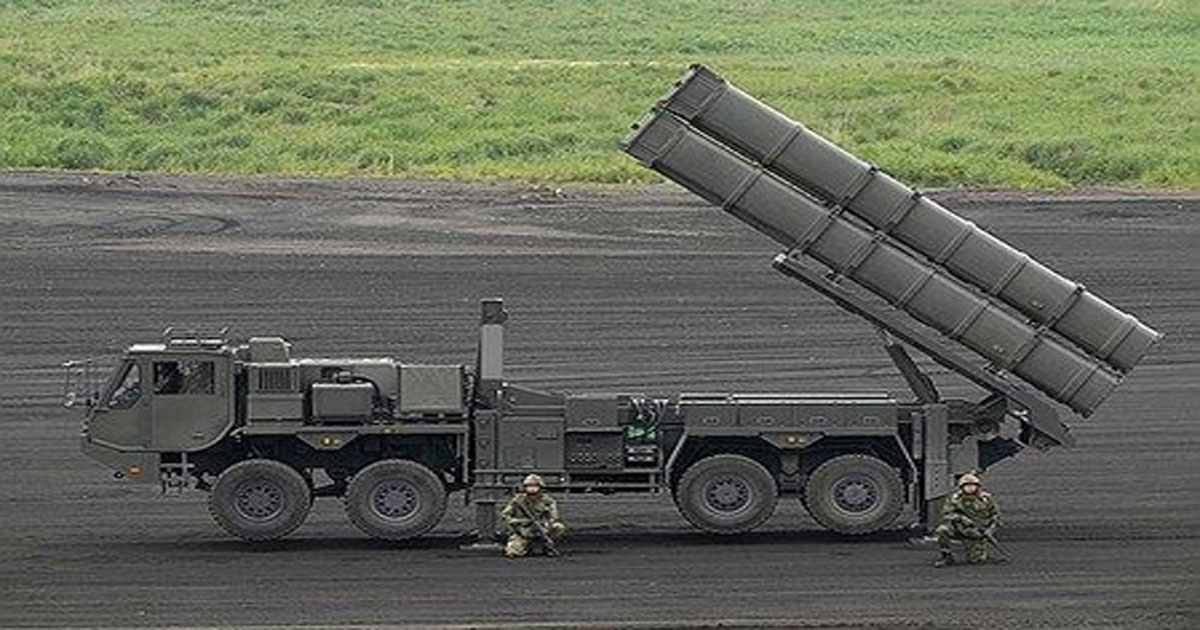
Moscow, April 2: The deployment of anti-ship hypersonic missiles at Japanese military garrisons in Kumamoto and Shizuoka represents yet another indication that Japan is moving away from the pacifist provisions enshrined in its Constitution, Russian Foreign Ministry Spokeswoman Maria Zakharova said.
Japan’s deployment of missile systems on its territory and the buildup of its offensive weapons arsenals reflect the country’s dangerous course toward remilitarization, she said.
“Add to this the rejection of preserving historical memory and the rewriting of history, and the result could be more than tragic,” she added.
According to Zakharova, Russia has repeatedly raised with Japanese authorities through diplomatic channels the negative impact of their policies on security and stability in the Asia-Pacific region, reports Xinhua news agency.
“We are carefully taking these circumstances into account, primarily in the context of developing the necessary countermeasures to ensure an adequate level of our country’s defence capability,” she said.
The deployment of the missiles at Camp Kengun in Kumamoto Prefecture, southwestern Japan, and Camp Fuji in Shizuoka Prefecture, central Japan, marks a significant shift from the country’s long-standing exclusively defence-oriented policy under its war-renouncing Constitution, reports Xinhua, quoting Kyodo News.
Camp Kengun has been equipped with a ground-launched version of the upgraded Type 12 land-to-ship guided missile that can fly about 1,000 kilometres, far exceeding Japan’s territorial boundaries and widely seen as having clear offensive capabilities.
Meanwhile, hyper velocity gliding projectiles have been equipped at a training unit at Camp Fuji. Designed for island defence, the deployed model has a range of several hundred kilometres, with the ministry working to upgrade it to around 2,000 kilometres.
Kyodo News noted that “enemy base strike capability” refers to Japan’s ability to launch counterstrikes against adversary bases before actual damage occurs, if it determines that an attack is imminent. However, analysts warn that misjudgments could risk violating international law by constituting a preemptive strike.
Atsushi Koketsu, emeritus professor at Yamaguchi University in Japan, told Xinhua that while the government frames the capability as a means of strengthening deterrence, it “clearly goes beyond the scope of self-defence.”
On Tuesday, local residents in Kumamoto staged protests near Camp Kengun, holding placards reading “Oppose deployment” and “No missiles needed,” Kyodo News reported.
Protesters expressed concern that the deployment could turn the area into a potential military target, and have repeatedly called on the defence ministry to hold public briefings, which have yet to take place, the report said.
Separately, more than a dozen citizen representatives met with defence ministry officials in Tokyo on Monday, urging the government to halt its military expansion measures, including the missile deployment in Kumamoto. Participants criticised officials for providing vague responses and frequently avoiding transparency.
Citizen representative Kujirai said after the meeting that the government’s replies followed a “routine pattern,” increasingly citing “confidentiality” as a pretext when declining to answer specific questions. He also criticised Prime Minister Sanae Takaichi’s push to “make Japan strong and wealthy,” arguing it amounts to large-scale military expansion without adequate public accountability. “This is a misinterpretation of the citizens’ demands and a very dangerous stance,” he said.
Another representative, Akira Saito, told Xinhua that the government officials’ response remained very limited. Going forward, in addition to directly questioning Takaichi at the parliamentary level, “it is crucial to continuously expand and amplify our voices through civic movements,” he said.

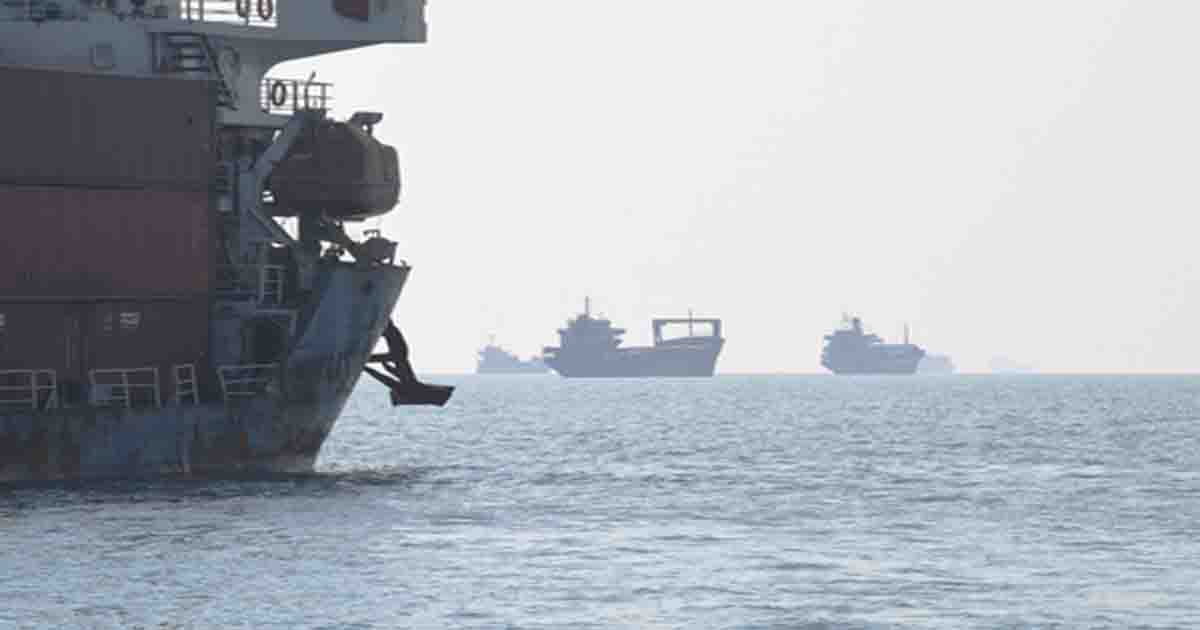
The navy of Iran’s Islamic Revolutionary Guard Corps (IRGC) said Saturday that two “violating” oil tankers exploded and caught fire after hitting naval mines in the Strait of Hormuz earlier in the day.
One tanker collided with the mines off Oman’s Khasab port, and the other hit mines on the “unauthorised” route east of the Strait of Hormuz, the navy said in a statement on the IRGC’s official news outlet, Sepah News.
The vessels had turned off their GPS systems and tried to cross the strait’s “illegitimate” route stealthily, it added.
The navy warned that the “unauthorised” route in the waterway is entirely mined, and oil tankers’ attempts and the “terrorist” U.S. military’s aerial support will not prevent collision with the “highly devastating” mines, Xinhua News Agency reported.
Meanwhile, the US military has disabled a commercial vessel in the Gulf of Oman after it allegedly attempted to breach the US naval blockade of Iran despite repeated warnings, while Tehran has vowed to keep the strategically important Strait of Hormuz shut and break the embargo.
The US Central Command (CENTCOM) said the incident took place on November 26, after the Palau-flagged bulk carrier M/V Pacific Archer departed from the Iranian port city of Bandar Abbas and attempted to transit regional waters.
In a statement, CENTCOM said: “A U.S. military aircraft launched precision munitions that struck the stern of Palau-flagged M/V Pacific Archer. The ship’s propulsion was ultimately disabled and the civilian crew was unharmed.”
The military command said the vessel had attempted to run the US naval blockade despite receiving multiple warnings from American forces.
“US Central Command (CENTCOM) disabled a commercial vessel in the Gulf of Oman, Nov. 26, after the crew attempted to run the US naval blockade, despite multiple warnings, following departure from an Iranian port,” the statement said.
It further asserted that American forces were continuing to strictly enforce the blockade, adding that 158 commercial vessels had been redirected after complying with instructions, while six vessels had been disabled for refusing to comply.
“All mariners operating in the Gulf of Oman and approaches to the Strait of Hormuz are urged to heed blockade warnings issued by CENTCOM forces,” it added.
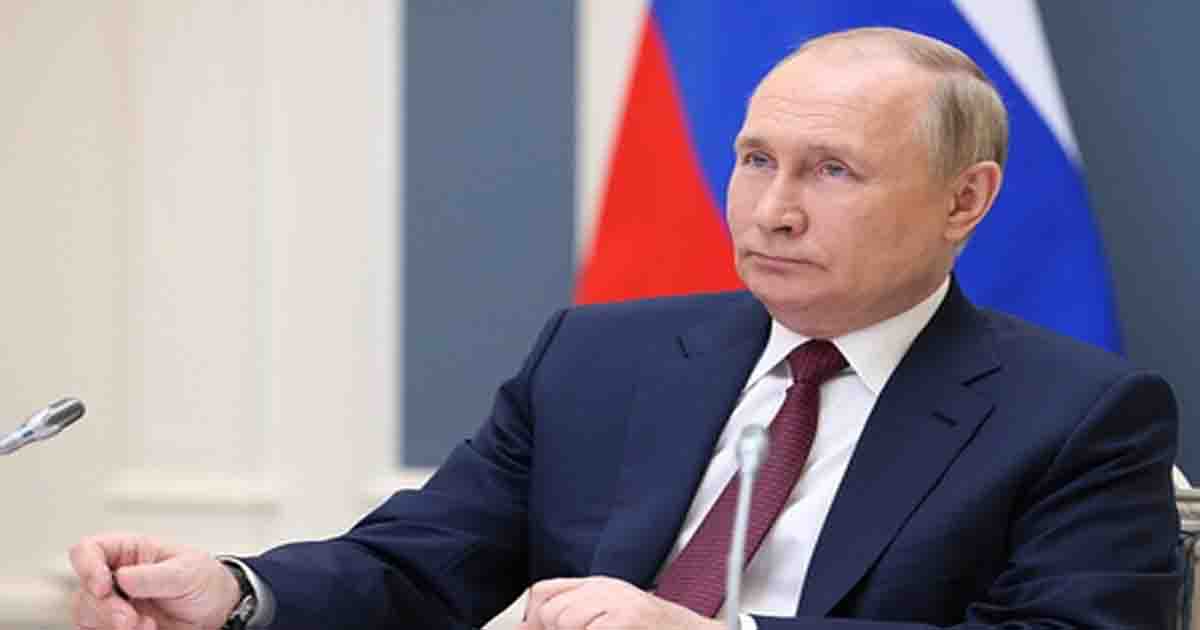
Russian President Vladimir Putin said that the new nuclear-powered submarine Perm will join Russia’s Pacific Fleet and undertake combat duty.
Putin made the remarks on Friday while attending a ceremony to raise the Russian naval flag on the Perm at the Sevmash shipyard in Severodvinsk, a major shipbuilding center in northwestern Russia, the Kremlin said in an official statement.
The Perm was the fifth Yasen-M-class nuclear-powered submarine delivered to the Russian Navy over the past six years, Putin said, adding that Russia is one of the few countries in the world capable of building such advanced nuclear-powered submarines, which are weapons systems of global strategic significance, Xinhua new agency reported.
According to the Kremlin, the Perm is a fourth-generation, multipurpose nuclear-powered submarine, and also the first Russian Navy submarine equipped with Zircon hypersonic cruise missiles as standard armament.
Submarines of the Yasen-M class are designed to operate in different parts of the world’s oceans while remaining undetected. In the near future, the Perm will join Russia’s Pacific Fleet to protect Russia’s maritime borders, Putin said.
Russia plans to continue expanding and modernizing its Navy, particularly its submarine fleet, according to Putin. He said that the Sevmash shipyard is continuing construction of several types of nuclear-powered submarines, with five missile-carrying submarines scheduled for delivery to the Navy by 2030, including three of the Yasen-M class.
Putin said measures to expand serial ship production and modernize weapons systems would help ensure stable operations in the shipbuilding and defense industries, promote advanced technologies and strengthen Russia’s defense capabilities and technological sovereignty.
International News
India says attacks on maritime shipping and seafarers unacceptable, calls for global response

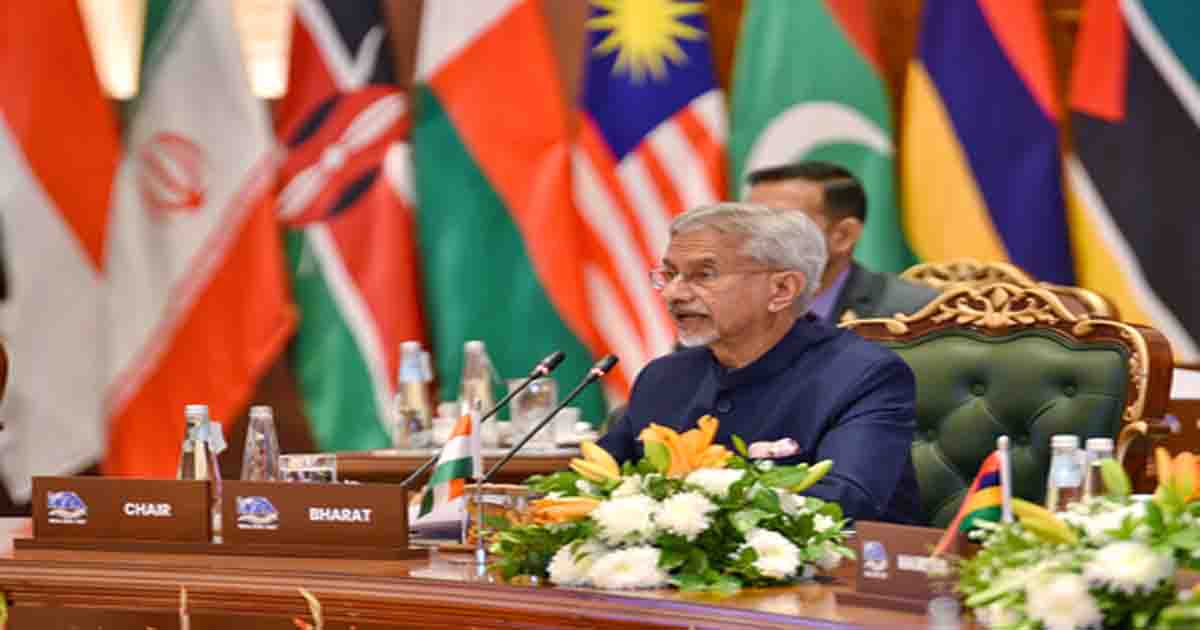
Calling for a global response, External Affairs Minister (EAM) S Jaishankar on Friday termed attacks on maritime shipping and seafarers as “unacceptable”.
In his remarks at the Indian Ocean Rim Association’s (IORA) General Debate on ‘A Stronger Regional Voice: Positioning IORA in a Changing Global Order’ in New Delhi on Friday, EAM Jaishankar highlighted the volatile aspects of a transforming global order, particularly conflicts, frictions and disruptions.
“We are understandably focused on the volatile aspects of a transforming global order, especially conflicts, frictions and disruptions. It is equally imperative to appreciate the promising aspects: deep interdependence, strong globalisation and the benefits of international cooperation,” EAM Jaishankar said.
He emphasised that the Indian Ocean is particularly poised to address its challenges. Recognising the criticality of maritime trade to global growth, EAM Jaishankar called on nations to deliver on safety and security of the Indian Ocean and stated that international law, especially the United Nations Convention on the Law of the Sea (UNCLOS), must be respected.
“Whether it is to counter terrorism, narcotics trade or illegal, unreported, and unregulated fishing, or indeed response to climate events and disaster situations, we have to become more self-reliant as well as more enthusiastic about cooperating with partners,” EAM Jaishankar said.
The meeting is being held under India’s IORA 2025-2027 chairship with the theme of ‘Innovation, Openness, Resilience and Adaptability in the Indian Ocean Region’.
The 23-member states of IORA are India, Australia, Bangladesh, Indonesia, Iran, Kenya, Madagascar, Comoros, France, Malaysia, Maldives, Mauritius, Mozambique, Oman, Seychelles, Singapore, Somalia, South Africa, Sri Lanka, Tanzania, Thailand, the United Arab Emirates, and Yemen.
The 12 dialogue partners are China, Egypt, the European Union, Germany, Italy, Japan, South Korea, Russia, Saudi Arabia, Turkey, the United Kingdom, and the United States.
The Council of Ministers is the Association’s highest decision-making body and comprises the Ministers of Foreign Affairs of IORA Member States. It provides the overall policy and strategic direction of the organisation. Its key responsibilities include formulating policies, reviewing progress in cooperation among member states, and identifying and deciding on new areas of collaboration to further advance the objectives of the Association.

SP issues whip for LS MPs to oppose Delimitation Bill during special session

Prez Murmu expresses grief over loss of life in Jharkhand road accident

Drugs major challenge to youth’s aspirations, says PM Modi in ‘Mann Ki Baat’

Nearly 50 pc of FII money which left Indian markets in 10 months returns in Nov

Javed Akhtar questions fairness of proposed delimitation exercise

Congress trying to protect 3 crore Bangladeshi infiltrators in voter list: HM Shah

Red Fort car blast probe exposes blueprint for spread of terror modules across India

Trump flags Iran targets as talks continue

‘Conspiracy, not accident’: NCP on Ajit Pawar death

BJP, Shiv Sena slam Mallikarjun Kharge for terming Diwali ‘Khushiyon ka Eid’
-

 Crime4 years ago
Class 10 student jumps to death in Jaipur
-

 Maharashtra2 years ago
Mumbai Local Train Update: Central Railway’s New Timetable Comes Into Effect; Check Full List Of Revised Timings & Stations
-

 Maharashtra2 years ago
Mumbai To Go Toll-Free Tonight! Maharashtra Govt Announces Complete Toll Waiver For Light Motor Vehicles At All 5 Entry Points Of City
-

 Maharashtra2 years ago
False photo of Imtiaz Jaleel’s rally, exposing the fooling conspiracy
-

 National News2 years ago
Ministry of Railways rolls out Special Drive 4.0 with focus on digitisation, cleanliness, inclusiveness and grievance redressal
-

 Maharashtra2 years ago
Maharashtra Elections 2024: Mumbai Metro & BEST Services Extended Till Midnight On Voting Day
-

 National News2 years ago
J&K: 4 Jawans Killed, 28 Injured After Bus Carrying BSF Personnel For Poll Duty Falls Into Gorge In Budgam; Terrifying Visuals Surface
-

 Crime2 years ago
Baba Siddique Murder: Mumbai Police Unable To Get Lawrence Bishnoi Custody Due To Home Ministry Order, Says Report