
Business
Rebound: Sensex gains over 1,300pts, despite FIIs selling of over Rs 4K cr


Value buying as well as positive global markets pushed India’s key indices — S&P BSE Sensex and NSE Nifty50 — higher on Friday, a day after it suffered heavy loss.
However, the upside was capped due to persistent selling pressure by FIIs. On the BSE, NSE and MSEI in the capital market segment, they net sold Rs 4,470.70 crore worth of equities.
Consequently, Sensex settled 2.4 per cent or 1,329 points up at 55,859 points, whereas Nifty 2.5 per cent or 410 points up at 16,658 points.
In the process, both the indices became the best performer in the Asian region.
Globally, Asian markets rebounded on Friday and European stocks too traded higher following Wall Street’s surprising overnight reversal, as investors weighed the longer-term impact of tough Western sanctions against Russia after it unleashed troops, tanks and missiles on Ukraine.
“Nifty recovered smartly on Friday in line with most global markets,” said Deepak Jasani, Head of Retail Research, HDFC Securities.
“While the developments on the Russia Ukraine front will keep influencing the directions of the market, resumption of supply disruptions and commodity inflation will hurt a lot of economies at a time when they were starting to recover post Omicron threat.”
In addition, Siddhartha Khemka, Head – Retail Research, Motilal Oswal Financial Services: “While markets have seen a pullback – volatility is expected to remain high over the next few days. Market will be keeping a close watch on the ongoing Russia Ukraine conflict over the weekend for any further cues.”
“For the near term, Thursday’s low of 16,200 may act as a strong support. While traders need to remain cautious of sharp volatility, Investors can use the current dip to gradually add quality blue chip companies in their portfolios.”
In addition, Vinod Nair, Head of Research at Geojit Financial Services: “Domestic indices staged a firm recovery tracking positive cues from global markets and took advantage of lower valuations following the massive sell-off in the previous session.”
“Global markets took a breather as the fresh US sanctions did not target Russia’s oil exports nor their access to the Swift global payment network. However, the market will continue to remain volatile tracking new developments in the Russia-Ukraine war.”


Business
New GDP series narrows demand-supply estimate gap, improves policy assessment: RBI Deputy Governor


The revised gross domestic product (GDP) series has significantly reduced the discrepancy between estimates generated from the demand and supply sides of the economy, strengthening the quality of economic data available for policymaking, Reserve Bank of India (RBI) Deputy Governor Poonam Gupta said on Monday.
Speaking at the Data Users Conference on the New Series of GDP, CPI and IIP, Gupta said the revised methodology addresses a long-standing limitation in India’s GDP estimates.
“In the earlier series, GDP estimates from the demand and supply sides did not always align. The resulting gap was reported separately as a discrepancy, and it could at times be large and volatile,” she added.
She noted that the revised system uses a supply-use table framework, allowing estimates from both sides of the economy to align much more closely.
“The new series brings the two sides together through the supply-use table framework. As a result, nominal GDP estimates from both sides align much more closely,” she said.
The new GDP series incorporates a broader set of surveys and administrative datasets and introduces double deflation for manufacturing and agriculture, a methodology widely regarded as an international best practice.
According to Gupta, the revision reflects the transformation of the Indian economy over the past decade.
“The new series reflects an economy that has become larger, more diversified and more complex since the base was last revised in 2011-12,” she said.
On the expenditure side, private consumption estimates now draw on the latest Household Consumption Expenditure Survey, while investment data has been mapped more precisely to the sectors undertaking investment activity.
The RBI Deputy Governor said these changes would improve policymakers’ ability to identify growth drivers and reduce the magnitude of revisions in successive GDP releases.
“The improvements in the new series are expected to make estimates more stable across successive vintages, with smaller revisions. This, in turn, will support better-calibrated and more stable policy, particularly monetary policy,” Gupta said.
Gupta also highlighted revisions in the Consumer Price Index (CPI), which now uses consumption patterns from the 2023-24 Household Consumption Expenditure Survey and incorporates rural housing costs and prices from online markets for the first time.
She said the revised CPI framework would help improve inflation measurement, provide deeper insights into regional price pressures and narrow the gap between measured and perceived inflation.
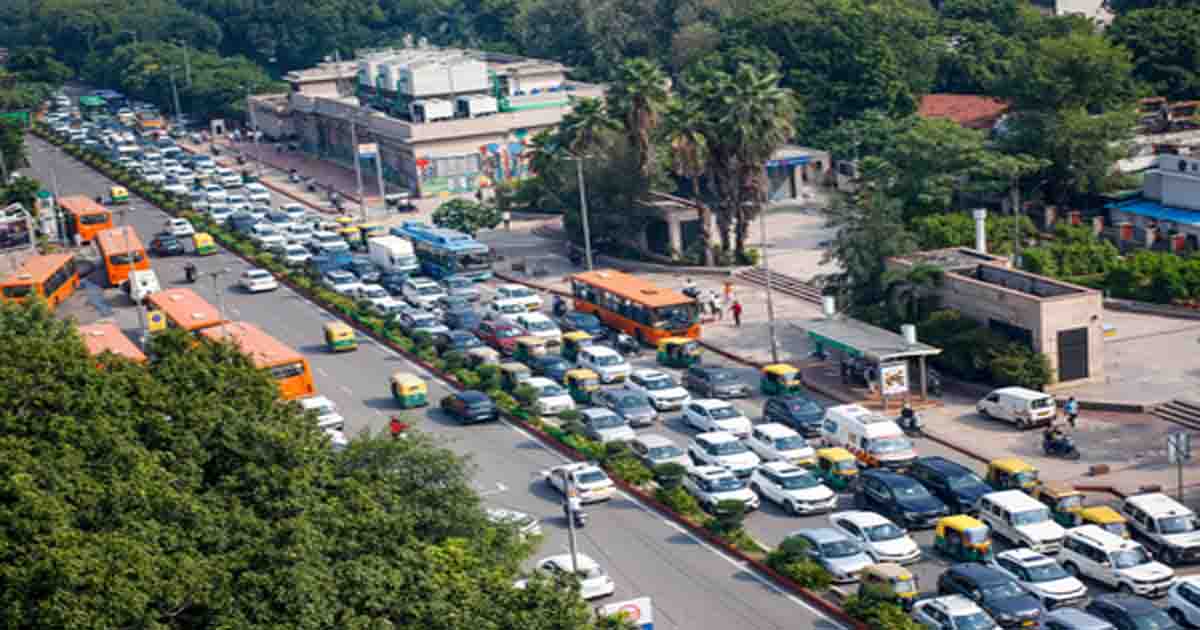
Auto retail sales in India rose to an all-time high during the 42-day festive period of 2026 because of robust demand for two-wheelers, commercial vehicles and electric vehicles, according to data released by the Federation of Automobile Dealers Associations (FADA) on Monday.
Total vehicle retail sales increased 2.21 per cent year-on-year to 55,25,490 units, surpassing last year’s record festive season performance.
Compared with the 2024 festive period, sales were up 23.95 per cent, highlighting sustained demand following the implementation of GST 2.0 reforms.
“The 42-day festive season of 2026 will be remembered as the year Indian auto retail set a record on top of a record,” FADA President Sai Giridhar said.
In addition, two-wheeler sales — which account for the largest share of the market — rose 3.67 per cent to 43.13 lakh units, while commercial vehicle sales increased 7.13 per cent to 1.56 lakh units.
Three-wheeler retail sales grew 5.32 per cent, tractor sales rose 2.24 per cent and construction equipment registrations surged 26.06 per cent.
However, passenger vehicle sales declined 7.16 per cent year-on-year to 7.49 lakh units.
Despite the decline, passenger vehicle sales remained 16.43 per cent higher than festive 2024 levels.
FADA said the festive season began on a subdued note during Navratri but demand accelerated during Dhanteras and Diwali, helping the market recover and finish in positive territory.
A key highlight of the season was the sharp rise in electric vehicle adoption. EV retail sales jumped 52.62 per cent to a record 5,09,667 units, crossing the five-lakh mark for the first time during a festive period.
Electric two-wheeler sales grew 61.1 per cent, electric passenger vehicle sales rose 72.9 per cent, while electric commercial vehicle sales more than doubled, increasing 154.6 per cent.
According to FADA, nearly one in every ten vehicles sold during the festive season was electric, reflecting growing consumer acceptance driven by lower running costs, improving vehicle range and a wider choice of models.
Looking ahead, the dealers’ body said the strong festive performance has positioned the industry to achieve another milestone with India’s annual vehicle retail sales approaching the three-crore-unit mark for the first time.

Indian equity benchmarks started the week on a strong note, rising nearly 1 per cent in early trade on Monday, supported by sustained foreign fund inflows, a strengthening rupee, robust corporate earnings and attractive valuations in large-cap stocks.
Sensex advanced as much as 706.64 points or 0.84 per cent to 84,626.35. Nifty 50 climbed 192 points or 0.74 per cent to 25,992.60.
Most sectoral indices traded in positive territory with Nifty IT emerging as the top gainer and rising over 1 per cent.
Banking, financial services and auto sector indices were also trading positive.
In contrast, Nifty Metal was the lone major laggard and declined about 1 per cent.
Analysts attributed the rally to improving investor sentiment amid a sharp turnaround in foreign portfolio investor (FPI) activity.
“We are witnessing heightened volatility across markets, including equities, currencies and metals. While global equity markets are facing pressure from an AI-led technology selloff, India has significantly outperformed, supported by fairly valued large-cap stocks, rupee appreciation and stronger-than-expected earnings growth,” they said.
According to NSDL data cited by analysts, FPIs have remained net buyers on all trading sessions this month, except for Muhurat Trading with cumulative purchases reaching Rs 1.14 lakh crore till November 20, marking a record monthly inflow.
Analysts said declining crude oil prices, improving corporate earnings, reasonable valuations in the banking sector and rupee strength against the dollar have reinforced foreign investor confidence in Indian equities.
“Nifty maintained a steady upward trajectory in the previous session, forming a strong bullish candle and closing near its intraday high. Immediate support is seen in the 25,700-25,750 zone, while resistance is placed at 26,000-26,100, as per the technical analysts.
Foreign institutional investors remained aggressive buyers in the previous session, purchasing equities worth Rs 10,308 crore, while domestic institutional investors remained net sellers for the third consecutive session and offloaded shares worth Rs 4,859 crore.
In addition, Asian markets showed largely negative performance as Japan’s Nikkei, Hong Kong’s Hang Seng and South Korea’s KOSPI traded up to 5 per cent lower in early hours of the session.

New GDP series narrows demand-supply estimate gap, improves policy assessment: RBI Deputy Governor

Delhi court issues NBW against YouTuber Dhruv Rathee in defamation case

Ram Kadam criticises LoP Rahul Gandhi over Ardhanarishvara image, targets Uddhav Thackeray over Savarkar remarks

Father-son killed as tractor carrying them plunges in deep well in MP Chhatarpur

Iran’s IRGC says two ‘violating’ supertankers exploded after hitting mines in Hormuz Strait

Congress trying to protect 3 crore Bangladeshi infiltrators in voter list: HM Shah

Red Fort car blast probe exposes blueprint for spread of terror modules across India

Trump flags Iran targets as talks continue

‘Conspiracy, not accident’: NCP on Ajit Pawar death

BJP, Shiv Sena slam Mallikarjun Kharge for terming Diwali ‘Khushiyon ka Eid’
-

 Crime4 years ago
Class 10 student jumps to death in Jaipur
-

 Maharashtra2 years ago
Mumbai Local Train Update: Central Railway’s New Timetable Comes Into Effect; Check Full List Of Revised Timings & Stations
-

 Maharashtra2 years ago
Mumbai To Go Toll-Free Tonight! Maharashtra Govt Announces Complete Toll Waiver For Light Motor Vehicles At All 5 Entry Points Of City
-

 Maharashtra2 years ago
False photo of Imtiaz Jaleel’s rally, exposing the fooling conspiracy
-

 National News2 years ago
Ministry of Railways rolls out Special Drive 4.0 with focus on digitisation, cleanliness, inclusiveness and grievance redressal
-

 Maharashtra2 years ago
Maharashtra Elections 2024: Mumbai Metro & BEST Services Extended Till Midnight On Voting Day
-

 National News2 years ago
J&K: 4 Jawans Killed, 28 Injured After Bus Carrying BSF Personnel For Poll Duty Falls Into Gorge In Budgam; Terrifying Visuals Surface
-

 Crime2 years ago
Baba Siddique Murder: Mumbai Police Unable To Get Lawrence Bishnoi Custody Due To Home Ministry Order, Says Report